 Wondershare EdrawMind
MindMap Gallery Rehabilitation function assessment (1)
- 24
Rehabilitation function assessment (1)
This is a mind map about rehabilitation function assessment (1), with a detailed introduction and comprehensive description. I hope it will be helpful to those who are interested!
Edited at 2023-12-02 12:42:18
- bacteria
This is a mind map about bacteria, and its main contents include: overview, morphology, types, structure, reproduction, distribution, application, and expansion. The summary is comprehensive and meticulous, suitable as review materials.
- Plant asexual reproduction
This is a mind map about plant asexual reproduction, and its main contents include: concept, spore reproduction, vegetative reproduction, tissue culture, and buds. The summary is comprehensive and meticulous, suitable as review materials.
- Reproductive development of animals
This is a mind map about the reproductive development of animals, and its main contents include: insects, frogs, birds, sexual reproduction, and asexual reproduction. The summary is comprehensive and meticulous, suitable as review materials.
Rehabilitation function assessment (1)
- bacteria
This is a mind map about bacteria, and its main contents include: overview, morphology, types, structure, reproduction, distribution, application, and expansion. The summary is comprehensive and meticulous, suitable as review materials.
- Plant asexual reproduction
This is a mind map about plant asexual reproduction, and its main contents include: concept, spore reproduction, vegetative reproduction, tissue culture, and buds. The summary is comprehensive and meticulous, suitable as review materials.
- Reproductive development of animals
This is a mind map about the reproductive development of animals, and its main contents include: insects, frogs, birds, sexual reproduction, and asexual reproduction. The summary is comprehensive and meticulous, suitable as review materials.
- Recommended to you
- Outline
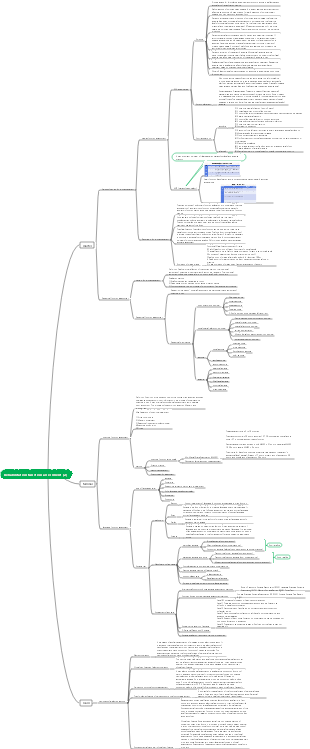
Rehabilitation function assessment
ICF
Four major categories: body functions, body structure, activities and participation, and environmental factors
Function
body functions and structures
Physiological functions (including psychological functions) and anatomical structures of the human body
Activity
The specific performance of an individual when performing a task or action, which is the individual aspect of the function; such as climbing a ladder or moving something
participate
The interaction between the individual and the living environment is the social aspect of function
obstacle
damage
Loss or deviation from normal physiological functions and structures; such as paralysis and amputation
activity restrictions
Difficulties that individuals may encounter during activities; such as being unable to stand and walk
Participation Limitations
Problems that individuals may encounter in their interactions with their living environment; such as being unable to go to school
master
motor function assessment
Muscle strength assessment
concept
Examining the maximum contraction force produced by a subject's muscles or muscle groups during active exercise is a method of examining the functional status of nerves and muscles, and is one of the most basic methods for evaluating motor function.
significance
Determine whether there is a decrease in muscle strength, the degree and scope of the decrease, and indirectly determine the degree of neurological damage.
Regularly check the degree and speed of recovery from neuromuscular lesions, test the effect of treatment and training, and evaluate the recovery situation
Assessment method
Isokinetic muscle strength testing is currently the best method for evaluating muscle function and studying muscle mechanical properties.
Depending on whether equipment is used or not
Manual muscle strength test (MMT)
Touch the muscle belly to contract (grasp the importance of muscle anatomy) Observe the active movement of muscles The function of movement against the gravity of the limb or external resistance
Lovett muscle strength grading scale
Indications
Muscle weakening in healthy people or caused by various reasons (disuse, myogenic, neurogenic, arthrogenic, etc.)
Contraindications
Unhealed fractures, joint dislocation, joint instability, acute inflammation, severe pain, acute injury and destruction of various bones, joints and surrounding tissues
Operating procedures
Precautions
1. First explain the purpose, procedures and methods of the examination to the subjects to eliminate their nervousness and obtain full understanding and cooperation. 2. Adopt the correct test posture and fix the proximal limbs in an appropriate position to prevent alternative movements. 3. Each test should be compared between the left and right sides. During the examination, the muscle of the same name on the contralateral side should be tested first. It is generally believed that a difference of more than 10% between the two sides has clinical significance. 4. When the muscle strength is above level 3, check that the resistance added must be continuously applied and kept opposite to the direction of movement. 5. Muscle strength test is not suitable for patients with spastic paralysis caused by central nervous system diseases 6. When muscle strength is abnormal, the antagonistic muscles and innervation of the active muscles (muscle groups) must also be fully considered.
Instrument muscle strength assessment
Simple instrument assessment
Portable dynamometer
Large instrument evaluation
Isokinetic force measuring device
According to muscle contraction pattern
Physiological contraction
Isometric strength assessment
Isotonic strength assessment
With the help of equipment
Isokinetic muscle strength assessment
Isokinetic concentric muscle strength assessment
Isokinetic eccentric muscle strength assessment
According to the assessment parts, it can be divided into limb and trunk muscle strength assessment as well as hand grip and pinch strength assessment.
According to the purpose of assessment, it can be divided into assessment of explosive power, local muscle endurance, etc.
Muscle tone assessment
concept
Muscle tone: an involuntary, continuous, tiny contraction of muscle tissue in a resting state, that is, the degree of muscle tension displayed during passive exercise
Muscle tone assessment: It is mainly a manual examination. First, observe and touch the tension of the tested muscles in a relaxed and static state, and then judge through passive movement.
Normal muscle tone classification
resting muscle tone
postural muscle tone
exercise muscle tone
Abnormal muscle tone classification
Hypotonia (sluggishness): no resistance is felt in passively movable joints, and they are loose and weak
Increased muscle tone (spasm or stiffness): there is significant resistance to passive movement of the joints, and it is even difficult to perform passive movements
Dystonia: disorder of muscle tone, either high or low, appearing irregularly and alternately
Assessment method
clinical examination
Take medical history
Visual inspection
Palpation examination
reflex check
Abnormal muscle tone evaluation criteria
hypotonia
method
Upper limb drop test
MMT manual muscle strength test
increased muscle tone
method
Passive movement assessment: It can detect the response of muscles to stretch stimulation to find out whether there is hypertonia and whether it is accompanied by clonus, and compare and identify it with contracture.
Check tendon reflexes
Operation: Muscle contraction occurs when tapping lightly
Score: 0 no response; 1 weakened; 2 normal; 3 spasmodic hypertonia, hyperreflexia; 4 clonus
Typical deep reflex examination: biceps tendon, triceps tendon, brachioradialis tendon, patellar tendon, hamstring tendon, Achilles tendon
Assessment of muscle spasm: supine position, passive movement of upper and lower limb joints, graded according to resistance
Precautions
Ask the patient to relax as much as possible while the evaluator moves or supports the limb
Pay attention to the order of assessment and do not perform treatment before assessment.
The rater continues to complete the work with bare hands in a fixed form (fast and with few repetitions)
When unilateral dysfunction occurs, comparison should be made with the healthy side
If you want to differentiate from contracture, antagonist electromyography can be added
Combined with other ratings: Brunnstrom, fugl-Meyer, Barthel, FIM
Joint range of motion (ROM) measurement
Definition: The degree of movement of the distal bone, which can be divided into active and passive ranges of joint motion.
Significance: It plays an important role in determining the cause of the disease, assessing the degree of joint mobility impairment, and evaluating the effectiveness of treatment.
Different individuals may have different joint mobility when completing the same action, indicating the location of dysfunction.
Limited joint range of motion → limited functional activity → movement disorder
Factors affecting joint mobility
Influence of factors in and around joints
Differences in area size of joint surfaces
Joint capsule thickness and tightness
The number and strength of joint ligaments
The stretch and elasticity of muscles or soft tissues around joints
Pain in joints and surrounding soft tissues
muscle spasms
soft tissue contracture
muscle weakness
Intra-articular abnormalities
joint stiffness
other factors
age
gender
Profession
Assessment of joint range of motion
Tool: Universal Protractor
Measurement steps
The patient is in a comfortable position (lying, sitting, standing)
Let patients understand the measurement process and reasons to obtain their cooperation
Expose the joint to be measured
Identify bony landmarks for measuring joints
Stable proximal joints for measuring joints
Passively move the joint to understand possible range of motion and any resistance
Put the joint in the starting position
The axis of the goniometer should be aligned with the joint axis, the fixed arm should be parallel to the proximal bone of the joint, and the movable arm should be parallel to the distal bone that forms the joint. Avoid making the angle needle deviate from the movement direction of the goniometer.
Record the angle at the starting position of the joint and remove the protractor. Do not attempt to secure the protractor during joint movement
Within the range of possible ROM, the therapist should move the joint carefully and gently to determine complete passive ROM. Never be violent and observe the patient carefully to see if there is any pain or discomfort
Reposition the protractor and record the final angle
Remove the protractor and place the patient's limb in a resting position
Record ROM
Recording of measurement results
Joint names and left and right
Location of ankylosis, ankylosis, or contracture
Active ROM and Passive ROM
Body position during measurement
The direction of movement during the measurement process and whether there is any error
Precautions
Determine the starting position of ROM measurement
The same patient should be measured by a dedicated person. Each measurement should take the same position and compare the two sides.
When the active ROM of a joint is inconsistent with the passive ROM, it indicates the existence of problems such as extra-articular muscle paralysis, tendon contracture or adhesion. The range of passive movement of the joint should be used as the standard, or the active and passive ROM should be recorded simultaneously.
If the active and passive ROMs are compared, the starting position, type of protractor, and placement method of the protractor should be the same.
Determine the possible causes of ROM limitation, and develop treatment methods for ROM limitation based on the degree, cause, and prognosis of ROM limitation.
Pay attention to eliminate the mutual influence or compensation of adjacent joints; also pay attention to eliminate the influence of other factors such as pain, scars, tight clothes, etc.
Balance and coordination ability assessment
balanced assessment
Classification
Static balance: being in a specific posture without the action of external forces
Autodynamic balance: the ability to regain a stable state during voluntary movement or posture transitions
Dynamic balance: the ability to return to a stable state under the influence of external forces
balance control
Sensory input: perspective, proprioception, vestibular sense
Motor output: Produce appropriate movements and complete the plan formulated by the brain
Central integration: Processing the received information and forming a movement plan; under the action of interactive innervation or inhibition, the human body remains stable and selective. Choose to exercise other parts of the body.
Purpose
Understand whether the assessment subject has balance dysfunction; determine the degree and type of balance disorder
Analyze the causes of balance disorders
Assist in the formulation and implementation of rehabilitation plans based on assessment results
Evaluating the effectiveness of training in the treatment of balance disorders
Fall risk prediction
Indications
central nervous system damage
Brain trauma, cerebrovascular accident, Parkinson's disease, multiple sclerosis, cerebellar diseases, brain tumors, cerebral palsy, spinal cord injury, etc.
Bone and joint diseases and injuries
Fractures and bone and joint diseases, amputation, joint replacement, neck and back injuries that affect posture and posture control, various sports injuries, muscle diseases and peripheral nerve injuries, etc.
Otolaryngology diseases
Various vertigo disorders
Special groups
Athletes, pilots, astronauts, elderly people with naturally declining balance functions
Assessment method
Simple assessment method
The subject stands with his feet together, stretches his hands forward, opens his eyes first, and then closes them for 30 seconds. Unsteady standing or tipping is considered abnormal. Those with normal balance function do not tip.
Equipment: Ruler, two standard chairs (one with armrests, one without), footstool or steps, stopwatch
Time:15-20min
Explanation: (The score is 0-4 points, 4 points means that it can be executed independently, 0 points means that it cannot be executed) 0-20 points indicates poor balance function and the patient needs to use a wheelchair; 21-40 points indicates that the patient has a certain balance ability and can walk with assistance; A score of 41-56 indicates that the balance function is good and the patient can walk independently. 40 points indicates a risk of falling
Functional (scale) assessment method
Balance tester evaluation method
Assessment of coordination ability
coordinated movement
Sensory output: including vision and proprioception, vestibular sense plays a small role
Motor control: mainly relies on the strength of muscle groups
Central integration: brain reflex regulation and cerebellar ataxia coordination system, among which the coordination system of the cerebellum plays a more important role. In addition to balance dysfunction, damage to the cerebellum can also cause ataxia.
concept
Coordination: The body's ability to produce smooth, accurate, controlled movement
Coordination disorder: Abnormal motor coordination dysfunction characterized by clumsy, unbalanced, and inaccurate movements, also known as ataxia
Caused by: Lesions in different parts of the central nervous system (cerebellum, basal ganglia, posterior cord of the spinal cord)
Classification
Cerebellar ataxia: abnormal rapid and alternating movements of the upper limbs, and a drunken gait of the lower limbs
cerebral ataxia
tremor
chorea
athetosis sign
twitch
dystonia
Sensory ataxia: deep sensory impairment, difficulty standing with eyes closed (Romberg's syndrome) positive
upper limbs
finger-nose test
finger to finger test
rotation test
Lower limbs
Heel-knee-shin test
Rating criteria: 5 points normal 4 points Mild impairment: Able to complete specified activities, but speed and intensity are slightly worse than normal 3 points Moderate impairment: Able to complete designated activities, but with extremely obvious coordination deficits, slow, clumsy and unstable movements 2 points Severe impairment: Can only initiate movement but cannot complete it 1 point unable to move
Gait analysis
Walking parameters: step length, stride width, stride angle, stride speed, cadence kinematic parameters Kinetic parameters Myoelectric activity parameters Energy metabolism parameters
Clinical significance: Provide objective basis for formulating rehabilitation treatment plans and evaluating rehabilitation efficacy.
method
Clinical Analysis: Observation, Measurement
Three-dimensional gait analysis: gait analyzer, gait analysis laboratory
Forces involved in gait: ground reaction forces, moments, joint forces Muscle contraction: dynamic electromyography or surface electromyography Requires force measuring platform and foot force plate Camera equipment and expertise
Common abnormal gait
spastic gait
Hemiplegic gait: Causes: foot drop, inversion, external or internal rotation of the lower limbs, abnormal knee flexion Performance: When swinging the leg to step forward, the affected leg often rotates forward through the outside, so it is also called a roundabout step or a circle step; the upper limb often flexes and adducts to stop swinging.
Paraplegic gait: also known as crossover step or scissor step Cause: Spasm of adductor muscles of lower limbs Performance: Bilateral hip adduction, knees rubbing against each other, and unstable gait when walking
myasthenic gait
Gluteus maximus weakness: Cause: Weak hip extensor muscles Performance: When walking, the trunk leans backward; the gravity line passes behind the hip joint to maintain passive hip extension and control the inertia of the trunk forward; the posture of raising the chest and protruding belly
Gluteus medius weakness: Reason: Weak hip abductor muscles and inability to maintain lateral stability of the hip Performance: The gravity line passes through the outside of the hip joint; relying on trunk bending and the contralateral quadratus lumborum muscle to raise the pelvis to maintain walking stability. ·If the gluteus medius muscles on both sides are weak, the upper body will swing from side to side when walking, like a duck walking, also known as duck walk.
Quadriceps weakness: Cause: Weak knee extensor muscles Performance: The affected leg cannot keep the knee extension stable during the support period; the upper body leans forward, and the gravity line passes in front of the knee joint, so that the knee is passively straightened; the patient strengthens the tension of the gluteal and hamstring muscles by slightly flexing the hip. The lower end of the femur swings back to help passively extend the knee; if the hip extensor muscles are also weak, the patient needs to lean forward and press the thigh with his hands to straighten the knee.
Tibialis anterior muscle weakness: Cause: Weak ankle dorsal extensor muscles Performance: foot drop, increased hip and knee flexion during the swing phase to prevent toes from dragging the ground, also known as threshold step or hurdle step
ankylosing gait
Cause: Contracture and ankylosis of joints in the lower limbs, wearing orthotics such as HKAFO Manifestations: Compensatory pelvic anteversion, lumbar hyperextension, and shortened step length occur when hip flexion contracture occurs; short-leg gait may occur when knee joint flexion contracture exceeds 30°; when knee extension contracture occurs, the affected leg abducts or abducts during the swing phase. Lift the pelvis on the same side to prevent the toes from dragging the ground; when the ankle plantar flexion contracture occurs, the heel cannot touch the ground, and the hip and knee flexion are often increased during the swing period to compensate.
waddling gait
Cerebellar ataxia, walking unsteadily, unable to walk in a straight line, like a drunken man, also known as drunk walking
panic gait
In Parkinson's disease or basal ganglia disease, the gait is short and fast, difficult to start and stop, and the swing of the upper limbs shrinks or stops, which is called panic gait.
painful gait
When various reasons cause pain in the affected leg when bearing weight, the patient should try to shorten the support period of the affected leg, so that the contralateral lower limb swings forward in a jumping manner and shortens the step length, also known as short stride.