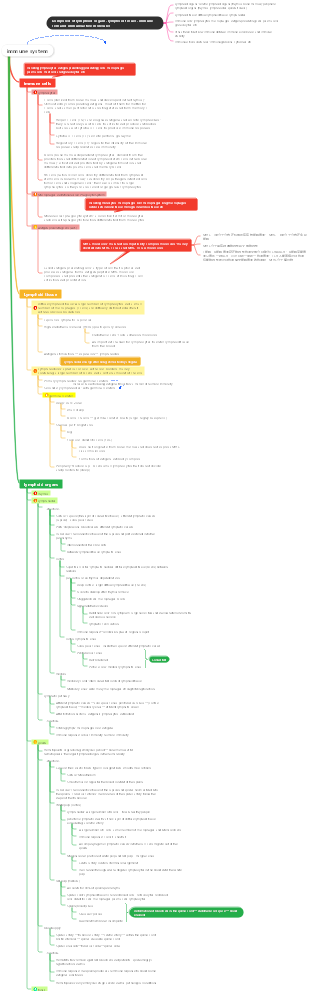
MindMap Gallery Medicine-Immune Cells
This is a mind map about immune cells. The immune system is an important defense system in living organisms. It consists of immune organs, immune cells and immune molecules.
Edited at 2023-11-29 16:48:31This is a mind map about bacteria, and its main contents include: overview, morphology, types, structure, reproduction, distribution, application, and expansion. The summary is comprehensive and meticulous, suitable as review materials.

This is a mind map about plant asexual reproduction, and its main contents include: concept, spore reproduction, vegetative reproduction, tissue culture, and buds. The summary is comprehensive and meticulous, suitable as review materials.
This is a mind map about the reproductive development of animals, and its main contents include: insects, frogs, birds, sexual reproduction, and asexual reproduction. The summary is comprehensive and meticulous, suitable as review materials.
This is a mind map about bacteria, and its main contents include: overview, morphology, types, structure, reproduction, distribution, application, and expansion. The summary is comprehensive and meticulous, suitable as review materials.
This is a mind map about plant asexual reproduction, and its main contents include: concept, spore reproduction, vegetative reproduction, tissue culture, and buds. The summary is comprehensive and meticulous, suitable as review materials.
This is a mind map about the reproductive development of animals, and its main contents include: insects, frogs, birds, sexual reproduction, and asexual reproduction. The summary is comprehensive and meticulous, suitable as review materials.
immune system
Overview
composition
Lymphoid organs, lymphoid tissue, immune cells
Function
immune defense
immune surveillance
immune self-hiding
Characteristics and Essence
Identify self and non-self
MHC molecule; characteristic antigen receptor on the surface of T cells and B cells
Immune Cells
Immune cells are scattered in lymphoid tissue, or in blood, lymph and other tissues
Lymphocytes, macrophages, antigen-presenting cells, plasma cells, granulocytes, mast cells, etc.
Macrophages and mononuclear phagocytes
Macrophages, osteoclasts, microglia, stem macrophages, lung macrophages
Lymphocytes
B cells
bone marrow maturation
T cells
Helper T cells
Referred to as Tr cells, helper T cells and B cells. HIV can specifically destroy Tr cells, causing paralysis of the immune system.
Cytotoxic T cells
Tc cells, referred to as Tc cells, can directly attack heterotypic cells, virus-infected cells and certain tumor cells that enter the body; they can secrete granzymes and induce the death of target cells.
regulatory T cells
Tr cells for short, directly or indirectly inhibit the proliferation, differentiation and activity of antigen-specific T cells.
NK cells
The body’s first natural line of defense against tumors and infections
antigen presenting cells
Dendritic cells (Langerhans cells, Veil cells, interdigitated cells), monocytes (macrophages), B lymphocytes
Lymphoid tissue
concept
With mesh structure or loose connective tissue as the scaffold, a large number of lymphocytes and other immune cells are the site of immune response
diffuse lymphoid tissue
The tissue has no obvious boundaries and is densely composed of a large number of T cells. It is also called high endothelial venules and is an important channel for lymphocytes to enter lymphoid tissue (antigen stimulation causes them to expand and lymphatic nodules appear).
lymph nodes
After antigen stimulation, germinal centers are produced, called primary lymphoid nodules, and there are dense small lymphocytes around the germinal centers called nodule caps.
The germinal center is clear and there are two dark areas
lymphoid organs
central lymphoid organ
thymus and bone marrow
peripheral lymphoid organs
lymph nodes, spleen, tonsils
Thymus
membrane
thin layer of connective tissue
substance
Thymic lobules
cortex
Thymic epithelial cells secrete thymosin and thymopoietin
Thymocytes account for 80-90%, filling in the spaces between thymus epithelial cells
medulla
There are many medullary epithelial cells, which secrete thymosin and partially constitute thymic corpuscles, which grow with age.
Few thymocytes
High endothelial tail vein micron at the corticomedullary junction
blood-thymus barrier
continuous capillary
continuous basement membrane around endothelium
perivascular space, containing macrophages
epithelial basement membrane
a continuous layer of thymic epithelial cell processes
Maintain homeostasis of the internal environment and ensure normal development of thymocytes
Lymph nodes
membrane
thin layer of connective tissue
substance
cortex
superficial cortex
It is composed of lymph nodes and diffuse lymphoid structures between the nodes, which is the B cell area.
paracortical area
It is the subcortical layer and is a large area of diffuse lymphoid tissue, mainly composed of Tr cells, also known as the thymus-dependent area.
cortical lymphatic sinus
Divided into subcapsular sinuses and trabecular sinuses - lymph flows slowly in the sinuses, which is beneficial to macrophages in clearing antigens
medulla
medullary cord
Interconnected cord-like lymphocytes contain mainly B cells, T cells and a large number of plasma cells, and high endothelial venules can be seen
medullary sinus
More macrophages, stronger filtration ability
Interstitial
connective tissue, blood vessels and nerves
Function
filtering lymph, immune response
spleen
Dense connective tissue, more elastic fibers, smooth muscle
substance
white marrow
periarterial lymphatic sheath
Equivalent to the paracortical layer, with a large number of T cells and no high endothelial venules
lymph nodes
A large number of B cells
fringe zone
There are more macrophages and there are marginal sinuses, which are channels for internal blood antigens and lymphocytes to enter the white pulp.
Red pith
Splenic cord - composed of lymphoid tissue rich in blood cells, in the shape of irregular cords, containing more reticular cells and lymphocytes
Splenic sinusoids - irregular in shape, connected into a network, composed of long rod-shaped endothelial cells arranged longitudinally in parallel. Hemogenic cells can change shape and enter the sinusoids through the endothelial gap.
Interstitium; connective tissue, blood vessels, nerves
Function; immune response, hematopoiesis
Lymphocytes - afferent lymphatic vessels, lymphoid tissue - blood circulation - high endothelial venules