MindMap Gallery immune system
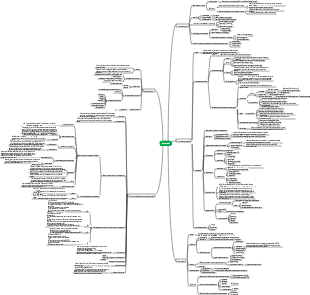
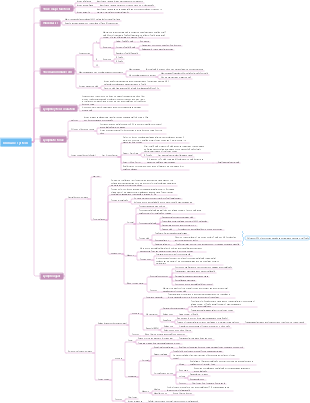
This is a mind map about the immune system. The immune system is a complex and sophisticated defense mechanism in the human body. It is responsible for identifying and destroying foreign pathogens, such as bacteria and viruses, and removing abnormal cells, such as cancer cells, in the body, thereby maintaining The health status of the body.
Edited at 2024-12-01 17:07:38這是一篇關於把時間當作朋友的心智圖,《把時間當作朋友》是一本關於時間管理和個人成長的實用指南。作者李笑來透過豐富的故事和生動的例子,教導讀者如何克服拖延、提高效率、規劃未來等實用技巧。這本書不僅適合正在為未來奮鬥的年輕人,也適合所有希望更好地管理時間、實現個人成長的人。
This is a mind map about treating time as a friend. "Treating Time as a Friend" is a practical guide on time management and personal growth. Author Li Xiaolai teaches readers practical skills on how to overcome procrastination, improve efficiency, and plan for the future through rich stories and vivid examples. This book is not only suitable for young people who are struggling for the future, but also for everyone who wants to better manage time and achieve personal growth.
這七個習慣相輔相成,共同構成了高效能人士的核心特質。透過培養這些習慣,人們可以提升自己的領導力、溝通能力、團隊協作能力和自我管理能力,從而在工作和生活中取得更大的成功。
這是一篇關於把時間當作朋友的心智圖,《把時間當作朋友》是一本關於時間管理和個人成長的實用指南。作者李笑來透過豐富的故事和生動的例子,教導讀者如何克服拖延、提高效率、規劃未來等實用技巧。這本書不僅適合正在為未來奮鬥的年輕人,也適合所有希望更好地管理時間、實現個人成長的人。
This is a mind map about treating time as a friend. "Treating Time as a Friend" is a practical guide on time management and personal growth. Author Li Xiaolai teaches readers practical skills on how to overcome procrastination, improve efficiency, and plan for the future through rich stories and vivid examples. This book is not only suitable for young people who are struggling for the future, but also for everyone who wants to better manage time and achieve personal growth.
這七個習慣相輔相成,共同構成了高效能人士的核心特質。透過培養這些習慣,人們可以提升自己的領導力、溝通能力、團隊協作能力和自我管理能力,從而在工作和生活中取得更大的成功。
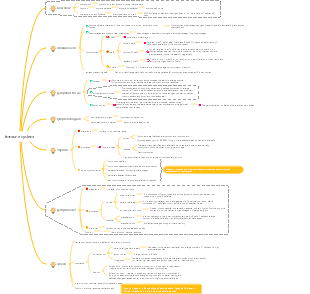
immune system
immune cells
Including lymphocytes, antigen-presenting (presenting) cells, macrophages, plasma cells, mast cells and granulocytes, etc.
Lymphocytes
T cells (derived from bone marrow and developed in the thymus): Stimulated by corresponding antigens, most of them form effector T cells, and a small part return to a resting state and form memory T cells.
Helper T cells (Th): can recognize antigens and secrete lymphokines; they can not only assist B cells to activate and produce antibodies, but also assist cytotoxic T cells to produce immune responses.
Cytotoxic T cells (Tc): secrete perforin, granzyme
Regulatory T cells (Tr): regulate the intensity of the immune response and prevent excess immunity
B cells (bone marrow-dependent lymphocytes, derived from the proliferation and differentiation of lymphoid stem cells in the bone marrow): activated and proliferated by antigen stimulation, and differentiated into plasma cells and memory B cells
NK cells (natural killer cells, directly differentiated from lymphoid stem cells in bone marrow): can directly kill pathogen-infected cells, tumor cells and allogeneic cells; their size is similar to large lymphocytes, so they are also called large granular lymphocytes
Macrophages and Mononuclear Phagocyte System
Mononuclear phagocyte system: a collective term for monocytes and cells with phagocytic function differentiated from monocytes.
Including monocytes, macrophages, liver macrophages, lung macrophages, osteoclasts in bone tissue, microglia in nervous tissue, etc.
Antigen presenting cells (APC)
Called antigen-presenting cells: a type of cell that captures and processes antigens, forms antigen peptide-MHC molecule complexes, and presents the antigen to T cells, stimulating T cell activation and proliferation.
MHC molecules: main histocompatibility complex molecules; mainly divided into MHC-I class and MHC-II class molecules
MHC-I类分子分布在机体所有有核细胞表面;MHC-II类分子分布在免疫细胞
MHC分子具有种属特异性和个体特异性
T细胞,B细胞表面存在特异性抗原受体分别称为TCR和BCR;B细胞克隆表面只表达一种BCR,可识别同一类同一抗原表面;TCR不能直接识别抗原,仅能特异性地识别抗原提呈细胞表面的抗原肽-MHC分子复合物
Lymphoid tissue
Diffuse lymphoid tissue: A large number of lymphocytes and a small number of macrophages (T cells) are diffusely distributed within it, with no obvious boundaries.
capillaries, lymphatic capillaries
High endothelial venules (HEVs)/postcapillary venules
Endothelial cells: rods, adhesion molecules
An important channel for lymphocytes to enter lymphoid tissue from the blood
Antigen stimulation → expansion → lymph nodes
Lymph nodules: spherical or oval, with clear borders, mainly containing a large number of B cells and a certain amount of Th cells
Lymph nodes enlarge after being stimulated by antigens
Primary lymph nodes: no germinal centers
Secondary lymph nodes: with germinal centers
germinal center
Deep: Dark Zone
small, deep
B cells, Th cells → germinal center blasts (large, highly basophilic)
Shallow part: bright area
big
Follicular dendritic cells (FDC)
Does not originate from bone marrow and does not express MHC class II molecules
Formation of antigen-antibody complex
Periphery: Nodule cap - B cells/small lymphocytes that do not divide and proliferate (deep)
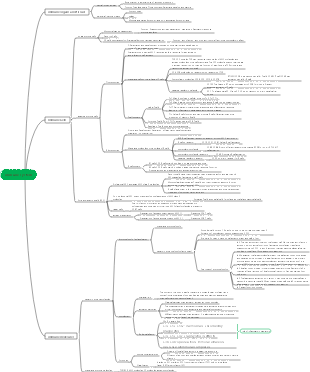
lymphoid organs
Thymus
Lymph nodes
【structure】
Surface: capsule (thin layer of connective tissue) - afferent lymphatic vessels - (capsule) - subcapsular sinus
Porta: depressions, blood vessels, efferent lymphatic vessels
Trabeculae: The connective tissue of the capsule and portal extends into the parenchyma
interconnected, thick brackets
Between: lymphoid tissue, lymphatic sinus
cortex
Superficial cortex: lymphatic nodules, diffuse lymphoid tissue (B cells) between nodules
paracortical area/thymus-dependent area
Deep cortical, larger diffuse lymphoid tissue (Th cells)
Failure to develop after thymus removal
Staggered cells, macrophages, B cells
high endothelial venules
Endothelial cells: rich cytoplasm, large nuclei, few and shallow heterochromatin, and obvious nucleoli
lymphatic recirculation
Immune response→cell division phase↑, regional scope↑
cortical lymphatic sinus
Subcapsular sinus - inside the capsule: afferent lymphatic vessel
Peritrabecular sinus
End: blind end
Partial access: medullary lymphatic sinus
Connected
medulla
medullary cords: interconnected cords of lymphoid tissue
Medullary sinus: wide, many macrophages, strong filtering function
Lymphatic pathway
Afferent lymphatic vessels → subcapsular sinus, peritrabecular sinus → (cortical lymphoid tissue) → medullary sinus → efferent lymphatic vessel
After filtration: bacteria, antigens↓, lymphocytes, antibodies↑
【Function】
Filtering lymph: macrophages clear antigens
Immune response: cellular immunity, humoral immunity
spleen
Hematopoietic organ during embryonic period → bone marrow after hematopoiesis: the largest lymphoid organ in the human body
【structure】
Capsule: thick, elastic fibers, type III collagen fibers, smooth muscle fibers
Surface: Mesothelium
Smooth muscle: regulates the blood content of the spleen
Trabeculae: The connective tissue of the capsule and splenic hilum extend into the spleen - Trabecular arteries: The branches of the splenic artery follow the shape of the trabeculae
White pulp (cortex)
Lymph nodes: A large number of B cells---few in healthy people
periarterial lymphatic sheath: a thick layer of diffuse lymphoid tissue surrounding a central artery
A large number of T cells, a small number of macrophages, and interlaced cells
Immune response: T cells ↑, sheath ↑
Accompanying small lymphatic vessels: intrathecal T cells migrate out of the spleen
Marginal zone: junction of white pulp and red pulp—marginal sinus
Central artery collateral terminal enlargement
The channel through which antigenic lymphocytes in the blood enter the white pulp
red pulp (medulla)
Accounts for 80% of spleen parenchyma
Splenic cord: Lymphoid tissue rich in red blood cells - reticulocytes, red blood cells, dendritic cells, macrophages, plasma cells, lymphocytes
Spleen (blood) sinus
Sinus wall: porous
Basement membrane: incomplete
Deformation of blood cells in the splenic cord → endothelial cell space → blood sinusoids
blood supply
Splenic artery → trabecular artery → central artery → within the splenic cord: bristle arterioles → splenic sinusoids/splenic cord
Splenic sinusoids→trabecular veins→splenic veins
【Function】
Hemofiltration: remove aged red blood cells and platelets - splenomegaly/hyperfunction: anemia
Immune response: The spleen produces an immune response to blood-borne antigenic substances
Hematopoiesis: early embryonic stage, severe anemia, pathological conditions
tonsil
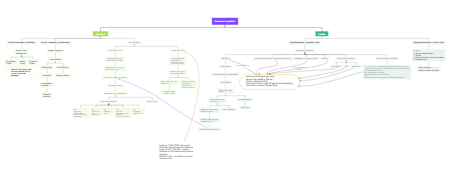
Composed of lymphoid organs, lymphoid tissues, immune cells and immunoactive molecules
Lymphoid organs: central lymphoid organs (thymus, bone marrow); peripheral lymphoid organs (thymus, lymph nodes, spleen, tonsils)
Lymphoid tissue: diffuse lymphoid tissue, lymph nodes
Immune cells: lymphocytes, macrophages, antigen-presenting cells, plasma cells, granulocytes, etc.
It has three functions: immune defense, immune surveillance, and immune stability.
Immunoactive substances: immunoglobulins, cytokines, etc.