MindMap Gallery Medicine-Immune System Mind Map
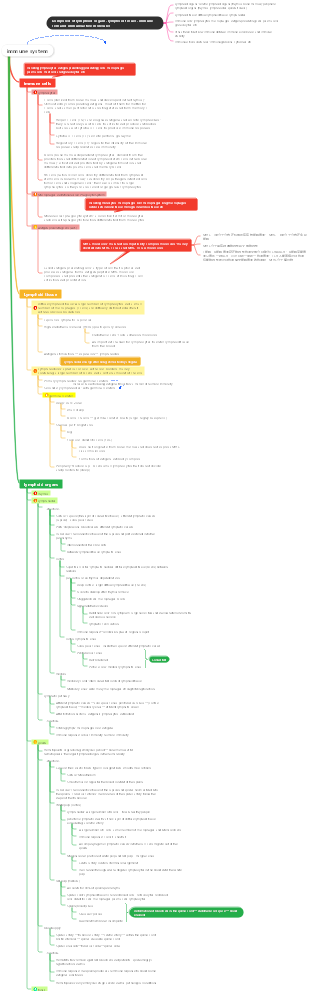
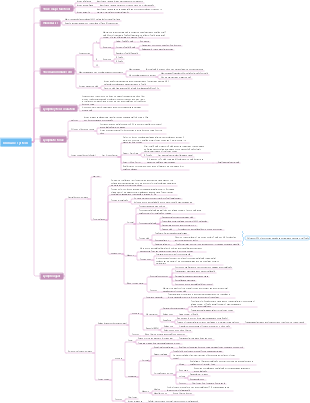
Basically all the key knowledge about the immune system is covered, which is a very useful review material. Friends in need hurry up and collect it!
Edited at 2023-11-28 17:22:50This is a mind map about bacteria, and its main contents include: overview, morphology, types, structure, reproduction, distribution, application, and expansion. The summary is comprehensive and meticulous, suitable as review materials.

This is a mind map about plant asexual reproduction, and its main contents include: concept, spore reproduction, vegetative reproduction, tissue culture, and buds. The summary is comprehensive and meticulous, suitable as review materials.
This is a mind map about the reproductive development of animals, and its main contents include: insects, frogs, birds, sexual reproduction, and asexual reproduction. The summary is comprehensive and meticulous, suitable as review materials.
This is a mind map about bacteria, and its main contents include: overview, morphology, types, structure, reproduction, distribution, application, and expansion. The summary is comprehensive and meticulous, suitable as review materials.
This is a mind map about plant asexual reproduction, and its main contents include: concept, spore reproduction, vegetative reproduction, tissue culture, and buds. The summary is comprehensive and meticulous, suitable as review materials.
This is a mind map about the reproductive development of animals, and its main contents include: insects, frogs, birds, sexual reproduction, and asexual reproduction. The summary is comprehensive and meticulous, suitable as review materials.
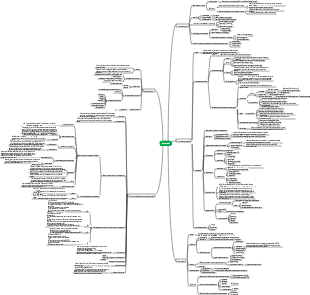
immune system
immune organs and tissues
central immune organ
Bone marrow: the primary site of antibody production.
Thymus: The place where T lymphocytes differentiate, develop, and mature.
peripheral immune organs
Lymph nodes
spleen
Mucosa-associated lymphoid tissue, skin-associated lymphoid tissue
Immune Cells
innate immune cells
Monocyte/macrophage system
Function: Phagocytosis, antigen presentation, mediating inflammatory response, immune regulation
Dendritic Cells
NK cells: spontaneously kill target cells without antigen sensitization
Function: anti-infection, anti-virus, anti-tumor effect; immunomodulatory effect
adaptive immune cells
T lymphocytes
Differentiation and development: produced by bone marrow and developed by thymus. Three stages, two choices.
Characteristic properties: MHC-restricted, able to recognize foreign antigens, and tolerant to self-antigens.
membrane cells on the surface of T cells
TCR-CD3 complex: TCR can recognize the complex of MHC molecules and antigen molecules on the cell membrane. The CD3 molecule does not participate in antigen recognition, but has the function of stabilizing the TCR structure and transmitting activation signals.
CD4, CD8 molecules: co-receptors or co-receptors of TCR.
Costimulatory molecules: CD28, CD2, CD154, CD278
B7(APC)CD28 is the second signal for T cells. CD40L (T cell) CD40 is an activation signal for B cells.
negative regulatory molecule
CD152: The ligand is B7, which competes with CD28 for binding. Prevent excessive activation of T cells.
PD-1: The ligands are PD-L1 and PD-L2, which transmit inhibitory signals after binding.
T cell subsets
helper T cells
Th1: Mainly involved in cellular immunity Th2, Th17, Tfh
Th2: Mainly assists humoral immunity and assists B cells to produce antibodies.
Th17: Participates in innate immune response and inflammatory response, leading to inflammatory damage and autoimmune diseases
Tfh: Helper B cells function and can promote B cell differentiation and the production of memory B cells.
Cytotoxic T cells (Tc or CTL): The phenotype is CD8 T cells.
Regulatory T cells: suppress immune response
B lymphocytes
Growth and Development: Generation, differentiation, development and maturation in bone marrow.
Membrane molecules on the surface of B cells
BCR: B cell antigen recognition receptor, without MHC restrictions.
B cell co-receptor
CD19, CD21, CD81: Helper B cell activation.
costimulatory molecule
CD80, CD86: Bind to different receptors to enhance (CD28) or inhibit (CTLA-4) T cell activation
costimulatory molecule receptors
CD40: Promotes B cell activation
negative regulatory receptor
CD22: inhibitory receptor for B cells.
B cell subsets
B1 cells: CD5 B cells, mainly involved in innate immune response.
B2 cells: CD5-B cells, mainly involved in adaptive immune response. Function: Produce antibodies, present antigens, and secrete cytokines.
Antigen presenting cells (APC)
Professional APC: expresses MHC class II molecules
Dendritic cells: have the strongest antigen-presenting ability and are the only APCs capable of activating initial T cells.
Mononuclear/macrophages: The cells with the strongest phagocytic function among the three professional APCs.
B cells: play a major role in secondary immune responses and immune responses triggered by low-concentration antigens.
Non-professional APC: does not express (inducible expression) MHC class II molecules
Activated T cells, endothelial cells, fibroblasts, epithelial and mesothelial cells
target cells
Due to infection or mutation, endogenous proteins can be processed into polypeptides and combined with their own MHC class I molecules to present to CD8 T cells.
antigen presentation
Presentation of exogenous antigens by MHC II
Presenting CD4 T cells
Presentation of endogenous antigens by MHC I
Presenting CD8 T cells
immune molecules
secretory immune molecules
Immunoglobulin Ig classification
membrane immunoglobulin
secretory immunoglobulins (antibodies)
Physiological functions: 1. Specific binding to the corresponding antigen. 2. Activation of complement, opsonophagocytosis, ADCC
Structure: Antigen in hand, complement in waist, and cells in foot.
Five types of immunoglobulins
IgG: The highest content in serum; the longest half-life; the main anti-infection antibody, which has the functions of activating complement, regulating phagocytosis, and ADCC; the only antibody that can pass the placental barrier; involved in type II and III hypersensitivity reactions.
IgM: pentamer, the largest molecular weight; the earliest antibody synthesized and secreted during ontogeny; the earliest antibody to appear in the primary immune response; the strongest complement activator; the antibody of the natural ABO blood group; involved in type II and III Hypersensitivity reactions.
IgA: local antibody, divided into serotype and secretory type. Secretory IgA is the main effector antibody of local mucosal immunity. Can be obtained from colostrum.
IgE: The least abundant antibody in serum; it can combine with mast cells and basophils to sensitize the cells. When the sensitized cells use IgE to recognize the allergen again, it induces a type I hypersensitivity reaction.
IgD: exact function unknown.
complement
characteristic
The content in the body is stable; the nature is unstable, heat-intolerant, and comes from a wide range of sources (hepatocytes and macrophages are the main cells that produce complement).
activation pathway
Classical pathway: main activator: antigen-antibody complex
The bypass pathway: is activated first because its activators are microorganisms or their components, such as bacteria and bacterial components.
MBL activation pathway: main activator: N-galactosamine residue or mannose residue on the surface of the pathogen.
Biological effects
C5b-9: bacteriolysis.
C3a, C5a, C567: chemokines, absorbed by phagocytes.
C3a, C5a, C4a: anaphylatoxin effects.
role of inflammatory mediators
C3b, C4b: opsonization, immune adhesion, clearance of immune complexes.
Cytokines
common characteristics
Diversity of local effects: autocrine, paracrine, endocrine.
Efficiency, pleiotropy and overlap, antagonism and synergy, and network nature of action
Classification
Interleukin (IL), interferon (IFN), tumor necrosis factor (TNF), colony-stimulating factor (CSF), growth factor (GF)
membrane immune molecules
TCR/BCR, MHC molecules, CD molecules, adhesion molecules