MindMap Gallery immune system
The immune body's function of identifying "self" or "non-self" and excluding "non-self" is an effective and natural defense mechanism that can help the body resist external pathogens and protect human health.
Edited at 2023-10-31 12:42:37This is a mind map about bacteria, and its main contents include: overview, morphology, types, structure, reproduction, distribution, application, and expansion. The summary is comprehensive and meticulous, suitable as review materials.

This is a mind map about plant asexual reproduction, and its main contents include: concept, spore reproduction, vegetative reproduction, tissue culture, and buds. The summary is comprehensive and meticulous, suitable as review materials.
This is a mind map about the reproductive development of animals, and its main contents include: insects, frogs, birds, sexual reproduction, and asexual reproduction. The summary is comprehensive and meticulous, suitable as review materials.
This is a mind map about bacteria, and its main contents include: overview, morphology, types, structure, reproduction, distribution, application, and expansion. The summary is comprehensive and meticulous, suitable as review materials.
This is a mind map about plant asexual reproduction, and its main contents include: concept, spore reproduction, vegetative reproduction, tissue culture, and buds. The summary is comprehensive and meticulous, suitable as review materials.
This is a mind map about the reproductive development of animals, and its main contents include: insects, frogs, birds, sexual reproduction, and asexual reproduction. The summary is comprehensive and meticulous, suitable as review materials.
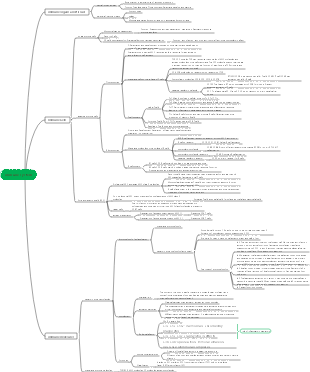
immunity
1 Introduction
Basic concepts of immunity
immunity concept
The body's function of identifying "self" or "non-self" and eliminating "non-self"
Classification
Innate immunity/natural immunity/non-specific immunity
The body's natural defense function formed during the long-term germline evolution process
Heritable, no antigen stimulation required, not specific
Adaptive immunity/acquired immunity/specific immunity
A targeted process acquired by the body after contact with antigenic substances
Not hereditary, requires antigen stimulation, strong specificity
basic skills
immune defense
Anti-infective
immune homeostasis
Maintain internal environment stability
immune surveillance
Discover and eliminate mutated cells in the body
A brief history of the development of immunology
The nascent stage of immunology
The early days of immunology
A leap forward in immunology
Immunology and its subdisciplines
Classification
basic immunology
clinical immunology
Recent Developments in Immunology
Developmental Characteristics of Immunology
breadth of multiple intersectionality
Deep multi-layeredness
high speed of development
The role of immunology in the development of veterinary medicine and biology
immunodiagnosis
Immunoprophylaxis
immunity therapy
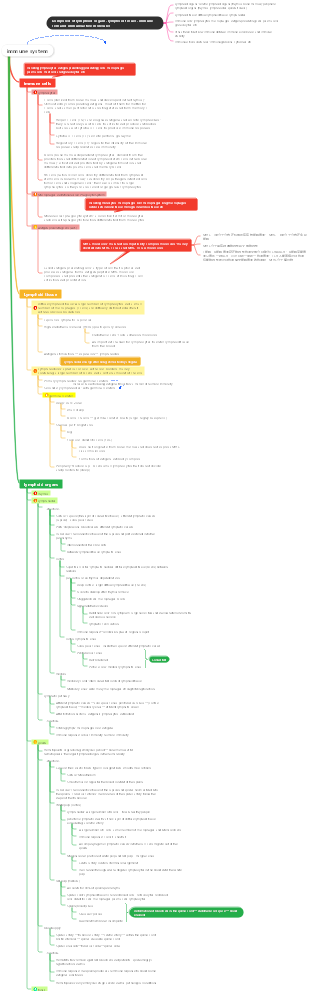
2. Immune system
concept
The system that controls and performs immune functions is called the immune system. The histological basis for the body's immune response is a complete anatomical and physiological system.
immune organs and tissues
concept
Organ that controls and is responsible for the body's immune function
central immune organ
concept
An immune organ that produces immune cells and induces their differentiation and maturation
marrow
Lymphoid stem cells develop into precursor cells of various lymphocytes
The site where all immune cells are produced
Site of immune cell differentiation and maturation (except T cells)
Thymus
The earliest lymphocytes that occur during the embryonic stage. The thymus is relatively large in newborn animals. Produces thymosin to promote T cell maturation.
Site of T cell differentiation and maturation
The location of multifunctional hematopoietic stem cells
Bursa of Fabricius
The lymphoid organ unique to birds is also called the supracoelal bursa. The size of chicks is largest when they are 3-4 months old, and gradually degenerates and shrinks after sexual maturity. Produce cystokinin, which promotes B cell maturation.
Has the function of a peripheral immune organ
Peripheral immune organs (secondary immune organs)
A site where immunocompetent cells colonize, proliferate, and respond to antigen stimulation.
Lymph nodes
structure
cortical area
Superficial cortical area
Place where B cells colonize, lots of B Cells aggregate into lymphoid follicles.
deep cortical area
T cell settlement site
medullary region
B cells, plasma cells, some T cells
lymph nodes (lymph follicles)
Contains a large number of B cells, a small amount of T cells and macrophages
Immune Function
Filter and remove antigenic foreign matter in lymph fluid
Place where T and B lymphocytes reside and proliferate
The place where lymphocytes receive antigen stimulation and produce specific immune responses.
Participate in lymphocyte recirculation
spleen
Immune Function
Filter and remove antigenic foreign matter in lymph fluid
Place where T and B lymphocytes reside and proliferate
The place where lymphocytes receive antigen stimulation and produce specific immune responses.
Synthesis of certain biologically active substances, such as secretory complement and interferon
mucosa-associated lymphoid tissue
digestive tract submucosal lymphoid tissue
Lymphoid tissue under respiratory tract mucosa
Breast glands, lacrimal glands, salivary glands
Harder's gland
Glands in the eye sockets of birds. Local immunity and regulation of humoral immunity, and can also secrete tears to play a non-specific protective role.
immune cell IC
Cells involved in or related to immune response
Classification
immunocompetent cells ICC
It has specific antigen receptors, which can activate, proliferate and differentiate after being stimulated by antigens, and produce specific immune responses.
Antigen presenting cells APC
Able to capture and process antigens and present them to T lymphocytes
Other cells involved in immunity
Membrane surface molecules of immune cells
differentiation antigen CD
Membrane molecules that exist on the surface of immune cells and are related to the differentiation and development of immune cells.
adhesion molecules AMs
Membrane molecules that mediate contact and binding between cells or between cells and matrix
membrane receptor
T lymphocytes
Cellular immunity, immune regulation
main receptor
T cell antigen receptor TCR
E receptor
subpopulation
Cytotoxic T cells
Helper T cells
Regulatory/inhibitory T cells
memory T cells
B lymphocytes
subpopulation
B1-T cell independence only produces IgM, does not show re-response, and easily forms tolerance.
B2-T cell dependent can produce IgM and IgG
surface receptors
Antigen receptor BCR
complement C3b receptor
Receptor FcR
mitogen receptor
Cytokine receptor
Epstein-Barr virus receptor
K cells and NK cells
K cells: Killer cells, developed directly from bone marrow stem cells. There are IgGFC receptors.
ADCC: Antibody-dependent cell-mediated cytotoxicity. There is FcrR on the surface of the K cell membrane, which can contact target cells bound to IgG-type antibodies and kill target cells. The targets of killing are antigens larger than microorganisms.
NK cells: natural killer cells. It can kill cells without relying on antigens or antibodies. Mainly tumor cells and virus-infected cells, which have ADCC effects. It can also directly kill target cells, directly contact with target cells, and release perforin and granzyme.
accessory cells AC
Mononuclear-macrophages
Monocytes enter the tissue and become macrophages
effect
Phagocytosis
Antigen presentation
Synthesize and secrete various active factors
dendritic cellsDC
B cells
Humoral immunity, antigen presentation
other immune cells
neutrophils
eosinophils
basophils
platelets
red blood cells
immune related molecules
Antibody
complement
Cytokines
3. Antigen
concept
Any substance that can stimulate the body to produce antibodies and sensitized lymphocytes and react with them is called antigen Ag.
Antigenicity
Immunogenicity
Characteristics that can stimulate the body's immune response
reactogenicity
The ability to specifically bind to antibodies or effector T lymphocytes.
Determining conditions
Physicochemical properties of antigens
Substance type
molecular size
Substance molecules with good immunogenicity are generally above 10,000, those with molecular weights less than 5,000 are less immunogenic, and those with molecular weights below 1,000 are haptens.
chemical components
Epitope accessibility
Physical properties
Antigens interact with the body
Foreign body property
Ways of entry into the body
body genetic factors
specificity
Molecular structural basis for determining antigen specificity
Antigen specificity
Structural basis for specificity
Antigenic determinant (epitope)
cross antigen
Haptens and carriers
complex hapten
Non-immunogenic, reactogenic
simple hapten
Non-immunogenic and reactogenic, can prevent antigen-antibody reaction
hapten-carrier phenomenon
Antigen type
Dependence on T cells when inducing antibodies based on antigen
Thymus-dependent antigen TD-Ag
Thymus-independent antigen TI-Ag
According to the biological relationship
xenoantigen
autoantigen
alloantigen
ABO blood type
heterophile antigen
microbial antigens
bacteria
Virus
Classification based on the properties of antigenic substances
natural antigen
artificial antigen
4•Antibodies and immunoglobulins
AntibodyAb
After the animal body is stimulated by antigenic substances, B lymphocytes are transformed into plasma cells to produce immunoglobulins that can specifically bind to the corresponding antigen.
Immunoglobulin Ig
A type of globulin with a chemical structure similar to that of antibodies that exists in the blood (serum), tissue fluid and other exocrine fluids of humans and animals.
Basic structure and function of immunoglobulins
The structure of the immunoglobulin molecule
single molecule structure
It is a "Y" shaped molecule composed of four peptide chains, two identical heavy chains and two identical light chains.
heavy chain and light chain
The heavy chain consists of 420-446 amino acid residues and has a molecular weight of 50-75kDa. According to the different heavy chains, immunoglobulins can be divided into 5 categories: IgG, IgM, IgA, IgD, and IgE. Each type of Ig can also be divided into subcategories based on the composition of the amino acid residues in its hinge region and the number and position of disulfide bonds.
Light chain L
Each monomeric Ig molecule has only one light chain
Heavy chainH
Also called L chain, it consists of 210-230 amino acid residues and has a molecular weight of about 25kDa. The light chain is divided into two types: κ and λ.
variable and constant regions
Variable region V
1/2 of the amino terminus (N terminus) of the Ig light chain and 1/4 (λ, α, δ) or 1/5 (μ, ε) peptides of the N terminus of the heavy chain. Their amino acid types and sequences are variable, so This area is called the variable area (V area).
constant region C
The peptide segment of the carboxyl terminal (C-terminal) 1/2 of the light chain and the C-terminal 3/4 or 4/5 of the heavy chain has a relatively constant amino acid composition and arrangement and is called a constant region.
Hypervariable region and skeleton region
Hypervariable region HV
The amino acid residues at certain specific positions in the V region are more variable and exhibit great variability due to different antibody specificities, so these positions are called hypervariable regions. It is the site where antibodies specifically bind to antigens. The hypervariable region is also called the complementary determining region.
skeleton area FR
Backbone region: The amino acid composition and sequence of the region other than the CDR are relatively difficult to change and are called the backbone region, FR. VH and VL each have 4 FRs.
antigen binding site
hinge area
Hinge region: There are 10-60 amino acids between CH1 and CH2, rich in proline and disulfide bonds, difficult to form α-helices, and very sensitive to protease treatment. Open and close freely and can be expanded to 180 degrees.
Suitable for binding to antigen-binding sites and antigenic determinants at different distances
Exposing the complement binding site creates conditions for complement activation.
Ribbon
The polypeptide chain molecules of immunoglobulins can fold to form several ring-shaped globular structures connected by intra-chain disulfide bonds. These globular structures are called functional domains of immunoglobulins.
J chain and secretory patch
J chain is also called the connecting chain: it refers to a short stretch of cysteine-rich polypeptide that connects two immunoglobulin monomer molecules. Unique to individual immunoglobulins.
Hydrolytic fragments and biological activity
papain
Function: Fab—retains the function of specifically binding to antigen, but unit price Fc—retains the antigenicity of the heavy chain and the corresponding functional region biological activity
Pepsin
Function: F(ab’)2—has the function of specifically binding to antigen and is bivalent. pFc’—small molecule polypeptide fragment without any biological activity
Main characteristics and functions of various types of immunoglobulins
IgG
1. IgG: (monomeric) (1) Divided into 4 subcategories: IgG1, IgG2, IgG3, and IgG4 (2) The highest serum content (75%) and the smallest molecular weight (3) It begins to be synthesized in 3 months after birth and has a long half-life of about 21 days. (4) The only Ig that passes through the placenta (5) Main components of immunoglobulin (6) Anti-infection antibodies, involved in autoimmunity and hypersensitivity reactions
IgM
2. IgM: (pentamer or monomer) Pentameric IgM: (1) It has the largest molecular weight, exists in the blood stream, and resists sepsis. (2) The earliest synthesis and short half-life, used for early diagnosis and prenatal diagnosis (3) It has powerful conditioning, complement activation and bactericidal effects (4) Blood type antibodies are mainly IgM (5) Participate in autoimmunity and hypersensitivity reactions Monomeric IgM: SmIgM is the earliest important surface marker of B cells.
IgA
Serotype IgA: monomer, present in serum, weak immune effect Secretory IgA: Disomy, Trisomy and Polysomy (1) Exist in breast milk, saliva and exocrine fluid (2) Local immunity, activation of complement (alternative pathway), ADCC
IgD
(1) Low serum content (1%) (2) As a differentiation receptor for B cells (3) Prevent the occurrence of immune tolerance 5. IgE: (1) The normal content is extremely low (0.002%) (2) Two types of Fc receptors—high-affinity receptors: related to type I hypersensitivity reactions (3) Related to anti-parasitic infection
Antibody function
Specific binding to antigens: such as neutralizing toxins and viruses; Activate complement: lyse target cells; lyse Prophagocytosis: clearing antigens Binding to tissue cells: allergic reaction; ADCC; opsonization Selective transmission: IgG can pass through the blood-fetal barrier under the action of Fc, and IgA can enter milk or tears through Fc.
Antigenicity of immunoglobulins
Isotype
allotype
unique type
Immunoglobulin diversity formation
Monoclonal antibodies
Concept: Monoclonal Antibody (McAb) is an antibody secreted by a single B lymphocyte clone.
Preparation of antibodies
1. Types of artificially prepared antibodies 1. Polyclonal antibodies: Traditional immunization methods are used to enter the antigenic substances into the animal's body through different ways. After several immunizations, the animal's blood is collected and the serum is separated. The antiserum thus obtained is a polyclonal antibody.
5.Cytokine CK
concept
A type of highly active multifunctional protein peptide molecules synthesized and secreted by cells
It has the functions of mediating and regulating immune response and inflammatory response, stimulating hematopoietic function, and participating in tissue repair.
biological activity of cytokines
Antibacterial effect: Promote B cell, Th cell differentiation, etc.
Antiviral effect: IFN
Mediates and modulates specific immune responses
Promote the formation of blood vessels
Stimulate hematopoiesis
Mode of action
autocrine
Paracrine
Common properties of cytokines
Low molecular weight proteins and glycoproteins
multi-source
biological functional diversity
Pleiotropy
overlap
Synergy
antagonistic
biological vitality efficiency
synthetic secretory rapidity
Biological duality
Types of cytokines
Interleukin IL