MindMap Gallery medical immune antigen
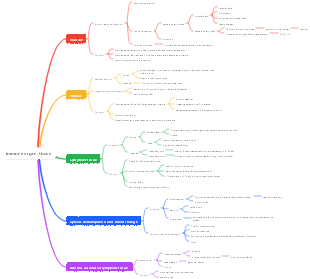
This is a mind map about medical immune antigens, which mainly includes antigen properties, molecular structure basis, factors affecting antigen immunogenicity, antigen types, etc.
Edited at 2024-03-16 19:38:24This is a mind map about bacteria, and its main contents include: overview, morphology, types, structure, reproduction, distribution, application, and expansion. The summary is comprehensive and meticulous, suitable as review materials.

This is a mind map about plant asexual reproduction, and its main contents include: concept, spore reproduction, vegetative reproduction, tissue culture, and buds. The summary is comprehensive and meticulous, suitable as review materials.
This is a mind map about the reproductive development of animals, and its main contents include: insects, frogs, birds, sexual reproduction, and asexual reproduction. The summary is comprehensive and meticulous, suitable as review materials.
This is a mind map about bacteria, and its main contents include: overview, morphology, types, structure, reproduction, distribution, application, and expansion. The summary is comprehensive and meticulous, suitable as review materials.
This is a mind map about plant asexual reproduction, and its main contents include: concept, spore reproduction, vegetative reproduction, tissue culture, and buds. The summary is comprehensive and meticulous, suitable as review materials.
This is a mind map about the reproductive development of animals, and its main contents include: insects, frogs, birds, sexual reproduction, and asexual reproduction. The summary is comprehensive and meticulous, suitable as review materials.
3. Antigen
Antigenic properties, molecular structure basis
Two basic characteristics
Immunogenicity, antigen is recognized and bound
activate T cells b cells
Differentiation into effector cells and effector products
immunoreactivity
Specific binding to utility substances
exert immunity
adaptive immune antigen specificity
Originality specificity
Induce immune response in corresponding lymphocytes
Reactivity specificity
Lymphocyte values bound to specific antigens
Antigenic epitope. antigenic determinant
Special chemical groups that determine the specificity of immune responses
5 to 15 amino acid residues, 5 to 7 polysaccharide or nucleotide residues
An antigen molecule contains multiple epitopes
A hapten is equal to an independent epitope, a binding valence
Classification
Spatial structure
Linear
continuous arrangement
Conformation
Discontinuous spaces are close to each other
cell recognition epitope
T cells: Apc degrades linear epitopes for TCR recognition
Requires the participation of mhc molecules
B cells, directly recognize conformational epitopes and linear epitopes for bcr recognition
hapten-carrier effect
Hapten plus macromolecular carrier is a complete antigen
Factors affecting antigen immunogenicity
Anti-principle properties and structural properties
Foreign body property
alien matter
The farther away the heterogeneous lineage is, the stronger the origin is.
allogeneic blood group antigens
Self-material: sperm, brain tissue
own material
exposed during embryonic period
Physical and chemical
Chemical properties, proteins are larger than polysaccharides, lipopolysaccharides are larger than nucleic acids, histones
The larger the molecular weight, the more epitopes and the more difficult it is to destroy
The more complex the molecular structure, the stronger the source
Conformational epitope accessibility
Physical properties, aggregated state is larger than granular antigen, larger than soluble protein
How antigens enter the body
dose
Moderate
Immune response is appropriately spaced
too high too low
Immune tolerance
way
Subcutaneous is larger than muscle, larger than abdominal cavity, larger than vein, larger than oral
Adjuvant
Significantly alter response intensity and type
Antigen type
According to whether THC is required to participate in inducing antibodies
Thymus-dependent, TD-Ag
humoral immune cell immunity
multiple epitopes
B cells, (T cells required)
There are mhc restrictions
activate b2 cells
IgM IgG IgA
Have immune memory
Thymus-independent region, TI-Ag
Humoral immunity
single epitope
repeat b cells
activate b1 cells
IgM
No immune memory
According to the genetic relationship between the antigen and the body
Heterophilia
Identical antigens of different species
xenoantigen
horse serum antitoxin
allotype
Different individuals of the same species
blood group antigens
autoantigen
Caused by surgery or trauma
Sympathetic ophthalmia
Drug physical and chemical changes in its own composition
idiotype antigen
According to the source of intracellular antigens in APC
endogenous
Synthesis of neoantigens within APC
exogenous
bacteria fungi
non-specific immune stimulants
superantigen
No strict antigen specificity
Directly activate large numbers of T cells
not restricted by mhc
Only very low concentrations are required
Adjuvant
Self-non-immunogenic and does not elicit an immune response
Injected into the body beforehand or at the same time as the antigen
nonspecific enhanced response
mitogen
Binds to receptors to promote lymphoblast transformation and mitosis