MindMap Gallery Histology and Embryology Immune System
This mind map focuses on the immune system and covers its functions, components, and other contents. Help you become familiar with the key points of knowledge and strengthen memory. Students in need can bookmark it.
Edited at 2025-03-09 23:48:22Rumi: 10 dimensions of spiritual awakening. When you stop looking for yourself, you will find the entire universe because what you are looking for is also looking for you. Anything you do persevere every day can open a door to the depths of your spirit. In silence, I slipped into the secret realm, and I enjoyed everything to observe the magic around me, and didn't make any noise. Why do you like to crawl when you are born with wings? The soul has its own ears and can hear things that the mind cannot understand. Seek inward for the answer to everything, everything in the universe is in you. Lovers do not end up meeting somewhere, and there is no parting in this world. A wound is where light enters your heart.
Chronic heart failure is not just a problem of the speed of heart rate! It is caused by the decrease in myocardial contraction and diastolic function, which leads to insufficient cardiac output, which in turn causes congestion in the pulmonary circulation and congestion in the systemic circulation. From causes, inducement to compensation mechanisms, the pathophysiological processes of heart failure are complex and diverse. By controlling edema, reducing the heart's front and afterload, improving cardiac comfort function, and preventing and treating basic causes, we can effectively respond to this challenge. Only by understanding the mechanisms and clinical manifestations of heart failure and mastering prevention and treatment strategies can we better protect heart health.
Ischemia-reperfusion injury is a phenomenon that cellular function and metabolic disorders and structural damage will worsen after organs or tissues restore blood supply. Its main mechanisms include increased free radical generation, calcium overload, and the role of microvascular and leukocytes. The heart and brain are common damaged organs, manifested as changes in myocardial metabolism and ultrastructural changes, decreased cardiac function, etc. Prevention and control measures include removing free radicals, reducing calcium overload, improving metabolism and controlling reperfusion conditions, such as low sodium, low temperature, low pressure, etc. Understanding these mechanisms can help develop effective treatment options and alleviate ischemic injury.
Rumi: 10 dimensions of spiritual awakening. When you stop looking for yourself, you will find the entire universe because what you are looking for is also looking for you. Anything you do persevere every day can open a door to the depths of your spirit. In silence, I slipped into the secret realm, and I enjoyed everything to observe the magic around me, and didn't make any noise. Why do you like to crawl when you are born with wings? The soul has its own ears and can hear things that the mind cannot understand. Seek inward for the answer to everything, everything in the universe is in you. Lovers do not end up meeting somewhere, and there is no parting in this world. A wound is where light enters your heart.
Chronic heart failure is not just a problem of the speed of heart rate! It is caused by the decrease in myocardial contraction and diastolic function, which leads to insufficient cardiac output, which in turn causes congestion in the pulmonary circulation and congestion in the systemic circulation. From causes, inducement to compensation mechanisms, the pathophysiological processes of heart failure are complex and diverse. By controlling edema, reducing the heart's front and afterload, improving cardiac comfort function, and preventing and treating basic causes, we can effectively respond to this challenge. Only by understanding the mechanisms and clinical manifestations of heart failure and mastering prevention and treatment strategies can we better protect heart health.
Ischemia-reperfusion injury is a phenomenon that cellular function and metabolic disorders and structural damage will worsen after organs or tissues restore blood supply. Its main mechanisms include increased free radical generation, calcium overload, and the role of microvascular and leukocytes. The heart and brain are common damaged organs, manifested as changes in myocardial metabolism and ultrastructural changes, decreased cardiac function, etc. Prevention and control measures include removing free radicals, reducing calcium overload, improving metabolism and controlling reperfusion conditions, such as low sodium, low temperature, low pressure, etc. Understanding these mechanisms can help develop effective treatment options and alleviate ischemic injury.
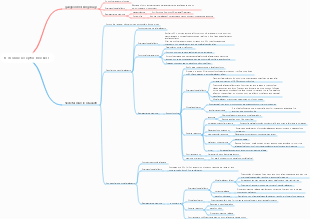
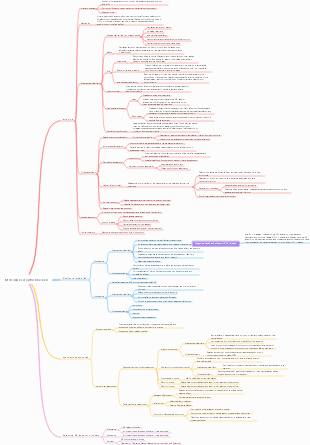
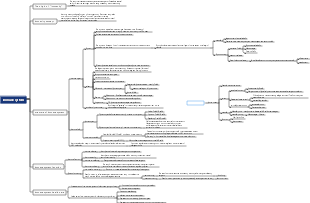
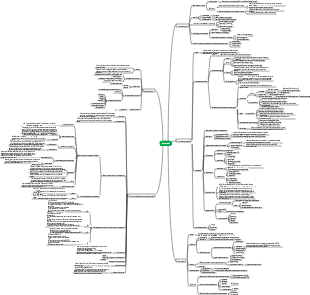
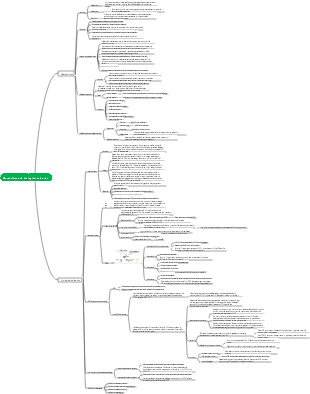
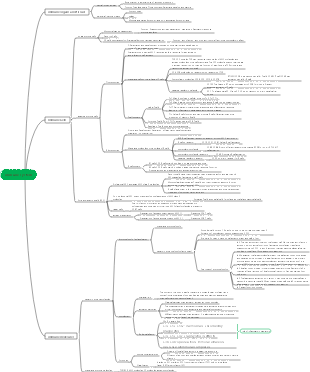
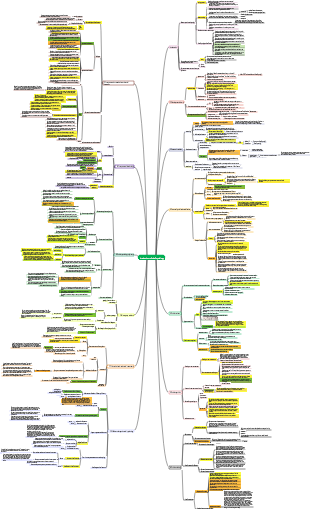
Immune system
Three major functions
Immune Defense
Identify and remove foreign pathogenic microorganisms
Immune surveillance
Identify and remove mutations in the body and virus-infected cells
Immune stability
Identify and remove aging and dead cells and immune complexes in the body to maintain internal environmental stability
Work Basics
Major tissue soluble complexes (MHC molecules) on the cell surface
Specific antigen receptors on the surface of T and B lymphocytes
The main immune cells
Lymphocytes
T
Maintaining a resting state before contacting specific antigens is called initial T cells. Most of the mature T cells differentiate into effector T cells, and a small number of them differentiate into memory T cells.
Subgroup
Helper T cells/Th cells
Sub-theme
Cytotoxic T cells/Tc cells
Have direct, continuous, specific killing functions
Release perforin and granular enzymes
Regulatory T cells/Treg cells
B
Subgroup
B-1 cells
B-2 cells
NK
Macrophages and mononuclear phagocytosis systems
Macrophages
Terminal cells formed by blood monocytes bleed into connective tissue
Mononuclear phagocytic system
Macrophages Osteoclasts Microglia Kupfer cells Dust cells
Also the main antigen presenting cell
Antigen presenting cells
Immune cells that can capture and process antigens, form antigen peptide-MHC molecular complexes and present antigens to T cells
Dendritic cells Langerhans cells Veil cells Interleaved cells Blood DCs
Lymphocyte recirculation
Lymphocytes in the surrounding lymphoid organs/tissue enter the blood flow through the lymphatic vessels, circulate throughout the body, and then return to the lymphoid organs/tissue through the high endothelial veins of the Mimph lymphoid tissue.
It is conducive to identifying antigens and promoting assistance between immune cells
Lymphatic tissue
definition
Immune response place where reticular tissue is used as a scaffold, mesh is filled with lymphocytes and immune cells
Diffusion of lymphoid tissue
Contains high endothelial microveins (HEV, i.e. posterior capillary microveins), endothelial cells are rod-shaped
It is an important channel for lymphocytes to enter lymphoid tissue from the blood
Lymph nodes (lymph follicular)
Hair Growth Center
Definition: Lymph nodules are enlarged after being stimulated by antigen. If there is no structure, it is called primary lymph nodes, and if there is some, it is secondary lymph nodes.
Deep → Dark Area
After initial B cells or memory B cells recognize the antigen, they divide and proliferate, becoming large, naive, and strong basophilic B cells, closely clustering at the end of the lymph nodes.
B. Th cells
Hair germinal center blast (large and naive)
Asahi → Ming District
B. In addition to Th cells, there are follicular dendritic cells (not antigen presenting cells) and macrophages
Small germinal center cells
B cells that do not undergo division and proliferate to the outside and form small nodule caps
Lymph organs
Central lymphoid organs
marrow
Thyroid glands
Divided into the left and right lobes, there is a connective tissue mask on the surface, and the mask extends into the thymus to form a lobular gap, separating the parenchyma into the thymus lobes
Thymus is old in childhood and begins to degenerate after puberty. By the age of age, most of the parenchyma is replaced by adipose tissue. The cortex can completely disappear and the medulla is retained for life.
Thymus stromal cells
A unique microenvironment that forms T cell development
Including thymic epithelial cells, thymic dendritic cells, macrophages, etc.
composition
Cortical
Thymocytes dense, dark coloring
Thymic epithelial cells are scaffolds, with a large number of thymic cells and a small number of stromal cells in the gap
Thymic epithelial cells
Desmosomal connection between cells
The surface contains a large number of MHC molecules
Can secrete thymosin and thymusprotinin
Feeding cells
Cytoplasm rich, epithelial cells surrounding thymocytes
Thymus cells
T cells at different developmental stages
Positive selection
Occurs in the outer layer of the cortex, confers T cells with MHC molecules restrictive recognition ability
Negative selection
T cells that react with their own antigens occur in the deep cortex and medulla
Only about 5% of thymocytes develop and mature and become initial T cells
Medosis
More thymic epithelial cells are lightly colored, and the cells are connected by desmosomes. They can secrete thymosin and form thymus bodies.
Thymus body
Characteristic structure of thymus medulla
It is composed of concentric circles of thymic epithelial cells, the epithelial nucleus near the center of the body degenerates, and the cytoplasm contains more keratin
Blood-thymus barrier
Structural composition
Continuous capillaries with tight connections between endothelial cells
The basement membrane around endothelial cells
Perivascular space contains macrophages
Epithelial base membrane
Continuous thymic epithelial cells (protrusions)
Function
Maintain the stability of the internal thymus environment and ensure the normal development of thymus cells
Surrounding lymphoid organs
Spleen (maximum lymphatic organ)
structure
Cover and trabecular
The membrane is thicker, and the connective tissue extends into the spleen to form a trabecular structure, forming a thick stent of the spleen.
White marrow
Periartery lymphatic sheath
Thick layer of diffuse lymphatic tissue around the central artery is composed of a large number of T cells, a small number of macrophages, etc. No high endothelial veins
The paracortical area equivalent to the lymph nodes
Spleen body
Large number of B cells
Edge Zone
Red-white pulp junction (more macrophages and some B cells)
The end of the central artery branch is enlarged in this area → marginal sinus
The passage of antigens and lymphocytes in the blood into the white pulp
Red pulp (80%)
Spleen cord
Irregular cords composed of lymphoid tissue rich in blood cells
Splenic sinus sinus: blood filtering
Function
Blood filtering immune response Blood production
Lymph nodes
structure
Cover
Extend into the substance to form a gusset
The trabecular tissue and lymphatic sinus
There are injected lymphatic vessels passing through
substance
Cortical
Superficial cortical area
B cell region (dispersed lymphoid tissue between lymph nodes and subdivisions)
Paracortical area
Th cells (diffusing lymphoid tissue) Thymus-dependent areas
High endothelial vein (an important part of lymphocyte recirculation in lymph nodes)
Cortical lymphoid sinus
Minato
Single layer of flat endothelial cells, with matrix outside the endothelium and a small amount of reticular fibers
Sinus cavity
Supported by stellate endothelial cells, with macrophages attached to endothelial cells
include
Trabecular peri-dragon
Subcapsular sinus
Function
Filter lymph fluid, lymphatic flow channel
Medosis
Myeloid
Cycloid lymphoid tissue (with high endothelial veins) T, B, macrophages and a large number of plasma cells
Medullary sinus
Strong filtering function
Function
Filter lymph
Immune response
Cellular immunity and humoral immunity occur simultaneously