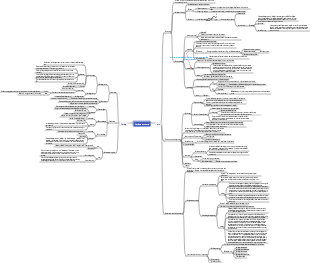
MindMap Gallery Chapter 8-M Choline Receptor Blocking Drugs
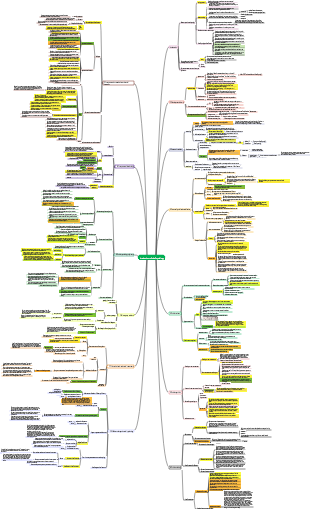
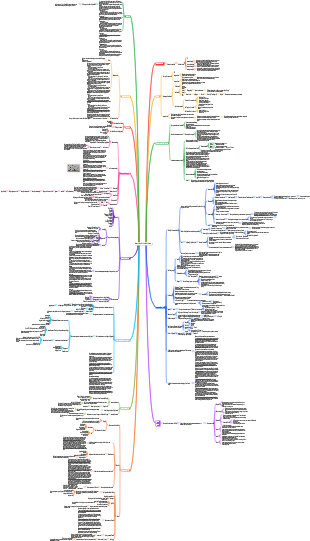
This chapter focuses on the introduction of M-receptor blocking drugs represented by atropine, focusing on mastering the drug's pharmacological effects, clinical applications, and adverse reactions, and using this as a baseline to learn to identify other M-receptor blocking drugs.
Edited at 2024-03-07 21:29:26This is a mind map about bacteria, and its main contents include: overview, morphology, types, structure, reproduction, distribution, application, and expansion. The summary is comprehensive and meticulous, suitable as review materials.

This is a mind map about plant asexual reproduction, and its main contents include: concept, spore reproduction, vegetative reproduction, tissue culture, and buds. The summary is comprehensive and meticulous, suitable as review materials.
This is a mind map about the reproductive development of animals, and its main contents include: insects, frogs, birds, sexual reproduction, and asexual reproduction. The summary is comprehensive and meticulous, suitable as review materials.
This is a mind map about bacteria, and its main contents include: overview, morphology, types, structure, reproduction, distribution, application, and expansion. The summary is comprehensive and meticulous, suitable as review materials.
This is a mind map about plant asexual reproduction, and its main contents include: concept, spore reproduction, vegetative reproduction, tissue culture, and buds. The summary is comprehensive and meticulous, suitable as review materials.
This is a mind map about the reproductive development of animals, and its main contents include: insects, frogs, birds, sexual reproduction, and asexual reproduction. The summary is comprehensive and meticulous, suitable as review materials.
M choline receptor blockers
atropine
internal processes
Absorption: Intestinal absorption, through the eyelash membrane, poor skin absorption
Distribution: Systemic tissues, can enter the central nervous system
Excretion: urine
Mechanism
It is a competitive M receptor blocking drug with high affinity and selectivity for M receptors, but generally does not stimulate M receptors. It blocks the binding of ACh or cholinergic receptor agonists to receptors and antagonizes M receptors. body stimulating effect
Pharmacological effects
Appears sequentially with increasing dose
Decreased secretion of glands
increased heart rate
accommodative paralysis
Gastrointestinal and bladder smooth muscle inhibition
Central symptoms occur after large doses
glands
Decreased secretion, manifested by dry mouth, dry skin, and increased body temperature (salivary glands, sweat glands > lacrimal glands, respiratory glands > gastric juice)
Eye
dilate pupils
Blocks the pupillary sphincter M receptor, and the pupillary sphincter relaxes, allowing the pupillary dilator muscle (α receptor) innervated by adrenergic nerves to dominate, and the pupil dilates.
Raising intraocular pressure
The pupil dilates, the iris retreats to the periphery, the anterior chamber angle gap becomes smaller, hindering the return of aqueous humor into the scleral sinus, and the intraocular pressure increases
accommodative paralysis
Block the M receptor of the ciliary muscle, the ciliary muscle retreats to the surroundings, the suspensory ligament becomes tense, and the curvature of the lens decreases, resulting in unclear vision of near objects and clear vision of distant objects.
smooth muscle
It has a more obvious effect on visceral smooth muscles with excessive activity or spasmodic contraction, can relieve smooth muscle spasm and relieve gastrointestinal colic.
Cardiovascular System
heart
Therapeutic doses slow heart rate
A larger dose blocks the sinoatrial node M2 receptor, relieves the inhibitory effect of the vagus nerve on the heart, and accelerates the heart rate.
Blood vessel
Therapeutic doses of atropine have no significant effect on blood vessels and blood pressure, but can completely antagonize the peripheral vasodilation and decrease in blood pressure caused by choline ester drugs.
Large doses of atropine can dilate blood vessels in the skin, causing the skin to become flushed and warm.
Central Nervous System
Larger doses can excite the medulla oblongata and brain. Toxic doses can cause irritability, hallucinations, disorientation, ataxia, convulsions, convulsions, increased doses can cause coma and respiratory paralysis, and finally death from circulatory and respiratory failure.
Clinical application
Relieve smooth muscle spasm
For various visceral colic
Treatment of gastrointestinal colic and bladder irritation, enuresis in children
Used with opioid analgesics to treat biliary colic and renal colic
Inhibit glandular secretion
Administer before general anesthesia to reduce glandular secretion
Can also be used to treat night sweats, heavy metal poisoning, and Parkinson's disease sialorrhea.
Ophthalmic applications
iridocyclitis
Eye drops relax the iris pupillary sphincter and ciliary muscles, take adequate rest, and subside inflammation
Use alternately with miotic drugs to prevent iris and lens adhesion
Optometry, fundus examination
Adjust paralysis and fix lens
Dilated pupils, fundus examination
bradyatrial arrhythmias
Release the inhibitory effect of the vagus nerve on the heart and restore the heart rate
Treat sinus bradycardia, sinoatrial block, atrioventricular block and other slow arrhythmias
Treatment of sinus or atrioventricular bradycardia associated with early myocardial infarction
Pay attention to dosage
Inadequate aggravation of bradycardia
Excessive heart rate increases, increases myocardial oxygen consumption, and aggravates myocardial infarction.
Poor efficacy against ventricular arrhythmias
Anti-septic shock
Relieve vasospasm and improve microcirculation disorders
Disabled for patients with high fever and rapid heart rate
Rescue organophosphate poisoning
Adverse reactions
Dry mouth, blurred vision, increased heart rate, dilated pupils, flushed skin
poisoning rescue
Gastric lavage, catharsis
Slow intravenous injection of physostigmine
Central excitement using diazepam
Phenothiazines are M receptor blockers (banned)
Contraindications
Glaucoma, prostatic hypertrophy, pyloric obstruction
Similar to alkaloids
Scopolamine
Pharmacological effects
Inhibits gland secretion more effectively than atropine
It dilates pupils and regulates paralysis and is weaker than atropine.
Strong effect on the central nervous system, long-lasting effect, and euphoric effect
Therapeutic doses cause central nervous system depression, leading to drowsiness, amnesia, fatigue, and lack of dreams.
Weak cardiovascular effects
Clinical application
Administration before anesthesia inhibits gland secretion and central nervous system
For the treatment of motion sickness, combined with diphenhydramine to increase the efficacy
shaking paralysis
Anisodamine
Natural anisodamine: 654; synthetic anisodamine 654-2
Pharmacological effects
Effective in relieving vascular smooth muscle spasm and microcirculation disorders
Relieve smooth muscle spasm similar to atropine
Inhibits salivary glands and dilates pupils weakly
Difficult to pass through blood-brain barrier, weak central function
Clinical application
toxic shock
Visceral smooth muscle cramps
Vertigo
angioneuropathic headache
synthetic substitutes
Synthetic mydriasis
The maintenance time of homatropine, tropicamide, cyclopentolate, and eucatropine's mydriasis effect is significantly shortened.
Eucatropine has no paralyzing effect
synthetic antispasmodics
Quaternary ammonium antispasmodics
ipratropium bromide
Pharmacological effects
Bronchiectasis, increased heart rate, inhibition of respiratory gland secretion, few central effects
Highly selective for bronchial smooth muscle M choline receptors
It has strong protection against bronchoconstriction caused by external stimuli, but poor protection against bronchoconstriction caused by allergic mediators.
Clinical application
Relieves symptoms of bronchospasm and wheezing caused by chronic obstructive pulmonary disease COPD
Propanthyl bromide (probentheline)
Synthetic antispasmodic drug, incomplete absorption after oral administration, take before meals
Pharmacological effects
Significantly inhibits gastrointestinal smooth muscle and reduces gastric juice secretion
Clinical application
Gastroduodenal ulcer, gastrointestinal spasm, urinary tract spasm as well as enuresis and vomiting of pregnancy
Hyoscyamine bromide
Mainly treats gastrointestinal diseases
Methyl bromide
Relieve gastrointestinal spasm and assist in the treatment of peptic ulcer
Methyl bromide
Relieve gastrointestinal spasm and assist in the treatment of peptic ulcer
Tertiary amine antispasmodics
Benatezin (Weifukang)
Relieves smooth muscle spasm, inhibits gastric juice secretion, and has a central sedative effect
For ulcer patients with anxiety disorders
tolterodine
Selective effect on bladder
Treating Overactive Bladder
Dicyclovirin, flavopiperate, oxybutynin
Non-specific direct relaxation of smooth muscle
Dicyclovirine: used for smooth muscle spasm, hyperperistalsis, peptic ulcer
Flavonoids and oxybutynin: have a selective effect on the bladder and treat overactive bladder
Selective M receptor blockers
Pirenzepine
M1 receptor blockers
Inhibit gastric acid and pepsin secretion, treat peptic ulcer
tirenzepine
Inhibit gastric acid and pepsin secretion, treat peptic ulcer
Solinacin
M3 choline receptor blockers
Treatment of Overactive Bladder (Bladder Smooth Muscle Highly Selective)
Negative feedback effect of ACh release
After ACh is released, it can act on the M1 receptor on the presynaptic membrane and inhibit the release of ACh. However, atropine can block the M1 receptor on the presynaptic membrane of parasympathetic postganglionic nerve fibers and weaken the negative feedback inhibitory effect of ACh release.