 Wondershare EdrawMind
MindMap Gallery Essentials of Chinese Culture
- 111
Essentials of Chinese Culture
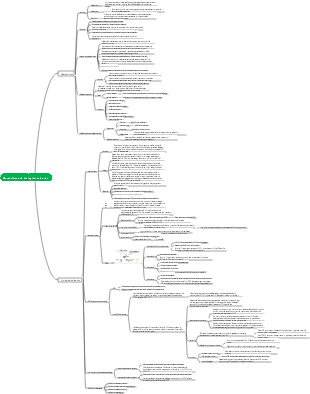
Summarizes all common test points, including customs and habits, exquisite utensils, classical literature, traditional architecture, classic book collections, imperial examination system, academic thoughts, etc.
Edited at 2024-01-15 12:21:18
- bacteria
This is a mind map about bacteria, and its main contents include: overview, morphology, types, structure, reproduction, distribution, application, and expansion. The summary is comprehensive and meticulous, suitable as review materials.
- Plant asexual reproduction
This is a mind map about plant asexual reproduction, and its main contents include: concept, spore reproduction, vegetative reproduction, tissue culture, and buds. The summary is comprehensive and meticulous, suitable as review materials.
- Reproductive development of animals
This is a mind map about the reproductive development of animals, and its main contents include: insects, frogs, birds, sexual reproduction, and asexual reproduction. The summary is comprehensive and meticulous, suitable as review materials.
Essentials of Chinese Culture
- bacteria
This is a mind map about bacteria, and its main contents include: overview, morphology, types, structure, reproduction, distribution, application, and expansion. The summary is comprehensive and meticulous, suitable as review materials.
- Plant asexual reproduction
This is a mind map about plant asexual reproduction, and its main contents include: concept, spore reproduction, vegetative reproduction, tissue culture, and buds. The summary is comprehensive and meticulous, suitable as review materials.
- Reproductive development of animals
This is a mind map about the reproductive development of animals, and its main contents include: insects, frogs, birds, sexual reproduction, and asexual reproduction. The summary is comprehensive and meticulous, suitable as review materials.
- Recommended to you
- Outline
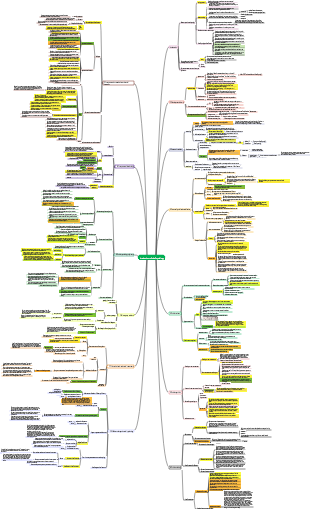


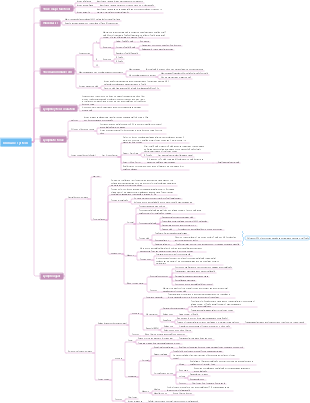
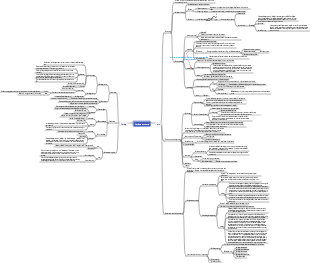
Essentials of Chinese Culture
Brief discussion
Culture and Chinese Culture
Four levels of culture
P3
material culture layer
It refers to the sum of people’s material life activities and their products, which are concrete and tangible things that can be seen and touched, such as people’s food, clothing, housing, and transportation.
institutional culture layer
Refers to the norms established by people in social practice to regulate their own behavior and mediate mutual relationships.
behavioral culture layer
It refers to the habits and customs established by people in long-term social interactions. It is a social and collective behavior, not an individual's whim.
mentality culture layer
It refers to people’s social psychology and social ideology, including people’s values, aesthetic tastes, ways of thinking and the resulting literary and artistic works. This is the core part of culture and the essence of culture.
history
The origin of Chinese culture
P33
Yangshao Culture
Best reflects the matriarchal commune culture
Widely distributed in the Yellow River Basin
Also known as painted pottery culture
Because there are many pottery unearthed from the site, most of them are painted with colorful patterns, which is called painted pottery.
Longshan Culture
Marked China's entry into a patriarchal clan society
Widely distributed in the Yellow River Basin and Yangtze River
The ceramics of Longshan Culture are exquisitely made, dark and shiny, and are called black pottery, so they are also called black pottery culture.
Sovereigns and Five Emperors
Three Emperors
Fuxi
Shennong
Yellow Emperor
Five Emperors
Shaohao
Zhuanxu
"Gaoyang Family"
grandson of yellow emperor
"The Emperor Gaoyang lived in Miao Yi, and my emperor called him Boyong." This shows that Qu Yuan took Zhuanxu as his ancestor.
Emperor Ku
Yao
Emperor Ku's son
Mingfangxun
Born in Yiqi
"Yiqi family" or "Tao Tang family"
Tang Yao
Determine the sacrifices, accompanied by music and dance
Shun
Origin of distant ancestors
"Huaxia Group" in Northwest China
Heluo Cultural District
Yellow Emperor and Yan Emperor
Emperor Zhuanxu, Yao and Shun
Originated from Shaanxi-Gansu region
Activities in the Yellow River area
Yangshao Culture and Henan Longshan Culture
The "Dongyi Group" in the East
Go to Hedai Culture
Dawenkou Culture and Shandong Longshan Culture
Shaohao
The "Miao Man Group" in the South
Jianghan Cultural District
Hemudu Culture, Liangzhu Culture
Taihao Fuxi clan
dynasty of china
The Han Dynasty and the Tang Dynasty almost determined the basic core and basic character of Chinese culture
The continuation of the life of a Chinese dynasty depends on the succession of descendants
The eldest son inheritance system originated from the patriarchal system and feudal system formed in the late Shang and early Zhou dynasties.
The so-called patriarchal system is a system that organizes and maintains social order according to the system and concubines.
The eldest son inheritance system is the core of patriarchal system and feudal system.
First name and last name
The origin and development of surnames
Surname represents maternal lineage
Clan represents clan branch
Before the Qin Dynasty, the surnames were divided into two, and then they were merged into one.
Surname distinguishes bloodline Distinction between descendants
Ancient famous families and surnames
Consciousness of county hope
County popularity means that a certain surname has lived in a certain county for a long time and is looked up to by people. It actually refers to the social influence of a certain surname.
Han Yu, a writer in the Tang Dynasty, claimed to be from Changli. This was because Han Xin at that time regarded Changli and Nanyang as his county commanders.
The surname Liu has Pengcheng as the county, the surname Chen has Yingchuan as the county, the Zhou surname has Runan as the county, the surname Zhang has Nanyang as the county, the surname Wang has Taiyuan as the county, and the surname Du has Jingzhao as the county.
Chinese names, characters and numbers
Superstition was prevalent in the Shang Dynasty and social life was very simple. People were named after their birthdays.
The Zhou Dynasty established ritual norms
There are five names
letter
Named after the circumstances of birth
righteous
Named after moral character
elephant
Named after the image of something
Fake
borrow the name of an object
Kong Li, son of Confucius
kind
The baby is named after the similarities with its father
It is stipulated not to name six kinds of things after the name of the country, officials, mountains, rivers, hidden diseases, livestock, utensils and silk.
After the Spring and Autumn Period and the Warring States Period, social rationality changed dramatically. The phenomenon of naming more reflected the demeanor of the lower class in society, naming people after the ugly and ugly.
Adding some meaningless particles between the name and the character, I Zhu Zhiwu Jiezi deduces that it will not harm Lu Buwei
In the Han Dynasty, when the country was strong, people prayed for immortality and often used names such as Anguo, Yannian, Lifespan, and Qianqiu to cure diseases.
At the end of the Western Han Dynasty, Wang Mang banned the use of compound names, and people mostly used single names.
In the Wei, Jin, Southern and Northern Dynasties, there were too many repetitions of single names, and the people became prosperous again. Influenced by the aloof ethos of scholar-bureaucrats, people like to use "Zhi" in their names. At that time, because of the popularity of Buddhism, there were many names, so taking Buddhist words was like Wang Sengbian.
relationship between names
The name has the same meaning as the character
name related to meaning
The name has the opposite meaning
The meaning of names and characters is taken from the five elements.
Using Meng Zhongshu Ji Pai as the character
Taken from ancient sayings and idioms
P73
Number
Although the origin of the number is very early, its popularity was only after the Tang and Song Dynasties, and was at its peak in the Ming and Qing Dynasties.
academic thought
The Way of Confucius and Mencius
Confucius—named Qiu, styled Zhongni, was a native of Zouyi, State of Lu in the Spring and Autumn Period.
education doctrine
Advocating "education without distinction"
Advocating “teaching students in accordance with their aptitude”
Advocates "never tire of learning and never tire of teaching"
It advocates "being so angry that you forget to eat, being happy and forgetting your worries"
Advocate "choose the good ones and follow them, and change the bad ones"
He believes that “knowing is knowing, not knowing is not knowing, this is knowing”
Asking people to "no conjecture, no necessity, no stubbornness, no self-righteousness"
"Benevolence"
"Benevolence" includes all virtues
What is "benevolence"?
"The benevolent love others" People love each other
How to "love"
"Expect yourself to others"
"If you want to be established, you can establish others; if you want to be successful, you can help others."
Give others the benefits you want
"Do unto others, do not impose on others."
Never force things you don’t want or do on your own
Be respectful wherever you live, be respectful when serving, and be loyal to others
Be loyal in words and respectful in deeds
Confucius showed equal treatment and respect for people and the pursuit of perfect moral personality
political ideology
Starting from "benevolence", a set of ethical concepts and political concerns for moral education are put forward.
"Cultivation of one's character, order of family, governance of country, peace of the world"
"Filial piety is the foundation of benevolence."
Advocating for “correction of names”
Restoring discipline according to certain standards of right and wrong
"If the name is not correct, then the words will not go smoothly. If the words are not right, the things will not be accomplished. If the things are not accomplished, the rituals and music will not flourish. If the rituals and music are not flourishing, the punishments will not be adequate. If the punishments are not adequate, the people will be at a loss."
Advocate for "trustworthiness"
Conquering a ruler requires gaining the trust of the person's name
"Politics must be upright. If you take the lead in being upright, who dares not to be upright?"
"If his body is upright, he will not do what he is told. If his body is not upright, he will not obey even though he is told."
Advocates the use of moral education to govern the country, rather than the use of force and violence
"The way is based on government, and the rules are punished, so that the people can be spared and shameless; the way is based on virtue, and the rules are governed by etiquette, and there is shame and dignity."
dross
Advocates the restoration of Zhou rites, looks down upon manual labor, and despises women
Mencius - Warring States Period, named Ke, courtesy name Ziyu
political ideology
Further develop “humanistic thinking”
"The people are the most valuable, the country is the second most important, and the king is the most important."
Emphasizing the importance of the people and highlighting their status in the country's political structure
Put forward the idea of "benevolent government"
Advocating that the country should support its people
Advocating for "good nature" and "conscience"
That is to say, people have a "heart of compassion", "a heart of shame", "a heart of resignation" and "a heart of right and wrong"
"Nourish the awe-inspiring spirit"
"Wealth cannot be lascivious, poverty cannot be moved, power cannot be subdued"
"Sacrifice one's life for righteousness"
Xunzi
Ming Kuang Zi Qing Zhao Guoren
Emphasis on "evil nature"
Human nature is evil, so we need to rely on acquired power to help people become good.
The first method is to “cultivate oneself”
The second method is to "learn from others"
Advocates strengthening the power of the monarchy, but attaches importance to the role of the people
The king is a boat; the common man is water. Water carries the boat, water overturns the boat
Put forward the materialist view of "the distinction between heaven and man"
It is believed that "the laws of heaven are always consistent, not for the survival of Yao, nor for the destruction of Jie", that is, the way of heaven cannot interfere with human affairs, and nature and human society each have their own laws of development. Therefore, the root cause of social chaos lies in people rather than heaven. Some researchers classify Xunzi as a Legalist because he advocates "rule of law", but his rule of law starts from etiquette. Putting people's rule first is still the core of Confucianism
After the Han Dynasty, Confucianism dominated
Dong Zhongshu takes Confucianism as the core and combines Yin-Yang, Five Elements, Taoism and Dharma. Compare the way of heaven to human affairs, and establish an idealist ideological system centered on "influence between heaven and man"
Lao-Zhuang thought
road
"Tao" is the highest category, used to observe and understand the objective world
"Tao" represents the original state of the universe, which existed before the formation of heaven and earth. It is the so-called "things are mixed, and the heaven and the earth are born"
"Tao" also means the origin of the world. It is believed that all things in the world come from "Tao", which is the so-called "Tao gives birth to one, gives birth to two, two gives birth to three, and three gives birth to all things."
Emphasis on "Tao follows nature" and believes that everything in the universe evolves and develops naturally It is "self-transformation by inaction", so he said, "With no desire and tranquility, the world will be determined by itself."
Simple dialectical thinking
Things themselves contain other things, and everything is a unity of opposites, positive and negative, affirmation and negation.
"Misfortune lies where blessings depend, and blessing lies where misfortune lies."
“Conquer hardness with softness”
"Guirou", "Keeping the weak"
Passively give in, govern by doing nothing, deny progress
excessive
Zhuangzi
The core of Zhuangzi is to govern by doing nothing
He also takes "Tao" as the highest category of his thoughts
The discussion is more detached and humorous
"Xiaoyaoyou" "Equality of Things"
It is believed that people should follow the way of nature and the laws of nature to eliminate the opposition between things and myself and achieve the harmony between man and nature.
Propose the ways of inner cultivation through "xinzhai" and "sitting and forgetting"
Mohist theory
Together with "Confucianism", they were called two major major schools. During the Warring States Period,
Mozi, Zhai, a native of Lu, was born a commoner
Represent more the interests and demands of lower-class workers
Universal love, non-aggression, respecting the virtuous, respecting the same, frugal burial, frugal use, non-happiness, non-fate, respecting heaven
universal love
Fraternity that treats everyone equally regardless of closeness or distance
"Promote the benefits of the world and eliminate the harms of the world"
Believes that war is most harmful to people
Therefore, we advocate "non-attack"
The ten major propositions are based on "universal love"
"Unfate" leads the people not to succumb to fate
Limit "Zuntian" and "Minggui"
Affirm the existence of heaven and ghosts to threaten the rulers
He has also made outstanding achievements in formal logic and natural sciences.
Three basic forms of thinking
"Name words said" concept judgment reasoning
The relationship between points, lines and circles
In terms of mechanics, the principle of levers, the relationship between force and motion and weight
legalism
Han Fei
"According to the name and responsibility" "Reward for trust must be punished"
The Fundamentals of Shang Yang’s “Dharma”
Shen Buhao's "technical" means
Be careful about the premise of "potential"
Classics of Han Dynasty
Dong Zhongshu "Modern Learning" Emperor Wu of the Han Dynasty
He paid attention to elucidating the "minor meanings" of the scriptures, and tried his best to find theoretical basis for the feudal "unification" of the Han Dynasty, and was established as an "official school"
At the end of the Western Han Dynasty, Wang Mang reorganized the system, accepted Liu Xin's suggestion, and established ancient classics as an official school.
Ma Rong Xu Shen Ma Rong’s disciple Zheng Xuan
No. "Zheng Xue"
Wei and Jin metaphysics
Three Mysteries: Laozi, Zhuangzi, and Zhouyi
He Yan Wang Bi
Ji Kang Ruan Ji Guo Xiang
Neo-Confucianism of Song and Ming Dynasties The Four Great Schools of Neo-Confucianism
Zhang Zai
"Establish a heart for heaven and earth, establish a destiny for the living and the people, carry on the unique knowledge of the past saints, and create peace for all generations."
Practical spirit
"Guan Xue"
Zhou Dunyi
Lian Xue
Cheng Hao Cheng Yi
"Luoxue"
Zhu Xi
"Min Xue"
Lu Jiuyuan
Inheriting the "heart" of "Er Cheng"
The human heart is the truth
"The universe is my heart, and my heart is the universe."
Pu Xue in Qing Dynasty
textual criticism
Qianlong Jiaqing
"Qianjia School"
Gu Yanwu Huang Zongxi Wang Fuzhi Yanyuan
Why can Confucianism and Taoism complement each other? What impact have these two ideas had on the Chinese people?
Reasons why Confucianism and Taoism can complement each other: 1. Complementary value orientations: Confucianism focuses on social ethics and family ethics, emphasizing interpersonal relationships and social responsibilities; Taoism focuses on personal cultivation and inner cultivation, and pursues self-liberation and freedom. The two complement each other. Confucianism emphasizes social order and responsibility, while Taoism emphasizes individual inner peace and self-cultivation. 2. Complementary attitudes towards life: Confucianism emphasizes social responsibility and interpersonal relationships, and values proper behavior between people; Taoism focuses on individual inner cultivation and detachment, and pursues peace of mind and detachment. These two different attitudes can meet people's needs for life at different levels. The influence of Confucianism and Taoism on the Chinese people: 1. The balance between social ethics and personal cultivation: Confucianism emphasizes interpersonal relationships and social responsibility, laying a stable ethical foundation for Chinese society; while Taoism emphasizes individual inner cultivation and spiritual pursuit, providing individuals with spiritual salvation and peace. . 2. Formation of the diversity of traditional Chinese culture: Confucianism and Taoism are integrated with each other to form the diversity of traditional Chinese culture. There is the influence of Confucianism, which focuses on social order and human ethics, and the influence of Taoism, which focuses on inner cultivation and free pursuit. 3. Formation of the Chinese people’s philosophy of life: The combination of Confucianism and Taoism has enabled the Chinese to form a unique philosophy of life, which not only attaches importance to social responsibilities and interpersonal relationships, but also focuses on inner cultivation and detachment, forming the Chinese people’s unique attitude towards life and Way of being in the world.
Why could Confucianism become the dominant ideology in China's feudal society?
The reason why Confucianism became the dominant ideology in China's feudal society can be analyzed from the following aspects and answered with examples: 1. Social stability and order - Confucianism emphasizes etiquette, filial piety and loyalty. These values help maintain social order and stability. In feudal society, these values were used to regulate people's behavior and maintain the authority of feudal rulers. - For example, the Confucian classics "The Book of Filial Piety" and "The Analects of Confucius" emphasize the importance of filial piety, which promotes the stability of family and social order and helps feudal rulers consolidate their dominance. 2. Support the legitimacy and authority of feudal rulers - Confucianism emphasizes the ethical order of relationships between monarch and minister, father and son, husband and wife, and emphasizes the benevolence and virtuousness of the monarch, providing the theoretical basis of legitimacy and authority for feudal rulers. - For example, Confucius emphasized that a gentleman is based on benevolence and that a monarch should govern the country with benevolence. This concept consolidated the legitimacy of the ruler and made Confucianism an ideological supporter of feudal rule. 3. Support from the education system - Confucianism emphasizes the importance of education and advocates the concepts of reading to understand etiquette, cultivating oneself, managing one's family, and governing the country to bring peace to the world. This is in line with the needs of feudal society for education. - For example, the imperial examination system in feudal society was established based on the Confucian emphasis on education. Selecting talents through the imperial examination consolidated the dominance of feudal rulers and promoted social development. To sum up, the reason why Confucianism became the dominant ideology in China's feudal society is because its values fit with the needs of feudal society, provided ideological, ethical and educational support for feudal rule, and helped maintain the integrity of feudal society. Stability and order.
Chinese character
The structure of Chinese characters - "Six Books"
Xu Shen of the Eastern Han Dynasty summarized the achievements of his predecessors and wrote "Shuowen Jiezi"
Four uses and two uses
Pictogram
Pictograms are drawn into their objects, and they are drawn according to the body, such as the sun and the moon.
It means to use curved lines to draw the shape of the object according to its outline.
For example: sun, moon, dragon, door
refer to something
Those who refer to things can be recognized by looking at them, and their meanings can be seen by looking at them. This means that they are up and down.
It means that you can know what it expresses by looking at it, but you need to observe it carefully to understand its meaning.
For example: up, down, this
Understand
Those who understand each other are analogous to He Yi, and those who see and point out actions, Wu, and Xin are also
It means to combine two or more words together and combine their meanings to create a new meaning.
For example: Wu Lv Nie
Wu: The top is Ge, and the bottom is toes, which means to hold the Ge and use force to conquer.
Nie: whisper in the ear
An: The woman is very safe in the house
Most of the idioms are verbs
phonetic
The phonetic form is named after something, and the example is used to complement each other, such as river and river.
It means that rivers are water-like things, so water is used to make the shape part, and Gong can be used as the phonetic part. The two are combined to form the phonetic character.
For example: Jianghe Songfeng
transfer
Those who transfer bets, build the same category, agree to accept each other, test, always also
Create characters of the same type with unified radicals. If the characters have the same meaning, they can annotate each other.
For example: Kao Lao, follow the trend, top the trend
Borrow
Those who borrow under the guise do not have their own words, they just follow the sound of the words and drag things out.
It means that the word does not exist in the word, but it does not use a new word, but uses a ready-made word to express it.
For example: Ling Chang
religious beliefs
Polytheism and the Three Worships
"Fengzen"
A large-scale ceremony in which the emperor came to offer sacrifices to heaven and earth
"Feng" is worshiped at the altar on the top of Mount Tai
"Zen" worships on the hill near Mount Tai, such as "Liang Fu"
Five Mountains and Four Mountains
five mountains
Dongyue Taishan
Xiyue Huashan
Nanyue Hengshan
Beiyue Hengshan
Zhongyue Songshan Mountain
Sidu
Dongdu Huaihe River
Nandu River (Yangtze River)
Xidu River (Yellow River)
Beidu Daji (Jishui)
Buddhism
Why did Buddhism develop so prominently in the Wei, Jin, Southern and Northern Dynasties?
1. Social foundation. The teachings of self-liberation and transcendent survival advocated by Buddhism are suitable for the people from the late Eastern Han Dynasty to the Wei, Jin, Southern and Northern Dynasties. At that time, the world was in chaos, all classes of society suffered endless suffering, and everyone wanted to find a kind of sustenance. and tranquility 2. Ideological basis. The transcendental thought promoted by Buddhism was consistent with the metaphysics prevalent in the society at that time, and was loved by scholar-bureaucrats. For example, the Buddhist classic "Prajna Sutra" which preaches that "all dharmas are empty" became popular. 3. Class basis. Buddhism is advocated and utilized by the ruling class. The basic ideas promoted by Buddhism are beneficial to the ruling class. For example, Buddhism requires Buddhists to practice hard in order to achieve liberation and a series of teachings on the basic spirit of karma, rebirth, and reincarnation. Not only do they not constitute a threat to society, but they also help maintain social order.
Tibetan Buddhism
Mainly based on Tantric classics introduced from India
Nyingma Sect Red Sect
Kadampa
Kagyu Sect Baijiao
Sakya Sect Red White Black Flower Cult
Gelug Sect Yellow Sect
The titles of the reincarnation system of the two major living Buddhas of the Yellow Sect, the Dalai Lama and the Panchen Lama
What is the connection between Buddhism and Chinese culture?
1. Buddhism and the history of Chinese philosophy. Buddhism belongs to idealism. Since Buddhism was introduced to China, Confucianism, Taoism, and Buddhism have absorbed and rejected each other, accelerating the development of Chinese philosophical idealism; at the same time, atheism and materialism have also been continuously developed in the struggle to criticize Buddhist philosophy. Buddhism is one of the important parts of the history of Chinese philosophy. 2. Buddhism and Chinese literature. The translation, introduction and dissemination of Buddhist classics have promoted the integration of Chinese literature and Buddhist literature. Many famous Chinese literary works contain Buddhist ideological elements. For example, the journey of Sun Wukong in "Journey to the West" incorporates Buddhist stories and ideas. At the same time, Buddhist poetry and Zen poetry also had a profound impact on Chinese literature. For example, poets Wang Wei and Du Fu of the Tang Dynasty were inspired by Buddhist poetry. 3. Buddhism and art. The introduction of Buddhism has given rise to a large number of Buddhist art works, such as Buddha statues, grottoes, murals, etc. These works not only display Buddhist teachings and stories, but also influence the development direction of traditional Chinese art. In addition, the influence of Buddhist thought is also reflected in traditional Chinese painting and calligraphy. For example, Zen paintings and calligraphy often reflect Buddhist ideas of meditation and emptiness. 4. Buddhism and Chinese language. The translation activities of Buddhist classics promote the development of Chinese and enrich the vocabulary and expressions of Chinese. At the same time, the translation of Buddhist scriptures has had a certain impact on the grammar and semantics of the Chinese language. For example, the five bodies fell to the ground, spotless, the sea of suffering has no end, and the shore is restored, etc. Promoted the development and evolution of Chinese language and characters.
Buddhist cultural relics and Buddhist sites
Four famous mountains of Buddhism
Mount Wutai - Manjushri - Great Wisdom - Lion Mount Emei—Puxian Bodhisattva—Da Xing—Xiang Jiuhua Mountain—Ksitigarbha Qisa—Great Wish— Mount Putuo——Avalokitesvara Bodhisattva——Great Compassion——
Taoism
The Origin and Basic Beliefs of Taoism
Taoism is a religion that originated in China. It was officially formed later than Buddhism, but its origins are very early. Generally speaking, there are the following aspects
primitive religion and witchcraft
Alchemy that emerged during the Spring and Autumn and Warring States periods
Yin Yang and Five Elements Theory
Huang Lao theory
Zhang Daoling pioneered Taoism
Sanqingtian
The highest gods: Yuanshi Tianzun, Daode Tianzun, Lingbao Tianzun
Three-hole Scripture
Siyu//Sifu
Haotian Golden Tower Supreme Jade Emperor
Zhongbei Ziwei Arctic Emperor
Assist the Jade Emperor in controlling the sun, moon, stars, and weather in the four seasons
Gou Chen Shang Gong Jade Emperor
Chengtian imitates the earthly emperor and earthly emperor
A goddess in charge of yin and yang fertility, the beauty of all things, and great mountains and rivers
Basic characteristics of Taoism
Taoism is a traditional religion in China. Its basic characteristics include: 1. Taoist thought: Taoism originates from Taoist thought, which emphasizes the pursuit of the realm of Tao, emphasizes the philosophical concepts of nature, inaction, and submissiveness, and advocates a lifestyle that conforms to nature and pursues transcendence. 2. Emphasis on cultivation and inner alchemy Kung Fu: Taoism attaches great importance to cultivation, advocates the cultivation of body and mind through inner alchemy Kung Fu, and pursues the realm of immortality and transcendence. 3. Worshiping gods and immortals: In Taoism, many gods and immortals are worshiped, such as Taishang Laojun, Jade Emperor, Sanqing, etc. They are believed to have magical powers and the ability to guide all living beings. 4. Concepts of Yin, Yang, Five Elements and Feng Shui: Taoism includes the concepts of Yin, Yang, Five Elements and Feng Shui. It believes that everything in the universe is divided into Yin and Yang. It also attaches great importance to the impact of the environment on people and pays attention to layout and Feng Shui. 5. Rich rituals and belief practices: Taoism has rich religious rituals and belief practices, including sacrifices, Dharma meetings, Taoist temple activities, etc. It also has rich Taoist classics and teachings. These characteristics constitute the basic concepts and practices of Taoism, making Taoism an important branch of traditional Chinese religion.
Ge Hong, nicknamed "Baopuzi"
omission order
Combining immortal Taoist thought with Confucianism, it systematically discusses the theory and method of "immortals releasing medicine, transforming ghosts and monsters, and preserving health and prolonging life", which greatly enriches and develops Taoist theory.
Tao Hongjing
Another disciple of Lu Xiujing
He has certain attainments in Taoist ethics, medicine, and alchemy.
"True Spirit Position and Karma Map"
Divide the levels and tastes of immortals, and conceive of a strict, grand and detailed genealogy of immortals Taoism formed a huge belief system
ancient education
ancient school education
The university of Emperor Zhou was called "Piyong"
The south is "Chengjun" - music and dance
The north is "shang itching" - Dian Shu
East is "Eastern Preface" - Gange
The west is "Gu Zong" - Li De
After Confucius, equal emphasis was placed on official education and private education - a dual-track system of education
King Xuan of Qi's "Jixia Academy"
The so-called "jiujiu" means in ancient times "if you eat on the wall to offer sacrifices to the first, the wine will grow longer". It was later used as an official name, equivalent to today's university president.
"Hongdu School"
Emperor Ling of Han Dynasty
vocational school
Imperial College in the Ming and Qing Dynasties
The Imperial College was initially just an administrative agency that managed education.
By the Ming Dynasty, it had replaced Guozixue and had both the nature of an administrative agency and the highest academic institution.
By the Qing Dynasty, it had replaced Taixue and became the country's only highest institution of learning, but its authority had been greatly reduced and it was no longer an educational administrative leadership agency.
ancient family education
Family education in my country first began in the Western Zhou Dynasty
Taste independence, carps tend to cross the court
"Yan's Family Instructions" is the earliest monograph on family education in my country.
imperial examination system
The selection system before the imperial examination system
Before the Spring and Autumn Period and the Warring States Period
Shiqingshilu system
The Fourth Prince of the Warring States Period
Lord Mengchang, Lord Xinling, Lord Chunshen, Lord Pingyuan
guest guest system
Qin and Han
inspect, conquer
Han Dynasty
"Renzi" system
Three Kingdoms
Cao Cao's "Only the talents"
Wei and Jin Dynasties
Nine-grade Zhongzheng system
In the later period, wealthy families took control of Zhongzheng’s appointment power
The emergence and development of the imperial examination system
It completely destroyed the decadent system since the Wei and Jin Dynasties that used family status as the criterion for selecting people.
The third-level examination in the Ming and Qing Dynasties
The completion stage of the imperial examination was in the Qing Dynasty
Rural Examination//Examinations in various provinces
once three years
Zi Mao Wu You
Autumn and August "Autumn"
Gongyuan of various provincial cities
Guibang
Passed exam
Jieyuan means to be sent to the imperial court for admission
General Examination//The Ministry of Etiquette Examination in Beijing
once three years
Chou Chen Wei Xu
"Chun Wei" "Li Wei" Spring March hosted by the Ministry of Rites
Apricot list
The examiner must be personally appointed by Huangdi, a first- or second-grade official, and be a Jinshi.
Beijing Gongyuan
Gongshi Huiyuan
imperial examination//imperial examination
Baohe Hall of the Forbidden City
Passed the Jinshi Examination and won the "Gold List Title"
The top three in the first class, the number one pick, the second pick, the third overall pick
The first place in the second class, Chuanlu, the top ten, the emperor personally contacted
Hall Dachuanlu All Jinshi
Jinshi and rank Jinshi origin Same as Jinshi origin
Tongsheng test
County examination
Government examination
College examination
Tongsheng//Xiucai
Three dollars in a row
The imperial examination system was a system for selecting officials in ancient China. Its influence, merits and demerits can be viewed from many aspects. Impact and merit: 1. Selection of talents: The imperial examination system selects a large number of talents for society. Regardless of whether they are from poor or wealthy backgrounds, as long as they are talented, they will have the opportunity to pass the imperial examination and become officials, which is conducive to social mobility and talent selection. 2. Increase social mobility: The imperial examination system gives talents in society the opportunity to break away from their original social status through hard study and achieve social class mobility, which is conducive to the development and progress of society. 3. Promoted the development of cultural education: In order to pass the imperial examination, many people would study hard, which promoted the development of cultural education and improved the cultural literacy and knowledge level of the entire society. 4. Maintained social order: The imperial examination system gave the upper class of society a certain degree of cohesion, because only those who passed the imperial examination could become officials, which helped maintain social order and stability. Disadvantages and disadvantages: 1. It brought about bureaucracy: The imperial examination system made the selection of officials heavily dependent on test scores, which easily led to the emergence of bureaucracy. Instead of ability and actual performance, they became important selection criteria. 2. Weakened the importance of practical skills: The imperial examination system valued literary talents and ignored the importance of practical skills, preventing some outstanding practical experts from being reused. 3. Created a sense of superiority among the gentry: The imperial examination system made passing the examination the main way to become an official in the upper class of society, which led to a certain sense of superiority among the gentry and intensified the closed nature of the social class. In general, the imperial examination system has certain effects in selecting talents, maintaining social order, and promoting the development of culture and education, but it also has problems such as bringing bureaucracy, weakening the importance of practical skills, and causing social class closure.
Classics collection
Scripture
"Book of Rites"
"Zhou Rites"
"Etiquette"
"Zuo Zhuan"
"The Legend of Gongyang"
"The Legend of Guliang"
Book of Songs
"Shang Shu"
"Book of Changes"
"The Classic of Filial Piety"
"The Analects"
"Erya"
"Mencius"
History books and their categories
chronology
The beginning of "Spring and Autumn"
Representative of "Zi Zhi Tong Jian"
A type of history book genre that narrates historical events according to chronology and provides comments to summarize historical experience and lessons.
biographical
The beginning of "Historical Records"
The biographical style is based on human beings, interspersed with historical facts, and uses dedicated chapters to record regulations and systems.
"Ben Ji"
chronicle the deeds of emperors
"surface"
Briefly list historical events and figures by year and month
"Aristocratic Family"
An account of the deeds of princes, victors and famous people
"Book"
Describing rules and regulations, later changed to "table"
"Biographies"
Describe other historical figures
final note
Taking historical events as the outline, organize historical materials by categories. Each category describes a major historical event and can be a separate article.
A review of the advantages and disadvantages of three types of history books
Chronicle style, chronicle style and chronicle style are the three main styles of ancient Chinese history books, and they each have different advantages and disadvantages. Chronology: advantage: 1. Focus on the chronology and sequence of events to make the development process of historical events clearly visible. 2. It helps to grasp the historical context as a whole and present the overall history systematically. 3. Suitable for recording the dates and order of occurrence of important events. shortcoming: 1. The description of the event is relatively brief and lacks depth and details, making it difficult to deeply analyze the internal causes and effects of historical events. 2. It is easy to fall into a rigid timeline narrative, with few descriptions of historical figures, and it is difficult to show the richness and complexity of the characters. 3. Chronicles often have complex contents and trivial events, making it difficult to systematically understand the internal logic of historical development. Biography: advantage: 1. Character-centered, it can vividly display the image and characteristics of historical figures, which is conducive to readers' understanding and recognition of historical figures. 2. Vivid storytelling can increase the readability and appeal of history books. 3. It helps to deeply display the internal causes and impacts of historical events and provide a more profound interpretation of historical events. shortcoming: 1. It is greatly affected by the author’s position and viewpoint, which may lead to historical one-sidedness and subjectivity. 2. Focusing on personal experiences and deeds, the presentation of the overall historical context is not as clear as the chronology. 3. Due to the focus on narrating stories, the role and influence of historical figures may be exaggerated or reduced, resulting in historical inaccuracies. The final version of the chronicle: advantage: 1. Focusing on the process and results of events will help readers have a clear understanding of the development process of historical events. 2. It describes the occurrence, development and results of historical events in detail, helping readers to fully understand the full picture of historical events. 3. A relatively comprehensive analysis and description of the background, causes and effects of historical events. shortcoming: 1. It is easy to be too complicated, the events are complicated, and it may be difficult to understand when reading. 2. There are few descriptions of historical figures, making it difficult to show the richness and complexity of the characters. 3. Due to the complexity of the content, the description of historical events may appear too mechanical and lack vividness and appeal.
Books and dictionaries
Two famous categories of books in the Song Dynasty
"Taiping Yulan"
"Cefu Yuangui"
The largest collection of books in the Ming Dynasty
"Yongle Ceremony"
Major books of the Qing Dynasty
"Collection of Ancient and Modern Books"
traditional building
palace architecture
In ancient times, a house was divided into two parts, the front and the back. The front was called the hall and the back was called the room, so there is an idiom about entering the hall and entering the room. At the same time, the hall and the hall agree to refer to the tall main house.
"Three Palaces of the Han Dynasty" Changle Palace, Weiyang Palace and Jianzhang Palace
"Tang San Palace" Tai Chi Palace Daming Palace Xingqing Palace
the Forbidden city
"Sleep in the front and in the back"
The three main halls of the "Outer Dynasty" are Taihe, Zhonghe and Baohe. It was the place where government was administered, and the open space set off the majesty of the palace. Standing outside the palace, it conveyed the majesty of the imperial authority and the humility of the individual.
The three rear palaces of the "Inner Court" are Qianqing Palace, Jiaotai Palace, and Kunning Palace.
roof of chinese architecture
There are six forms of palace roofs in traditional Chinese architecture, namely hill-rest style, slope-roof style, verandah-style roof, pointed roof style, hanging mountain style and verandah-rest hill style. Each form has its own unique characteristics and style. 1. Resting Mountain Pose: Features: The gable roof is one of the most common forms in traditional Chinese architecture. It is characterized by upward tilting on both sides and a flat middle part, resembling a low hill. This roof form is often used in halls and palace buildings, giving people a solemn feeling. 2. Sloping roof type: Features: Slope roof, also known as single-slope roof, is a simple roof form with only one slope. This form is often used in flat rectangular buildings, such as temples, residences, etc., giving people a simple and stable feeling. 3. Veranda style: Features: The verandah-style roof is composed of multiple pitched roofs, and the middle part is trapezoidal or polygonal. This form is often used in large halls or palace buildings, giving people a solemn and majestic feeling. 4. Cuanjian style: Features: The pointed roof is composed of multiple overlapping spires, and the edges of the roof are wavy. This form is often used in temples, pavilions and other buildings, and looks very beautiful and unique from a distance. 5. Hanging mountain pose: Features: The gabled roof is a cascading roof form, somewhat similar to the peaked roof, but more complex. This form was often used in ancient palace and temple buildings, giving people a gorgeous and mysterious feeling. 6. Resting in the verandah and mountain pose: Features: The verandah-style roof combines the veranda-style roof with the veranda-style roof to form a unique roof form. This form is often used in important palaces and palace buildings, giving people a majestic and solemn feeling. These six roof forms all play an important role in traditional Chinese architecture. They not only have unique beauty in form, but also integrate Chinese architectural culture and aesthetic tradition.
Top decoration
"Kiss Beast" - "Auspicious Beast"
The number of kissing beasts indicates the level of the palace. They are usually arranged in odd numbers, with a maximum of nine. The number of the Taihe Hall in the Forbidden City is ten as an exception. There are a pair of kissing beasts on the two sections of the main spine, called "Owl Kisses"
animals with four roofs
Riding the Phoenix Immortal
dragon
Phoenix//symbolizes harmony and auspiciousness
Lion//Symbolizes bravery
seahorse
Pegasus
Betting on fish//can put out fires
Suanni//symbolizes bravery
Haechi//symbolizes justice
Bullfighting//can put out fires
Xingshi//Monkey
Imperial Tombs
Tomb "Fangshang"
Build the earth into a square cone with a small top and a big bottom
The top is flat and in the shape of an overturned bucket
The Tang Dynasty used mountains as mausoleums
Emperor Taizong's "Zhao Mausoleum"
Tang Gaozong and Wu Zetian were buried together in "Qianling"
Adopt "Baocheng Baoding"
"Five Colored Earth"
Yellow in the middle, green in the east, white in the west, red in the south, and black in the north mean "there is nothing in the world but the king's land"
decorative architecture
Beijie
"Baxia"
One of the nine sons of the dragon. He is extremely powerful and likes to bear heavy loads.
"Shadow Wall"
Outside the door is a "zhaobi"
"Screen wall" // "screen" inside the door
Classics
Four Masters of Yuan Opera
Guan Hanqing
Ma Zhiyuan
Bai Pu
Zheng Guangzu
"The Story of Huan Sha"
The tradition of singing with Kunshan accent in the first legendary drama laid the foundation for the subsequent rise of Kunqu Opera.
Four Wonderful Books of the Ming Dynasty
"Three Kingdoms"
"Water Margin"
"Journey to the West"
"Jin Ping Mei"
exquisite utensils
Five famous kilns
Ru kiln
The body of the porcelain produced is gray-white, which is called "incense gray body" The glaze is sky blue The pattern is "crab claw pattern"
The five famous kilns refer to the five famous kilns in ancient China that have a long history and are world-famous for their unique porcelain art. They are Jingdezhen, Ru kiln, Guan kiln, Jun kiln and Ding kiln. 1. Jingdezhen - Ancient location: Jingdezhen City, Jiangxi Province -Also known as: Porcelain Capital - Role: As the birthplace of China's ceramic industry, Jingdezhen is world-famous for its porcelain and plays an important role in the development history of Chinese ceramics. - Characteristics of porcelain: Jingdezhen porcelain is exquisitely made, with bright glaze colors and exquisite craftsmanship. Blue and white porcelain and Jingdezhen porcelain are especially famous. 2. Ru Kiln - Ancient location: Ruyang County, Pingdingshan City, Henan Province - Nickname: Ruci - Function: Ru kiln is one of the earliest porcelain kilns in ancient China. The porcelain produced is known as "Ru porcelain" and plays an important role in the history of Chinese ceramics. - Characteristics of porcelain: Ru porcelain is simple and elegant, with a simple and elegant shape. It is famous for its unique gray-green glaze. It is rugged yet elegant, and was deeply loved by ancient literati. 3. Official kiln - Ancient location: Xingtai County, Xingtai City, Hebei Province -Also known as: Guan porcelain - Function: The official kiln is the largest official porcelain kiln in ancient China. It produces porcelain for the royal family and has an important status as an official kiln. - Characteristics of porcelain: Official porcelain has dignified shapes and warm and elegant glaze colors. It is mainly single-color glaze porcelain, such as azure glaze, Ru glaze, etc. It has exquisite craftsmanship and is highly valuable for collection. 4. Jun Kiln - Ancient location: Jingdezhen City, Jiangxi Province - Alias: Junci - Function: Jun kiln is one of the famous kiln mouths in ancient China. The porcelain produced is called "Jun porcelain" and plays an important role in the history of Chinese ceramics. - Characteristics of porcelain: Jun porcelain has gorgeous and changeable glaze colors, mainly fired blue and white glaze. It is crystal clear, highly ornamental and valuable for collection, and is a treasure among ancient Chinese kiln porcelains. 5. Ding kiln - Ancient location: Laiyuan County, Baoding City, Hebei Province - Alias: Ding porcelain - Function: Ding kiln is one of the important kiln mouths in ancient China. Its porcelain making technology reached its peak in the Song Dynasty and attracted much attention. - Characteristics of porcelain: Ding porcelain has a bright and elegant glaze color, mainly white glaze. It has a beautiful shape and a warm glaze color. It is famous for its decorative techniques such as engraving, scratching, and brush strokes, and is deeply loved by collectors. The above five famous kilns each have their own characteristics. Their porcelain occupies an important position in the history of Chinese ceramics and has a profound impact on the ceramic production techniques and aesthetic concepts of later generations.
Four Treasures of the Study
The pen is a unique invention of Chinese culture
According to folklore, the inventor of the pen was Qin General Meng Tian.
customs
Yi Yin, prime minister of Shang Tang Dynasty, was born in Pao Zheng and advocated the "theory of harmony of five flavors" and the "theory of fire" and used them to govern the country.
During the Warring States Period, articles specifically discussing dietary issues appeared
"Lu's Spring and Autumn Period·Original Flavor"
It records the story of Yi Yin of Shang Tang Dynasty who talked about soup based on taste, thus preserving the oldest cooking theory in the world.
China’s eight major cuisines refer to Shandong cuisine, Sichuan cuisine, Cantonese cuisine, Jiangsu cuisine, Fujian cuisine, Zhejiang cuisine, Hunan cuisine and Anhui cuisine. They come from the following provinces and have their own unique characteristics: 1. Shandong cuisine - From: Shandong Province - Characteristics: Pay attention to cooking skills and heat control, the taste is salty, pay attention to cooking methods such as stewing, boiling, and frying, pay attention to the original flavor, and feature seafood and pasta. 2. Sichuan cuisine - From: Sichuan Province - Characteristics: It is famous for its spicy, spicy, fresh and fragrant dishes. It is good at using various seasonings, pays attention to heat and knife skills, and is good at cooking barbecue, frying, etc., with varied tastes and rich dishes. 3. Cantonese cuisine - From: Guangdong Province - Features: pursue freshness, tenderness, refreshingness and smoothness, pay attention to the original flavor of ingredients, pay attention to knife skills and heat, have various cooking methods, pay attention to lightness and deliciousness, and have rich seafood dishes. 4. Jiangsu cuisine - From: Jiangsu Province - Characteristics: Pay attention to cooking techniques and knife skills, fresh taste, pay attention to soups and snacks, pay attention to the perfect combination of color, aroma, taste and shape, and specialize in cooking skills. 5. Fujian cuisine - From: Fujian Province - Features: Light taste, good at using seafood and mountain delicacies, focusing on seasoning and stewing, diverse dishes, focusing on freshness, tenderness, and smoothness. 6. Zhejiang cuisine - From: Zhejiang Province - Features: Pay attention to the original flavor, pursue freshness, tenderness and smoothness, be good at cooking steaming, stewing, etc., and specialize in seafood and bamboo shoots dishes. 7. Hunan cuisine - From: Hunan Province - Features: It is famous for its spicy, numbing, fresh and sour taste. It pays attention to the diversity of tastes and is good at cooking braised and stir-fried. The dishes have rich taste. 8. Anhui cuisine - From: Anhui Province - Characteristics: Pay attention to heat and knife skills, pay attention to stewing and stewing, have a variety of flavors, and are good at using game and mountain delicacies. Each cuisine has its own unique local characteristics and cooking techniques, reflecting the food culture and cooking traditions of different regions.