MindMap Gallery Histology and Embryoology Circulatory System
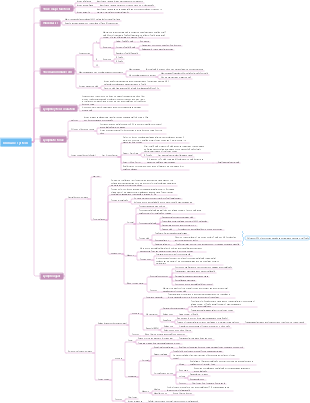
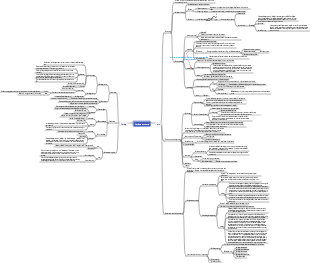
This mind map revolves around the circulation system and covers the composition and occurrence of the circulation system. Help you become familiar with the key points of knowledge and strengthen memory. Students in need can bookmark it.
Edited at 2025-03-09 23:51:20Rumi: 10 dimensions of spiritual awakening. When you stop looking for yourself, you will find the entire universe because what you are looking for is also looking for you. Anything you do persevere every day can open a door to the depths of your spirit. In silence, I slipped into the secret realm, and I enjoyed everything to observe the magic around me, and didn't make any noise. Why do you like to crawl when you are born with wings? The soul has its own ears and can hear things that the mind cannot understand. Seek inward for the answer to everything, everything in the universe is in you. Lovers do not end up meeting somewhere, and there is no parting in this world. A wound is where light enters your heart.
Chronic heart failure is not just a problem of the speed of heart rate! It is caused by the decrease in myocardial contraction and diastolic function, which leads to insufficient cardiac output, which in turn causes congestion in the pulmonary circulation and congestion in the systemic circulation. From causes, inducement to compensation mechanisms, the pathophysiological processes of heart failure are complex and diverse. By controlling edema, reducing the heart's front and afterload, improving cardiac comfort function, and preventing and treating basic causes, we can effectively respond to this challenge. Only by understanding the mechanisms and clinical manifestations of heart failure and mastering prevention and treatment strategies can we better protect heart health.
Ischemia-reperfusion injury is a phenomenon that cellular function and metabolic disorders and structural damage will worsen after organs or tissues restore blood supply. Its main mechanisms include increased free radical generation, calcium overload, and the role of microvascular and leukocytes. The heart and brain are common damaged organs, manifested as changes in myocardial metabolism and ultrastructural changes, decreased cardiac function, etc. Prevention and control measures include removing free radicals, reducing calcium overload, improving metabolism and controlling reperfusion conditions, such as low sodium, low temperature, low pressure, etc. Understanding these mechanisms can help develop effective treatment options and alleviate ischemic injury.
Rumi: 10 dimensions of spiritual awakening. When you stop looking for yourself, you will find the entire universe because what you are looking for is also looking for you. Anything you do persevere every day can open a door to the depths of your spirit. In silence, I slipped into the secret realm, and I enjoyed everything to observe the magic around me, and didn't make any noise. Why do you like to crawl when you are born with wings? The soul has its own ears and can hear things that the mind cannot understand. Seek inward for the answer to everything, everything in the universe is in you. Lovers do not end up meeting somewhere, and there is no parting in this world. A wound is where light enters your heart.
Chronic heart failure is not just a problem of the speed of heart rate! It is caused by the decrease in myocardial contraction and diastolic function, which leads to insufficient cardiac output, which in turn causes congestion in the pulmonary circulation and congestion in the systemic circulation. From causes, inducement to compensation mechanisms, the pathophysiological processes of heart failure are complex and diverse. By controlling edema, reducing the heart's front and afterload, improving cardiac comfort function, and preventing and treating basic causes, we can effectively respond to this challenge. Only by understanding the mechanisms and clinical manifestations of heart failure and mastering prevention and treatment strategies can we better protect heart health.
Ischemia-reperfusion injury is a phenomenon that cellular function and metabolic disorders and structural damage will worsen after organs or tissues restore blood supply. Its main mechanisms include increased free radical generation, calcium overload, and the role of microvascular and leukocytes. The heart and brain are common damaged organs, manifested as changes in myocardial metabolism and ultrastructural changes, decreased cardiac function, etc. Prevention and control measures include removing free radicals, reducing calcium overload, improving metabolism and controlling reperfusion conditions, such as low sodium, low temperature, low pressure, etc. Understanding these mechanisms can help develop effective treatment options and alleviate ischemic injury.
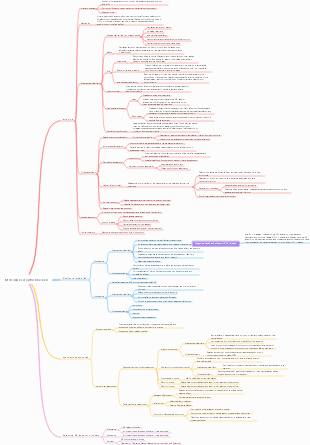
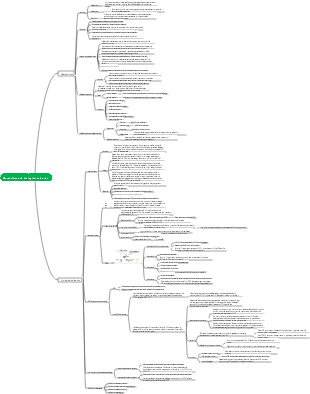
Circulation system
Cardiovascular system
General structure of arterial venous wall
Endometrium
Endothelial
Single layer flat epithelium Pebbles Cell clothing Endothelial cells have base membranes and also have tight junctions and gaps
Plasma membrane vesicles
W-P small body
Subendothelial layer
Elastic membrane
Medium film
composition
Elastic membrane, smooth muscle fibers and connective tissue
Vascular smooth muscle fibers
There are gap connections and adhesive tapes between them
Probably a subtype of fibroblasts
External membrane
Composition of loose connective tissue
Larger arteries have an elastic membrane
The inner membrane is generally free of blood vessels, and nutrition is supplied by the blood. The outer membrane of the middle membrane is supplied by the nutritional tube.
artery
Large artery (elastic artery)
Aorta, pulmonary artery, brachial trunk, common carotid artery, subclavian artery, common iliac artery, etc.
Endometrium
WP is particularly rich in small bodies
The subendothelium is connective tissue, containing a small amount of smooth muscle fibers
Medium film
40-70 layers of elastic membrane arranged in concentric circles (with window holes)
Smooth muscle fibers can migrate into the endometrial hyperplasia and atherosclerosis
External membrane
Loosen connective tissue
Middle artery (Muscular artery)
Endometrium
There is an internal elastic membrane at the junction with the middle membrane
Medium film
10-40 layers of annular smooth muscle fibers There are gaps between smooth muscle fibers
External membrane
Contains nutrient blood vessels and nerve fibers (extending into the smooth muscles of the media to regulate vasomotor)
Arterioles
Smooth muscle fibers of the 3-9 layer of the media membrane, belonging to the myocardial artery No outer elastic film
Arterioles
No elastic film inside and outside 1-2 layers of smooth muscle fibers in the middle membrane
The relationship between arteriosus wall and function
aorta
Transform intermittent cardiac ejaculation into a continuous blood flow
Middle artery (distribution artery)
Depressed under nerve innervation, regulates blood flow distributed to various parts of the body
Arterioles and arterioles
It is regulated by nerves and body fluids, regulates local tissue blood flow, and maintains normal blood pressure, so it is called peripheral resistance blood vessels
vein
Microvein
Irregular lumen, large endothelial gap, and high permeability
Post-capillary veins
A vein that is close to the capillary
Small vein
Larger one or more layers of complete smooth muscle fibers
Middle vein
Thin inner membrane, weak elasticity of inner elastic membrane, thicker outer membrane than medium membrane
Large vein
Thick outer membrane, connective tissue contains a large amount of smooth muscle fibers
Vein valve
It is formed by folding the inner membrane into the lumen
Prevent blood flow
Capillary
Basic structure
composition
Endothelial cells and their basement membrane pericytes
The base film has only substrate
There are many microfilaments in the pericyte cytoplasm, which has a contraction function, regulates capillary blood flow The blood vessels are damaged, and the periocytes can proliferate and differentiate into endothelial cells, smooth muscle fibers and fibroblasts
Basic functions
Permeability barrier for blood and tissue cell material exchange
Classification
Continuous capillaries
Features
There is a tight connection between endothelial cells A large number of plasma membrane vesicles in the cytoplasm (the main method of blood group material exchange)
Base film complete
distributed
Connective tissue, muscle tissue, exocrine gland, nervous system, thymus, lungs
Porous capillaries
Features
There are tight connections between endothelial cells and the basement membrane is intact Endothelial cells do not contain nuclei and are extremely thin. With window holes (closed with diaphragm) are conducive to the exchange of medium and small molecules
distributed
Gastrointestinal mucosa, certain endocrine glands and renal vascular spheres
Blood sinus
Large gaps between endothelial cells are conducive to exchange of macromolecular substances
distributed
liver, spleen, bone marrow and certain endocrine glands
Microcirculation
The blood circulation between the microartery and the microveins is the basic structure and functional unit of blood circulation and material exchange.
The comfort of arterial smooth muscle fibers is the main gate that controls microcirculation blood flow.
Intermediate artery
Branches of arterioles
True capillaries
Capillaries formed by the branches of the intermediate arterial artery, which are commonly known as capillaries
Roundabout way
Slow blood flow, the main place for material exchange
Blood-opening capillaries
The capillaries with the shortest distance between the intermediate artery and the microvein form the direct access path
Arteriovenous anastomosis
heart
The structure of the heart wall
Endaria
Endothelial and subendothelial
The subendothelium is divided into two layers
The inner layer is a thin layer of connective tissue, rich in elastic fibers and a small amount of smooth muscle fibers
The outer layer is the subendocardial layer loose connective tissue with small blood vessels and nerves, containing Purkinje fibers
Myocardial membrane
Myocardial fiber composition, inner longitudinal and outer oblique
The thickest left ventricle
Heart bones
A solid stent structure composed of dense connective tissue between atrial and ventricular muscles
Atrial muscle fibers are short and thin, containing special atrial particles, which contain atrial natriuretic peptides (diuretic, sodium excretion, diffusion of blood vessels, lower blood pressure)
Epicardial membrane
That is, the heart layer, which is the serosal membrane (mesothelial connective tissue)
Heart valve
Located in the atrioventricular and arterial foramen
It is formed by the endocardium, with an endothelium on the surface and a dense connective tissue inside
Cardiac conduction system
Composition and location
Sinusal nodules
Deep epicardium between superior vena cava and right atrium (cardiac pacing point)
Atrioventricular node, Atrioventricular bundle
Subendocardial layer
The atrioventricular tract further branch into the myocardium
Cells and their types and functions
Pacing cells
Connective tissue in the central part of sinoatrial and atrioventricular nodes (myoatrial excitation pacing point)
Small size Shunshape or polygon Less intracytoplasmic organelles, less myogen fibers, more glycogen
Transit cells
Sinusatrial and Atrioventricular node periphery and Atrioventricular bundle
The role of conducting impulses
Purkinje fiber
Constituting the atrioventricular bundle and its branches at various levels
Located in the subendocardial layer and myocardial membrane of the ventricle
Developed leap plate
Functional syncytium is formed through gap junctions, achieving synchronous contraction of myocardial fibers
Lymph system
Capillary lymphatic vessels
Start from the tissue with a blind end, synthesizes each other into a network, and enters the lymphatic vessels
Lymph vessels
Lymph catheter