MindMap Gallery Histology and Embryoology
This mind map mainly revolves around the structure, cell composition, appendages and functions of the skin. Help you become familiar with the key points of knowledge and strengthen memory. Students in need can bookmark it.
Edited at 2025-03-09 23:49:24Rumi: 10 dimensions of spiritual awakening. When you stop looking for yourself, you will find the entire universe because what you are looking for is also looking for you. Anything you do persevere every day can open a door to the depths of your spirit. In silence, I slipped into the secret realm, and I enjoyed everything to observe the magic around me, and didn't make any noise. Why do you like to crawl when you are born with wings? The soul has its own ears and can hear things that the mind cannot understand. Seek inward for the answer to everything, everything in the universe is in you. Lovers do not end up meeting somewhere, and there is no parting in this world. A wound is where light enters your heart.
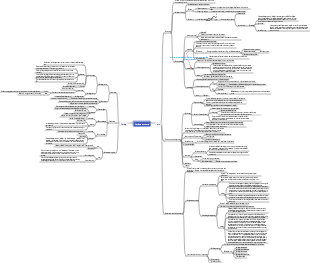
Chronic heart failure is not just a problem of the speed of heart rate! It is caused by the decrease in myocardial contraction and diastolic function, which leads to insufficient cardiac output, which in turn causes congestion in the pulmonary circulation and congestion in the systemic circulation. From causes, inducement to compensation mechanisms, the pathophysiological processes of heart failure are complex and diverse. By controlling edema, reducing the heart's front and afterload, improving cardiac comfort function, and preventing and treating basic causes, we can effectively respond to this challenge. Only by understanding the mechanisms and clinical manifestations of heart failure and mastering prevention and treatment strategies can we better protect heart health.
Ischemia-reperfusion injury is a phenomenon that cellular function and metabolic disorders and structural damage will worsen after organs or tissues restore blood supply. Its main mechanisms include increased free radical generation, calcium overload, and the role of microvascular and leukocytes. The heart and brain are common damaged organs, manifested as changes in myocardial metabolism and ultrastructural changes, decreased cardiac function, etc. Prevention and control measures include removing free radicals, reducing calcium overload, improving metabolism and controlling reperfusion conditions, such as low sodium, low temperature, low pressure, etc. Understanding these mechanisms can help develop effective treatment options and alleviate ischemic injury.
Rumi: 10 dimensions of spiritual awakening. When you stop looking for yourself, you will find the entire universe because what you are looking for is also looking for you. Anything you do persevere every day can open a door to the depths of your spirit. In silence, I slipped into the secret realm, and I enjoyed everything to observe the magic around me, and didn't make any noise. Why do you like to crawl when you are born with wings? The soul has its own ears and can hear things that the mind cannot understand. Seek inward for the answer to everything, everything in the universe is in you. Lovers do not end up meeting somewhere, and there is no parting in this world. A wound is where light enters your heart.
Chronic heart failure is not just a problem of the speed of heart rate! It is caused by the decrease in myocardial contraction and diastolic function, which leads to insufficient cardiac output, which in turn causes congestion in the pulmonary circulation and congestion in the systemic circulation. From causes, inducement to compensation mechanisms, the pathophysiological processes of heart failure are complex and diverse. By controlling edema, reducing the heart's front and afterload, improving cardiac comfort function, and preventing and treating basic causes, we can effectively respond to this challenge. Only by understanding the mechanisms and clinical manifestations of heart failure and mastering prevention and treatment strategies can we better protect heart health.
Ischemia-reperfusion injury is a phenomenon that cellular function and metabolic disorders and structural damage will worsen after organs or tissues restore blood supply. Its main mechanisms include increased free radical generation, calcium overload, and the role of microvascular and leukocytes. The heart and brain are common damaged organs, manifested as changes in myocardial metabolism and ultrastructural changes, decreased cardiac function, etc. Prevention and control measures include removing free radicals, reducing calcium overload, improving metabolism and controlling reperfusion conditions, such as low sodium, low temperature, low pressure, etc. Understanding these mechanisms can help develop effective treatment options and alleviate ischemic injury.
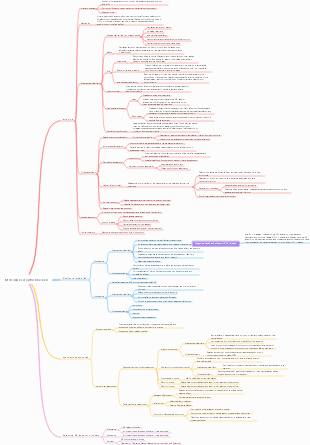
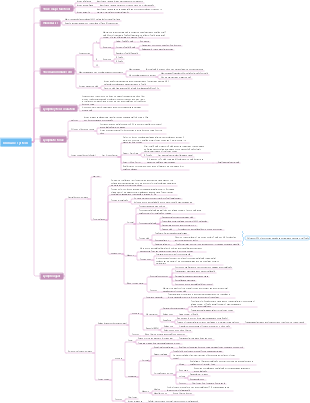
Chapter 11 Skin
skin
epidermis
Composition: Keratosis complex flat epithelium
Keratinocytes
Nonkeratinocytes
Melanocytes
The cells that produce melanin contain melanosomes (the melanosomes are changed to melanocyte particles after melanosomes appear)
The HE-stained sections are round, the nuclear staining is deep, and the cytoplasm is transparent.
Function: Melanin can absorb ultraviolet rays to prevent radiation damage to DNA in keratinocyte nucleus
Pigmented nevus/black nevus: Melanocytes stay in the dermis
Source: From the proliferation and differentiation of neural spinal cells during the embryonic period
Langerhans cells
Morphology: scattered in the shallow part of the spinous layer, round on the HE-stained section, deep staining of the cell nucleus, and clear cytoplasm
Features: Birdbeck granules in the cytoplasm (involved in the treatment of antigens)
Function: Present antigens, play an important role in fighting pathogenic microorganisms that invade the skin and monitoring cancerous cells.
Merkel Cells
Morphology: Located at the basal layer, flat finger-shaped protrusions extending between keratinocytes and connected by desmosomes
Distribution: More in the fingertips, oral cavity and reproductive tract mucosal epithelium, can feel light touch and mechanical stimulation
Features: The cytoplasm contains dense core particles, and the basal surface forms a synaptic-like structure with the sensory nerve endings, called the Merkel cell-axon complex
Classification
Thick skin
Palm and soles of the feet. (The other parts are thin skin)
Thin skin
Layered
Base layer
Constitution: a layer of dwarf columnar basal cells
Features: cytoplasmic basophilic (containing abundant free ribosomes); keratin filaments (also known as tension filaments)
Connection method: Desmosomal cells are connected to the hemidesmosomal
Function: Stem cells of the epidermis. It has important regeneration and repair functions
Spinus
Constitution: 4 to 10 layers of polygonal spiny-like protrusions
Features: Cytoplasm is weakly basophilic, and the cytoplasm contains plate particles. After secretion, it forms a membrane-containing lipid with the cell space.
Keratin tows: radially extending from the perinuclear radial to attach to desmosome attachment plates
Inner protein: deposited on the inner side of the cell membrane, thickening the cell membrane
Connection: The protrusions of adjacent cells are chimeric, connected by a large number of desmosomals
Granular layer
Constitution: 3 to 5 layers of flattened spindle cells
Features: Nuclear organelles have degenerated, and the pellet particles in the cytoplasm have increased
Contains transparent keratin particles, strong basophilic, irregular shape, membrane-free, histidine-rich protein
Transparent layer
Composition: 2 to 3 layers of flat cells
Features: The cell boundaries are unclear, this layer is strongly basophilic, and the nucleus and organelles disappear.
Cuticle
Composition: Multi-layer flat keratinocytes
Features
The cells are completely keratinized, eosinophilic homogeneous, filled with dense, thick keratin filaments and homogeneous substances
The complex of the two is called keratin
The inner surface of the cell membrane contains a layer of protein (the cell membrane is thickened and strong)
The cell space is filled with membranes made of lipids; the superficial cell connection is loose, falling off to form dander
Genuine Leather
Nipple layer (a dense connective tissue close to the thin layer of the epidermis)
Formation: Loose connective tissue protrudes into the epidermis, forming a dermal nipple, expanding the connection between the epidermis and the dermis, making the connection firm
Features: Rich capillaries and free nerve endings; contains more tactile bodies in fingers and other parts
Mesh: (thicker dense connective tissue)
It is interwoven into a web of thick collagen fibers, with many elastic fibers
Contains blood vessels, lymphatic vessels, nerves; deep annular bodies
Below the dermis is subcutaneous tissue (the superficial fascia as anatomically known as the superficial fascia), composed of loose connective tissue and adipose tissue
Function
Block foreign bodies and pathogens invasion, prevent body fluid loss, and has an important barrier protection effect
Feel the various stimuli from outside.
Regulate body temperature, eliminate metabolites, and participate in the synthesis of vitamin D
Affiliated organs
hair
Hair Stand: The bare skin surface, which is composed of keratinized epithelial cells like the hair shaft, is rich in melanin particles and keratin
Hair root: buried in the skin, with hair follicles outlined
Hair follicles
The inner layer is an epithelial sheath connected to the epidermis
The outer layer is a connective tissue sheath connected to the dermis
Hair ball: The end is enlarged, which is the growth point of hair and hair follicles, the bottom is sunken, and connective tissue protrudes into hair nipple, containing capillaries and nerve endings, which induces hair growth. There are erected erotic muscles on the hair root and the obtuse angle of the skin.
Hairy parenteral cells: epithelial cells on hairballs, stem cells
Sebaceous glands: vesicular glands located between the hair follicles and the erectus muscle
Secretion
Vesicle-like, multi-layered cells. Surrounded by a layer of smaller basal cells, basophilic. The intermediate cells are large and full of lipid droplets. The gland cells eventually disintegrate together with the lipid droplets, which is sebum (secretion of the whole plasm)
Catheter department
Composed of a complex layered flat epithelium, short and thick, mostly open in the upper part of the hair follicle
Sweat glands
Exocrine sweat glands (local sweat glands)
Single tubular gland
Secretionary part: monolayer pyramidal cells, light cytoplasm coloration, a base membrane outside the cell, and myoepithelial cells between the cell and the base membrane
Catheter: Two layers of darker stained cubic cells, basophilic, open to sweat holes on the skin surface
Across sweat glands (average sweat glands): distributed in the axilla, areola, and vagina
Sweat secretion in the form of apical slurry
Secretionary part: thicker, gland cells are cubic or short columnar
Catheter: composed of two layers of epithelial cells, the secretions are viscous and emulsion liquid (containing proteins and lipids), which produces a special odor after being decomposed by bacteria.
Nails
At the end of the finger (toe), the skin pattern is blocked by the finger (toe) nails, forming a circumference, taking the shape of a bucket, a bow, etc., and typing the fingerprint on the finger