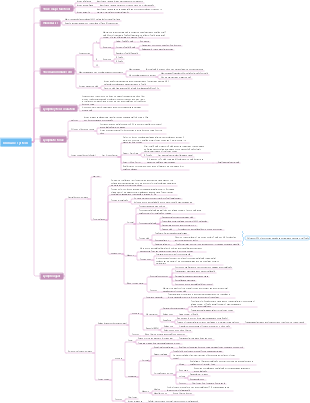
MindMap Gallery Histology and Embryoology Cartilage and bone
This mind map revolves around the structure, type, growth mode and occurrence process of cartilage and bone. Help you become familiar with the key points of knowledge and strengthen memory. Students in need can bookmark it.
Edited at 2025-03-09 23:44:50Rumi: 10 dimensions of spiritual awakening. When you stop looking for yourself, you will find the entire universe because what you are looking for is also looking for you. Anything you do persevere every day can open a door to the depths of your spirit. In silence, I slipped into the secret realm, and I enjoyed everything to observe the magic around me, and didn't make any noise. Why do you like to crawl when you are born with wings? The soul has its own ears and can hear things that the mind cannot understand. Seek inward for the answer to everything, everything in the universe is in you. Lovers do not end up meeting somewhere, and there is no parting in this world. A wound is where light enters your heart.
Chronic heart failure is not just a problem of the speed of heart rate! It is caused by the decrease in myocardial contraction and diastolic function, which leads to insufficient cardiac output, which in turn causes congestion in the pulmonary circulation and congestion in the systemic circulation. From causes, inducement to compensation mechanisms, the pathophysiological processes of heart failure are complex and diverse. By controlling edema, reducing the heart's front and afterload, improving cardiac comfort function, and preventing and treating basic causes, we can effectively respond to this challenge. Only by understanding the mechanisms and clinical manifestations of heart failure and mastering prevention and treatment strategies can we better protect heart health.
Ischemia-reperfusion injury is a phenomenon that cellular function and metabolic disorders and structural damage will worsen after organs or tissues restore blood supply. Its main mechanisms include increased free radical generation, calcium overload, and the role of microvascular and leukocytes. The heart and brain are common damaged organs, manifested as changes in myocardial metabolism and ultrastructural changes, decreased cardiac function, etc. Prevention and control measures include removing free radicals, reducing calcium overload, improving metabolism and controlling reperfusion conditions, such as low sodium, low temperature, low pressure, etc. Understanding these mechanisms can help develop effective treatment options and alleviate ischemic injury.
Rumi: 10 dimensions of spiritual awakening. When you stop looking for yourself, you will find the entire universe because what you are looking for is also looking for you. Anything you do persevere every day can open a door to the depths of your spirit. In silence, I slipped into the secret realm, and I enjoyed everything to observe the magic around me, and didn't make any noise. Why do you like to crawl when you are born with wings? The soul has its own ears and can hear things that the mind cannot understand. Seek inward for the answer to everything, everything in the universe is in you. Lovers do not end up meeting somewhere, and there is no parting in this world. A wound is where light enters your heart.
Chronic heart failure is not just a problem of the speed of heart rate! It is caused by the decrease in myocardial contraction and diastolic function, which leads to insufficient cardiac output, which in turn causes congestion in the pulmonary circulation and congestion in the systemic circulation. From causes, inducement to compensation mechanisms, the pathophysiological processes of heart failure are complex and diverse. By controlling edema, reducing the heart's front and afterload, improving cardiac comfort function, and preventing and treating basic causes, we can effectively respond to this challenge. Only by understanding the mechanisms and clinical manifestations of heart failure and mastering prevention and treatment strategies can we better protect heart health.
Ischemia-reperfusion injury is a phenomenon that cellular function and metabolic disorders and structural damage will worsen after organs or tissues restore blood supply. Its main mechanisms include increased free radical generation, calcium overload, and the role of microvascular and leukocytes. The heart and brain are common damaged organs, manifested as changes in myocardial metabolism and ultrastructural changes, decreased cardiac function, etc. Prevention and control measures include removing free radicals, reducing calcium overload, improving metabolism and controlling reperfusion conditions, such as low sodium, low temperature, low pressure, etc. Understanding these mechanisms can help develop effective treatment options and alleviate ischemic injury.
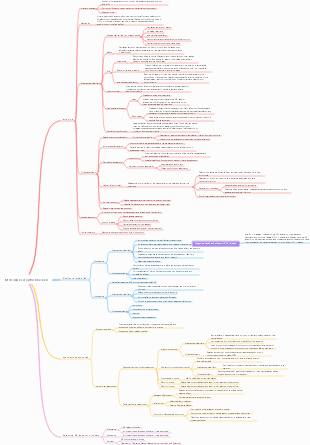
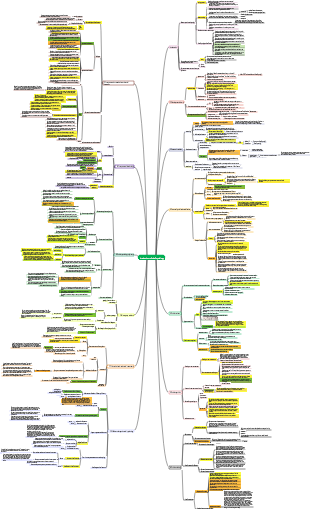
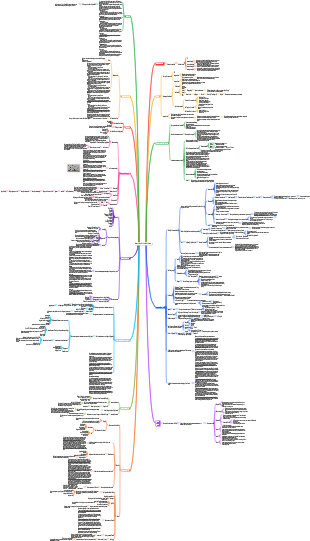
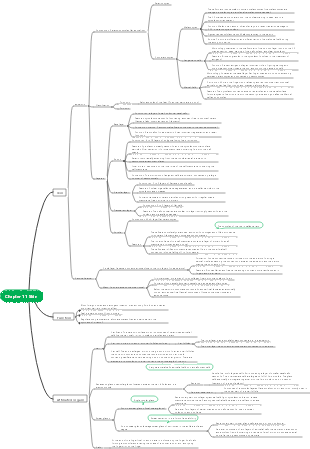
Cartilage and bone
bone
Bone tissue
Concept: It consists of bone cells and calcified extracellular matrix, which is the structural body of bone.
Bone matrix (bone)
Extracellular matrix of calcified bone tissue
Element
Organic ingredients
Large amount of collagen fibers (type I collagen) Small amount of amorphous matrix
Inorganic ingredients
It is called bone salt, mainly fine needle-shaped hydroxyapatite crystal
Boneoid
Uncalcified extracellular matrix
Bone
Structural transformation
Braided bones
Laminar bone
Bone plate
There are a large number of collagen fibers arranged in parallel. The collagen fibers in the same layer of bone plates are parallel to each other, and the fibers between adjacent bone plates are perpendicular to each other. This structural form effectively increases the strength of the bone.
Tight bone
Cancellous bone
Inside the epiphyseals, flat bones and irregular bones of long bones, several layers of irregular bone plates form a large number of needle-shaped or sheet-shaped bone trabecula, crisscrossing, becoming a porous three-dimensional network structure
Bone tissue cells
osteoprogenitor cell
Stem cells
Located in the periosteum and inner periosteum
Smaller cells, spindle-shaped, nucleus elliptical or elongated, less cytoplasm, weak basophilic
osteoblast
Distributed on the surface of bone tissue
Distributed on the inner side of the osteoprogenitor cells, it is short columnar or cubic, with fine protrusions on the cell surface, nuclear round, and cytoplasmic basophilic
EM structure
The rough endoplasmic reticulum and Gorgi complex are developed
The secretion product is osteoid
Release matrix vesicles
Calcification starts
Secretes multiple cytokines
Bone-coated cells
Osteoblasts become flat when they are relatively stationary and close to bone tissue
osteococyte
Located within the bone tissue, scattered between or within the bone plate
Morphological structure
Have slender protrusions
The cavity where the osteocyte cell body is located is called the bone trap, and the cavity occupied by the protrusion is called the bone tubules. The bone traps are connected to each other through the bone tubules. The adjacent osteocyte protrusions are connected by gaps and contain tissue fluid, which can nourish bone cells and transport metabolic substances.
effect
A certain osteogenesis and osteolysis effect
Participate in regulating calcium and phosphorus balance
osteoclast
Multinuclear giant cells, made by the fusion of multiple monocytes
Morphological structure
LM
Strong eosinophilicity in the cytoplasm, rich in lysosomes and mitochondria
Wrinkled edge
There are sedation vesicles and phagocytosis in the deep-faced cytoplasm
EM
Protrusions of different lengths, thicknesses and sizes
Bright area
Absorbing a trap
Release a variety of hydrolytic enzymes and organic acids to dissolve and absorb bones
effect
Osteolysis
The structure of the long bones
Tight bone
Ring bone plate
It is a bone plate arranged around the inner and outer surfaces of the backbone, called the inner ring bone plate and the outer ring bone plate respectively.
The outer ring bone plate is relatively thick and is arranged neatly around the backbone
The inner ring bone plate is thin and the arrangement is irregular
Bone Unit (Havers System)
Located between the inner and outer ring bone plates
constitute
Havers bone plate central tube
The central tube is connected to the through-tube, and its wall contains periosteal tissue and the lumen contains capillaries and nerves.
The bone tubules in one bone unit are connected, and the bone tubules in different bone units are not connected, and the innermost bone tubules are connected to the central tube.
Interbone plate
Located between bone units or between bone units and annular bone plate
It is the residual part of the bone unit and the annular bone plate in the early stages of bone growth and reconstruction
Adhesion line: It is a bone matrix on the surface of each bone unit that contains more bone salt but less collagen fibers, which presents a contour line with strong refractive light in the cross-sectional specimen of the bone unit.
Pass through pipe (Folkman tube)
Passing horizontally within the long bone backbone
Nourishing holes
Connect with central control
Cancellous bone
Constructed by a large number of needle-like or small-sheet-like trabecula
Articular cartilage
periosteum
Extrabone membrane
Some fiber bundles also penetrate into the outer ring bone plate, making the outer membrane of the bone difficult to separate from the bone, and are called perforation fibers and play a fixed role.
There are blood vessels and nerves inside, and there are bone progenitor cells on the deep side
Endometrium
effect
Nutrition, helping to grow and repair
Periosteal transplant
Treatment of periosteum and bone defects
periosteum
marrow
Accident and remodel (understand)
Concept: Bone originates from mesenchymal during the embryonic period, and bones occur in two ways: intramembraneal osteogenesis and intracartilage osteogenesis
Bone generation device
Intramembrane osteogenesis
Concept: Direct osteogenesis in the membrane formed by mesenchymal differentiation
Flat bones and irregular bones in the human body, such as the frontal bone, parietal bone, occipital bone, temporal bone, clavicle, etc., mostly occur in this way.
process
At the site to be osteogenesis, mesenchymal first differentiates into the original connective tissue membrane, where the mesenchymal cells are then differentiated into osteoblasts, which are further differentiated into osteoblasts.
First, the part where the bone tissue is formed is called the ossification center. As the ossification continues, the bone trabecula is formed. The osteoblasts on its surface continue to add new bone tissue, making the bone trabecula grow and thicker.
The scope of the trabecular bone gradually expanded into cancellous bone: later, the surface of the cancellous bone was gradually converted into dense bone.
The connective tissue around the osteogenic area differentiates into periosteum accordingly
Intracartilage osteogenesis
Concept: Gradually replaced by hyacinth cartilage to bone
Most bones in the human body, such as limb bones, trunk bones, etc.
process
Mesenchymal cells-bone progenitor cells-chondrocytes-chondrocytes, which proliferate and secrete cartilage matrix. Because the matrix shape is similar to bone, it is called cartilage prototype
The middle section of the prototype, bone progenitor cells differentiate into osteoblasts, which form a thin primitive bone tissue in the shape of a collar circle and wraps around the middle section of the prototype, called the bone collar
The middle section of the prototype is apoptosis of chondrocytes, cartilage ossification, osteoclasts dissolve and absorb degenerated cartilage, forming a tunnel consistent with the long axis of the bone. Osteoblasts attach to other cartilage matrixes, forming a cord-like structure with the calcified cartilage matrix as the axis, surrounding the new bone tissue, which is called transitional bone trabecular, and the part where this structure appears is called the primary ossification center.
The secondary ossification center appears in the center of the cartilage at both ends of the backbone, and the time it appears varies from bone, mostly several months or years after birth. The osteogenesis process is similar to the primary ossification center, which is radial from the center to the surroundings. The epiphyseal is eventually formed by bone tissue replacing the cartilage. A layer of cartilage on the epiphyseal surface is never ossified, that is, articular cartilage. A layer of cartilage is retained between the epiphyseal and the backbone, called the epiphyseal plate, which is the structural basis for the growing long bones.
Growth and reconstruction of long bones
Bone lengthening
Through continuous growth of epiphyseal plates and replacement of bone tissue
Replace partition
Cartilage reserve area
Cartilage hyperplasia area
Cartilage mature area
Cartilage calcification zone
Osteogenesis area
Bone thickening
Bone reconstruction
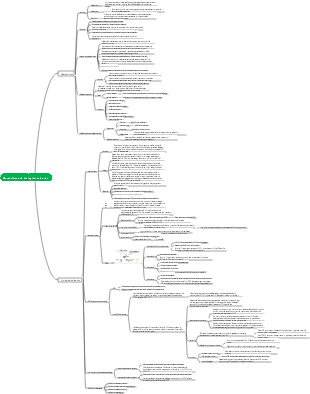
Cartilage
constitute
Cartilage tissue
Chondrocytes
Embedded in the cartilage matrix, the cavity where it is located is called cartilage trap
Features
There is a substrate containing more chondroitin sulfate around the trap, called the cartilage capsule, and HE staining is highly basophilic.
The surrounding cartilage is childish, small, flat and round, and is distributed individually
In the middle of cartilage, cells are mature, large in size, weak basophilic in the cytoplasm, and cell populations are distributed (2-8, formed by proliferation of one chondrocyte, called homologous cell population)
Rich coarse endoplasmic reticulum and Golgi complex can be observed under EM
Persistent protein secretion cells
Function
Generate cartilage matrix
Cartilage matrix
constitute
Amorphous matrix fiber
The main components of amorphous matrix
Protein
Similar to proteoglycans that loose connective tissue, it forms a molecular sieve
water
Reasons for strong permeability of the matrix
Cartilage capsule
It is essentially a cartilage matrix
Periosteum
There are blood vessels, lymphatic vessels and nerves
Provide nutrition and protection
There are osteoprogenitor cells-chondrocytes-chondrocytes in the inner layer
Collagen fibers on the outer layer play a protective role
Classification
Clear cartilage
distributed
Core cartilage, articular cartilage, respiratory cartilage, etc.
feature
Strong compressive resistance, certain elasticity and toughness
Translucent when fresh
Not easy to distinguish under the light mirror
Collagen fibers mainly composed of type II collagen
Elastic cartilage
distributed
Auricle, throat, epiglottis, etc.
feature
Yellow when fresh
Contains a large number of interwoven and arranged elastic fibers, which have good elasticity
The matrix is highly eosinophilic, and the red and blue intersect under the light microscope
Fibrous cartilage
distributed
Intervertebral disc, articular disc, pubic junction, etc.
feature
Opacity white
Very tough
There are a large number of collagen fiber bundles arranged in parallel or cross-arranged in fibrocartilage. The number of chondrocytes is small and the size is small. They are often distributed in rows between fiber bundles and have very few matrixes.
Generation and growth
occur
Mesenchymal cells-Osteoprogenitor cells-Charyngeon cells-Charyngeon cells
Periosteum
Grow
Additional growth
Also known as subchondral growth, it proliferates and differentiates from the osteoprogenitor cells in the periosteum into chondrocytes, which then forms chondrocytes. The latter then produces fibers and matrix to thicken the cartilage.
Interstitial growth
Also known as cartilage endogenous growth, the chondrocytes inside the cartilage mature and divide, and continuously produce cartilage matrix, causing the cartilage to expand and grow from the inside to the surroundings.