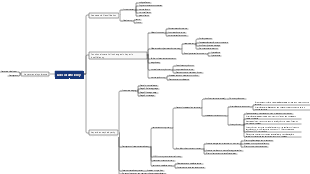
MindMap Gallery Pathophysiology-Hepatic Insufficiency
The liver is the largest metabolic organ of the human body. It is composed of parenchymal cells, namely hepatocytes, and non-parenchymal cells. Various factors that cause liver damage can damage liver cells, causing dysfunctions such as synthesis, degradation, detoxification, storage, secretion, and immunity. Jaundice may occur in the body. Clinical syndromes such as hemorrhage, infection, renal dysfunction and hepatic encephalopathy are called hepatic insufficiency.
Edited at 2023-11-29 09:17:41This is a mind map about bacteria, and its main contents include: overview, morphology, types, structure, reproduction, distribution, application, and expansion. The summary is comprehensive and meticulous, suitable as review materials.

This is a mind map about plant asexual reproduction, and its main contents include: concept, spore reproduction, vegetative reproduction, tissue culture, and buds. The summary is comprehensive and meticulous, suitable as review materials.
This is a mind map about the reproductive development of animals, and its main contents include: insects, frogs, birds, sexual reproduction, and asexual reproduction. The summary is comprehensive and meticulous, suitable as review materials.
This is a mind map about bacteria, and its main contents include: overview, morphology, types, structure, reproduction, distribution, application, and expansion. The summary is comprehensive and meticulous, suitable as review materials.
This is a mind map about plant asexual reproduction, and its main contents include: concept, spore reproduction, vegetative reproduction, tissue culture, and buds. The summary is comprehensive and meticulous, suitable as review materials.
This is a mind map about the reproductive development of animals, and its main contents include: insects, frogs, birds, sexual reproduction, and asexual reproduction. The summary is comprehensive and meticulous, suitable as review materials.
Liver insufficiency
The liver is the largest metabolic organ in the human body and is composed of parenchymal cells, namely hepatocytes, and non-parenchymal cells. Various factors that cause liver damage damage liver cells and cause dysfunction in synthesis, degradation, detoxification, storage, secretion, and immunity. The body may develop clinical syndromes such as jaundice, bleeding, infection, renal dysfunction, and hepatic encephalopathy, which are called hepatic encephalopathy. Insufficient function Advanced liver dysfunction is called liver failure The main clinical manifestations are hepatic encephalopathy and hepatorenal syndrome
Common causes
biological factors
Hepatitis B virus has high incidence and great harm
Drugs and hepatotoxic substances
immune factors
primary biliary cirrhosis
nutritional factors
Liver diseases caused by simple nutritional deficiencies are rare, but nutritional deficiencies can promote the occurrence and development of liver diseases.
genetic factors
Hereditary liver diseases are rare, but the occurrence and development of many liver diseases are related to genetic factors
Classification
acute hepatic insufficiency
Characteristics: Acute onset, rapid progression, and jaundice appearing a few hours after onset.
chronic liver insufficiency
The course of the disease is long and the progression is slow. Clinically, the condition is often worsened by inducements such as upper gastrointestinal bleeding, infection, alkalosis, and sedatives.
Body functions and metabolic changes
Metabolic disorders
Glucose metabolism disorder
Hypoglycemia
Massive death of liver cells significantly reduces liver glycogen reserves The activity of glucose-6-phosphatase in the damaged endoplasmic reticulum of liver cells is reduced, and the process of converting liver glycogen into glucose is impaired. Hepatocyte inactivation and decreased insulin function
Lipid metabolism disorder
Fatty liver and elevated plasma cholesterol
protein metabolism disorder
The proportion of plasma amino acids is imbalanced, with an increase in aromatic amino acids and a decrease in branched-chain amino acids. hypoalbuminemia Multiple transport protein synthesis disorders
Water and electrolyte metabolism disorders
hepatic ascites
reason Portal hypertension Decreased plasma colloid osmotic pressure Insufficient lymphatic drainage Naishui ripples remain
Hypokalemia
Excessive aldosterone increases renal potassium excretion and may cause hypokalemia
hyponatremia
Decreased effective circulating blood volume causes increased secretion of antidiuretic hormone
Disorders of bile secretion and excretion
Heme is phagocytosed by phagocytes to produce non-ester bilirubin, which is then taken up, transported, esterified and excreted by hepatocytes and enters the bile ducts. Hyperbilirubinemia and jaundice can result when liver cells have obstacles in the uptake, transport, esterification, and excretion of bilirubin.
coagulopathy
Liver cells synthesize most of the coagulation factors, which can induce disseminated intravascular coagulation in severe cases.
biotransformation dysfunction
Detoxification dysfunction
Increased entry of toxic substances into the blood
drug metabolism dysfunction
prone to drug poisoning
Reduced hormone inactivation function
immune dysfunction
Kupffer cells are responsible for phagocytosis and removal of foreign bodies, viruses, and bacteria from the intestines. Toxins, etc. Severe dysfunction of Kupffer cells can lead to enterogenic endotoxemia
hepatic encephalopathy
concept
Hepatic encephalopathy refers to a series of severe neuropsychiatric syndromes secondary to liver dysfunction when other known brain diseases are excluded. Hepatic encephalopathy is reversible in the early stage and mainly includes personality changes, weakened intelligence, and disturbance of consciousness. In the late stage, irreversible hepatic coma and even death may occur.
installment
Mild asterixis in the first prodromal stage Obvious asterixis in the early stage of second-stage coma The third stage of drowsiness, you can fall asleep but can wake up Stage 4 coma: comatose and unable to be awakened, unresponsive to painful stimuli, and no asterixis.
4 pathogenesis mechanisms of hepatic encephalopathy
ammonia poisoning theory
Causes of elevated blood ammonia
Insufficient ammonia removal
Ornithine cycle disorder portosystemic shunt
Increased ammonia production
Intestine
Portal blood flow is blocked, intestinal mucosal congestion and edema. Digestive capacity decreases, undigested and absorbed protein increases, and ammonia is produced under the action of amino acid oxidase. Azotemia: In advanced liver cirrhosis combined with renal dysfunction, the excretion of urea decreases and the urea diffused into the intestine increases.
muscle
In patients with restlessness, muscle activity increases, the decomposition of adenylate increases, and ammonia production increases.
kidney
Glutaminase deaminates glutamine
Factors affecting ammonia entering the brain
Increased pH Increased blood-brain barrier permeability
Toxic effects of ammonia on the brain
Ammonia changes neurotransmitters in the brain
Effects on astralnergic neurotransmission
Glutamate is an excitatory neurotransmitter in the brain The early production of glutamate increases and excitability increases Later stage: As ammonia in the brain further increases, ammonia combines with glutamate to form glutamine to relieve the toxic effects of ammonia. Later, glutamine accumulation increases and acts as an inhibitory neurotransmitter, causing astrocytes to swell.
Increased inhibitory neuronal activity
Ammonia interferes with brain cell energy metabolism
Ammonia inhibits nerve cell membranes
GABA theory
GABA_a receptor
Composed of two A subunits and two B subunits A subunit containing benzodiazepine receptor The B subunit contains GABA receptors, GABA acts on the postsynaptic membrane, causing chloride ions to flow in and produce hyperpolarization. GABA also has presynaptic inhibitory effects: when GABA acts on the presynaptic
pseudoneurotransmitter theory
Phenylalanine and tyrosine are aromatic amino acids that are converted into phenylethylamine and tyramine through the action of decarboxylase released by intestinal bacteria. When liver dysfunction occurs, the detoxification function decreases and the concentrations of phenylethylamine and tyramine in the blood increase.
The main function of the brainstem reticular formation is to maintain wakefulness or maintain arousal function. Norepinephrine and dopamine are the main neurotransmitters in the brainstem reticular formation. In the nerve cells of the brainstem reticular formation, phenethylamine and tyramine generate phenylethanolamine and hydroxyl, respectively, under the action of B-hydroxylase. Phenylethanolamine.
pseudoneurotransmitter
Definition: A class of substances that are structurally similar to normal neurotransmitters but have extremely weak or inactive physiological effects.
Phenylethanolamine and hydroxyphenylethanolamine are pseudoneurotransmitters with similar structures to norepinephrine and dopamine. When it increases, it can replace the uptake of norepinephrine and dopamine neurons and store it in vesicles, but it has no physiological effect. The arousal function of the ascending excitation system of the brainstem reticular structure cannot be maintained, leading to coma.
amino acid imbalance theory
The aromatic amino acid AAA increased, while the branched chain amino acid B CAA decreased. The ratio between the two: the ratio of branched chain to aromatic is 3~3.5
Causes of plasma amino acid imbalance
Liver dysfunction, insufficient inactivation of pancreatic islets and pancreas height, but significant increase in pancreas height, enhanced catabolism, and large amounts of amino acids released into the blood Liver dysfunction, reduced ability to degrade aromatic amino acids, impairment of gluconeogenesis of aromatic amino acids, and elevated levels of aromatic amino acids in the blood Branched-chain amino acids are primarily metabolized in skeletal muscle Insulin promotes amino acid uptake by muscles On the other hand, when blood ammonia rises, branched-chain amino acids combine with α-ketoglutarate through transamination to form glutamate.
Amino acid imbalance in the blood, phenylalanine and tyrosine increase in the brain. High levels of phenylalanine can inhibit the activity of tyrosine hydroxylase and reduce the production of normal neurotransmitters. Phenylalanine and tyrosine further generate phenethylamine and tyramine under the action of aromatic amino acid decarboxylase, and further generate phenylethanolamine and hydroxyphenylethanolamine under the action of ß-hydroxylase.