MindMap Gallery Pedagogy Section 1 Educational System and Educational Practice 2
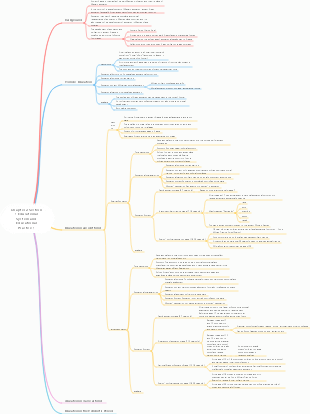
This mind map is the continuation of the previous mind map. It is the content of the second part of the history of foreign education: Education in Ancient Greece. It mainly talks about education in the Archaic period and education in the Hellenistic period.
Edited at 2023-11-28 21:07:05This is a mind map about bacteria, and its main contents include: overview, morphology, types, structure, reproduction, distribution, application, and expansion. The summary is comprehensive and meticulous, suitable as review materials.

This is a mind map about plant asexual reproduction, and its main contents include: concept, spore reproduction, vegetative reproduction, tissue culture, and buds. The summary is comprehensive and meticulous, suitable as review materials.
This is a mind map about the reproductive development of animals, and its main contents include: insects, frogs, birds, sexual reproduction, and asexual reproduction. The summary is comprehensive and meticulous, suitable as review materials.
This is a mind map about bacteria, and its main contents include: overview, morphology, types, structure, reproduction, distribution, application, and expansion. The summary is comprehensive and meticulous, suitable as review materials.
This is a mind map about plant asexual reproduction, and its main contents include: concept, spore reproduction, vegetative reproduction, tissue culture, and buds. The summary is comprehensive and meticulous, suitable as review materials.
This is a mind map about the reproductive development of animals, and its main contents include: insects, frogs, birds, sexual reproduction, and asexual reproduction. The summary is comprehensive and meticulous, suitable as review materials.
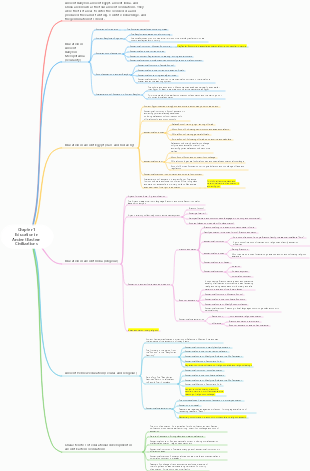
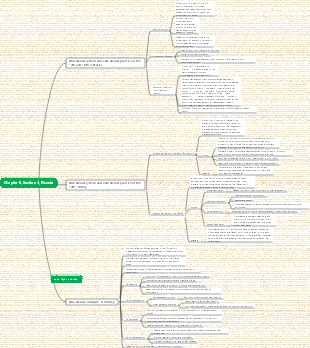
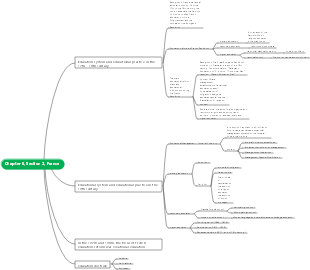
Chapter 2 Education in Ancient Greece Section 1 Educational System and Educational Practice 2
Homeric Education
Education in ancient times
education in classical times
background
The classical period was a period when Greek civilization reached its peak and then turned from prosperity to decline.
Greco-Persian War: War between Persia and the Greek city-states
Pushed Athens to an unprecedented period of prosperity
Peloponnesian War: War between the city-states of Sparta and Athens
The failure of Athens became the starting point for the decline of Greek civilization
During this period, the slave economy developed significantly, the democratic political system of slavery was finally established, and its cultural and educational undertakings also reached a stage of comprehensive prosperity.
Introduction to "Sophists"
Wise men: specifically refers to itinerant teachers who teach for a fee, people with specialized knowledge and skills from all walks of life, and people with the ability to govern a country
The earliest wise man was Protagoras, who was also one of the founders of the "Sophist" school
Wise Man is the earliest professional teacher in the West
Educational Characteristics of “Sophists”
relativism
individualism
Sensualism
Skepticism
The educational activities and contributions of the “Sophists”
Expand educational objects and promote cultural dissemination
Use money instead of family status as the only condition for teaching
This expands the scope of education, promotes cultural dissemination, and promotes social mobility.
Expand educational content and expand research areas
The establishment of the "first three arts", grammar, rhetoric, and dialectics, was first determined by wise men.
Pay attention to moral and political knowledge education
Put forward the educational purpose of cultivating politicians
What the wise man actually provides is the preparatory education for politicians or rulers
Promote the professionalization of teachers and discover the uniqueness of education
Form educational theories and promote ideological formation
Education in the Hellenistic Period
background
King Alexander of Macedonia annexed Greece, expanded eastward, and established a huge military group spanning Asia, Europe, and Africa.
School education in the Hellenistic period
education system
spread widely
Education Center
Transfer occurs. The center of culture and education moved from Athens to Alexandria, which became the center of cultural exchange between the East and the West at that time.
primary education
Metamorphosis occurs
In the classical period, primary schools in ancient Greece usually focused on multi-faceted education with moral, intellectual, physical and beauty as the basic content.
During the Hellenistic period, junior schools were mainly limited to intellectual subjects such as reading, writing, and arithmetic. Sports with a military nature were first cancelled, aesthetic education was gradually weakened, and the tradition of focusing on harmonious development and multi-faceted education was destroyed.
secondary education
Facing decline
During the Hellenistic period, the original secondary educational institution, the gymnasium, was replaced by a grammar school. Secondary education increasingly focuses on knowledge teaching, with particular emphasis on literature education, while physical education and aesthetic education are neglected
higher education
obvious development
In addition to the original Plato's Academy, Aristotle's Lyceum and Isocrates' rhetoric school, many philosophical schools appeared. Around 200 BC, the above-mentioned schools were merged to form the University of Athens.