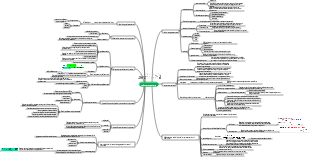
MindMap Gallery Polymer Chemistry-Free Radical Polymerization
A mind map about polymer chemistry-free radical polymerization, including polymerization kinetics (microscopic), Polymerization thermodynamics, free radical polymerization mechanism, etc.
Edited at 2023-11-27 17:26:24This is a mind map about bacteria, and its main contents include: overview, morphology, types, structure, reproduction, distribution, application, and expansion. The summary is comprehensive and meticulous, suitable as review materials.

This is a mind map about plant asexual reproduction, and its main contents include: concept, spore reproduction, vegetative reproduction, tissue culture, and buds. The summary is comprehensive and meticulous, suitable as review materials.
This is a mind map about the reproductive development of animals, and its main contents include: insects, frogs, birds, sexual reproduction, and asexual reproduction. The summary is comprehensive and meticulous, suitable as review materials.
This is a mind map about bacteria, and its main contents include: overview, morphology, types, structure, reproduction, distribution, application, and expansion. The summary is comprehensive and meticulous, suitable as review materials.
This is a mind map about plant asexual reproduction, and its main contents include: concept, spore reproduction, vegetative reproduction, tissue culture, and buds. The summary is comprehensive and meticulous, suitable as review materials.
This is a mind map about the reproductive development of animals, and its main contents include: insects, frogs, birds, sexual reproduction, and asexual reproduction. The summary is comprehensive and meticulous, suitable as review materials.
Radical Polymerization
Free radical polymerization mechanism
Selectivity of polymerization mechanisms by olefinic monomers
induction effect
The electron-withdrawing group reduces the density of the double bond π electron cloud, which is conducive to anion attack and anionic polymerization.
The electron donating group increases the density of the double bond π electron cloud, which is beneficial to cationic attack and cationic polymerization.
conjugation effect
Electrons are more mobile and can easily induce polarization
steric effect
The structure is more asymmetric, the degree of polarization increases, and it is easier to aggregate.
1,2 disubstituted olefinic monomers are generally difficult to homopolymerize due to steric hindrance effects and some have structural symmetry, or can only form dimers.
Tri-tetra-substituted ethylene generally cannot be polymerized, except for fluoroethylene, because the radius of the fluorine atom is small and the steric hindrance effect can be ignored.
Chain trigger
Concept: Reaction to form monomeric free radicals (active species).
Process: In the first step, the initiator I decomposes to form the primary free radical R• (endothermic reaction with high activation energy, low reaction rate, rate-controlled step) I—>2R• In the second step, free radicals add to monomers to form monomer free radicals (the exothermic reaction has low activation energy and high reaction rate, which is comparable to chain growth reactions. This step is necessary for chain initiation) R•+Monomer—>R Monomer•
Initiator type
Azo compounds
Azobisisobutyronitrile AIBN (molecular weight equal to 164) forms nitrogen and two cyanopropyl radicals, has no induced decomposition activity, has low activity and is prone to cage effects.
Azobisisoheptanitrile (ABVN) has higher activity and medium activity.
Peroxides (inorganic and organic)
Inorganic: Persulfate is used in emulsion and aqueous solution polymerization to form a redox system with ferrous ions and can be initiated at room temperature
Organic: Alkyl hydroperoxide, dialkyl peroxide, diacyl peroxide (low activity) Dibenzoyl peroxide BPO molecular weight 242 Features: two-step decomposition to form two free radicals with low activity It is easy to induce decomposition, making the initiator efficiency low, but it is not easy to cause the cage effect.
redox system
Low activation energy, fast initiation rate, low initiator efficiency BPO+NN Dimethylaniline
photoinitiator
The first two types can produce free radicals through light decomposition. In addition, disulfides, benzoin, and diphenylethylenedione are also photoinitiators.
Strong selectivity, light controllability, mild reactivity
Initiator thermal decomposition kinetics
Initiator decomposition rate
Initiator residual fraction
Half-life t1/2
The time required for the initiator to decompose to half its initial concentration
Initiator efficiency f: the fraction of primary free radicals generated by the decomposition of the initiator that actually participate in the chain initiation reaction It is equal to the decomposed (start-last-decomposition initiator) divided by the total amount of decomposition (start-last), generally 0.5-0.8
induced decomposition
The transfer reaction of free radicals to the initiator produces new free radicals, the number remains unchanged, but the initiator is consumed, reducing the efficiency.
Choice of initiator
Affects reaction rate, time, and molecular weight
Looking at the polymerization method, bulk polymerization (oil phase) suspension, the solution should choose an oil-soluble initiator such as azo peroxide Emulsion aqueous solution in aqueous phase, choose persulfate or redox system
Second, look at the polymerization temperature. If the temperature is high, choose low activity. If the temperature is low, choose high activity. If you want uniform polymerization, you need high or low (medium activity).
Third, look at other factors
chain growth
Concept: Monomer free radicals add to monomers to generate new free radicals, and this process repeats to generate chain-growing free radicals.
Features: Strong exothermic reaction, heat of polymerization 55-95KJ/mol Low activation energy, about 20-34, large rate constant, rapid growth
How to add a single unit
Single unit connection method
First and last bonus: accounting for 98-99% of the set. Determined by the conjugation effect and steric hindrance of side groups The resonance effect of the substituent on the chain free radicals, the resonance is stable, and there is no The steric resistance of the head-to-tail bonding is small, but the head-to-head bonding resistance is large.
Head structure: When monomers with less steric hindrance are polymerized due to resonance effects of substituents, the content of heads increases. As the polymerization temperature increases, the activation energy increases, and the head structure content will increase.
stereotacticity
The chain radicals of free radical polymerization are planar sp² hybridization, and there is no orientation factor.
When the monomer adds to the chain radical, it can be added randomly from the top or bottom of the plane. After the chain radical reaction, it changes from sp² hybridization to sp3 hybridization. The substituent has no selectivity for the spatial configuration and is random. Atactic polymers are obtained. Therefore, it is difficult to achieve directional polymerization by free radical polymerization.
Auto-acceleration phenomenon (gel effect)
Double base termination is hindered by diffusion control and the termination rate is reduced.
Both relative molecular mass and dispersion increase
chain termination
Concept: Free radicals are highly active and tend to deactivate through mutual reactions. The reaction in which chain radicals are deactivated to form a stable polymer is called a chain termination reaction.
Features: Mainly bimolecules (double base termination), low activation energy, high rate constant, double base termination controlled by diffusion
Double base termination
Coincidence ends - two become one
The termination reaction in which the single electrons of two chain radicals combine with each other to form a covalent bond
When initiated by an initiator and without chain transfer, both ends of the macromolecule are initiator residues
The stronger the conjugation effect, the more likely it is to occur
Disproportionation terminates - two becomes two
A termination reaction in which a free radical in a chain seizes a hydrogen atom or other atom from another free radical
The greater the steric hindrance effect, the more likely it is to occur
Increasing temperature leads to increased disproportionation termination
choose
Monosubstituted vinyl monomers, acrylonitrile, and styrene, are all coupling-terminated A special case is the complete disproportionation termination of vinyl acetate.
11 Disubstituted vinyl, MMA disproportionation terminated
Single base termination
Chain free radicals and monomers undergo chain transfer and terminate
chain transfer
The growing chain free radicals take away atoms from other molecules in the system, lose their activity and form polymers, and the molecules that take away atoms generate new free radical reactions.
Belongs to single base termination
Polymerization inhibition: If the new free radicals generated after transfer are inactive, the monomer polymerization cannot be initiated or the polymerization reaction will be stopped.
Characteristics of free radical polymerization mechanism
The reaction kinetics are characterized by slow initiation, fast growth, fast termination, and transfer.
The degree of polymerization changes little, and the purpose of extending the polymerization time is to increase the monomer conversion rate.
When a certain conversion rate is reached, the viscosity becomes larger, causing the polymerization rate and molecular weight to increase simultaneously (automatic acceleration), and diffusion control causes macroscopic kinetic phenomena.
polymerization thermodynamics
basic concept
The positive or negative value of the polymerization free energy difference △G is the criterion for whether the monomer can be polymerized. △G=△H-T△S is less than 0 and can be polymerized otherwise it will be depolymerized. Entropy reduction reaction, so the heat of polymerization must be less than 0 - the larger △H, the greater the tendency of polymerization
heat of polymerization
Direct calorimetry, combustion heat method, thermodynamic equilibrium method can be used for actual measurement, or it can be calculated from the standard heat of formation.
Influencing factors
steric effect
Reduce the heat of polymerization (a methyl substituent reduces the heat of polymerization by 9kJ/mol)
conjugation effect
Reduce the heat of polymerization. There are π-π, p-π and σ-π conjugation in the olefinic monomer, which averages the electron cloud and reduces the thermodynamic energy. Conjugation averages the electron cloud, The thermodynamic energy of the monomer decreases.
Substituent electronegativity
The heat of polymerization is increased, and the bond energy substituted by strongly electronegative atomic groups is significantly increased.
hydrogen bond
It reduces the heat of polymerization and hydrogen bonding reduces the internal energy. Acrylic acid has stronger intermolecular interaction than polyacrylic acid, so the heat of polymerization is lower. Methacrylic acid reduces it more due to steric hindrance and hydrogen bonding.
solvation
Reduce the heat of polymerization
Polymerization upper limit temperature
Polymerization and depolymerization are in a state of dynamic equilibrium. At this time, the temperature is called the (polymerization) upper limit temperature Tc = △H standard / △S standard
equilibrium monomer concentration
Effect of pressure on polymerization-depolymerization equilibrium
The volume of the system shrinks and pressurization will shorten the distance between molecules, which is beneficial to polymerization and can increase the upper limit temperature of polymerization.
Polymerization Kinetics (Microscopic)
reaction speed
Conversion rateC The percentage of monomers that have participated in the reaction to the starting monomer content M = M0 (1-C) M is the monomer
C-t Figure 1. Induction period: Polymerization-inhibiting impurities terminate primary free radicals and no polymer is produced. 2. Initial stage of uniform speed 3 mid-stage acceleration stage (automatic acceleration) 4. Later deceleration stage
three assumptions
Long chain assumption Assume that the degree of polymerization is large and the total polymerization rate is equal to the chain growth rate
Equiactivity assumes that the rate constants at each step of chain growth are equal.
Steady state assumption: The generation and destruction of free radicals are in equilibrium, the concentration of free radicals remains unchanged, and the steady state state Rt = Ri chain initiation is equal to the chain termination rate
a premise
In the early stage of polymerization, there is no depolymerization, double radical termination, and no influence on chain transfer.
Factors affecting polymerization rate
Monolithic structure
Conjugation effect: The weaker the conjugation effect of the substituent, the weaker the activity of the monomer, the more active the free radical, and the greater the reaction rate.
The stronger the polarity, the greater the reaction rate
Steric hindrance effect: the larger the volume of the substituent, the smaller the kp
average kinetic chain length
Definition - In chain polymerization, each active species from initiation to termination (including chain transfer The average number of monomer molecules consumed over the continuation of the reaction.
Disproportionation terminates Xn=v Coupling terminates Xn=2v
Temperature is unfavorable to the number average degree of polymerization