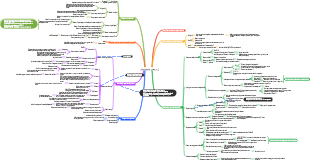
MindMap Gallery The structure of chemical polymers
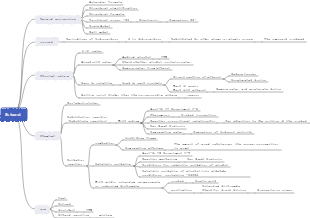
Chemical Industry Press Summary of Chapter 7 of Polymer Chemistry and Physics, including crystallinity and physical properties, long-range structure, The crystal structure of polymers, etc.
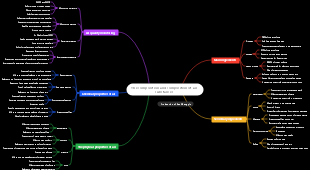
Edited at 2023-11-27 16:29:37This is a mind map about bacteria, and its main contents include: overview, morphology, types, structure, reproduction, distribution, application, and expansion. The summary is comprehensive and meticulous, suitable as review materials.

This is a mind map about plant asexual reproduction, and its main contents include: concept, spore reproduction, vegetative reproduction, tissue culture, and buds. The summary is comprehensive and meticulous, suitable as review materials.
This is a mind map about the reproductive development of animals, and its main contents include: insects, frogs, birds, sexual reproduction, and asexual reproduction. The summary is comprehensive and meticulous, suitable as review materials.
This is a mind map about bacteria, and its main contents include: overview, morphology, types, structure, reproduction, distribution, application, and expansion. The summary is comprehensive and meticulous, suitable as review materials.
This is a mind map about plant asexual reproduction, and its main contents include: concept, spore reproduction, vegetative reproduction, tissue culture, and buds. The summary is comprehensive and meticulous, suitable as review materials.
This is a mind map about the reproductive development of animals, and its main contents include: insects, frogs, birds, sexual reproduction, and asexual reproduction. The summary is comprehensive and meticulous, suitable as review materials.
polymer structure
short-range structure
chemical components
carbon chain polymer
covalent bond
Good plasticity, stable chemical properties, not easy to hydrolyze, but average mechanical strength, low carbon-hydrogen bond energy, and poor heat resistance
Heterochain polymer
The heat resistance and strength are higher than those of carbon chain polymers, but the chemical properties are unstable due to the introduction of functional groups.
Elemental organic polymers
No carbon atoms in the main chain
Good plasticity and elasticity
Excellent thermal stability
Less intense
Structural unit keying method
Homopolymer structural unit sequence (head-to-tail, head-to-head, random)
Geometry of polymer chains
1.Linear polymer
Soft and elastic, it can be dissolved in an appropriate solvent, can be spun into silk, can be formed into a film, and can be thermoformed into products of various shapes. It is usually called a thermoplastic polymer.
2. Branched polymers
Loosely packed, low density, low crystallinity, strong air permeability
3. Cross-linked polymers
Network macromolecules, good heat resistance, high strength, strong solvent resistance, stable shape
sequence structure
No rules
alternately
block
graft
structure
Optical isomerism
The RS configuration is formed in the C atom space of four different substituents.
Stereoconfiguration
Total isomorphism
syndiomorphism
random configuration
Isotactic and syndiotactic polymers are stereoregular polymers
geometric isomers
Caused by different configurations of substituents on double bonds or ring structures in polymer molecules
Properties of stereoregular polymers
The polymer has good stereoregularity and orderly arrangement of molecules, which is conducive to crystallization. High crystallinity leads to high boiling point, high melting point, high strength, and high solvent resistance.
remote structure
internal rotation conformation
Conformation: Due to the internal rotation of single bonds, molecules have different shapes in space and are unstable. Thermal motion of molecules can cause conformational changes.
Configuration: The arrangement and stability of atoms fixed by chemical bonds in space. Configuration reorganization must go through the breaking and reorganization of chemical bonds.
Internal rotation of polymer chains
The ability of a macromolecule to change its conformation through internal rotation is called the flexibility of the macromolecular chain. The more conformations a macromolecular chain can form, the greater its flexibility.
Flexibility of polymer chains
The more single bonds, the more conformations that can be generated, and the more flexible the polymer is.
chain segment
A chain segment is the smallest unit in a polymer chain that can rotate freely.
The more structural units each chain segment contains, the smaller the flexibility.
Factors affecting the flexibility of polymer chains
Main chain structure
C-O C-N Si-O can increase flexibility
Benzene ring or conjugated double bond,
The π electron cloud of the conjugated double bond overlaps and cannot rotate internally, so the flexibility is poor and the chain is rigid.
isolated double bond
Discuss on a case-by-case basis
Double bonds cannot rotate internally
Reduced non-bonding atoms, making it easier for adjacent single bonds to undergo internal rotation
substituent
The more polar the substituent, the less flexible the polymer chain will be.
The substituent is rigid. The greater the steric hindrance, the lower the flexibility.
The substituent is flexible. The larger the distance between molecular chains, the higher the flexibility.
Symmetric substituents can increase the distance between molecular chains, weaken interactions, and increase flexibility.
Hydrogen bonding greatly increases the rigidity of the molecular chain and reduces the flexibility. The impact is more significant than polarity.
Cross-linking reduces flexibility
Mean square end distance (a representation of flexibility)
Terminal distance: the straight-line distance from one end of the polymer chain to the other end, mean square
Geometric Algorithm for Mean Square End Distance
free link chain
Regardless of bond angle restrictions and potential barrier obstacles, each polymer chain is composed of many chemical bonds freely linked, and each bond has an equal chance of being oriented in any direction.
free rotating chain
Each bond is free to rotate in the direction allowed by the bond angle, but the effect of steric hindrance on rotation is not considered.
statistical algorithm
free link chain
Consistent with the geometric algorithm results
Equivalent free connection chain
z b
The actual polymer chain is not a freely connected chain or a freely rotating chain. A bond originally composed of n bonds with a bond length of l and a fixed bond angle of θ and non-rotatable bonds is actually an equivalent free connection chain composed of Z chain segments of length b.
Steric hindrance parameter
The 0.5th power of the ratio of the measured undisturbed mean square end distance to the free rotating mean square end distance. The smaller the value, the better the chain flexibility.
Feature ratio
The ratio of the mean square end distance of an undisturbed chain to a freely connected chain
Chain segment length
The greater the length of the chain segment, the less flexible it is.
unobtrusive size
Intermolecular forces and aggregation state of polymers
Aggregated structure: the arrangement and stacking structure between polymer chains, also called supramolecular structure
Aggregated structure affects material properties
Interaction force between polymers
electrostatic force
inducement
dispersion force
hydrogen bond
cohesive energy density
Indicates the magnitude of the force between polymers
The energy required to overcome the intermolecular forces and move one mole of liquid or solid molecules beyond their gravitational pull.
Cohesive energy density: cohesive energy per unit volume
crystalline structure of polymer
single crystal
spherulite
When the temperature is high, the spherulites are compact and strong; when the temperature is low, the opposite is true.
Adding nucleating agents can generate small and uniform spherulites, which can improve transparency and impact resistance.
string crystal
dendrites
Crystallinity and physical properties of polymers
Crystallinity and test methods
Crystallinity
The shortcut to polymers is not 100%
Can be expressed as weight percentage and volume percentage
Determination
density method
x-ray diffraction
differential scanning calorimetry
Infrared spectroscopy
Effect of crystallization on polymer properties
The higher the crystallinity, the greater the strength, and the lower the elasticity, elongation, and impact toughness.
The smaller the spherulite size, the higher the strength and toughness.
Density increases with increasing crystallinity
The higher the crystallinity, the worse the transparency
The higher the crystallinity, the better the heat resistance
The higher the crystallinity, the worse the breathability and solubility.
Polymer crystallization process
crystallization ability
Polymers with good symmetry are easy to crystallize
Stereoregular polymers have better crystallization ability
The copolymer destroys the regularity and symmetry and has poor crystallization ability.
Good flexibility and strong crystallization ability
Branching: The regularity of the polymer is reduced and the crystallization ability is reduced.
Cross-linking has little effect
Polymers with strong interaction are difficult to crystallize, but once crystallized, the crystal structure is stable.
Crystallization kinetics
The volume of a polymer decreases as it crystallizes
Avrami equation
half crystallization time
Effect of temperature on crystallization rate
Crystallization sensitive temperature zone
Tmax≈0.85Tm
The polymer crystallization rate is the sum of the crystal nucleation growth rate and the grain growth rate.
Other factors affecting crystallization rate
molecular chain structure
The simpler the structure, the higher the symmetry, the smaller the steric hindrance of the substituents, the better the stereoregularity, and the faster the crystallization rate.
molecular weight
Low molecular weight and fast crystallization
stress
Impurities
Orientation structure of polymer
Classification
molecular chain orientation
Grain Orientation
Unoriented polymers are isotropic, and oriented polymers are anisotropic.
Orientation mechanism
Deformation occurs above Tg temperature, while molecular chain and segment motion freezes below Tg temperature.
liquid crystal structure
It has both static orderliness and liquid fluidity.
LCD classification
forming conditions
thermotropic crystallization
Lyotropic crystallization
Arrangement
smectic
Nematic
cholesteric