MindMap Gallery Epidemic Chapter 3 Causes and Causal Inference
Etiology and causal inference, triangular model: embodies the basic conditions for disease occurrence, emphasizing that host, environment, and pathogenic factors are the three elements of disease occurrence, and the three balance each other to maintain body health.
Edited at 2023-11-26 11:30:18This is a mind map about bacteria, and its main contents include: overview, morphology, types, structure, reproduction, distribution, application, and expansion. The summary is comprehensive and meticulous, suitable as review materials.

This is a mind map about plant asexual reproduction, and its main contents include: concept, spore reproduction, vegetative reproduction, tissue culture, and buds. The summary is comprehensive and meticulous, suitable as review materials.
This is a mind map about the reproductive development of animals, and its main contents include: insects, frogs, birds, sexual reproduction, and asexual reproduction. The summary is comprehensive and meticulous, suitable as review materials.
This is a mind map about bacteria, and its main contents include: overview, morphology, types, structure, reproduction, distribution, application, and expansion. The summary is comprehensive and meticulous, suitable as review materials.
This is a mind map about plant asexual reproduction, and its main contents include: concept, spore reproduction, vegetative reproduction, tissue culture, and buds. The summary is comprehensive and meticulous, suitable as review materials.
This is a mind map about the reproductive development of animals, and its main contents include: insects, frogs, birds, sexual reproduction, and asexual reproduction. The summary is comprehensive and meticulous, suitable as review materials.
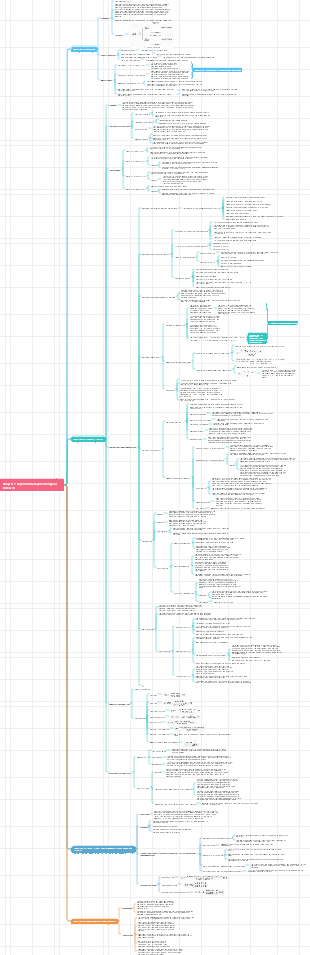
Epidemic Chapter 3 Causes and Causal Inference
Overview
Definition of cause
Triangular model: embodies the basic conditions for the occurrence of disease, emphasizing that the host, environment, and pathogenic factors are the three elements of disease occurrence, and the three balance each other to maintain body health.
Wheel model: Attributes the occurrence of disease to two major causes: the host's own causes: genetic material plays an important role; peripheral environmental factors include: social environment, biological environment, physical and chemical environment, emphasizing that disease and health are the interaction between the environment and the host The result of the action (the proportions of each part in the wheel-shaped model of different diseases are different.)
Cause chain: refers to the occurrence of a disease that is usually the result of multiple pathogenic factors acting sequentially or simultaneously. According to the position of different causes in the cause chain, they are divided into: proximal causes, intermediate causes, and distal causes.
Cause network: The occurrence or prevalence of a disease may be the result of the joint action of two or more cause chains. Various factors interact with each other, intertwined like a network, reflecting the complex relationship between causes and causes, and between diseases and causes, providing a relatively complete Causal path.
Rothman proposed the sufficient cause-necessary cause-component etiology model of disease
Sufficient cause: sufficient conditions for the occurrence of a disease, that is, a series of conditions, factors and events that at least make the disease occur. The presence of this factor will definitely cause the disease; and in the process of the disease, there may be a combined effect of multiple factors, which is sufficient. The cause may be composed of multiple components. We call these factors that work together as component causes. A single component cause is not enough to cause the disease.
Necessary cause: A specific factor must exist for a disease to occur. If the factor is missing, the disease will not occur. However, the necessary cause is not necessarily sufficient. That is, the necessary cause alone may not be enough to cause the disease, and other component causes are needed. Only when they participate and jointly form sufficient causes can the disease occur.
If there is only one sufficient cause for the occurrence of a disease, then each component of the sufficient cause is a necessary cause. For example, a pathogen is a necessary cause of an infectious disease. If the role of the pathogen is lacking, the infectious disease will not occur. At the same time, if there is a lack of transmission routes, And the disease will not occur in susceptible people.
Classification of causes
host factors
Innate factors: genes, chromosomes, gender
Acquired factors: age, development, growth status, physique, behavior, psychology, acquired immunity
envirnmental factor
Biological environment: pathogenic microorganisms, parasites, harmful animals and plants (most infectious diseases and poisonings are the result of biological environmental factors)
Physical and chemical environment: meteorology, geography, water quality: air pollution
Social environment: population, family, eating habits, hobbies
Basic steps and methods of etiology research
step
descriptive research
cross-sectional study system case reporting ecological research
Establish a hypothesis of etiology
Descriptive studies cannot prove the sequential relationship between exposure factors and diseases. The statistical associations found can only illustrate the association between the frequency of diseases and a certain factor at the same time point or period, but cannot determine the causal association.
analytical research
case control study array research
Testing hypotheses about etiology
The case-control study can explore the association between multiple exposure factors and diseases by moving from "effect" to "cause", but it cannot obtain the incidence rate of the exposed group and the non-exposed group; the cohort study design can be directly calculated by moving from "cause" to "effect" An indicator that reflects the strength of the association between exposure factors and disease, and has a strong ability to test etiological hypotheses.
experimental research
Clinical Trials Field Test community experiment
Test the hypothesis of etiology
Through random grouping and the design of balanced and comparable control groups, we can experimentally prove that the causal relationship between exposure factors and diseases is the highest. Completely designed experimental studies can confirm whether there is a causal relationship between exposure factors and diseases.
Research methods
The method of seeking common ground: The method of identifying the necessary conditions for a certain type of event or attribute refers to finding common points among different groups where the same event occurs, and looking for common exposures from the relationship between multiple exposures and outcomes, thereby discovering possible causes.
Difference-seeking method: The method of identifying sufficient conditions for a certain type of event or attribute refers to finding differences between different groups where the event occurs in different situations. If the incidence of the same disease varies greatly with or without exposure to a certain factor, then This factor may be the cause of the disease.
Usage of similarities and differences: a method of identifying necessary and sufficient conditions for a certain type of event or attribute, which means that the correlation between a certain factor and an event conforms to both the similarity and difference method, then the factor may be the cause of the disease.
Covariation method: When the exposure factor is not a categorical output, but a hierarchical output or quantitative variable, and there is a dose-response relationship with the outcome, then the factor is likely to be causally related to the event.
Residual method: When an event is caused by multiple factors, after eliminating known correlations through a variety of methods, the remaining factors may be the cause of the event.
From statistical association to causal association
Changes in the frequency and nature of a certain factor lead to changes in the frequency of a certain disease, and this factor is called the cause of the disease. The connection between the two is called a causal link.
association
Chance correlation (sampling error)
statistically significant association
non-causal association
False correlation (principle, information bias)
Indirect association (confounding bias)
causal connection
Indirect causal link (indirect cause)
Direct causal link (direct cause)
Causal inference standard
The first milestone in human causal inference; The main rules for inferring the etiology of emerging infectious diseases: Henle-Koch principle
1. The pathogen can be detected in patients with related diseases 2. The pathogen has not been found in other patients 3. The organism comes into contact with susceptible animals and can cause the susceptible animals to suffer from the same disease 4. It can be isolated from the infected animals to the same pathogen.
Five criteria for determining the cause of disease
1. Time sequence of association
2.Strength of association
3. Specificity of association
4. Consistency or repeatability of association
5. Coherence or reasonableness of association
Hill standard
Key timing: the temporal sequence of exposure factors and disease occurrence, that is, the logical antecedents and consequences. This standard is a necessary condition and an absolute standard
Strength of the key: the degree of association between exposure and disease. Indicators: ratio OR, relative risk RR, correlation coefficient
Dose-response relationship: Frequency of disease as a function of exposure
Key reproducibility: Different researchers conduct studies on the association between a certain exposure factor and a certain disease using different research methods in different populations and times, and they can all observe the same research results.
Key specificity: The occurrence of a certain disease must occur after a certain factor, or the exposure of a certain factor can only cause a specific disease.
Experimental evidence: Epidemiological experimental methods remove the experimental cause of a certain disease, causing a certain morbidity or mortality rate to decrease or reach zero, indicating that there is a termination effect in the causal relationship. Experimental evidence can come from population field trials, clinical trials, and basic medical experiments.
Reasonability of association: 1. The causal association discovered should be biologically reasonable. It should be consistent with the natural history and biology of the disease. 2 Researchers or evaluators should start from the background of professional knowledge when making assumptions about causal relationships. essential
Critical consistency: Not much different from critical plausibility.