MindMap Gallery Biology - Transcriptional regulation in eukaryotes
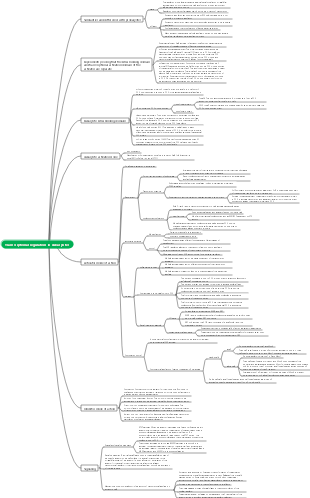
This is a mind map about biology-eukaryotic transcriptional regulation, including gene silencing, activator function, insulator function/characteristics, etc.
Edited at 2023-11-24 18:19:19This is a mind map about bacteria, and its main contents include: overview, morphology, types, structure, reproduction, distribution, application, and expansion. The summary is comprehensive and meticulous, suitable as review materials.

This is a mind map about plant asexual reproduction, and its main contents include: concept, spore reproduction, vegetative reproduction, tissue culture, and buds. The summary is comprehensive and meticulous, suitable as review materials.
This is a mind map about the reproductive development of animals, and its main contents include: insects, frogs, birds, sexual reproduction, and asexual reproduction. The summary is comprehensive and meticulous, suitable as review materials.
This is a mind map about bacteria, and its main contents include: overview, morphology, types, structure, reproduction, distribution, application, and expansion. The summary is comprehensive and meticulous, suitable as review materials.
This is a mind map about plant asexual reproduction, and its main contents include: concept, spore reproduction, vegetative reproduction, tissue culture, and buds. The summary is comprehensive and meticulous, suitable as review materials.
This is a mind map about the reproductive development of animals, and its main contents include: insects, frogs, birds, sexual reproduction, and asexual reproduction. The summary is comprehensive and meticulous, suitable as review materials.
Under the regulation of transcription in eukaryotes
Gene silencing
Heterochromatin morphology
Methylation modification
enhancer
Characteristics of action: long-range effect; no directionality; homeopathic regulation; no species or gene specificity, can be connected to heterologous genes to play a role; tissue-specific; phase-dependent; some enhancers can respond to external signals reaction
Mechanism
① Affect the DNA double helix structure near the template, causing the DNA double helix to bend or, with the participation of trans factors, use the interaction between proteins as a medium to form a loop connection between the enhancer and the promoter, activating gene transcription.
② Fixing the template at a special location in the nucleus, such as connecting it to the nuclear matrix, will help DNA topoisomerase change the tension of the DNA double helix structure and promote the binding and sliding of RNA polymerase II on the DNA chain.
③Enhancers can serve as entrances for trans-acting factors or RNA polymerase II to enter the chromatin structure.
activator action
Recruit the transcription machinery to the promoter
Recruit nucleosome modifications to help the transcription machinery bind to promoters or initiate transcription
Recruits factors required for efficient initiation and elongation
Can regulate gene expression over long distances
Activators can cooperate to bind and integrate signals
Insulator function/characteristics
Preventing the silencer or enhancer on the other side of its boundary from regulating the gene promoter it defines does not itself inhibit the activity of the regulatory factor or promoter.
It can inhibit the unfolding of chromatin modifications, avoid indiscriminate activation/inhibition, and protect genes.
Protect the region between two insulators from external influences, such as protecting randomly inserted genes from silencing
Alternative splicing regulation and ontogeny
Example: Drosophila sex determination
The ratio of X chromosome to autosomal A determines sex: female 2X:2A; male 1X:2A
The X chromosome encodes two transcriptional activators that control Sx1 (sex lethal) gene expression.
Dpn is encoded by the autosomal chromosome and is a suppressor of the Sx1 gene. Its activity is controlled by two transcriptional activators encoded by the X chromosome: SisA, SisB → (transcriptional regulation) Sx1 → (splicing regulation) Tra → (splicing regulation) Dsx. Constructs that control female- and male-specific gene expression respectively
epigenetic regulation
In the absence of both mutation and initiation signals, inheritance of gene expression patterns is called epigenetic regulation
Example
The lysogenic state is maintained by cell division
In the first step, repressor synthesis is established through activation of the repressor (cI) gene by activator cII (which is sensitive to growth conditions).
In the second step, repressor synthesis is maintained through self-regulation: the repressor activates the expression of its own genes
DNA methylation: Certain specific DNA methylases can methylate previously unmodified DNA at a low frequency, but so-called maintenance methylases are extremely efficient at modifying hemimethylated DNA; DNA methylases are almost lactating Key markers of animal silent zones