MindMap Gallery Biology-Transcriptional regulation in eukaryotes
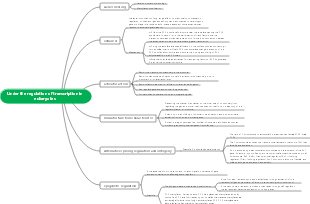
This is a mind map about the transcriptional regulation of eukaryotes, including similarities and differences with prokaryotes, the DNA binding domain of eukaryotes, etc.
Edited at 2023-11-24 18:18:26This is a mind map about bacteria, and its main contents include: overview, morphology, types, structure, reproduction, distribution, application, and expansion. The summary is comprehensive and meticulous, suitable as review materials.

This is a mind map about plant asexual reproduction, and its main contents include: concept, spore reproduction, vegetative reproduction, tissue culture, and buds. The summary is comprehensive and meticulous, suitable as review materials.
This is a mind map about the reproductive development of animals, and its main contents include: insects, frogs, birds, sexual reproduction, and asexual reproduction. The summary is comprehensive and meticulous, suitable as review materials.
This is a mind map about bacteria, and its main contents include: overview, morphology, types, structure, reproduction, distribution, application, and expansion. The summary is comprehensive and meticulous, suitable as review materials.
This is a mind map about plant asexual reproduction, and its main contents include: concept, spore reproduction, vegetative reproduction, tissue culture, and buds. The summary is comprehensive and meticulous, suitable as review materials.
This is a mind map about the reproductive development of animals, and its main contents include: insects, frogs, birds, sexual reproduction, and asexual reproduction. The summary is comprehensive and meticulous, suitable as review materials.
Transcriptional regulation in eukaryotes
Similarities and differences with prokaryotes
same
The regulation principles are the same: external signal stimulation, intracellular activators and inhibitors transmit signals, and function through recruitment, allostery and synergistic binding.
Regulation occurs at similar stages: mainly during the initiation of transcription
different
Eukaryotic regulation can occur at the pre-mRNA splicing stage, which is not possible in prokaryotic regulation.
Eukaryotic transcription machinery is more complex and subject to more diverse regulation
Nucleosomes and their modifications influence gene transcription
Many eukaryotic genes have multiple regulatory protein binding sites and are therefore regulated by more regulatory proteins.
Experiments proving that the DNA-binding domain and transcriptional activation domain of the activator are separate
Experimental object: Gal4 activator of eukaryotic cells, which can activate the transcription of the galactose gene of Saccharomyces cerevisiae
① Domain exchange experiment: The protein obtained by expressing the fragment of the Gal4 gene (N-terminal 1/3) can bind to DNA normally, but cannot activate the transcription process. Such a protein contains a DNA-binding domain but lacks an activation domain, so the DNA-binding and transcriptional activation domains of Gal4 can function separately.
② Yeast two-hybrid experiment: Construct a hybrid gene that fuses the C-terminal 2/3 sequence encoding the Gal4 protein with the DNA binding domain of the bacterial inhibitor protein LexA. The resulting protein is expressed in yeast with the same reporter plasmid. There is a LexA binding site upstream of the plasmid Gal4 promoter, and the fusion protein can activate the transcription of this reporter. Experiments show that activation is not only mediated by binding to DNA. On the contrary, the role of the DNA-binding domain is only to bind the activation domain. associated with the promoter.
Eukaryotic DNA binding domains
① Homotype domain proteins: A type of protein with a helix-turn-helix motif DNA-binding domain that binds to DNA in the same way as bacterial regulatory proteins
②Zinc-containing DNA binding domain
zinc finger protein
Type C4: The zinc atom cooperates with four cysteines to form a DNA recognition domain similar to helix-turn-helix.
C2H2 type: Zinc atom interacts with cysteine disability and histidine to keep the DNA binding domain intact
zinc cluster domain
③Leucine zipper domain: This protein contains both dimerization surface and DNA binding surface. Dimerization: interaction with the hydrophobic surface (leucine) of the alpha helix; DNA binding: interaction with the symmetric DNA recognition site, ultimately clamping on the DNA like a clamp
④Helix-loop-helix domain (HLH): The extended α-helical region in each monomer is embedded in the major groove of DNA. It is similar to the structure of leucine zipper and can also form dimers and is called basic zipper/base. sexual HLH protein
⑤ High-speed motility protein (HMG): The highly conserved peptide chain AY hooks can interact with the minor groove of the DNA helix and significantly change the conformation of the DNA double helix.
eukaryotic activation zone
with uncertainty
Classification: ①Acidic activation zone (most common, Gal4) ②Glutamine-rich zone (SP1) ③Proline-rich zone (CTF1)
Activator mode of action
No allosteric activation in eukaryotes
Recruitment
For indirect recruitment of polymerase
Interacts with a part of the transcription machinery other than the polymerase to recruit the transcription machinery to the gene
Recruit nucleosome modifiers to change the chromatin structure near genes and facilitate gene activation
Transcription machine
Polymerase and multiple protein complexes, including intermediary protein and TFIID complex
Experiments to test the interaction between activators and proteins
ChIP chromatin immunoprecipitation experiment: ChIP is used to see which part of the genome a regulatory protein interacts with
Activator bypass experiment: the activator directly recruits the mediator protein to DNA to activate transcription, and activates transcription through the direct connection between the mediator protein and DNA.
nucleosome modifications
Role: Directly recruits transcription machinery to help activate inaccessible genes embedded in chromatin
modifier type
Adding chemical genes, such as acetyl groups, to histone tails
Modifiers that remodel nucleosomes, such as SWI/SNF dependent on ATP activity
Model that assists activation: nucleosome remodeling exposes DNA binding sites; adding acetyl groups to histone tails creates new protein binding sites on nucleosomes and relaxes chromatin structure
action at a distance
Mode of action
Certain proteins help, such as cohesin
chromatin compacted structure
control
The globin gene expresses different locus genes at different stages of development.
The LCR regulatory element in the site control region binds to regulatory proteins to cause the opening of the chromatin structure
Wide-area control region GCR action in mice, long-distance regulation
synergy
collaborative sources
Multiple activators each recruit the same component of the transcription apparatus
Multiple activators each recruit different components of the transcription apparatus
Multiple activators interact to help bind to sites upstream of the genes they regulate
How activators coordinately bind to DNA
Two proteins cooperate to bind to DNA through direct interactions, also known as "classical" cooperative binding.
Two proteins interact with a shared third protein to achieve similar effects
An indirect way in which the binding of a protein to a DNA site within a nucleosome promotes the binding of another protein
The first protein recruits nucleosome remodeling molecules to expose the binding site of the second protein
The first protein binds to its site, a DNA site that happens to be outside the nucleosome. Binding slightly unfolds the nucleosomal DNA to expose the binding site of the second protein.
Signal integration example
HO gene
Co-regulated by two activators: SWI5 and SBF
SWI5: recruits nucleosome modifiers (nucleosome remodeling proteins) to open the originally shielded SBF binding site
SBF: only active in the G1/S transition phase of the cell cycle, recruiting intermediary proteins
human beta-interferon gene
Expressed when the virus invades cells, infection activates three activators
The activator binds to the enhancer synergistically to form an enhancer body, which subsequently recruits the coactivator CBP
Combination control
In combinatorial control, activator proteins work together with repressor proteins. bacterial CAP activator
Combinatorial regulation of mating type genes in S. cerevisiae
haploid cells
a cell
Produce regulatory proteins a1 and Mcm1
The α-cell-specific gene is turned off without an activator to bind to it, the α-cell-specific gene is turned on, and Mcm1 binds and activates the gene.
alpha cells
Produce regulatory proteins α1, α2 and Mcm1
The α cell-specific gene is turned on, and Mcm1 binds upstream of the promoter and activates gene expression. Mcm1 binds at a weak binding site and only functions with the α1 monomer. a cell-specific genes remain switched off due to the presence of the α2 repressor
Characteristics of α2 repressor: ① It covers the spark of Mcm1 to prevent protein expression, ② It also effectively suppresses these genes.
Diploid cells a/α: a cell-specific genes and α-cell-specific genes are turned off, and haploid-specific genes are turned off by α2 in diploid cells
Inhibitor mode of action
Competition: Competition with the activator for the binding site. By binding to overlapping sites that bind activators, repressors inhibit the binding of activators to genes, thereby blocking gene activation.
Inhibition: Inhibits activator function. The inhibitor binds to a site next to the activator and interacts with the activator, sterically blocking its activation region.
Direct inhibition: competes with activator for binding to polymerase. The inhibitory factor binds to the site upstream of the gene and inhibits the initiation of transcription by acting in a special way with the transcription apparatus.
Indirect inhibition: recruitment of nucleosome modifiers. Represses transcription by recruiting histone-modifying enzymes to alter nucleosomes. Such as methylation modification and deacetylase action.
Signaling
Examples of signaling pathways
STAT pathway: When the receptor is activated by a ligand, it will cause the two receptor chains to gather, triggering the activation of kinases in each chain to phosphorylate a special sequence in the receptor cell region. This phosphorylation site is subsequently recognized by the STAT protein. , the protein is also randomly phosphorylated, and then dimerizes and moves to the nucleus to bind to DNA.
The mitogen-activated protein kinase (MAPK) pathway that controls the activator: Jun causes the activator to act on the beta interferon enhancer, and the activated receptor induces a series of signaling events that ultimately lead to MAPK activation, and MAPK further phosphorylates Jun.
Signaling pathway: The initial signal/ligand binds to the extracellular domain of the specific receptor on the cell surface → the signal is transmitted to the intracellular domain of the receptor (through allostery or dimerization of the receptor) → the signal is then transmitted in a relay to the relevant transcriptional regulator → the transcriptional regulator controls the expression of the target gene
Mechanisms by which signals control the activity of transcriptional regulators in eukaryotic cells
Activation zone exposure: ① Changes in the conformation of the activation zone expose the originally masked activation zone; ② Release of the originally masked protein; ③ Some shielding proteins not only block the activator activation zone, but also recruit/act as deacetylase to prevent gene expression
Activators are transported to the nucleus to exert their effects
The kinase cascade process ultimately leads to the phosphorylation of the nuclear regulator
The activated receptor is cleaved by proteases, and the C-terminal part of the receptor enters the nucleus and activates the regulatory element