MindMap Gallery Quinones
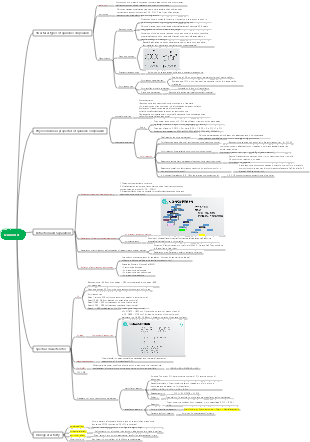
This is a mind map about quinone compounds, which are a class of natural organic compounds with unsaturated cyclic dione.
Edited at 2023-11-24 14:29:00This is a mind map about bacteria, and its main contents include: overview, morphology, types, structure, reproduction, distribution, application, and expansion. The summary is comprehensive and meticulous, suitable as review materials.

This is a mind map about plant asexual reproduction, and its main contents include: concept, spore reproduction, vegetative reproduction, tissue culture, and buds. The summary is comprehensive and meticulous, suitable as review materials.
This is a mind map about the reproductive development of animals, and its main contents include: insects, frogs, birds, sexual reproduction, and asexual reproduction. The summary is comprehensive and meticulous, suitable as review materials.
This is a mind map about bacteria, and its main contents include: overview, morphology, types, structure, reproduction, distribution, application, and expansion. The summary is comprehensive and meticulous, suitable as review materials.
This is a mind map about plant asexual reproduction, and its main contents include: concept, spore reproduction, vegetative reproduction, tissue culture, and buds. The summary is comprehensive and meticulous, suitable as review materials.
This is a mind map about the reproductive development of animals, and its main contents include: insects, frogs, birds, sexual reproduction, and asexual reproduction. The summary is comprehensive and meticulous, suitable as review materials.
Quinones
Definition: A class of natural organic compounds with unsaturated cyclic dione
Classification
Benzoquinone
Divided into p-benzoquinone and o-benzoquinone
naphthoquinone
Eg: Calming juglone, vitamin K
phenanthrenequinone
eg: Salviaquinone
Anthraquinone
Emodin type: hydroxyl groups are distributed on both sides of the benzene ring
Rubiacin: hydroxyl group is distributed on one side
Physical and chemical properties
physical properties
Color: The more auxiliary chromophores, the darker the color
Traits
Benzoquinone, naphthoquinone: free state, mostly crystalline
Anthraquinone: Glycoside, difficult to crystallize
solubility
Free quinone: less polar, soluble in lipophilic organic solvents
Anthraquinone glycoside: easily soluble in water-soluble organic solvents
Anthraquinone carbon glycoside: Hardly soluble in water and organic solvents, easily soluble in pyridine, DMSO
Sublimation, volatility: free anthraquinone
chemical properties
Acidic
Rule: Carboxyl group > Contains two β-hydroxyl groups > Contains one β-hydroxyl group > Contains two α-hydroxyl groups > Contains one α-hydroxyl group
Color reaction
Feigl reaction
Distinguish between quinones and non-quinones
Colorless methylene blue color test
Exclusive reaction of benzoquinone and naphthoquinone
Kesting-Craven method
Exclusive reaction of benzoquinone and naphthoquinone
Borntrager reaction
Hydroxyanthraquinone positive
with metal ions
Anthraquinone
p-Nitrosodimethylaniline reaction
anthrone
extract (There are many salts in plants, Make it free and acidify it with acid)
organic solvent extraction method
Free anthraquinone: chloroform, ethyl acetate
Glycoside: methanol or ethanol
alkaline acid method
Contains acidic groups
steam distillation
Small molecules of benzoquinone and naphthoquinone can volatilize
separation
Separation of free hydroxyanthraquinone
pH gradient extraction method (strong base - weak acid, strong acid - weak base)
chromatography
Commonly used silicone, polyamide
Separation of anthraquinone glycosides and anthraquinone aglycones
Separate according to different solubility
Isolation of anthraquinone glycosides
Solvent method: use a more polar solvent to extract purer total glycosides
chromatography
detect
Physical and chemical examination
Color reaction
Chromatographic identification
Structure Identification
UV spectrum
The anthraquinone mother core has four absorption peaks
IR
H NMR