MindMap Gallery Natural Medicinal Chemistry Quinones
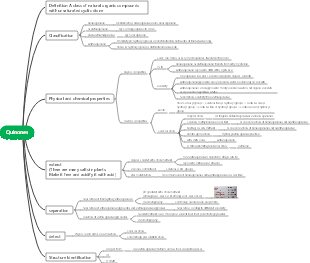
This is a mind map about natural medicinal chemistry quinone compounds, including the structural types, Physicochemical properties, extraction and separation of quinone compounds, Spectral characteristics, biological activity, etc.
Edited at 2024-01-16 20:33:45This is a mind map about bacteria, and its main contents include: overview, morphology, types, structure, reproduction, distribution, application, and expansion. The summary is comprehensive and meticulous, suitable as review materials.

This is a mind map about plant asexual reproduction, and its main contents include: concept, spore reproduction, vegetative reproduction, tissue culture, and buds. The summary is comprehensive and meticulous, suitable as review materials.
This is a mind map about the reproductive development of animals, and its main contents include: insects, frogs, birds, sexual reproduction, and asexual reproduction. The summary is comprehensive and meticulous, suitable as review materials.
This is a mind map about bacteria, and its main contents include: overview, morphology, types, structure, reproduction, distribution, application, and expansion. The summary is comprehensive and meticulous, suitable as review materials.
This is a mind map about plant asexual reproduction, and its main contents include: concept, spore reproduction, vegetative reproduction, tissue culture, and buds. The summary is comprehensive and meticulous, suitable as review materials.
This is a mind map about the reproductive development of animals, and its main contents include: insects, frogs, birds, sexual reproduction, and asexual reproduction. The summary is comprehensive and meticulous, suitable as review materials.
Quinones
Structural types of quinone compounds
definition
Compounds with or easily converted to unsaturated cyclic dione structures, as well as compounds closely related to quinones in biosynthesis
distributed
Quinones have an unsaturated ketone structure and are often colored when connected to auxochromophores (-OH, -OCH3, etc.); they often exist as pigments in animals, plants, and microorganisms
Classification
Benzoquinones
O-benzoquinone is unstable. In nature, it is mainly p-benzoquinone, which is mostly substituted by hydroxyl, methoxy and methyl groups.
Quinone: orange-red crystal, repels intestinal parasites; Coenzyme Q10: treats heart disease, high blood pressure, and cancer
Conversion of hydroquinone: reduced to hydroquinone by sodium hyposulfite under alkaline conditions; reversible, plays an important role as an electron transfer medium in organisms
Naphthoquinones
Basically, alpha-naphthoquinones are obtained in nature, such as juglone (antibacterial, anti-cancer and central nervous system sedative)
Phenanthrenequinones
Including o-phenanthrenequinone and p-phenanthrenequinone
Anthraquinones
Anthraquinone derivatives
Emodin type (-OH on both sides of the carbonyl group): mostly yellow
Rubiacin type (-OH is on one side of the benzene ring): color orange-yellow, orange-red
Anthranol (anthrone) derivatives
Unstable, only found in fresh plants
Dianthrone derivatives
Sennoside (the main diarrheal component in senna)
Physicochemical properties of quinone compounds
physical properties
Existence status: • Benzoquinone and naphthoquinone: mostly exist in free state • Anthraquinones: often combined into glycosides and present in plants Sublimation: Free quinones are mostly sublimable Volatility: small molecule benzoquinone, naphthoquinone Fluorescence: conjugated chain: sky blue fluorescence, long conjugated chain: yellow fluorescence (anthraquinone)
chemical properties
Acidic
The number and position of Ar-OH are different → acidity is strong and weak, molecular symmetry is good → strong association → acidity ↓
The order of acidity: -COOH > 2 or more β-OH > 1 β-OH > 2 α-OH > 1 α-OH Extraction and separation: 5% NaHCO3; 5% Na2CO3; 1% NaOH; 5% NaOH
Color reaction
Feigl reaction (quinone derivatives)
Quinone derivatives can quickly react with aldehydes and o-dinitrobenzene when heated under alkaline conditions to generate purple compounds.
Colorless methylene blue color test (benzoquinone, naphthoquinone)
Benzoquinone and naphthoquinone → blue, anthraquinone ×, for TLC, PC
Color reaction under alkaline conditions (hydroxyquinones)
Hydroxyquinones in alkaline solution → deepen in color and appear orange, red, purple-red and blue Hydroxyanthraquinones → red ~ purple (Bornträgers reaction)
Reacts with active methine reagents (benzoquinone, naphthoquinone)
Kesting-Craven method: benzoquinone → pink, naphthoquinone → purple OH substitution: reaction is hindered Anthraquinone: negative
Reacts with metal ions (anthraquinones with α-phenolic hydroxyl or o-diphenolic hydroxyl groups)
If anthraquinone compounds have an α-phenolic hydroxyl or o-diphenolic hydroxyl structure, they can form colored complexes with Fe3 (purple), Pb2 (orange), Mg2 and other ions
p-Nitrosoaniline reaction (C-9, 10 unsubstituted hydroxyanthrone)
C-9, C-10 unsubstituted hydroxyanthrone: blue-violet
Extraction and Separation
Extraction method of free quinones
1. Organic solvent extraction method 2. Alkali extraction acid precipitation method: used to extract compounds containing acidic groups (Ar-OH, -COOH) 3. Steam distillation method: suitable for small molecule benzoquinone and naphthoquinone compounds
Separation of free hydroxyanthraquinone
pH gradient extraction method
chromatography
Adsorbent: silica gel (acidic/neutral), polyamide (alkaline/neutral); alumina, especially alkaline alumina, is not suitable
Separation of anthraquinone glycosides and free anthraquinone derivatives
Extraction: Plants often exist in the form of Mg2, K, Na, and Ca2. They should be fully acidified to free them.
Separation: big difference in polarity, extraction method
Isolation of anthraquinone glycosides
Use column chromatography for separation. Commonly used carriers: silica gel, polyamide, glucose gel (larger molecules come down first)
Examples: Rhubarb, Glucose Gel (MW) • Dianthrone glycosides • Anthraquinone diglucoside • Anthraquinone monoglycosides • Anthraquinone aglycone
Spectral characteristics
UV
Benzoquinone: ~240 nm: strong peak; ~285 nm: moderately strong peak; ~400 nm: weak peak
Naphthoquinones: 257nm, introducing auxochromophore to shift to red
Anthraquinones: Peak Ⅰ: around 230 nm (strong absorption peak of the mother core) Peak II: 240 ~ 260 nm (caused by benzene-like structure) Peak III: 262 ~ 295 nm (caused by quinone-like structure) Peak IV: 305 ~ 389 nm (caused by benzene-like structure) Peak V: > 400 nm (caused by >C=O in the quinone-like structure)
infrared
Hydroxyanthraquinones
υC=O: 1675 ~ 1653 cm-1 (stretching vibration of carbonyl group) υ-OH: 3600 ~ 3130 cm-1 (stretching vibration of hydroxyl group) υaromatic ring: 1600 ~ 1480 cm-1 (skeleton vibration of benzene nucleus)
mass spectrometry
The molecular ion peak is usually the base peak, and there are fragment ion peaks missing 1-2 molecules of CO.
1H-NMR
When there is a power-supplying substituent on the quinone ring, the chemical displacement of other protons on the quinone ring shifts to a higher field.
OCH3 > OH > OCOCH3 > CH3
13C-NMR
Preparation of quinone compound derivatives
methylation reaction
Purpose: To protect -OH, determine the number of -OH and the position of glycosides
Ease of methylation: The stronger the acidity, the easier it is for protons to dissociate and the easier it is for methylation. -COOH > β-OH > Ar-OH > α-OH > R-OH
Reagent activity
CH3I > (CH3)2SO4 > CH2N2
Solvent
The polarity of the solvent is strong and the methylation ability is enhanced.
acetylation reaction
Reactivity
The stronger the nucleophilicity, the easier it is to be acylated: R-OH > β-OH > α-OH
Activity of acylating reagents
Acetyl chloride > Acetic anhydride > Esters > Glacial acetic acid
Catalytic ability of catalyst
Pyridine > Concentrated sulfuric acid
biological activity
purgative effect
Activity pattern: glycoside>glycone, dianthrone>anthrol>anthraquinone (containing COOH>containing OH>OH substituted) The main laxative components in rhubarb are: dianthrones
Antibacterial effect
Aglycon activity > glycoside; rhein, emodin, aloe-emodin, etc. have this effect
anti-tumor effect
Rhein, emodin, etc. inhibit breast cancer and Ehrlich ascites cancer in rats
Other functions
Significant inhibitory effect on cAMP phosphodiesterase