MindMap Gallery Learning educational psychology knowledge
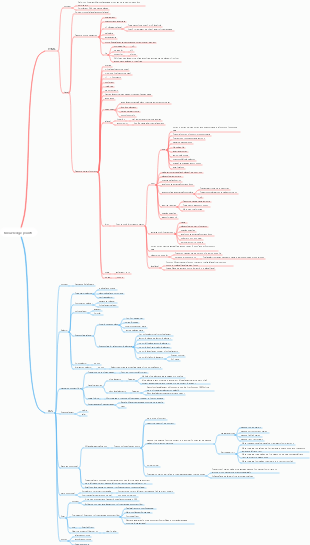
An article about educational psychology, knowledge learning mind map. Knowledge is the attributes and connections between people and things. Active responses are formed through the interaction between people and objective things.
Edited at 2023-11-22 18:45:41This is a mind map about bacteria, and its main contents include: overview, morphology, types, structure, reproduction, distribution, application, and expansion. The summary is comprehensive and meticulous, suitable as review materials.

This is a mind map about plant asexual reproduction, and its main contents include: concept, spore reproduction, vegetative reproduction, tissue culture, and buds. The summary is comprehensive and meticulous, suitable as review materials.
This is a mind map about the reproductive development of animals, and its main contents include: insects, frogs, birds, sexual reproduction, and asexual reproduction. The summary is comprehensive and meticulous, suitable as review materials.
This is a mind map about bacteria, and its main contents include: overview, morphology, types, structure, reproduction, distribution, application, and expansion. The summary is comprehensive and meticulous, suitable as review materials.
This is a mind map about plant asexual reproduction, and its main contents include: concept, spore reproduction, vegetative reproduction, tissue culture, and buds. The summary is comprehensive and meticulous, suitable as review materials.
This is a mind map about the reproductive development of animals, and its main contents include: insects, frogs, birds, sexual reproduction, and asexual reproduction. The summary is comprehensive and meticulous, suitable as review materials.
knowledge learning
Concept: Knowledge is people’s knowledge of the attributes and connections of things, and active responses are formed through the interaction between people and objective things.
Classification of knowledge
ways to acquire knowledge
Direct knowledge: derived from personal experience
Indirect knowledge: obtained from books
abstraction level
Perceptual knowledge: a reflection of the appearance characteristics and external connections of things
Rational knowledge: reflects the essential characteristics and inner connections of things
objectivity of knowledge
Subjective knowledge: an individual’s interpretation of facts
Objective knowledge: relatively conventional knowledge
ownership of knowledge
Personal knowledge: unique
Public knowledge: what society enjoys
The relationship between knowledge and speech
Explicit knowledge: knowledge that can be explained clearly in words
Tacit knowledge: knowledge that cannot be fully expressed in language
The complexity and variety of knowledge and its applications
What constitutes good domain knowledge is structured knowledge composed of clear factual concepts and rules.
Ill-structured domain knowledge: knowledge that is used flexibly
state and manifestation of knowledge
Declarative knowledge: “what is”
1. Symbol representation learning: establishing the equivalence relationship between symbols and things
2. Concept learning: master the key characteristics of similar things
3. Proposition learning: learning the relationship between things
Procedural knowledge: “how to do it”
Factors affecting knowledge learning
Internal factors
1. Previously, the richer the knowledge in knowledge-related fields, the faster the construction of new knowledge and the generation of meaning. Learning is conducive to the maintenance of new knowledge.
2. Cognitive structure: The availability, discriminability and stability of cognitive structure affect the acquisition of knowledge, the construction of new knowledge, the maintenance of knowledge, the speed and accuracy of problem solving and knowledge extraction.
3. Learning motivation and attitude: The higher the level of learning motivation within a certain range, the higher the student’s learning efficiency will be.
4. Learning aspiration and mindset: a state of psychological preparation caused by previous learning that has a special impact on future learning activities.
external factors
1. Content and form of learning materials
Arrangement of content: difficulty, quantity
Form: logical, intuitive
2. Teacher guidance
Guide students to discover the meaning and value of learning
Explicit learning strategy guidance
3. Learning situation
The learning place, the layout of the environment, the similarity between teaching and testing personnel
representation of knowledge
Representation of knowledge refers to the representation and organizational structure of knowledge in the mind
1. Declarative knowledge is represented by concept propositions, propositional network representations or diagrams
symbolic learning
concept learning
Concept assimilation: first present the concept directly to the learner in a defined way, Learners use existing concepts and knowledge experiences in their own cognitive structures to understand and clarify the common key characteristics of a type of things.
Teaching method: rules and regulations, learning method: receptive learning
Concept formation: Learners analyze and compare a large number of examples of similar things to see how they differ from other things. A learning method to discover the common key features of such things
Teaching method: example-rule method, learning method: guided discovery learning
The difference between concept assimilation and concept formation
1. Different psychological processes 2. Different learning conditions
proposition learning
Concepts are often expressed in terms of propositions
2. Procedural knowledge is mainly represented by production
Lower level learning
1. Derived generic learning: The newly learned content is an example of a previously learned concept.
Relevant generic learning: The newly learned knowledge is subordinate to a certain concept that has been learned in the mind, but it is not completely included. The two are only related to each other.
Superior learning
Also called comprehensive learning, it is to learn a concept or proposition with a higher degree of generalization and inclusiveness based on a certain concept that has been formed.
learning in parallel
Learning that occurs when new knowledge and the original concepts in the knowledge structure are neither generic nor comprehensive is a parallel combination of learning conditions
transfer of knowledge
It is a kind of learning that has an impact on another kind of learning.
major factor
1. Similarity of learning tasks
2. Original cognitive structure
3. Understanding of learning situations
4. The intention and attitude towards learning
5. Learn the level of strategy
6. Learning guidance
Classification
Depending on the nature and consequences of the migration
Positive transfer: one kind of learning promotes another kind of learning
Negative transfer: interference between two types of learning
Depending on the direction in which the migration occurs
Forward transfer: the impact of knowledge learned first on knowledge learned later
Reverse transfer: the impact of later-learned knowledge on first-learned knowledge
Depends on the content of the migration
General transfer: In a kind of learning, the acquired principles, methods, strategies and attitudes are transferred to the learning of specific content.
Special transfer: The specific and special experience acquired in learning is directly used in another learning process.
Depends on the scope of migration
Near transfer: Transferring learning experience to a situation that is relatively similar to the original one
Far transfer: Transferring learned experience to other situations that are basically dissimilar to the original situation.
Depending on the degree of automation of the migration
Low-pass transfer: the process of repeated practice of automation
High-path transfer: consciously abstract and generalize, Identify principles, ideas, strategies and procedures that are not limited to specific situations and can be applied universally
classical theory
form training theory
Wolf (functional psychology)
Through certain training, various functions of the mind can be developed and transferred to other studies.
Advocacy: Studying difficult subjects
Teaching: Mastering knowledge is secondary, the development of faculties is the most important
same elements theory
James, Thorndike, Woodworth
Thorndike: One kind of learning can have an impact on another kind of learning because both have common factors.
Woodworth: The content, substance and procedures are the same.
Teaching: In terms of curriculum, we focus on combining the teaching content of applied subjects with practice.
Limitation: Failure to fully consider the learner’s inner training process
generalization theory
Judd
Principles learned through experience are the main reasons migration occurs, The better you master the principles, the better you can transfer learning to new situations.
relational transformation theory
The essence of migration is the understanding of the relationship between things
1. There is a certain relationship between the two types of learning
2. Learners’ understanding and enlightenment of this relationship
cognitive structure transfer theory
Ausubel
All meaningful learning is based on original learning. That is, meaningful learning must include transfer
In teaching to promote transfer, teachers should pay attention to the following matters
1. Establish clear, specific and realistic teaching goals
2. Pay attention to the arrangement of teaching materials and teaching content
3. Teaching is meaningful to students
4. Present multiple examples in various situations
5. Consciously teach students how to learn and flexibly use various strategies