 Wondershare EdrawMind
MindMap Gallery Dust removal device
- 43
Dust removal device
Mainly introduces the types and parameters of dust removal equipment. Including bag dust collector, mechanical dust collector, electrostatic precipitator, etc. Mainly helpful for novices.
Edited at 2023-11-21 22:09:59
- bacteria
This is a mind map about bacteria, and its main contents include: overview, morphology, types, structure, reproduction, distribution, application, and expansion. The summary is comprehensive and meticulous, suitable as review materials.
- Plant asexual reproduction
This is a mind map about plant asexual reproduction, and its main contents include: concept, spore reproduction, vegetative reproduction, tissue culture, and buds. The summary is comprehensive and meticulous, suitable as review materials.
- Reproductive development of animals
This is a mind map about the reproductive development of animals, and its main contents include: insects, frogs, birds, sexual reproduction, and asexual reproduction. The summary is comprehensive and meticulous, suitable as review materials.
Dust removal device
- bacteria
This is a mind map about bacteria, and its main contents include: overview, morphology, types, structure, reproduction, distribution, application, and expansion. The summary is comprehensive and meticulous, suitable as review materials.
- Plant asexual reproduction
This is a mind map about plant asexual reproduction, and its main contents include: concept, spore reproduction, vegetative reproduction, tissue culture, and buds. The summary is comprehensive and meticulous, suitable as review materials.
- Reproductive development of animals
This is a mind map about the reproductive development of animals, and its main contents include: insects, frogs, birds, sexual reproduction, and asexual reproduction. The summary is comprehensive and meticulous, suitable as review materials.
- Recommended to you
- Outline
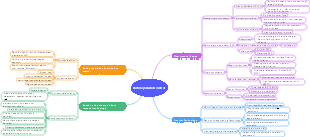

Dust removal device
Mechanical dust collector
Definition: A device that uses mass force (gravity, inertial force, centrifugal force, etc.) to separate particles from airflow.
The device contains
gravity settling chamber
Classification
Laminar flow settling chamber
Turbulent gravity settling chamber
Advantages and Disadvantages
Advantages: simple structure, low investment, small pressure loss (generally 50~130Pa), easy maintenance and management.
Disadvantages: large size and low efficiency, so it can only be used as a pre-dust removal device for high-efficiency dust collectors to remove large and heavier ions.
Inertial dust collector
Definition: In order to improve the dust removal effect of the settling chamber, various forms of baffles can be installed in the settling chamber to make the dust-laden airflow impact on the baffles; the direction of the airflow changes sharply, and with the help of the inertial force of the dust particles themselves, they collide with the dust particles. Air flow separation.
Inertial dust collector structure type
Impact type: The particles in the air flow impact the baffle to capture coarser particles. Impact dust collectors include single-stage and multi-stage.
Reverse type: captures finer particles by changing the direction of air flow. Reversing dust collectors include elbow type, louver type, and multi-layer isolation plate type
Application of inertial dust collector
Factors affecting the dust collector: the higher the gas flow rate, the larger the gas flow direction change angle, and the greater the number of changes, the higher the purification efficiency and the greater the pressure loss.
Application: When used to purify metal or mineral dust with larger density and particle size, it has higher dust removal efficiency.
Unsuitable scenarios: For cohesive and fibrous dust, it is not suitable to be used because it is easy to clog.
Application scenario: Generally only applicable to the first stage dust collector of multi-stage dust collector. Captures coarse dust particles above 10um~20um. Pressure loss depends on the type, generally 100~1000pa
Cyclone
Definition: Cyclone dust collector is a device that uses rotating airflow to generate centrifugal force to separate dust particles from the airflow. It has simple structure, wide application and various types. However, due to the complex filling of internal air flow and particle flow, it is difficult to accurately measure, and many require experiments to verify.
Movement of air flow and dust particles in cyclone dust collector
Cyclone dust removal generally consists of: intake pipe, cylinder, cone and exhaust pipe, etc.
The downward rotating one is called the outer vortex, and the upward rotating central airflow is called the inner vortex. Both have the same direction of rotation.
Upper vortex: When the airflow rotates downward at a high speed from the top of the dust collector, the pressure at the top drops. A part of the airflow carries fine dust particles and rotates upward along the cylinder wall. After reaching the top, it rotates downward along the outer wall of the discharge pipe, and finally reaches the Discharged from the discharge pipe, this rotating airflow is called an upper vortex.
The motion of the inner and outer vortex gas is decomposed into three velocity components: tangential velocity, radial velocity and axial velocity.
Tangential velocity: the main velocity component that determines the speed of the airflow, and also the main factor that determines the centrifugal force of the airflow particle.
Axial velocity is similar to radial velocity and depends on the internal and external vortices.
Cyclone dust collector pressure loss
A major indicator of cyclone dust collector design and performance is the pressure loss of airflow through the cyclone dust collector, also known as pressure drop. Due to the complex structure of the dust collector and the dynamic changes in operating status, the difficulty in theoretical calculation is mainly determined through experiments.
The acceptable pressure loss during cyclone dust collector operation is generally less than 2kpa
Dust removal efficiency of cyclone dust removal
Calculating the split diameter is the basis for determining dust removal efficiency.
Another widely used graded efficiency formula is an empirical formula proposed by analyzing a large amount of experimental data, and its accuracy can fully meet the needs of engineering design.
Factors affecting cyclone dust collector efficiency
secondary effects
proportional size
physical properties of smoke
Manipulated variables
Structural form of cyclone dust collector
Classification according to air intake mode: tangential entry type (also divided into direct entry type and volute type) and axial entry type
Classified according to airflow organization: return flow type, direct flow type, horizontal rotation type and swirling flow type, etc.
Multi-tube dust collectors are divided into two types: return flow type and direct flow type
Cyclone dust collector design types
Reasonably select the type of cyclone dust collector based on a comprehensive analysis of dust concentration, particle size distribution, density and other flue gas characteristics, as well as dust removal requirements, allowable pressure loss and manufacturing conditions.
Determine the inlet air speed based on the allowable pressure drop during use.
Determine the cross-sectional area, entrance width and height of the cyclone dust collector
Confirm the geometric dimensions of each part: determine the geometric dimensions of each part based on the inlet cross-sectional area, entrance width and height.
Baghouse
Definition: An air filter is a device that separates and captures dust by passing dust-laden airflow through filter materials. Air filters use filling layers such as filter paper or glass fiber as filter materials. They are mainly used for gas purification in ventilation and air conditioning.
How bag dust collector works
Principle of mechanical vibration bag dust collector: Dust-laden airflow enters the cylindrical filter bag from the lower orifice plate. When passing through the pores of the filter material, the dust is captured and the clean gas that penetrates the filter material is discharged from the discharge port. The dust deposited on the filter material can fall off the surface of the filter material under the action of mechanical vibration and fall into the ash hopper.
Porosity of filter material: Generally, the pores of filter material are 20~50um, and the filter material with raised surface is 5~10um. Therefore, the dust removal efficiency of fresh filter material is low.
The first layer of dust: Due to the effects of interception, inertial collision, static electricity and diffusion, particles gradually form a dust layer on the surface of the filter bag, which is often called the first layer of dust. After being formed, it becomes the main filter layer of the bag dust collector, improving the dust removal efficiency. The filter cloth only plays the role of forming the initial layer of dust and supporting it. However, as the particles accumulate on the filter bag, the pressure difference on both sides of the filter bag increases, which will squeeze out the fine dust attached to the filter material. , which means the dust removal efficiency decreases.
Factors affecting bag dust collector efficiency:
Particulate matter load: Indicates the thickness of the particle layer on the surface of the filter cloth, which indicates the amount of dust accumulated on the filter cloth per unit area.
Filtration speed: the ratio of the actual volume flow of flue gas to the area of filter cloth, so it is also called the gas-to-cloth ratio.
Influence of filtration speed: Filtration speed mainly affects inertial collision and diffusion. When selecting filtration speed, you need to consider the particle size and distribution to be captured. Generally, the dust removal efficiency decreases as the filtration speed increases. The selection of filtration speed is also related to the type of filter material and the dust cleaning method.
Dust cleaning: The pressure of the dust collector is too high, and the passing air volume decreases significantly, which affects the exhaust effect, so the dust needs to be cleaned in time. Cleaning should not be excessive and should not destroy the first layer of dust, otherwise the dust removal efficiency will be significantly reduced.
Bag filter pressure loss
The significance of pressure loss: Energy is usually expressed by the pressure loss of air flow through the filter bag. It is an important technical and economic indicator, which not only determines energy consumption, but also determines dust removal efficiency and cleaning interval.
The composition of pressure loss:
Pressure loss through clean filter bags. The pressure is generally 100~130pa.
Pressure loss through the ash layer. The pressure loss after the ash layer is formed is 500~570pa.
When the pressure loss approaches 1000pa, the filter bag generally needs to be cleaned.
Pressure loss calculation generally uses Darcy's formula. Pay attention to the penetration rate.
Bag filter filter material
Requirements for filter bags
The filter bag is the core part of the bag dust collector. Its performance has a great impact on the operation of bag dust collector
Selection: The characteristics of the dusty gas must be considered, such as particulate matter and gas properties (temperature, humidity, particle size and dust concentration, etc.)
Filter bag performance: A filter material with good performance should have large dust holding capacity, low hygroscopicity, high efficiency, low resistance, long service life, and also have the advantages of temperature resistance, wear resistance, corrosion resistance, and high mechanical strength.
The filter bag also has a lot to do with the surface structure of the filter material. The filter material with a smooth surface has a small dust holding capacity and is easy to clean. When used with dust with low dust concentration and high viscosity, the filtration speed should not be too high. Filter materials with raised (fleece) surfaces (such as wool felt) have a large dust holding capacity, and the particles can penetrate deep into the filter material. A higher filtration speed can be used, but the dust must be cleaned in time.
Filter material type
According to the material, there are natural fibers, inorganic fibers and synthetic fibers, etc.
According to the structure of the filter material, there are two types: filter cloth and felt.
Bag dust collector cleaning
Dust cleaning is a very important part of the operation of bag dust collector. Most bag dust collectors are named and classified according to the dust cleaning method.
There are three ways to clean dust:
Mechanical cleaning: The earliest method is to vibrate the filter material to remove the deposited dust.
Counter air flow cleaning: Dust cleaning is the direction of the air flow opposite to that of normal filtration. It takes the form of reverse blowing and reverse suction.
Pulse injection dust cleaning: Including counter-current backflushing process, this type of dust cleaning uses compressed air backflushing of 4 to 7 standard atmospheric pressure to produce a strong dust cleaning effect. Pulse: The time it takes to complete a cleaning cycle of the filter bag is called the pulse cycle, usually 60S.
Control parameters of pulse cleaning: pulse pressure, frequency, pulse duration and cleaning sequence.
Among the above three types of dust cleaning, the pulse injection dust cleaning method is the latest, which enables fully automated dust cleaning, with a purification efficiency of 99%, higher filtration load, reduced filter bag wear, safe and reliable operation, and is increasingly widely used.
Bag dust collection selection, design and application
Choice and Design
Select dust collector type, filter material and dust cleaning method
First decide on the type of dust collector to use
Secondly, according to the characteristics of dust-containing gas, select the appropriate filter material
Based on the type of dust collector, type of filter material, gas dust concentration, allowable pressure loss, etc., the dust cleaning method can be initially determined.
Calculate the filtration area: Based on the dust concentration, filter material type and dust cleaning method, the filtration air speed can be determined and the total filtration area can be obtained. Filtration air velocity is one of the most important design and operating specifications.
Dust collector design (self-design) steps:
Confirm filter bag size
Calculate the area of each filter bag
Calculate the number of filter bags
application
Bag dust collector is a high-efficiency dust collector. It is widely used in exhaust gas dust removal in various industrial sectors. Simple structure, low investment, stable operation and recyclable high resistivity dust
In order to adapt to the needs of high temperature and large flue gas purification, bag dust removal still has many problems to be solved. Mainly focusing on filter materials and dust cleaning methods.
run
Optimal dust reduction, bag life, cleaning conditions, bag style and other parameters may all become important factors under specific conditions. All parameters are best considered together, as they all influence the optimal cost, i.e. the lowest cost for long-term use.
The cost of a bag dust collector is related to the pressure drop that changes with the frequency of cleaning, the life of the bag and the energy required for cleaning.
The lowest long-term operating costs mean reliable operation of the equipment, and the prerequisite for reliability is to maintain detailed operating records. To reduce costs, operating procedures and equipment may need to be changed. Once the equipment is put into operation, the best operating procedures mainly depend on the operator to explore.
Electric bag dust collector
Definition: A new type of high-efficiency dust collector that combines electrostatic precipitator technology and bag dust collector technology. The dust collection efficiency can generally reach more than 99.9%.
Series electric bag dust collector
The front-stage electric dust collector and the rear-stage bag dust collector are connected in series into an integrated electric bag combination. According to the connection method, it is divided into two structures: split type and integrated type.
Hybrid electric bag dust collector
The discharge electrodes and dust collecting electrodes of the electrostatic precipitator are staggered with the filter bags of the bag dust collector, and the discharge electrodes, dust collecting electrodes and filter bags are arranged in the same unit. The dust-containing gas is first directed to the electrostatic precipitator area to remove about 90% of the dust. Then the gas containing the remaining dust flows through the small holes on the porous dust collection plate to the filter bag in the bag-type dust removal area. Through the filtration effect of the filter bag, Captures remaining dust.
The main technical characteristics and dust collection principle of the hybrid electric bag dust collector are similar to those of the series type. The former has a more compact structure, and the latter is also required to reduce the adsorption of dust during filter bag cleaning, but the structure is more complex.
Technical characteristics of electric bag dust collector
Since the electrostatic precipitator captures most of the dust, usually 80%, the amount of dust captured by the filter bag is only 1/5 of that of a conventional bag dust collector. This greatly reduces the amount of dust in the filter bag and increases the filtration speed of the bag dust collector.
When the electric dust approaches the fibers of the filter bag with the air flow, the fibers are induced to become charged. Under the action of electrostatic force, dust particles settle to the surface of the fiber, so the charge of the dust enhances the filtration efficiency of the fiber layer; especially the filtration efficiency of particles with a particle size of 0.15~0.5um is greatly improved. Time shows that the dust removal efficiency of electric bag dust collector can reach more than 99.99%, which is higher than that of electrostatic precipitator and bag dust collector.
The dust layer formed by charged dust on the surface of the filter bag has a loose structure and good air permeability, thereby reducing the filter resistance; it also has good peeling properties and is easy to clean.
The flue gas is finally discharged after bag dust removal, which can recover high-resistivity dust, and fluctuations in the processing flue gas volume and dust load have little impact on dust emissions, and the operation is stable.
Selection and design of electric bag dust collector
When selecting and calculating the cost, first collect the main parameters required for the design, including the processing flue gas volume, flue gas temperature (including normal temperature and fluctuation range), inlet gas dust concentration, gas dew point or moisture content, gas chemical composition, Dust particle size distribution and chemical composition, dust collector resistance and air leakage rate requirements, outlet dust emission requirements, filter bag life requirements, etc.
Determine the specifications of the electrostatic precipitator area
Determine the dust collection area. Dust collection efficiency is generally considered to be around 80%. According to the Deutsch hierarchical efficiency equation
Determine airflow speed. According to the experience of the electric power industry, the wind speed of the electric field is generally less than 1.2m/s.
Determine the flow cross-sectional area of the electrostatic precipitator area. The flow cross-sectional area can be calculated based on the processing air volume and air flow velocity.
Determine the electric field height, width, number of electric field channels, etc.; determine according to the corresponding specifications for electrostatic precipitator design
Determine the electric field length. The electric field length can be determined based on the dust collection area, electric field height, width, and number of electric field channels.
Calculate the structural size; after determining the main technical parameters of the above-mentioned electrostatic precipitator, you can proceed with the selection of high-voltage power supply equipment and the design of structural dimensions.
Determine baghouse size
Select the cleaning method for the bag dust collector area
Determine filtration speed
Calculate filter area
Calculate structural dimensions
The electrostatic precipitator area and the bag dust removal area are combined. An airflow adjustment device is provided in the transition area.
Application of electric bag dust collector
In recent years, it has been applied to flue gas dust removal in industrial sectors such as coal-fired power plants and cement plants.
Mostly used in renovation projects of electrostatic precipitators
electrostatic precipitator
Definition: In the process of ionizing dust-containing gas through a high-voltage electric field, the dust particles are charged, and under the action of the electric field force, the dust particles are deposited on the dust collection pole, which separates the dust particles from the dust-containing gas. Dust removal equipment. The main difference from other dust collectors is the electrostatic force and the separation force. It acts directly on the particles rather than on the entire air flow, which determines that it has the characteristics of small energy consumption for separating particles and small air flow resistance.
Advantages of electrostatic precipitator:
The pressure loss is small, generally 200~500pa
Large flue gas processing capacity, up to 10^5~10^6m³ per hour
Low energy consumption, about 0.2KW~0.4kwwh/(1000m³)
Very high collection efficiency for fine dust, which can be higher than 99%
Can operate under high temperatures or highly corrosive gases.
Working principle of electrostatic precipitator
Three basic processes of electrostatic precipitator
Charging of suspended particles: method: high voltage DC corona.
Charged particles migrate and become trapped within an electric field. This is achieved by a continuous corona electric field or a pure electric field between smooth, non-discharging electrodes.
Remove the trapped material from the dust collection surface. Vibration removes the ash layer on the ground electrode and makes it fall into the ash hopper. The liquid state condenses and falls into the lower container.
corona discharge
The mechanism of corona discharge
Corona discharge occurs: between the thin metal corona wire and the integrated board, or between the metal wire and the metal tube
The positive ions generated by the electron avalanche process move towards the discharge wire, collide with the surface of the wire and generate new electrons. Positive ions are the regeneration effect of the metal wire releasing new electrons ensuring the continuation of the corona process
Starting corona voltage
The voltage applied when the corona current starts to be generated is often called the initial corona voltage.
When the voltage exceeds the breakdown voltage, the corona zone gradually expands until the air between the poles is completely ionized. This phenomenon is called electric field breakdown. When the electric field breaks down, spark discharge occurs, the circuit is short-circuited, and the electrostatic precipitator stops working normally.
For industrial gas purification, the tendency is to use negative corona electrodes with strong stability and high operating voltage and current.
For air conditioning systems, positive corona electrodes are used, which have the advantage of producing low amounts of ozone and nitrogen oxides.
Factors affecting corona characteristics
Corona characteristics depend on many factors, including electrode shape, electrode spacing, gas composition, electrical power, temperature, and the concentration of dust to be captured in the gas flow. granularity. Resistivity and their deposition on corona electrodes and dust collectors, etc.
ion charge
There are two completely different particle charging mechanisms in China's precipitator corona field.
One is that particles move directionally under the action of electrostatic force and collide with particles to charge them, which is called electric field charging or collision charging.
The other is the particle charging process caused by the diffusion of ions, which is called diffusion charging. This process relies on the thermal energy of the ions rather than on the electric field.
The main charging process of particles depends on the particle size. Particles with a particle size larger than 0.5um are mainly charged by electric field, while particles smaller than 0.15um are mainly charged by diffusion and single charge. For particles with a balance of 0.15~0.5um, both processes need to be considered at the same time.
Calculation of electric charge
electric field charge
Factors affecting electric field charging: for particle characteristics, they are particle size and dielectric constant; for corona electric field, it is electric field strength
Diffusion charge
The thermal motion of the particles causes them to diffuse through the gas and collide with particles present in the gas, causing the particles to become electrically charged
The charge of a particle under these conditions depends on the kinetic energy of the particle's thermal motion, the size of the particle, and the charging time
The combined effect of electric field charging and diffusion charging
abnormal charging phenomenon
High-resistivity particles deposited on the surface of the dust collection electrode cause spark discharge at low voltage or back-corona phenomenon at the dust collection electrode. disrupts the normal corona process
When the concentration of tiny particles in the airflow is high, although the corona current formed by the charged dust particles is not large, the space charge formed is very large, which seriously inhibits the generation of corona current and prevents the dust particles from obtaining Therefore, the dust removal efficiency of the electrostatic precipitator is significantly reduced. The more particles with a diameter of about 1um, the more serious this phenomenon is.
When the dust content reaches a certain value, the corona phenomenon disappears, the particles cannot get any charge in the electric field, and the corona current is almost reduced to zero. The dust removal effect in urban areas and corona occlusion
Movement and capture of charged particles
Definition: The particle capture theory in electrostatic precipitator depends on the gas flow model. The simplest case is that dust-containing gas moves laminarly in the precipitator. In this case, the speed at which the particles move toward the dust collection pole can be found based on the laws of classical mechanics and electricity.
Drive speed
In an electrostatic precipitator with a general structure, the charged particles are affected by the electric field force on one hand, and on the other hand, when the particles move at the driving speed, they are affected by the Stokes dynamic viscous resistance.
In general electrostatic precipitating, the charging (corona) electric field intensity and the electric field intensity in the dust collection area are approximately equal.
In practical applications, ideal conditions for laminar flow do not exist. For single-zone electrostatic precipitators widely used in heavy industry sectors, the gas flow state is complex turbulence, coupled with the corona wind effect, the overall movement of particles when the dust concentration is high affects the momentum transfer of the air flow and other factors, the particles The movement trajectories within the dust collector are very complex and impossible to calculate in detail. In addition, Stokes dynamic viscous drag is only applicable in the range of Reynolds number less than 1. When the particle size is small, Cunningham correction still needs to be considered.
Particle collection efficiency-Deich formula
subtopic
Deutsch's classification efficiency equation summarizes the relationship between classification dust removal efficiency and dust collection plate area, gas flow rate and particle drive speed, and points out the way to achieve too high dust collector collection efficiency. Therefore, in dust collector performance analysis and design widely adopted
Effective driving speed
The effective drive speed can be used to characterize the performance of industrial electrostatic precipitators and serve as a basis for the design of similar precipitators. For industrial electrostatic precipitators, the effective driving speed changes in the range of 0.2~2m/s
The electrostatic precipitator process is an effective way to remove tiny particles. Measurements show that in many cases, the lowest collection efficiency occurs in the particle size range of 0.1~0.5um.
Removal of trapped dust
The process of removing the captured dust from the dust collector is also one of the basic processes of electrostatic precipitator.
Both the corona pole and the dust collection pole will have dust deposits, and the thickness of the dust ranges from a few millimeters to several centimeters.
Dust accumulation on the corona electrode affects the size and uniformity of the corona current. The most common way to keep the surface of the corona electrode clean is to use vibration cleaning
The purpose of dust collector cleaning is to prevent dust from re-entering the airflow. General cleaning methods include wet and dry methods
Extremely wet cleaning of dust collection generally uses water to rinse the dust collecting plate. Dry electrostatic precipitators use mechanical impact or vibration force generated by electrode vibration to remove dust. Most modern dust collectors use electromagnetic vibration or hammer vibration for dust cleaning.
The electromagnetic rapper is generally installed vertically on the top of the dust collector. It raps several plates in parallel through connecting rods. The flexible arm hammer-type rapping device consists of a transmission shaft, a supporting iron felt and a rapping rod.
The intensity of rapping depends on many factors, including the capacity of the dust collector, the installation method of the plate, the direction of rapping, the nature of the dust and the temperature of the flue gas. The design is that the intensity and frequency of rapping are difficult to define and need to be adjusted and confirmed on site during operation.
The structure of electrostatic precipitator
Dust collector type
The electrostatic precipitator is divided into single zones: In order to control the pollution of various process exhaust gases and combustion flue gases, the main forms of single-zone electrostatic precipitators are divided into tube type and plate type.
Tubular electrostatic precipitators are used in situations where the gas flow is small, the gas contains mist droplets, or the electrodes need to be washed with water.
Plate type electrostatic precipitator is the main form of industrial application, and the gas processing capacity is generally 25~50m³/s.
The electrostatic precipitator is divided into two zones: mainly used for purification of ventilation air and some light industrial sectors.
Corona electrode:
The main forms of electrodes currently include circular wires, star-shaped wires, zigzag wires, barbed wires, etc.
There are two ways to fix the corona wire: one is the weight suspension type. Another kind of pipe frame stretching type
General requirements for corona wires: low corona voltage, large corona current, high mechanical strength, ability to maintain accurate inter-pole distance and easy cleaning, etc.
dust collecting plate
A dust collecting pole with good performance should meet the basic requirements of subordinates
Rapping causes less dust to be raised for the second time.
Low metal consumption per unit dust collecting area
When the height of the pole plate is large, it should have a certain degree of rigidity and not be easily deformed.
Easy to clean when rapping, low cost
The current development of wide-spacing electrostatic precipitators has the advantage of making production, installation, and maintenance easier. Moreover, the equipment is small and the energy consumption is low.
High voltage power supply equipment
High-voltage power supply equipment provides the high electric field strength and corona current required for particle charging and trapping. In order to meet the needs of power supply equipment, the operation must be very stable, and the expected working life is more than twenty years.
Usually the output peak voltage of high-voltage power supply equipment is 70~100KV and the current is 100~2000mA
The determination of the number of electric field groups must take into account factors such as ensuring efficiency and reducing investment.
air distribution plate
The air flow distribution in the electrostatic precipitator has a great influence on the dust removal efficiency. In order to reduce eddy currents and ensure uniform air flow distribution, a reducing pipe should be installed at the inlet and outlet, and an air flow distribution plate should be installed in the inlet reducing pipe.
The most common air distribution panels are louvers, perforated plate distribution grids, channel steel type and railing type distribution panels. Porous plates are most widely used
Specific requirements for airflow distribution
The flow velocity at any point shall not exceed ±40% of the average flow velocity of the section
on any box measured section. The flow rate of more than 85% of the test points and the average flow rate must not differ by ±25%
Dust resistivity
Conductivity of dust
In order to transport particle current between the corona electrode and the dust collecting electrode, the dust deposited on the surface of the dust collecting electrode must have a certain conductivity. The minimum conductivity required for this is 10 (-10 times) (Ω▪cm )-1 power.
The resistivity is lower than 10 (-10 times) (Ω▪cm)-1 power, that is, the resistivity is greater than 10 (10 times) (Ω▪cm). Often called high resistivity dust. High resistivity dust will affect electrostatic precipitator operation and performance.
Liquid droplets and some solid particles are inherently conductive and therefore do not present the difficulties caused by high resistivity. Industrial electrostatic precipitators deal with a lot of dust, which is composed of silicates, metal oxides and similar inorganic compounds. These substances are good insulators in the dry state, so they will cause difficulties in the operation of the electrostatic precipitator.
Among the factors that affect the resistivity of the dust layer, in addition to particle temperature and composition, there are also some secondary factors, such as particle size and shape, dust layer thickness and degree of compression, and electric field strength applied to the dust layer.
Effect of high resistivity dust on the performance of electrostatic precipitator
High resistivity dust will interfere with the electric field conditions and cause dust removal efficiency to decrease. Considering these adverse effects, the electrostatic precipitator can still achieve higher efficiency and stable operation by adopting an effective automatic control system or appropriately adjusting the power supply system.
Methods to overcome the effects of high resistivity
Keep electrode surfaces as clean as possible
Use better power supply systems, flue gas conditioning, and develop new electrostatic precipitators. Increasing the humidity of the flue gas, or adding compounds such as sulfur trioxide, ammonia, and sodium carbonate to the flue gas can increase the conductivity of the particles. This method is called flue gas conditioning. The most commonly used chemical conditioning agent at present is sulfur trioxide.
Spraying water into the flue gas can achieve the dual purpose of increasing the humidity of the flue gas and reducing the temperature at the same time, so it is particularly effective.
Electrostatic precipitator selection and design
Determination of specific surface area of dust collecting plate
Based on operation and design experience, confirm the effective driving speed, and calculate the specific integrated plate surface area according to the Deich graded efficiency equation.
Confirmation of length-to-height ratio
The aspect ratio of the electrostatic precipitator is defined as the ratio of the effective length and height of the dust collecting plate, which directly affects the amount of secondary dust raised during vibration cleaning. When the dust removal efficiency is required to be greater than 99%, the length-to-height ratio of the dust collector must reach at least 1.0~1.5.
Determination of gas flow rate
Although the air flow velocity varies greatly in the dust collection area, the average flow velocity in the dust collector is an important parameter in design and operation. When capturing power station fly ash, the critical speed can be approximately 1.5~2.0m/s
Dust concentration of gas
There are two kinds of space charges in the electrostatic precipitator at the same time, one is the charge of gas ions, and the other is the charge of charged particles.
The moving speed of gas ions is about 60~100m/s. Much higher than the moving speed of charged particles, which is generally 6cm/s. Therefore, the corona current when the dusty airflow passes through the electrostatic precipitator is smaller than when it passes through the clean airflow.
If the dust concentration of the gas is very high, the space charge of the dust particles in the electric field is very high, which will cause the corona current of the electrostatic precipitator to drop sharply, and may approach zero in severe cases. This situation is called corona occlusion.
In order to prevent the occurrence of corona occlusion, certain measures must be taken when dealing with gases with high dust concentrations, such as increasing the working voltage, using a thorn-type corona electrode with strong discharge, and adding pre-purification equipment before the electrostatic precipitator. Generally, when the gas dust concentration exceeds 30g/m³, pre-purification equipment should be installed.
Hot end electrostatic precipitator
The hot-end electrostatic precipitator operating at 300~400°C has a dust resistivity lower than the critical value of 10 (10 times) Ω·cm, so it can be used for the long-term capture of cement kiln dust and other dust.
The main advantage of the hot-end electrostatic precipitator is that it avoids the high resistivity fly ash often encountered when using low-sulfur coal at flue gas temperatures of approximately 150°C, which is typical of the flue gas temperature after an air preheater.
Both laboratory and field studies have proven that low sodium content in the residual dust layer on the dust collection surface is one of the reasons for the deterioration of electrostatic precipitator performance. Adding sodium oxide equivalent to 1% to 2% of the mass of fly ash to coal can properly restore the performance of the electrostatic precipitator and prevent performance deterioration.
Wet dust collector
Overview
Definition: A wet dust collector is a device that brings dust-containing gas and liquid (usually water) into close contact, and uses the inertial collision of water droplets and particles and other effects to capture particles or increase the particle size. It can effectively remove liquid or solid particles of 0.1~20um from the air flow, and can also remove gaseous pollutants.
Advantages: It has the advantages of simple structure, low cost, small floor space, convenient operation and maintenance, and high purification efficiency. Able to handle high-temperature, high-humidity airflow to minimize the possibility of fire and explosion
Disadvantages: The use of wet dust collectors has dual equipment and pipeline corrosion, as well as problems such as sewage and sludge treatment. The wet dust collector process is also not conducive to the recovery of by-products. When installing outdoors, you need to consider the problem that the equipment may freeze in winter; the efficiency of removing fine particles is also higher, so the liquid phase must be better dispersed, but the energy consumption will increase.
Wet dust collector form
imbecile
The pressure loss of low-energy wet dust collector is 0.2~1.5Kpa, including spray tower and cyclone scrubber.
The water consumption (liquid-to-gas ratio) under general operating conditions is 0.5~3.0L/m³.
The purification rate for particles above 10um can reach 90%~95%.
High energy
The pressure loss of high-energy wet dust collectors is 2.5~9.0kpa, and the purification efficiency can reach more than 99.5%, such as Venturi scrubbers, etc.
Can be divided into seven categories according to purification mechanism
Gravity spray scrubber
Cyclone Scrubber
Self-excited spray scrubber
plate scrubber
Packing scrubber
Venturi Scrubber
Mechanically induced spray scrubber
Dust removal mechanism of wet dust collector
Inertial collision parameters and dust removal efficiency
The dust removal mechanism of the wet dust removal device is mainly the inertial collision and interception between droplets and particles.
When the particle diameter and density are determined, the collision coefficient is directly proportional to the relative running speed between the liquid particles and inversely proportional to the droplet diameter. Increase the speed of relative motion of liquid particles and reduce the diameter of droplets. Various wet dust collectors commonly used in engineering at present are basically developed around these two factors. However, the smaller the droplets, the better. If the diameter is too small, it will easily move with the air flow, reducing the relative movement speed of the liquid phase.
Contact power and dust removal efficiency
Contact power can better correlate the relationship between pressure loss and dust removal efficiency of wet dust collectors, and is widely accepted by industry. Lepp and Carmack observed that the dust removal efficiency of the spray scrubber is mainly determined by the sum of the gas pressure and the energy consumed by the atomized liquid.
Split particle size and dust removal efficiency
Another method for predicting scrubber dust collection performance is the split particle size method. This method is based on the fact that segmented particle size provides a comprehensive indication of the ease of separation of particles from a gas stream and the performance of the scrubber.
For dispersed aerosol systems, the overall dust collection efficiency of the control device will depend on the size distribution of the particles and the classification efficiency of this dust collection. The relationship between packed tower and centrifugal scrubber and sieve plate tower is derived from the above.
Spray tower scrubber
The cylindrical spray tower is a simple wet dust collector. In a counter-flow spray tower, dust-containing gas moves upward and droplets move downward from the nozzle.
The dust removal efficiency of the spray tower depends on the droplet size, the aerodynamic diameter of the particles, the liquid-gas flow ratio and the gas properties.
The dust collection efficiency of a single droplet is greatly affected by the Reynolds coefficient of the droplet motion. According to the dust collection efficiency when the droplet is surrounded by viscous flow and potential flow
The pressure loss of the spray tower is low when the air flow velocity is 0.15~0.45m/s. The liquid mass flow rate is (2~8)×104kg/(m³·h), and the pressure loss is usually 1000pa/m. The air velocity in the tower is generally 50% of the droplet settling velocity. If the droplet diameter is in the range of 0.5~1.0mm, the air velocity in the tower can be 0.6~1.2m/s.
The liquid-gas flow rate ratio has a great influence on the dust removal efficiency. In order to improve the liquid-gas ratio during operation, the liquid should be recycled, and a sedimentation tank is set up for this purpose.
Spray towers are divided into countercurrent and downstream.
The advantages of the spray tower: it has the characteristics of simple structure, small pressure loss and stable operation. It is often used in conjunction with high-efficiency scrubbers to capture larger particles.
Cyclone Scrubber
Definition: A row of nozzles is installed in an annular manner inside a dry cyclone separator, which constitutes the simplest cyclone scrubber. The spray action occurs in the outer vortex zone and captures particles. The droplets carrying the particles are thrown towards the wet wall of the cyclone scrubber, and then settle along the wall to the bottom of the device. The water inlet nozzle can also be installed at the inlet of the cyclone scrubber. A mist eliminator is usually required at the outlet.
The gas inlet speed range of the cyclone scrubber is generally 15~45m/s; the central spray cyclone scrubber has a collection efficiency of more than 95% for particles below 0.5um; the rotation speed of the air flow in the cyclone scrubber weakens the water entrainment phenomenon. Finer nozzles than those used in spray towers can be used. The water consumption of cyclone scrubbers is generally 0.5~1.5L/m³. The pressure loss range of cyclone scrubbers is generally 0.5~1.5kPA.
Usage scenarios: Cyclone scrubbers are suitable for processing situations with large amounts of flue gas and high dust concentrations. They can be used alone or installed after the Venturi scrubber as a dehydrator.
Venturi Scrubber
Dust removal process
The Venturi scrubber is a high-efficiency wet scrubber that is commonly used for cooling and dust removal of high-temperature flue gas. It consists of a shrink tube, a throat tube and a diffusion tube. After the dust-containing gas enters the shrink tube through the inlet pipe, the flow rate gradually increases, and the airflow The pressure energy is gradually converted into kinetic energy. At the entrance of the throat, the air speed reaches the maximum, generally 50~180m/s.
Adequate atomization is the basic condition for efficient dust removal
Fine particles enter the throat at the same speed as the air flow
The initial axial velocity of the washing droplets is zero. Due to the drag force of the air flow, it is gradually accelerated in the throat part. During the acceleration process of the droplets, due to the inertial collision between the droplets and the particles, the collection of fine particles is achieved.
Geometry
The geometric dimensions mainly include: the length and diameter of the shrink tube, throat and diffuser tube, and the opening angle of the shrink tube and diffuser tube.
The diameter of the air inlet pipe is confirmed according to the diameter of the previous pipe. The air flow speed in the pipe is generally 16~22m/s.
The angle of the shrink pipe is usually 23°~25°. The diameter of the throat is determined according to the gas velocity of the throat. The selection of the gas velocity of the throat needs to consider the physical and chemical properties of dust, gas and scrubbing liquid, the requirements for scrubber efficiency and resistance, and other factors. The typical ratio of the interface agent of the general throat to the cross-sectional area of the inlet pipe is 1:4.
The diffusion angle of the diffusion tube is generally 5°~7°. The diameter D2 of the outlet pipe is determined according to the air speed required by the mist eliminator connected to it. Since the straight pipe section behind the diffuser pipe also has the function of condensing and restoring pressure, a 1~2m long connecting pipe is generally installed to connect to the mist eliminator.
pressure loss
Reason for large pressure loss: The kinetic energy of the high-speed airflow in the Venturi scrubber is used to atomize and accelerate droplets, so the pressure loss of the airflow is naturally greater than other wet and dry dust collectors.
To determine the pressure loss throughout the throat assume
The air velocity in the throat is constant
Gas flow is an incompressible adiabatic process
The liquid-gas ratio remains unchanged at any section
Droplet diameter is constant
The pressure around the droplet is symmetric and can be ignored
Dust removal efficiency
Dust collectors are widely used, but there is still a lack of reliable equations for calculating dust collection efficiency. Calvert et al. currently use a simplified method to calculate the pass rate of the Venturi scrubber.
Selection and development of dust collectors
Reasonable choice of dust collector
When selecting a dust collector, relevant factors must be fully considered, such as dust removal efficiency, pressure loss, primary investment, maintenance management, etc. Among them, the most important four are dust removal efficiency.
The selected dust collector must meet the emission requirements stipulated in the emission standards
The physical properties of dust particles have a great influence on the performance of dust collectors.
For dust with high viscosity, it is not suitable to use a dry dust collector, for dust with too large or too small resistivity, it is not suitable to use an electric dust collector, for fibrous or hydrophobic dust, it is not suitable to use a wet dust collector.
Different dust collectors have completely different dust removal efficiencies for particles of different particle sizes. When choosing a dust collector, you must first understand the particle size distribution of the dust you want to capture, and then select an appropriate dust collector based on the dust removal classification efficiency and dust removal requirements of the dust collector.
When the dust concentration of the gas is high, low-resistance purification equipment should be installed in front of the electrostatic precipitator or bag dust collector to remove larger dust particles so that the equipment can function better.
Flue gas temperature and other properties are also factors that must be considered when selecting dust removal equipment. Bag dust collectors should not be used for high temperature and high humidity gases.
When selecting a dust collector, the disposal of collected dust must also be considered.
When selecting a dust collector, factors such as the location of the equipment, available space, and environmental conditions must also be considered. Economic factors such as one-time equipment investment (equipment, installation, and engineering, etc.) and operating and maintenance costs must also be considered.
Development of dust removal equipment
Dust removal equipment tends to be highly efficient
At present, only electrostatic precipitators and bag dust collectors can achieve such high dust removal efficiency.
Develop dust removal equipment to handle large flue gas volumes
Process equipment is developing towards large-scale development, and the amount of flue gas treated accordingly has also greatly increased.
Focus on improving the performance of existing high-efficiency dust collectors
Develop new dust removal equipment
Pay attention to the research on dust removal mechanism and theory