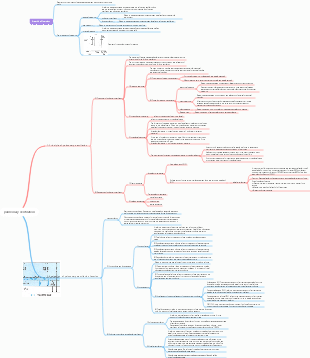
MindMap Gallery Medicine - Injections Mind Map
This is a mind map about medicine-injections, including basic knowledge, hazards of injections, infusion reactions, etc. Hope this helps!
Edited at 2023-11-19 20:45:36This is a mind map about bacteria, and its main contents include: overview, morphology, types, structure, reproduction, distribution, application, and expansion. The summary is comprehensive and meticulous, suitable as review materials.
This is a mind map about plant asexual reproduction, and its main contents include: concept, spore reproduction, vegetative reproduction, tissue culture, and buds. The summary is comprehensive and meticulous, suitable as review materials.
This is a mind map about the reproductive development of animals, and its main contents include: insects, frogs, birds, sexual reproduction, and asexual reproduction. The summary is comprehensive and meticulous, suitable as review materials.
This is a mind map about bacteria, and its main contents include: overview, morphology, types, structure, reproduction, distribution, application, and expansion. The summary is comprehensive and meticulous, suitable as review materials.
This is a mind map about plant asexual reproduction, and its main contents include: concept, spore reproduction, vegetative reproduction, tissue culture, and buds. The summary is comprehensive and meticulous, suitable as review materials.
This is a mind map about the reproductive development of animals, and its main contents include: insects, frogs, birds, sexual reproduction, and asexual reproduction. The summary is comprehensive and meticulous, suitable as review materials.
Injectable preparations
basic knowledge
What are injections?
Injections refer to sterile preparations that are solutions, emulsions or suspensions made of drugs and suitable solvents or dispersion media for injection into the human body, and powders or concentrated solutions that are prepared or diluted into solutions or suspensions before clinical use. .
Common injection routes of administration
Intravenous injection iv, intramuscular injection im, subcutaneous injection sc, intradermal injection id, spinal canal injection ip, other routes (acupoints, abdominal cavity, joint cavity, etc.)
Advantages and Disadvantages
advantage
Fast absorption, accurate and controllable dosage
shortcoming
Directly enters the body without the natural barrier of the human body; Can cause tissue damage, pain, infection, and even serious adverse reactions
Dangers of injections
endotoxin
definition
Metabolites of microorganisms, the main component of which is lipopolysaccharide LPS, which can induce pyrogenic reactions
Features
Heat resistance, filterability, water solubility, non-volatility
particle
definition
Tiny particle impurities, with a particle size of about 1-50 μm, which are invisible to the naked eye and are easily mobile and non-metabolized, are contaminated through various channels during the production or application of drugs. They are an important cause of infusion reactions and adverse events.
Incompatibilities and their manifestations
definition
When two or more drugs are mixed or made into preparations, in vitro interactions occur, resulting in physical and chemical reactions such as neutralization, hydrolysis, and destruction of the drugs, and abnormal appearance such as turbidity, precipitation, gas generation, and discoloration may occur.
Classification
Physical properties: separation, precipitation, deliquescence, liquefaction
Chemical properties: discoloration, gas production, precipitation, hydrolysis, combustion or explosion
Pharmacology: The pharmacological effect reduces or offsets the efficacy of the drug, or even disappears.
Compatibility principle
General principles, compatibility precautions, operating principles
The basic principle
Injections should be considered prescription drugs, and patients must have a doctor's prescription to use them.
If you can get results by taking it orally, don't inject it.
Regarding the choice of different routes, those that can be injected intramuscularly should not be injected intravenously.
The amount of combined injections should be reduced to avoid the occurrence of adverse reactions and incompatibility.
Traditional Chinese medicine injections should be used alone.
Safe injection (clean environment, qualified equipment, and standardized operation)
Improper compatibility
pH, solvent changes, inorganic ions are prone to insoluble precipitation, saturated solutions avoid crystallization, and oxygen reduction reactions
Strategies for safe and rational use of injections
When to use it?
Patients have dysphagia or/and obvious absorption disorders (such as vomiting, severe diarrhea, gastrointestinal lesions) or potential absorption disorders.
Oral administration of drugs that significantly reduces bioavailability.
There is no suitable oral dosage form of the drug.
Situations in which high tissue drug concentrations are required and high concentrations cannot be easily achieved by oral administration.
The disease is serious and progresses rapidly, requiring emergency treatment.
Patients with poor compliance with oral therapy.
Guiding Principles
Principles of using traditional Chinese medicine injections
Infusion solvent
0.9% sodium chloride injection (NS): neutral solvent
It is not advisable to choose sodium chloride injection or solutions containing chloride ions as coal-dissolving drugs.
Oxaliplatin, fomustine, loplatin Amphotericin, pefloxacin mesylate, erythromycin Tanshinone, Shenmai, Shengmai, Salvia miltiorrhiza, Compound Salvia miltiorrhiza, Puerarin
5% or 10% glucose injection (GS): acidic vehicle
It is not advisable to choose drugs with glucose injection as a solvent
Cephalosporins Furosemide, bumetanide Herceptin (trastuzumab), etoposide, cisplatin, hydroxycamptothecin Phenytoin, pralidoxime
pH value of commonly used injection solutions
5% glucose injection pH 3.2-6.5
5% Glucose Sodium Chloride Injection pH 3.5-5.5
0.9% Sodium Chloride Injection pH 4.5-7.0
Infusion speed
Dilute with 10% glucose injection and inject slowly, no more than 5ml per minute.
Infusion interval
Dosing frequency
Use reasonable judgment
infusion reaction
definition
A general term for adverse reactions caused by infusion or related to infusion, which are caused by factors such as pyrogens, drugs, impurities, too low temperature of the liquid, too high concentration of the liquid, too fast infusion speed, etc. during intravenous infusion. (Divided into local and systemic reactions)
clinical manifestations
Chills, shivering, cyanosis of the face and limbs, followed by fever, body temperature can reach 41-42°C, which may be accompanied by nausea and vomiting, headache, dizziness, delirium and irritability, etc.
reason
(1) Drugs
①Large infusion
② Added drugs: substandard quality, excessive dosage, physical and chemical changes in drugs and infusion, improper selection of injections
③Pyrogen and particle accumulation
(2) Quality of infusion equipment: unqualified leading to pyrogen contamination
(3) Infusion speed: Containing K, Ca, and Mg ions should not be too fast
(4) Infusion environment: microbial contamination in summer
(5) Patient factors: disease, age, individual differences