 Wondershare EdrawMind
MindMap Gallery Zoology basics mind map
- 194
Zoology basics mind map
This is a basic mind map of zoology, including protozoa, platyhelminthes, molluscs, arthropods, chordates, etc.
Edited at 2023-11-16 15:57:45
- bacteria
This is a mind map about bacteria, and its main contents include: overview, morphology, types, structure, reproduction, distribution, application, and expansion. The summary is comprehensive and meticulous, suitable as review materials.
- Plant asexual reproduction
This is a mind map about plant asexual reproduction, and its main contents include: concept, spore reproduction, vegetative reproduction, tissue culture, and buds. The summary is comprehensive and meticulous, suitable as review materials.
- Reproductive development of animals
This is a mind map about the reproductive development of animals, and its main contents include: insects, frogs, birds, sexual reproduction, and asexual reproduction. The summary is comprehensive and meticulous, suitable as review materials.
Zoology basics mind map
- bacteria
This is a mind map about bacteria, and its main contents include: overview, morphology, types, structure, reproduction, distribution, application, and expansion. The summary is comprehensive and meticulous, suitable as review materials.
- Plant asexual reproduction
This is a mind map about plant asexual reproduction, and its main contents include: concept, spore reproduction, vegetative reproduction, tissue culture, and buds. The summary is comprehensive and meticulous, suitable as review materials.
- Reproductive development of animals
This is a mind map about the reproductive development of animals, and its main contents include: insects, frogs, birds, sexual reproduction, and asexual reproduction. The summary is comprehensive and meticulous, suitable as review materials.
- Recommended to you
- Outline

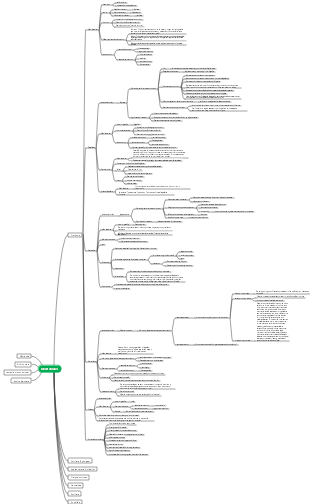
basics of zoology
protozoa
Main features
Composition: single cell or single cell group
Nutritional mode: autotrophic, heterotrophic, saprotrophic
Movement organs: cilia, flagella, pseudopods
Nucleus: macronucleus, micronucleus
Representative animal - Paramecium
Body wall (3 membranes)
cell membrane
Surface membrane bleb (2 layers)
cilia ← matrix ← filaments
Stinging Bubble: Sprays out stinging substances when stimulated to block danger.
cell nucleus
The macronucleus: metabolism, development, and membrane organelles
Micronucleus: sexual reproduction
Telescopic bubble: the collection tube collects water in the body and discharges it out of the body
Feeding and digestion
reproduce
Asexual reproduction (good conditions)
Micronucleus: mitosis
Large nucleus: amitosis
Sexual reproduction (harsh conditions)
Micronucleus: meiosis
Representative animal - Plasmodium vivax
Anopheles mosquito
Life cycle 48 hours: Anopheles bites humans (mouthparts) → Sporozoites in salivary glands enter the human body → Reach the liver through blood circulation → Develop in the liver (schizogeny) → Merozoites invade red blood cells (annular trophozoites) → Macrotrophozoites body
Strong resistance: merozoites no longer invade red blood cells, merozoites form large gametocytes and small gametocytes → sucked away by Anopheles → (in the body of Anopheles) large gametocytes and small gametocytes form large gametocytes, respectively. Microgametes combine to form zygotes → penetrate the stomach wall and digestive canal wall and reach between the digestive canal wall and body wall → (sporogeny) produce a large number of strip-shaped individuals (sporozoites) → enter the blood → gather in the salivary glands to prepare for the next Anopheles bite Invading animals
treat
Quinine (side effect: heart inhibitory effect) is extracted from the bark of the cinchona tree
Artemisinin is extracted from Artemisia annua
Plasmodium in birds
protozoan diversity
Ciliates
Acanthus
trumpet bug
clockworm
Sarcopodia (pseudopodia)
amoeba
Foraminifera (pseudopods protruding from the shell mouth or small holes in the shell)
Flagellates
Euglena (freshwater)
Noctiluca (fish gills): The fish dies due to lack of oxygen. After death, the algae consume a large amount of oxygen and release toxins.
Hairworms (termites): eat wood and buildings
Trypanosomiasis (blood): sleeping sickness
Spore class
Early embryonic development of multicellular animals
egg
Animal pole: less yolk, lower concentration, and higher position
Vegetative pole: more yolk, higher concentration, lower position
sperm
developmental stage
fertilization
Cleavage and blastocyst formation
complete cleavage
incomplete cleavage
Gastrulation and coelomogenesis
ectoderm
mesoderm
endoderm
germ layer differentiation
Ectoderm Nervous system, sense organs, skull, epidermis and accessory structures
Mesoderm skeleton, muscles, circulatory system, reproductive system, excretory system
Ectoderm Glands such as liver and pancreas, epithelium of digestive tract and respiratory tract
Porifera (sponge)
Main features
No symmetry or radially symmetric cavity
multicellular animals
No organ and true tissue differentiation
ditch system
single groove system
Double ditch system
complex ditch system
body wall
Flat cells
middle glue layer
Primitive cells: differentiate into other types of cells
awn cells
Collagen fibers
Bone spicules
collar cells
Pore cells (across three layers)
regeneration
Reorganization
reproduce
Asexual reproduction: budding reproduction
Sexual reproduction: reversal of embryonic development in some taxa
represent animals
sand sponge
We share the same acupoint
Fuzisuke
Cnidarian
Main features
Radiation/two-radiation symmetry
endoderm and ectoderm
Digestive circulation chamber
Stinging cells (in the nematocyst, when it touches the prey, it will turn out and pierce the prey to release toxins)
reticular nervous system
structure
Hydra type
body wall
Ectoderm: epithelial muscle cells (longitudinal myofibrils), nerve cells, sensory cells, intercellular cells, stinging cells
middle glue layer
Endoderm, endothelial muscle cells (transverse myofibrils), glandular cells
Jellyfish type
Regeneration (strong ability)
Reproduction (temporary formation of reproductive organs)
Asexual reproduction: budding reproduction, the cavities of the mother body and the bud body are connected
Sexual reproduction: Gonads are derived from interectodermal cells
Main groups
Hydrozoa
Hydra
hook-hand jellyfish
Yabuzhi Polyps
Peach Blossom Jellyfish
Jellyfish
Moon jellyfish (massive reproduction in polluted areas): fertilized eggs → floating larvae → polypoid larvae (falling to the bottom of the sea) → row bodies → disc-shaped larvae
jellyfish
Cross Medusa (a combination of polyps and jellyfish)
Cubojellyfish Box Jellyfish (Sea Wasp): Found in Australian waters, stings very painfully and can kill within 20 minutes
Coral class
Green wart anemone
sea gills
sea cockscomb
coral
Platyhelminthes
Main features
Appearance of head (sensory, feeding center)
bilaterally symmetrical
triplodermal animals
Protonephric duct
ladder central nervous system
Well-developed reproductive system
Main structure and function
Planaria (free living)
skin muscle bursa
Epithelial layer
Muscle layer from inside to outside: longitudinal muscles, oblique muscles, circular muscles
Muscles that connect the dorsum and abdomen (maintain body shape)
Abdominal cilia (glandular cells secrete mucus and cilia move forward)
Feeding and digestion
Muscular pharynx + intestine (3 main branches, multiple branches)
There is a mouth but no anus (residues come out of the mouth)
Flukes (parasitic life)
Epithelial layer syncytium (no clear boundaries between cells, only cell membrane and cytoplasm)
Muscle layer (nuclei settle into the muscle layer)
Feeding and digestion
Muscular pharynx + intestine (2 branches)
With mouth but no anus (no residue)
Tapeworms (extremely adapted to parasitic life)
Epithelial layer
Villi (increase the contact area and allow nutrients to penetrate through the body surface)
Mitochondria (transport nutrients)
Muscle layer (nuclei settle into the muscle layer)
Feeding and digestion
No digestive organs
Nutrients penetrate the body surface
reproduction and regeneration
sexual reproduction
planarian
Hermaphroditic
allogeneic fertilization
Freshwater individuals lay egg sacs outside the body
Most seafood species develop through Moller's larvae
Clonorchis sinensis
Hermaphroditic
Fluke female reproductive organs: (lower→upper) ovary, fallopian tube, spermatheca, vitelline tube, uterus, vitelline gland
Male reproductive organs of fluke: (lower → upper) testis, vas deferens, vas deferens, seminal vesicle, male genital pore
Approximately 80% of body mass consists of reproductive organs
Life cycle: miracoid → cystic larvae → cercariae → metacercariae
Larval reproduction: step by step amplification, increase in number
tapeworm
Hermaphroditic
asexual reproduction
regeneration
planarian
Cut into pieces equivalent to 1/279 of the body size can still be regenerated
Developmental research model animals
Any part of the body can be regenerated
Large numbers of adult totipotent stem cells
Easy to raise and low cost
Classification
Planarians
Monenterales
Trichomonales
polyenterata
Trematoda
Clonorchis sinensis
Fasciolopsis brucei
Schistosoma japonicum
Monogeny
third generation insects
Hermaphroditic, with 2 ovaries and 1 testis, ovoviviparous
There are already offspring embryos in the insect body, and the third generation embryos have been gestated in the offspring embryos.
It is parasitic on the body surface and gills of fish and is widely distributed, especially in Hubei and Guangdong. It harms fry and fingerlings in spring and summer.
Class Taenia
Mollusk
Main features
The body is divided into 4 parts
head
foot
mantle
visceral mass
Multiple shells (mantle secretion formation)
stratum corneum: scleroprotein, marginal secretion
Prismatic layer: calcareous, marginally secreted
Nacre: Calcium and chitin, secreted throughout the mantle
Multiple radula
Diverse respiratory organs
Open circulation: (blood flow direction) heart → blood vessels → sinusoids
The central nervous system consists of nerve cords and ganglia
multimeniolar larvae
trocarid larvae
Facial disc larvae
Gamma larvae
Representative group - Bivalvia
shape and movement
Shell top, front end, rear end, ventral edge
Drilling in the sand: The blood is squeezed forward, forming a mao-like structure, pulling itself into the sand, and then stretching and pulling. Only the outlet pipe is left outside to complete breathing and feeding.
adductor muscle
internal structure
gill
four gills
respiration
Assists in filter feeding (there is a groove at the bottom of the gills that secretes mucus to stick to food, and the cilia move it to the mouth)
Feeding and digestion: gills → mouth → stomach → rectum (through the pericardial cavity) → anus
open tube circulation
Excretion: The kidneys filter and excrete through the kidney pores and out of the body through the outlet pores.
Reproduction: gonads, reproductive ducts
Main taxa and evolution
polyplate
chiton
Bivalvia
No hinge teeth, one row of hinge teeth, 3 main teeth
In addition to hinged teeth, bivalves are classified based on: how many radial ribs there are, whether there are growth lines, and traces of the anterior adductor muscle after opening (round, heart-shaped, triangular, etc.)
Pearl oysters, Chlamydia scallops (the adductor muscles are eaten), oysters, mirror clams, razor clams, and clams
Cephalopod
squid
(Adapted to fast swimming life) Good body shape. When swimming fast, swim backwards. The rear end is very streamlined and has low resistance. Fast-moving animals must first have motivation.
Head: Eyes (well developed)
Feet: Specialized into wrists and funnels (10 wrists)
Mantle: muscular mass – atresia
Shell: "Inner" Skeleton
Endoskeleton: Many, (foam-like) supports the body shape (the body is squeezed by the resistance of the water during fast swimming)
Nervous organs are developed and ganglia are large
Source of squid power: When the squid swims, the mantle bulges, sucking in water and then releasing it. When it encounters danger, the locking device is locked, and the water in the body is squeezed by the mantle and spurts out of the body from the funnel. Due to the interaction of forces, the squid Move quickly in the opposite direction.
Nautilus: 4 gills, 4 kidneys, 4 auricles, 400 million years ago
giant squid
The difference between squid and cuttlefish: fins. The fins of cuttlefish exceed 2/3 of the body; the fins of squid (squid) and the like do not exceed 1/2 of the body.
Fins: Keep the body balanced.
Octopus (octopus): 8 arms, not much endoskeleton
Gastropoda
The movement is completed by contracting the abdominal muscles
The largest one at the bottom: whorl layer; the top one: whorl part
Flat jade snail (worm grub)
Bao: Its shells can be used as medicine, which is Cassia seed.
Baby: It used to be a currency
Apple snail: intermediate host of Angiostrongylus cantonensis, biological invasive species
Brown cloud snail (African giant snail): biologically invasive species
Nudibranchs: Manatees eat corals, sea anemones, etc., and then transfer stinging cells to their own nudibranchs.
Non-vegetative species: Aplysia (herbivore), Aplysia leucophylla (swallowing algae to extract chlorophyll, photosynthesis)
annelids
Main features
Well developed body cavity
hydrostatic skeleton
Tonglu section
Locomotor organs: warty legs or setae
closed loop
chain nervous system
Main structure and function
Body cavity: Contributes to the physiological functions of annelids such as respiration, circulation, and excretion, provides an environment to protect internal organs, and is used to store and transport nutrients and metabolic waste.
Hydrostatic skeleton: An internal support system provided by coelomic fluid that helps annelids maintain body shape and stability.
Formation of segments and knots
Sectioning: inside → outside; back → front
The left and right body cavity membranes meet to form the mesangium; the front and rear body cavity membranes meet to form the septum.
locomotive organs
Setae: through the synergistic action of muscles and nervous system.
Verrucopodia: a complex synergy of muscles, setae, and coelomic fluid.
metanephric duct
structure
The metanephric duct usually consists of a tube with an entrance and an exit.
The entrance portion is usually located within a segmented body cavity and serves to receive body cavity fluid.
The exit portion, usually located on the annelid's body surface or body wall, removes waste and excess body cavity fluid from the body through a small hole or pocket.
The ducts of the metanephric duct usually pass through the septa (septations) of the segments to connect adjacent segments.
Function
The main function is to excrete waste substances such as ammonia, urea and other metabolic products to maintain nitrogen balance in the body.
It is also involved in the regulation of water and ions, helping annelids maintain water and ion balance in the body.
Absorbs and excretes body cavity fluid, adjusts its composition, and excretes waste products from the body, thereby maintaining the stability of the internal environment.
Representative animal - Trichoderma
external form
The color of the back is similar to the environment
Internodal groove: the groove between nodes
Annulus: body segments XIV to XVI
Internal structure and functions
External→Internal: parietal coelomembrane, visceral coelomic membrane, longitudinal muscle, circular muscle, ectoderm, endoderm
body wall
Protection: Protect the internal organs of the worms from damage caused by the external environment
Respiration: Respiration occurs through the exchange of gases through the body wall.
Sensation: The sensory organs on the body wall can sense changes in the environment, such as temperature, humidity, light, etc.
Movement: The muscles of the body wall help the worms move.
Protective color: The color of the body wall can help the worms camouflage themselves in the environment and avoid being discovered by natural enemies.
Reproduction: Helps it reproduce. For example, the hermaphrodite Trichoderma worms secrete mucus in the reproductive zone to form egg cocoons.
intestinal wall
Digestion: The cells on the intestinal wall can secrete a variety of digestive enzymes, such as protease, amylase, lipase, cellulase, chitinase, etc., to help break down food.
Absorption: Digested nutrients can be absorbed by the worm through the intestinal wall.
Increase the surface area for digestion and absorption: The dorsal center of the intestinal worm is recessed into a blind passage, which expands the digestion and absorption area.
Respiration: Respiration is completed through the body wall. Oxygen is first dissolved in the mucus of the body wall, and then penetrates into the blood in the capillaries in the body wall. Carbon dioxide in the blood is also excreted through the body wall. Therefore, the body wall of the worm can secrete mucus to keep the body wall moist at all times to ensure normal breathing and reduce friction with the soil.
Blood circulation (closed tube circulation)
Longitudinal blood vessels: dorsal vessels, abdominal vessels, subneural vessels, esophageal lateral vessels.
Circular blood vessels: The heart has 4 or 5 pairs, can beat, has valves inside, and connects the dorsal and abdominal blood vessels. The back two pairs are divided into two branches on the dorsal side. One branch is connected to the dorsal blood vessel, and the other is connected to the superior gastric blood vessel.
Branched blood vessels: dorsal intestinal vessels, parietal vessels, abdominal intestinal vessels.
circulatory pathway
The dorsal blood vessels collect nutrient-containing blood from a pair of dorsal vessels and oxygen-containing blood from a pair of wall vessels in each body segment from section XIV onwards. They flow from back to front and are distributed to the esophagus, pharynx, and brain at the front end.
Most of the blood flows into the abdominal blood vessels through the 4 pairs of hearts, while a part of the blood flows directly or indirectly into the esophageal lateral blood vessels.
The blood in the abdominal blood vessels flows from front to back, and each body segment has branches.
excretion
Each somite has a pair of metanephric ducts
Earthworms of the genus Cylindria do not have large renal ducts, but have three types of small renal ducts
small renal duct
septal renal duct
pharyngeal renal duct
nerve
Sensory nerve cells: are part of the sensory organs and are responsible for receiving various sensory stimuli.
Sensory nerve fibers: Responsible for carrying sensory impulses into the nervous system.
Interneurons in the ventral nerve chain: play a connecting and integrating role in the nervous system.
Motor nerve fibers: Responsible for transmitting nerve impulses to trigger reactions.
Reaction organ: reacts after receiving nerve impulses.
Brain: There is a white suprapharyngeal ganglion called the "brain" near the pharynx of the worm. There are peripharyngeal nerves on both sides that bypass the pharynx and connect to the ventral surface.
reproduction and development
hermaphroditic, heterosexual mating
Male reproductive organs: testicular sac, seminal vesicle, vas deferens, prostate
Female reproductive organs: ovaries, egg funnel, fallopian tubes, spermatheca
When the adult becomes sexually mature, the girdle will secrete mucus during the reproductive period to form an egg cocoon.
Classification and evolution
Polychaeta
Nereis
Amaranthus spp.
Tremorworm
love trumps earthworms
Bleedes
Leeches
body cavity degeneration
Section 33
7-segment synthetic suction cup at the end
Each body segment has several body rings
The inhaled nutrients are stored in the blind sac to adapt to temporary parasitic life.
Hirudin: Promotes venous circulation during limb replantation surgery.
Anticoagulation: The strongest natural specific inhibitor of thrombin.
South American leech (herbivorous)
Erythrozoans
Echinococcus uniannularis: The adult is not segmented, while the larvae are segmented and have a well-developed body cavity.
Cross
The fertilized eggs sink to the bottom of the sea→female
The fertilized egg attaches to the female's snout → male
Adult male worms are found in the renal duct and body cavity of the female
nematodes
Main features
stratum corneum
False coelom: There is body wall mesoderm but no visceral mesoderm.
Lack of cilia, flagella and other motor organs
The body wall has only longitudinal muscles
Muscle cells: protoplasmic part, contractile part
hydrostatic skeleton
Main structure and function
body wall
Cuticle: This is the outermost layer of the body wall, well developed and somewhat elastic.
Epidermis: Also called the epithelial cell layer, it lies beneath the stratum corneum and forms the syncytium.
Muscle layer: This is the innermost layer of the body wall, with only the thicker longitudinal muscle layer and no circular muscle layer. It can only swing, not telescopic movement.
intestinal wall
Foregut and hindgut: formed by invagination of ectoderm with cuticle on the inner wall. The foregut includes the mouth, buccal cavity, and pharynx (esophagus), and the hindgut includes the rectum and anus.
Midgut: A layer of cells derived from the endoderm that digests and absorbs food.
Intestinal granules: There are a large number of granular structures in the intestinal wall cells of nematodes, called intestinal granules. The interior of the intestinal granules is an acidic environment and participates in endocytosis. It is similar to lysosomes, but larger in size.
reproduction
The vast majority of nematodes are dioecious, with some terrestrial rod nematodes and many plant nematodes being hermaphroditic.
Some nematodes have only female worms and no male worms are found, so they reproduce parthenogenetically.
Male: testes, vas deferens, seminal vesicles (opening in the cloaca, and the anus opening outside the body) and muscular ejaculatory ducts. The ejecta duct is connected to the end of the digestive tract and is also called the cloaca.
Female: Generally double-tubular, with a few single-tubular, including ovaries, fallopian tubes, and uterus. The union of the two uteruses forms the vagina.
represent animals
hookworm
Infection mode: Bite through the skin and enter the bloodstream (bite through the intestinal epithelium)
Parasite site: small intestine
Ancylostoma americana has one pair of teeth; Ancylostoma duodenale has two pairs of teeth.
Filaria
Mode of infection: Injection of filarial larvae when bitten by Culex and Anopheles mosquitoes
Parasite site: lymphatic system. Lymphatic vessels are blocked, and the retained lymph stimulates the skin to become thicker and harder.
Wudzeri bancrofti, Brucella malayi - lymphatic filariasis, ivermectin reduces the incidence.
Onchocerciasis - river blindness
Caenorhabditis elegans
free life
The development of each somatic cell can be tracked (body transparency)
Effects of parasitism on the host
Seize nutrients
Secretion of toxins (metabolic waste products)
mechanical injury
Spread other pathogenic microorganisms
arthropods
Main features
branched appendages
Bi-branched appendages: primary limb, inner limb, outer limb
Single appendage: base, turn, leg, tibia, tarsus, pretarsal (segment)
HOX genes (homologous genes or homeotic genes) that regulate animal morphology: they mainly regulate genes related to cell division, spindle direction, and the development of body segments, wings, appendages and other parts.
Irregular segmentation of the body
Head: feeding, feeling
Chest: sporty
Abdomen: houses internal organs, reproduction
Cephalothorax and abdomen, cephalothorax and abdomen, cephalothorax and abdomen (the abdominal appendages have basically degenerated, leaving only trace organs)
Developed senses
Well developed exoskeleton
Epidermal cells secrete to form exoskeleton
Upper epidermis layer: wax layer (waterproof)
Outer layer: calcium layer or protein (defense)
Inner epidermis: Chitin layer (increases flexibility and defense)
molt
age calculation
No molting. First instar larvae, molt once. Second instar larvae...
Molting process: Epidermal cells secrete enzymes to digest and reuse the chitin layer and protein layer. The wax layer is not used and continues to dissolve while the inside continues to grow, cracking the outer bones to complete molting.
Mixed body cavity (hemocoel)
Representative animal - locust
external form
Head: Eyes, a pair of compound eyes and three single eyes. The compound eye is composed of many small eyes (which image independently without interfering with each other) and are sensitive to moving objects.
Head: antennae, sense of touch and smell. Inner → Outer: shank section, stem section, whip section (whip section is composed of many sections)
Head: mouthparts. Upper → Lower: upper lip, upper jaw (large jaw), lower jaw (small jaw), lower lip.
Thorax: 3 segments; 2 pairs of wings; 3 pairs of legs (6 segments); 2 pairs of valves. The spines on the feet rub against the wings to produce sounds.
Abdomen: 11 body segments; 1 pair of hearing organs; 8 pairs of valves.
internal structure
digestion and excretion
The digestive system of a locust includes the digestive tract and digestive glands
Anterior → posterior part of the digestive tract: oral cavity, pharynx, esophagus, crop, gizzard, stomach, intestine and anus. The gastric caeca is the junction of the foregut and midgut.
The digestive glands and salivary glands are located under the crop of the chest. They are one pair, grape-shaped, with the opening of the salivary gland duct and the base of the tongue in the preoral cavity.
The excretory system of locusts is the Malpighian ducts located at the junction of the midgut and hindgut: Malpighian ducts are many slender blind tubes distributed in the hemocoelom.
Valve (gas in and out, water retention) Trachea Air sac (buoyancy, reduce organ friction)
blood circulation
heart in back
Blood flow: Because it is a mixed body cavity (blood cavity), the blood is transported forward from the back through the blood vessels to the mixed body cavity, and then returns to the heart.
reproduce
dioecious egg laying
Male: clasp, penis
Female: Ovipositing valve (inserting the ovipositing tube into the soil to lay eggs, about 50 eggs can be laid at one time)
The life cycle of a locust has three stages: egg, nymph and adult. Nymphs are divided into 5 instars and shed their skin 5 times. They usually do not feed or feed very little before and after the nymphs shed their skin. At the fifth instar, the larvae are mature. After feeding for a few days, they will climb to the plant, hang their bodies down, and wait for a while before the adults emerge.
Central Nervous System
Brain: Located in the front and upper part of the esophagus, between the compound eyes.
Subesophageal ganglion: located below the esophagus and connected to the periesophageal nerves emanating from the brain.
Ventral nerve cord: It is formed by the merger of two nerves, with ganglia on it, 3 in the chest and 5 in the abdomen, and sends out nerves to various tissues and organs.
Locust plague: The migration ability of gregarious migratory locusts is significantly stronger than that of scattered locusts. The two will transform each other.
Main groups
Trilobites: extinct
Univalve subphylum: cephalothorax and abdomen, bibranched appendages, gill respiration
prawns
New Penaeus prawn (Jiwei shrimp): There are many pigments in the body, but they are all decomposed at a certain temperature. Only astaxanthin has the highest melting point and is not decomposed.
Procambarus clarkii (crayfish), biologically invasive species
Scar palm sand crab
Japanese big eye crab
Portunus trituberculatus
Chinese mitten crab
Barnacles: on reefs, resistant to high temperatures and drought
Daphnia flea: It uses its tentacles to stir up the water and move around. Eggs develop inside the body
Chelicerina
Spiders have venom in their pincers. When the prey falls on the spider web, the spider senses the direction through vibration, goes to the prey and spins silk to wrap it and inject venom. It waits for the insect to die and then injects digestive juices. The soft parts of the prey are digested and dissolved into liquid. Since the prey has an exoskeleton, The exoskeleton cannot dissolve, forming an envelope of digested material that the spider sucks up with its mouth (by pumping the stomach in and out).
Scorpion, front abdomen, back abdomen, sting (venom). Ctenoid organ: There are sensory cells and sensory organs on the ventral side of the tooth.
tick mite
Horseshoe crab, respiratory organ: book gills
Sea spider: 4 single eyes, vestigial abdomen, egg-carrying legs, snout
Polypodia
Centipede
Head and trunk
1 pair of appendages per segment
The first segment of the trunk is the maxillopod
With venom gland openings and lack of wax layer on the body surface
The stomata often cannot be closed
Road
2 pairs of appendages per segment
Somites heal from 2 somites during embryonic stage
Many body segments have odor glands
Hexapodia (most groups)
Antenna types: bristly, filamentous, bead-shaped, serrated, double comb-shaped, awn-shaped, gill-flap-shaped, knee-shaped, hammer-shaped, ring-hair-shaped, club-shaped, etc.
Mouthpart type: chewing mouthparts, also specialized into sucking and siphoning mouthparts
Foot types: walking, jumping, catching feet, swimming feet, hugging feet, digging feet, powder collecting feet, etc.
Wing types: membrane wing, elytra, semi-elytra, lepidoptera, etc. The classification of wings also depends on the basis of wing veins and wing chambers.
perverted type
Gradual Metamorphosis: Locust
Semi-metamorphosis: The larvae's shape and living environment are completely different from those of adults, water dragonfly (dragonfly larvae lives in water)
Complete metamorphosis: going through a pupal stage in the life cycle that cannot eat or move.
Echinoderm
Main features
Five-radial symmetry: Multicellular animals are bilaterally symmetrical during early embryonic development, and later evolve into five-radial symmetry. The mesoderm and coelom are formed by the coelomic sac method, and each side of the coelom is divided into three parts.
Water pipe system
endoskeleton
posterior mouth
Main structure and function
plumbing system
Adult echinoderms have a water duct system, including external tube feet.
Through the catheter and the tube foot, various functions are realized, such as movement through the bending of the wrist and the suction cup at the end of the tube foot; circulation is achieved through the transmission of body cavity fluid in the catheter.
Dermal gills: The body surface of echinoderms has dermal gills, which are formed by protruding outward from the inner and outer layers of epithelial cells of the body wall. The ciliary action of the coelomic epithelium in the dermal gills causes coelomic fluid to flow within the dermal gills, and the cilia on the outer layer of the dermal gills cause water flow on the body surface for gas exchange. It has the functions of breathing and diffusion to eliminate some metabolic wastes.
Calcareous Endoskeleton: The skeleton of echinoderms is composed of calcareous bony plates connected by a network of collagen fibers.
Classification and evolution
Crinoids
sea fern
sea lily
Starfish
Echinacea, Aristotle's lantern (chewing organ)
Ophioda
Holothuria, Cuvierian organs (strongly sticky): When some species encounter danger, they can spray Cuvierian tubes or even internal organs outside the body to entangle the enemy.
Mammals
Main structure and function
Skin and derivatives: the most complex and diverse among vertebrates
Hair, main functions: insulation, touch
skin glands
sweat glands
sebaceous glands
mammary gland
taste glands
Claws, nails, hooves
horn
Hairy angle
Dong Kok
real angle
skeleton
skull
Enlargement of the brain cavity
Zygomatic arch appears: zygomatic process of jaw, zygomatic bone, zygomatic process of temporal bone
Well developed secondary palate
Turbinate
The mandible is a single tooth
Special shaped teeth
Human tooth type: 2.1.2.3/2.1.2.3, incisors, canines, premolars, molars
spine
biflat vertebral body
cartilaginous disc
notochord residual nucleus pulposus
The number of cervical vertebrae is constant at 7
Belt and limb bones
elbow joint backward
knee forward
crawling and disappearing
muscle
The limbs are well muscled to adapt to various activities of the limbs.
The unique diaphragm is formed by the occurrence and downward movement of the subaxial muscles of the neck, and participates in forming the diaphragm that separates the chest and abdominal cavities; the contraction and relaxation of the diaphragm participate in breathing actions.
The skin and muscles are well developed, allowing the animal to shake its skin and curl up. In primates, facial skin muscles are greatly developed and become expression muscles to express emotions. Expression muscles are particularly developed in humans.
The head has powerful masticatory muscles attached to the zygomatic arch to complete prey hunting, biting and chewing, so that the mouth has physical digestion and other functions.
The rectus abdominis muscle in the abdomen still retains its original segmented state.
Feeding and digestion
The digestive system is well differentiated. The digestive tract includes the oral cavity, pharynx, esophagus, stomach, small intestine (duodenum, jejunum, ileum), large intestine (cecum, colon, rectum), and anus.
Digestive glands include salivary glands, liver, and pancreas.
Monogastric: Insectivores and carnivores have single-chambered stomachs, short digestive tracts, and degenerated cecum.
The stomach (ruminant stomach)
The abomasum is the main body with a single layer of columnar epithelium and contains gastric juice.
Deformation of rumen, reticulum, omasum, and esophagus.
breathe
respiratory tract
Nasal Cavity: The nasal cavity is completely separated from the oral cavity due to the presence of the hard and soft palates. In addition to its sensory function, the nasal mucosa also has functions in dust removal, warming, and moistening of the air.
pharynx
Larynx: The larynx is not only a passage for breathing, but also an organ for pronunciation. In addition to cricoid cartilage and spoon-shaped cartilage, the laryngeal cartilage also has thyroid cartilage and epiglottis cartilage that are unique to mammals; there are vocal cords in the laryngeal cavity.
Trachea: The trachea divides into bronchi into the lungs.
Lungs: composed of a complex bronchial tree and the alveoli at the blindest end. The alveoli are gas exchange sites with a large gas exchange area that can effectively absorb the required oxygen from the air.
cycle
The heart is divided into 4 chambers, with complete double circulation, and oxygenated blood and hypoxic blood are completely separated.
Arteries: Mammals only have the left body arterial arch, which curves back to the dorsal aorta and reaches the tail end.
Veins: The main blood vessels tend to be simplified (most mammals only retain the right anterior great vein), and the renal portal vein is completely degenerated, which accelerates blood circulation, increases blood pressure, and improves circulation efficiency.
lymphatic system
A supplementary part of the venous system that collects and carries lymph fluid back to the heart.
It is the most developed among tetrapods.
There are a large number of valves in the lymphatic vessels, and lymph nodes are distributed along the paths of the lymphatic vessels, producing lymphocytes and filtering lymph fluid, playing an important immune role; lymphatic tissue is well developed.
Lymphatic vessels throughout the body finally merge into the thoracic duct and right lymphatic duct.
Lymphoid organs also include the thymus and spleen.
reproduction
reproductive organs
Internal fertilization.
Male: Testes (testicles), epididymis, vas deferens, accessory sex glands, and copulatory apparatus. In addition to producing sperm, the testis also secretes male hormones; the epididymis provides an environment for sperm to continue to develop and mature; the accessory sex glands secrete the main part of semen, providing a suitable environment for sperm to move and improve the fertilization rate. The copulatory organ (penis) is well developed and contains the corpus cavernosum and urethral corpus cavernosum, which facilitate mating. In some species, such as insectivores, rodents, and chiropterans, a baculum exists to increase its hardness.
Female: ovaries, muscular fallopian tubes, uterus, vagina, vulva and other structures that are not directly connected to the ovaries. In addition to producing eggs, the ovaries also secrete estrogen, including estrogen and progesterone. The uterus is the enlarged back end of the fallopian tubes and is where the fetus develops.
Reproductive cycle: Most mammals mate seasonally, usually in spring or winter.
Reproductive mode
Monotremes lay eggs: For example, platypus eggs are fertilized in the fallopian tube and then wrapped in egg shells, and then laid in the nest. After about 14 days of incubation, the young hatch out of their shells, naked and hairless, to lick the mammary gland area of the mother's abdomen. The secreted milk grows up.
Marsupial viviparous: There is no real placenta, the chorion is smooth, and only the yolk sac and the mother's uterine wall form the yolk sac placenta. The mother provides extremely limited nutrition to the fetus; the gestation period is short, and the main development stage of the embryo is outside the uterus, that is, the mother animal carried in the pouch. There are nipples in the abdomen in the pouch area. Newborn babies must find their own way to climb into the pouch after birth and mature, and can stay in it.
True viviparity in true beasts: the fetus is born after it is fully developed in the mother's womb.
brain and senses
brain
The cerebrum and cerebellum are highly developed
neocortical sulcus
Corpus callosum: A fiber bundle plate composed of fibers connecting the left and right cerebral hemispheres.
The brain oblongata remains an important nerve center for many life-sustaining activities.
There are 12 pairs of cranial nerves, and the autonomic nervous system is well developed.
senses
Hearing: 3 ossicles (stapes, incus, malleus), which are connected to each other to form an elastic lever; the sound-sensing part of the inner ear is developed and becomes a spiral cochlear duct with the organ of Corti inside; the auricle appears in the outer ear.
Sense of smell: Due to the developed turbinate bones, the area of the olfactory mucosa is expanded, so the sense of smell becomes acute.
Vision: Keen, but poor in color discrimination, because most of them are nocturnal, and the world they see is mostly gray, while primates have sharp color vision, which is quite special.
Classification
Prototheria: Monotremes.
The only mammal that lays eggs. It originated more than 130 million years ago and is only produced in Australia.
Teethless, with horny sheath
Have cloaca
No nipples
oviparous
platypus, echidna
Metatheria: Marsupials
Special-shaped teeth, many incisors
residual cloaca
Has nipples, in the brood sac
viviparous, without placenta
Red kangaroo, koala, thylacine, quoll
Subclass Eutheria: Placentae
Special-shaped teeth, few incisors
No cloaca
There are nipples, obvious, on the chest, groin or abdomen
viviparous, with placenta
Insectivorous order, Tree shrews, Chiroptera, Primates, Lepidoptera, Rodents, Lagomorpha, Carnivora, Cetaceans, Pinnipeda, Proboscidea, Perissodactyla, Artiodactyla, Siratea
evolution
Triconical teeth
The lower jaw is composed of a single tooth
Molars have 3 cusps arranged in a straight line
birds
Characteristics of birds adapting to a life of flight
feather
Bone lightness, healing, specialization
Developed chest muscles
double breathing
Developed senses
Main structure and function
Skin and derivatives
Feathers: rachis, vanes, barbules, barbules. Molt every year.
Horny beak, claws, scales
skeleton
axial skeleton
Single occipital condyle
Large cranial cavity
The upper and lower jaws elongate into beaks (bony beaks)
Different concave vertebral bodies in the cervical vertebrae (saddle-shaped vertebral bodies): making the neck very flexible
sternum with keel
ribs with uncinate processes
Belt and limb bones
Forelimbs specialized into wings
intertarsal joint
"V" shaped clavicle
Open pelvis, pelvis: a pelvic-like structure surrounded by the ischium, ilium, and pubis. Birds lay large hard-shelled amniotic eggs
muscle
Back muscles: tend to degenerate due to the healing of the spine beyond the thoracic spine.
Neck muscles: The neck muscles are well developed and enable the neck to complete fine movements in many directions.
Chest muscles: Very well developed. The chest muscles are divided into the superficial pectoralis major muscle and the deep superior coracoratus muscle (also known as pectoralis minor). They control the flapping and raising movements of the wings respectively. They are a pair of antagonistic muscles.
Hind limb muscles: Because birds rely on their hind limbs to walk and support their weight on land, the motor muscles of their hind limbs are very developed. The hind limbs have muscles suitable for perching on trees and holding branches. These arboreal-related muscles (such as perforator muscles, flexor digitorum muscles and peroneus medius) can use the ingenious cooperation between tendons, muscle sheaths and bony iliac joints to allow birds to perch on branches. Due to the pressure of body weight and the bending of leg bone joints, the tendons related to toe flexion are tightened, and the toes naturally bend to grasp the branches tightly.
breathe
air bag breathing
During both exhalation and inhalation, oxygen-rich gas flows in a single direction through the lungs.
There is always a large amount of oxygenated air in the lungs for gas exchange, ensuring efficient metabolism during flight.
heat dissipation.
double breathing
A breathing movement through the air bag that can occur in both flying and non-flying states.
Two gas exchanges occur in one breath. Gas enters the body, enters the lungs through the posterior thoracic air sacs, then enters the anterior thoracic air sacs from the lungs, and is discharged from the anterior thoracic air sacs. Due to the expansion and contraction of the air sacs, the gas undergoes gas exchange in the lungs twice.
During flight, the chest muscles drive the wings up and down. In this process, the chest muscles squeeze and relax the air bags, driving the air in the air bags into and out of the lungs. While at rest, the intercostal and abdominal muscles compress and relax the air sacs, creating gas exchange.
speak out
The vocal organ of birds is located at the bottom of the trachea and is called the syrinx.
Syrinx: The syrinx is composed of multiple enlarged rings of cartilage on the trachea. The inner and outer walls of the bifurcated part of the syrinx become thinner and can produce sounds with the vibration of the air flow, which is called the syringe membrane. There is a sound bone in the middle of the bifurcation of the syrinx, and a leaf-like membrane extends along the sound bone, called the meniscus. This structure vibrates and produces sounds with exhalation and inhalation.
How the sound is produced: Like the larynx of mammals, the passage of gas through the vocal organ causes vibrations, thus producing sound. Due to the presence of syringes, some birds, such as parrots and mynas, can make relatively complex sounds and even imitate human speech.
Screaming muscles: Parrots imitate human speech sounds, mainly because they have well-developed syrinx and syrinx muscles. Parrots have three pairs of song muscles. Because the left and right vocal muscles are innervated by different nerves, many birds can emit two completely different frequencies of sound waves at the same time.
Feeding and digestion
Beak: Main feeding tool. The shape of the bird's beak and tongue varies depending on the species, feeding habits and foraging methods. For example, the beak and tongue of ducks are flat and flat, making it easy to feed on aquatic plants and plankton in the water.
Esophagus: Located between the bird's pharynx and glandular stomach, on the dorsal side of the trachea, and accompanying the trachea, it is an easily dilated muscular tube. The diameter of the esophagus is related to the size of the food swallowed by the bird, and the esophagus itself has no digestive function. Its main function is to transfer food from the pharynx to the stomach.
Crop: The crop is a specialized sac-like structure formed by part of the esophagus. Its structure is similar to that of the esophagus. It is mainly used for temporary storage and softening of food.
Stomach: includes the glandular stomach at the front and the gizzard at the back. There are digestive glands in the glandular stomach that secrete digestive juice and have the function of digesting food. The gizzard, also known as the gizzard, is equivalent to the teeth of birds. It stores swallowed sand and gravel and is mainly used to grind food.
heart and blood vessels
big heart
Fast heart rate
high arterial blood pressure
reproduction and excretion
Urinary system: mainly includes the kidneys, ureters and cloaca. Since most birds do not have a bladder, they only have the function of storing urine in the cloaca. When they excrete feces, they excrete the urine together. The white part of bird feces is uric acid.
Reproductive system: consists of gonads, reproductive ducts and accessory glands. The gonads are very developed during the breeding period but underdeveloped during the non-breeding period.
Male: Most male birds do not have a penis (a few species such as ducks and ostriches do). Male and female birds inseminate by pressing their cloaca together on their backs and pouring semen into the female's cloaca.
The mating behavior during the breeding period can stimulate the sex hormone activity of both male and female birds, causing them to start a series of behaviors such as nest building, egg incubation, and brood raising. However, the frequency of mating has nothing to do with the number of eggs in the clutch, which is determined by genetic traits.
Female: The reproductive system develops as the female bird grows. The fallopian tubes are extremely expanded and coiled in early maturity, and contract during the incubation period.
brain and senses
brain
The cerebral cortex (nucleus) is developed
Developed midbrain optic lobes
Developed cerebellum
senses
Hearing: consists of outer ear, middle ear, and inner ear
Vision: Adjusting the curvature of the cornea and lens
Classification
Ratite: no keel, wings degraded.
Cuneiform superorder: body feathers are scale-like, and forelimbs are fin-like.
General purpose of protruding chest: well-developed wings, good at flying
evolution
Archaeopteryx
feathers, wishbone
The forelimbs are specialized into "wings"
open pelvis
4 toes on hind limbs (3 in front and 1 in back)
Alveolar teeth
tail vertebrae separation
3 separate metacarpal bones of forelimb
sternum without keel
Protect
Threatened status quo
Resource overutilization
Habitat loss and fragmentation
environmental pollution
artificial breeding ground
In situ conservation (replenished)
Off-site protection
Suitable habitat that was once distributed but is now extinct (reintroduction)
reptiles
Main structure and function
skin
lack of glands
Horny scales, leathery skin (prevents water loss)
Dermal bone plate
Perfect water retention mechanism
Molting with regular replacement of scales
skeleton
limb bones
It has typical five-toed (fingered) limbs.
The limb bones are in a transverse right-angle relationship with the axial bones, and the body cannot be lifted off the ground, so crawling is the main method of movement.
skull
With temporal fossa
Appearance of secondary palate: The appearance of secondary palate separates the oral cavity and nasal cavity, moves the internal nostrils backward, makes the respiratory passage unobstructed, improves respiratory efficiency, and allows the animal to breathe normally when swallowing large food. Crocodiles have a complete secondary palate, and the nasal cavity and oral cavity are completely separated.
single occipital condyle
Spine (further differentiation)
Cervical vertebrae: The number increases, the first is the ring vertebra, and the second is the axis vertebra.
thoracic
lumbar spine
Sacral vertebrae: 2, strengthened load-bearing, developed transverse vertebrae, strengthened through the belt joint to enable the hind limbs to bear weight.
tail vertebrae
The thorax appears: It is surrounded by thoracic vertebrae, ribs, and sternum. In addition to protecting internal organs, it also enhances the mechanical equipment for lung respiration, which echoes the development of lungs in terrestrial vertebrates.
muscle
Intercostal muscles: The movement of the intercostal muscles (including the external intercostal muscles and the internal intercostal muscles) pulls the ribs to change the volume of the thorax to complete the breathing action.
Cutaneous muscle: Cutaneous muscle is connected to the horny scales, and its contraction can pull the scales to assist crawling. It is especially developed in snakes.
Feeding and digestion
The appearance of the secondary palate separates the digestive tract and respiratory tract, so that the animal does not hinder breathing when feeding.
The oral cavity has a wide range of teeth, but there is no chewing and food is swallowed whole.
Teeth (same type of teeth)
terminal population
Lateral teeth
groove population
The oral cavity and pharynx are obviously differentiated, and the esophagus is extended.
A cecum appears in the digestive tract.
The cloacal pore is the exit from the digestive tract to the outside of the body.
breathe
adult lung respiration
Well-developed trachea and bronchi
Lungs are spongy
The thorax assists in breathing movements
cycle
heart
2 atria and 1 ventricle, the ventricles are incompletely separated, while the ventricles of crocodilians are completely separated, leaving a hole.
The oxygenated and hypoxic blood in the ventricles still cannot be completely separated.
Arteries and veins: The conus arteriosus disappears. Sinus degeneration.
excretion
kidney
The metanephros originates from the posterior segment of the nephrogenic segment, and its anterior and middle segments develop into the pronephros and mesonephros respectively during the embryonic period, and eventually degenerate.
The metanephros completely loses connection with the body cavity and uses blood vessels to collect waste and the metanephric ducts to urinate.
The excretory product is uric acid.
Extrarenal excretion
Reptiles such as lizards and turtles have bladders formed by enlarging the base of the allantois. The bladders of species in arid areas have the function of absorbing water.
Many species have salt glands in their noses or near their eyes that excrete highly concentrated salt solutions.
reproduction
Except for primitive species, males have external genitalia
Amniotic egg: fibrous dura mater, calcareous hard shell
Amniotic cavity: amniotic fluid (mainly from epithelial secretion)
Yolk sac: nutrients
Allantois: organ that breathes and contains excreta
The emergence of amniotic eggs creates a semi-enclosed water environment for animal embryos to develop on land.
oviparous or ovoviviparous
Nerve: brain
Brain: Neocortex
Diencephalon: Parietal organ, pineal gland, and pituitary gland are developed
Midbrain: optic lobes
Cerebellum: developed
12 pairs of cranial nerves
senses
Eye: Move the lens and change the curvature of the lens
Top eye: sensitive to light, improves body temperature
vomeronasal organ, vomeronasal organ in lizards and snakes
Cheek and lip pits: heat-sensitive receptors
skin pressure receptors
Ear: The tympanic membrane is inverted, forming the external auditory canal
Classification
Beakhead
Granular scales on body surface
The square bone cannot move
transverse cloacal orifice
The oldest group of existing reptiles, there is only one genus and one species left, namely the tuatara (wedge-toothed lizard). Bitemporal fossa type. Still retains a series of the most primitive characteristics, such as having a parietal eye located in the middle of the skull. It lives on more than 30 small islands in New Zealand and has a lifespan of 300 years.
Turtles
No temporal foramen
Keratinous scales or leathery skin
Dorsal and ventral bony plates
The square bone cannot move
Cloacal orifice longitudinal fissure (the excretory orifice has a longitudinal slit)
Turtle, hawksbill turtle, red-eared slider, sea turtle
Squamata
horny scales
Square bone activity
Terminal or lateral teeth
bitemporal foramen
transverse cloacal orifice
lizards and snakes
Crocodiformes
bitemporal foramen
The left and right ventricles are completely separated
The square bone cannot move
cloacal foramen longitudinal fissure
evolution
Salamander
The neck is short and the shoulder girdle is placed behind the skull.
The spinal division is not obvious
Labyrinth teeth (patterns on the enamel)
Single occipital condyle
2 sacral vertebrae
Belt and limb bones are thick
Five fingers of forelimb
Protect
Threatened status quo
Degradation of habitat quality
habitat fragmentation
Overuse
pollution and climate change
Invasive species: The red-eared turtle is one of the 100 most dangerous invasive species in the world. The emergence of the red-eared turtle has almost without exception caused the disappearance of other native turtles.
Amphibians
Main structure and function
Skin: bare skin, rich in glands and rich in pigment cells
Epidermis: multiple layers, the innermost layer is the germinal layer
Skin glands, mucous glands (developed), venom glands (the most concentrated place of venom glands: post-auricular glands), Chinese medicine toad venom: secretion of toad venom glands.
Dermis: thickened, nerves and blood vessels
skeleton
axial bone
spine
Cervical vertebra (atlas): only 1.
Trunk vertebrae: varying numbers (7-200).
Sacral vertebra: only 1. Its outer end is connected to the iliac bone of the belt to provide more stable support for the hind limbs.
Tail rod bones (tail vertebrae): more than 20 in salamanders and 1 in frogs and toads.
skull
Wide and flat. The brain cavity is narrow, with two occipital condyles formed by the lateral occipital bones.
The bones are thin and few in number.
The connection between the skull and jaw is self-joining.
The oscillator bone is one piece. Evolved from the tongue and jaw. In the tympanic membrane, the tympanic membrane is equivalent to the middle ear, without the outer ear.
The branchial arches regress, and the remaining portion forms the cartilage (trachea) that supports the larynx and pharynx.
appendicular bones
Bone-in
Shoulder girdle: It is composed of scapula, coracoid, superior coracoid and clavicle, and is connected with the forelimb through the shoulder socket.
Arc-chested shoulder girdle: The left and right upper coracoid cartilages are not connected and overlap each other. The shoulder girdle can move left and right on the ventral surface.
Solid chest type shoulder girdle: the left and right upper coracoid cartilages are connected, and the shoulder girdle cannot move left and right on the ventral surface.
Girdle: The pelvis is made up of the ilium, ischium and pubis, forming the acetabulum. Articulates with the sacral vertebrae to support the hind limbs.
Limb bones
Forelimbs: humerus, radius and ulna, carpus, metacarpals, phalanges.
Hind limb: femur, tibia and fibula, tarsus, metatarsal, phalanges.
Hyoid and mandibular bone becomes otic bone
Shoulder girdle detaches from skull
The belt is connected to the spine
Limbs with digits (toes)
muscle
Trunk muscles: Specialization less obvious in aquatic species. The original segmentation phenomenon of terrestrial species has been destroyed and changed into longitudinal or oblique long muscle groups that control the movement of the skull and spine. The ventral muscles are mostly flaky and layered, and the muscle fibers of each layer have different directions.
Muscles of the limbs: The muscles of the limbs are distributed around the girdle bones and limb bones, so the movement function is greatly complicated.
Branchial muscles: degenerated. The remaining part is involved in controlling swallowing, tongue and larynx movements.
Digestion
digestive tract
The upper and lower jaws and vomer are toothed.
Fleshy tongue and presence of salivary glands.
The intestine begins to differentiate: mouth → esophagus → stomach → small intestine (duodenum, ileum) → large intestine → cloaca → cloaca
When you close your eyes, press your eye sockets downward to help swallow food.
There are multiple openings in the mouth: internal nares, Eustachian tube opening, larynx, esophagus, (vocal sac).
Digestive glands: liver, pancreas, salivary glands (amphibians began to appear to overcome the dryness of land and difficulty in swallowing. The secreted fluid has no digestive enzymes and no digestive function, and only helps to moisten food).
breathe
respiratory organs
gill
Larvae use gills as respiratory organs. Like fish, their blood circulates in the same way. In the early stage, the larvae have 3 pairs of external gills attached to the side of the head.
Aquatic species such as mud salamanders are retained for life.
lungs and skin
Adult lung and skin respiration.
The lung structure is simple and thin sac-like. Unable to complete breathing function independently.
The skin is thin and moist, and cutaneous arteries and musculocutaneous veins branched from the pulmonary cutaneous arteries are distributed under the skin. The oxygen obtained through gas exchange through these subcutaneous blood vessels is approximately equivalent to 2/5 of the oxygen obtained by the lungs.
Salamanders and frogs that hibernate in winter stop breathing in the lungs and mainly breathe through the skin.
Breathing method: Swallowing breathing
cycle
heart, blood vessel structure
Heart: 2 atria and 1 ventricle.
Arterial arch: The arterial cone originates from the ventricle. The arterial cone is further divided into two left and right arterial trunks, each of which contains three arterial arches: the carotid arch, the systemic arterial arch and the pulmonary cutaneous arterial arch.
artery
Not far forward from the carotid artery arch, it is divided into two branches: the external carotid artery and the internal carotid artery.
The pneumodermal arch runs obliquely dorsolaterally, and then divides into 2 branches of different thicknesses, leading to the lungs (thin branches) and the skin (thick branches) respectively. Complete pulmonary circulation.
The left and right body arterial arches go forward a short distance, then go around both sides of the esophagus and turn to the back, then along the body wall and back to the front end of the kidneys, where they merge into one dorsal aorta. Gently turn the stomach and intestines to the right, and the confluence of the left and right body arterial arches can be seen. The dorsal aorta branches again on its way back to various parts of the body. Complete systemic circulation.
vein
Pulmonary vein: collects blood from the lungs and skin and enters the left atrium.
Anterior great vein: collects venous blood from the head and forelimbs and drains it into the venous sinuses.
Posterior great vein: collects the body, kidneys, and liver and merges into the venous sinus.
The great abdominal vein: collects the hind limbs and bladder, enters the hepatic portal vein, and then flows through the liver into the venous sinus.
Sinus venosus: collects blood from the great anterior and posterior veins and enters the right atrium.
Circulation pathway: incomplete double circulation.
Lymphatic system: lymphatic vessels, lymphatic cavity, lymphatic heart, lymph fluid, spleen, etc. It is an auxiliary structure of the vascular system.
Lymphatic cavities: The lymphatic cavities of frogs are distributed throughout the body, especially under the skin. This is related to preventing skin dryness and allowing skin respiration.
Lymphatic heart: The lymphatic heart beats and pushes lymph fluid back to the heart. There is a pair of anterior lymphatic centers under the scapula and behind the transverse process of the third vertebra, and a pair of posterior lymphatic centers on both sides of the end of the caudal rod bone.
Spleen: Belongs to the lymphatic system. It is a dark red sphere located on the mesentery. The main function is to destroy aging red blood cells, absorb and expel foreign matter in the blood, and produce new white blood cells.
excretion
Excretory organs: kidneys, skin, lungs, etc. The kidneys are the most important. Like fish, the adult kidney is mesonephros and the embryonic kidney is pronephros. Located on either side of the spine just behind the center of the body cavity.
The kidneys of salamanders are flat and belt-shaped.
The frogs are dark red and oblong in shape.
ureter
About the outer 1/4 of the back of the kidney is connected to the ureter. The left and right ureters open into the back of the cloaca respectively.
Before entering the cloaca, the ureters of the male body expand into seminal vesicles to store sperm.
bladder
There is a bladder on the ventral surface of the cloaca (the protruding abdominal wall of the cloaca is called the cloacal bladder), which stores urine.
The bladder has the function of reabsorbing water and is helpful in retaining water, but its effect is limited.
Excretion: urea (same as breastfeeding)
Regulation of osmotic pressure
reproduction and development
reproductive organs
Male: testis (1 pair, oval, light yellow) → vas deferens → kidney → ureter (the vas deferens and ureter are combined into one, also known as the duct) → seminal vesicle → cloaca → outside the body.
Female: ovaries (1 pair), mature eggs → body cavity (abdominal cavity) → fallopian tube → (covered by a gelatinous substance secreted by glands on the tube wall, forming an egg membrane) → uterus (enlarged part of the fallopian tube) → cloaca → outside the body .
Fat body: There is a pair of yellow fat bodies in front of the gonads, which provide nutrients for the development of the gonads.
Wedding pad: The base of the first and second fingers on the inner side of the forelimb or the local bulge on the third finger. The pad is rich in mucus glands or horny thorns and is used to strengthen the hugging effect.
Reproductive mode
Oviparous, in vitro fertilization (embryation phenomenon, but no mating).
During metamorphosis, fertilization occurs in water, fertilized eggs hatch in water, and larvae live and develop in water. After metamorphosis, they land and live.
Juvenile sexual maturity (or juvenile body): a phenomenon in which the gonads are mature and can reproduce, but retain larval morphological characteristics (such as external gills or gill pores).
nervous system: brain
Brain: Nerve cells appear on the surface - protoencephalon
Diencephalon: top with pineal gland
Midbrain: left and right optic lobes separate
Cerebellum: Underdeveloped (simple movement patterns)
senses
Measuring line: Larvae and aquatic species have lateral lines, whose function and position are the same as those of fish.
Nose: External and internal nares appear. The nasal mucosa covers the inner surface of the nasal cavity, and the olfactory nerves are distributed on the membrane. Therefore, the nose is the respiratory passage and the sense of smell.
Eyes: The adjustment ability of the frog's eyes is limited. It is myopic on land. When immersed in water, the cornea becomes flat and can see farther.
Ear
Inner ear: The balloon-shaped posterior wall of the inner ear differentiates into a rudimentary bottle-shaped sac (auditory pot), which has the function of receiving sound waves. Therefore, in addition to the sense of balance, hearing appears in the inner ear.
Middle ear: Appeared to adapt to life on land.
In addition to the inner ear, frogs also have a middle ear.
Main groups
No legs or eyes
Degeneration of appendages
scaly
biconcave vertebral body
No eardrum (vibration produces hearing)
tailed
With limbs and tail
naked body
Biconcave or retroconcave vertebral bodies
water life
Giant salamander, giant salamander
Anura
Tailless in adults
Anterior or posterior vertebral body concavity
caudal bone
with tympanic membrane and tympanum
Abnormality
evolution
fish-headed salamander
With operculum
lateral line
caudal fin ray
internal nares
tympanum
Terrestrial vertebrate appendages
seven toes
Protect
Chytrid fungus: It has caused the extinction of more than 200 species of amphibians and is the most deadly organism that threatens amphibians so far.
Hazardous factors
Habitat degradation or loss
capture
pollute
Natural disasters and climate change
species intrinsic factors
interspecific effects
fish
Main features
scales
With upper and lower jaws (to defend against enemies and capture)
Even fins
gill respiration
well developed bones
single cycle
external form
skin
Epidermis: ectoderm, secretes mucus, single-cell glands (drag reduction/insect protection)
Dermis: mesoderm
Scales are located below the epidermis and above the dermis
scales
Scales: The dermis forms the inner layer and the marrow, cartilaginous fish scales. (The scales are homologous to human teeth)
Bone scales (hard scales, round scales, comb scales): completely formed by dermal secretions, bony fish scales.
Main structure and function
Bones: the most basic and important part. It has always been there, providing support, movement, protection and other functions.
Cartilage (special connective tissue): composed of cells and intercellular matrix.
hard bones
Cartilage bone (replacement bone): hard bone tissue destroys cartilage to form
Membranous bone (dermal bone): thin bone formed in the dermis
axial skeleton
skull
cranium (surrounding the brain and senses)
Pharynx (front end of digestive tract)
upper and lower jaw
tongue and jaw
autostyly: lungfish and tetrapods
diptych amphistyly: partial fossil species of shark
Hyostyly: extant sharks and bony fishes
The tongue and jaw bones evolved to form the otic columella in birds and reptiles, and the ossicles in mammals.
spine, ribs
Vertebral spines, vertebral bodies, transverse processes (the transverse processes heal in the abdomen to form an arch: the venous arch)
Protocaudal type (Cyclostomia, a few primitive fish)
Crooked tail (upper lobe supported by tail vertebrae, cartilaginous fish, a few bony fish)
Normal tail (most bony fish)
appendicular skeleton
Belt bones, limb bones, fin bones
Feeding and digestion
mouth
Pharynx: gill rakers, pharyngeal teeth
Digestive canal: The digestive tract is a long and slender membranous tube. According to different functions and structures, it is divided into the oral cavity, pharynx, esophagus, stomach, small intestine and large intestine. There are spiral valves in the digestive tract of cartilaginous fish.
Digestive glands: Digestive glands are structures differentiated from epithelial tissue and come in two types: large and small. Small digestive glands are buried in the wall of the digestive tract, such as esophageal glands, gastric glands, and intestinal glands. Large digestive glands such as liver and pancreas.
breathe
Gills: Fish gills have two large gill covers, and the cavity inside the gill cover is called the gill cavity. When you lift the gill cover, you can see that there are four gills on each side of the throat. Each gill is divided into two rows of gill lamellae. Each row of gill lamellae is composed of many gill filaments, and many small gills grow on both sides of each gill filament. Small piece. There are capillaries in the gill lamellae. The epidermis here is very thin. When blood flows through it, gas exchange is completed.
Gill septum: The gill septum of cartilaginous fish reaches the skin and the gills are attached to it; the gill septum of bony fish is underdeveloped.
Water flows in the gills: the alternate opening and closing of the mouth and gill cover allows water to continuously enter the oral cavity from the mouth, reach the gill cavity through the pharynx, contact the gill filaments, and then be discharged to the outside through the gill pores.
Countercurrent exchange of oxygen: When water enters the fish's mouth, it passes through the gills and out from there. In this process, the direction of water flow is exactly opposite to the direction of blood flow in the gill plates, forming a countercurrent exchange system. This system can efficiently bring in oxygen and take away oxygen. The existence of this countercurrent exchange system allows fish to breathe efficiently in the water.
Cartilage fish have 4-7 pairs of gill slits, which open directly on the body surface.
swim bladder
Most bony fish have
The same organ as the lungs of terrestrial animals
Fast-swimming, bottom-dwelling fish without swim bladders
Oval area (thin wall, controls gas escape)
Perform lung function in dry season
heart and blood vessels
Heart: The heart is an organ composed of muscles that beat on its own.
The heart of a shark (cartilaginous fish) is divided into: sinus venosus, atrium, ventricle, and conus arteriosus. (They can all beat on their own)
The heart of bony fish is divided into: sinus venosus, atrium, and ventricle.
Blood vessel
Arteries: Arteries are blood vessels that carry blood from the heart to various parts of the body. Arteries in the gill area have the function of gas exchange.
Veins: Veins are blood vessels that carry blood from various parts of the body back to the heart. The anterior cardinal vein and the posterior cardinal vein are combined into the common cardinal vein that flows to the heart.
The veins composed of capillaries on both sides are called portal veins.
Hepatic portal vein: carries nutrients to the liver. The blood is transported to the liver to detoxify, synthesize, and store substances.
Renal portal vein: secondary filtration.
Capillaries: Capillaries are tiny blood vessels that connect arteries and veins. Their walls are very thin, allowing oxygen and nutrients to penetrate from the blood into surrounding tissues, while carbon dioxide and waste products can also pass from the tissues into the blood.
excretion
Whole kidney (protokidney): Cyclostome hagfish, a few bony fishes
Embryos: anterior and mesonephros
Adult: posterior kidney
A few teleost adults still use pronephros for urination
reproduction
bony fish reproductive organs
Most in vitro fertilization. Some examples include: oral hatching and internal fertilization of crucian carp. Fishes of the family Carassiusidae are ovoviviparous; fishes of the family Opisthognathidae hatch in the mouth.
Male: There is a pair of testes located in the abdominal cavity on both sides of the swim bladder. During the reproductive season, the testes enlarge to almost the same length as the body cavity. The vas deferens is formed by extending backward from the outer membrane of the testes and has no connection with the kidneys and ureters. The posterior segments of the left and right vas deferens merge into the common vas deferens, which ends with the urogenital opening behind the anus.
Female: Has a pair of ovaries, which are located at the same location as the testes. When sexually mature, many eggs can be seen in the ovaries. The ovary is encapsulated and extends backward to form the fallopian tube, the end of which leads to the outside of the body through the genital pore.
cartilaginous fish reproductive organs
Internal fertilization requires mating. Male fish have two reproductive legs as mating organs.
Male: testes, vas deferens, vas deferens, seminal vesicles, seminal vesicles, urogenital papilla, flippers, cysts
Female: ovaries, fallopian tubes
Oviparous (tiger shark), ovoviviparous (dog shark), pseudoviviparous (star shark)
nerve
Brain: olfactory center.
Diencephalon: thalamus, hypothalamus. There is the pineal gland at the top and the pituitary gland and vascular sac at the bottom.
Midbrain: optic lobes, midbrain nuclei. The left and right optic lobes are not separated.
Cerebellum: cerebellum, pons. developed.
Brain oblongata: It is the sensory center of the auditory capsule and lateral line.
Cranial nerves: 10 pairs
senses
Lateral line organs: neuromasts, hair cells. Feel the current to locate predators or mates.
Lorenzini organ: detects prey and emits a weak electric field.
Weber's organ (Cyprinidae fish): also known as Weber's ossicles, anterior → posterior: band bone, transverse bone, intercalated bone and triangular bone. They are connected by membranes and ligaments, and the band-shaped bone and the ship-shaped bone are in contact with the perilymphatic cavity of the inner ear and communicate with the endolymphatic sinus. The rear tip of the tripod bone is buried in the connective tissue of the anterior chamber of the swim bladder, thus establishing the connection between the swim bladder and the inner ear. connections between. When external sound is transmitted to the fish body, the swim bladder can enhance the amplitude of the sound wave. Through Weber's organ, carps can feel high-frequency, low-intensity sounds.
Inner ear: semicircular canals, utricle, saccule, flask, otoliths. Mainly a balance organ. The flask-shaped sac in bony fishes develops into the cochlear duct in mammals.
Main taxa and evolution
Main groups
Chondrichthyans
Electric eel, 50V, 1000W
The Greenland sleeping shark grows very slowly, only about 1cm per year.
whale shark
teleost fish
Class Sarcopterygians: Lungfish and Coelacanth
Internal nostrils: Lungfish (yes), Coelacanth (no)
spiral valve in intestine
Even fins are supported by well-developed bones and muscles
Round tail
Actino-finned fishes
cartilaginous scale
Holobony fish: gar, bowfin
teleost fish
Plaiceformes
With tail peduncle: "flounder" (two eyes on the left), "flounder" (two eyes on the right)
No peduncle: "tongue", "sole"
Seahorse (male has brood sac)
Zebrafish: development/aging research, disease models, drug screening, contamination detection, learning research, behavioral research
evolution
Placoderms: the ancestral group of cartilaginous fishes
Sticklebacks: ancestral group of bony fishes
Initial whole jaw fish
Maintained the structure of placoderms, but evolved the typical jaw structure of bony fishes
The "intermediate link" between the two major groups of cartilaginous fish and bony fish
Migration: Salmon migrate from the Pacific Ocean every spring, crossing oceans, leaping over waterfalls, swimming into inland rivers, and encountering brown bears. Those salmon that are lucky enough to return to their birthplace will have their body color changed due to the stimulation of sex hormones. Change, and then find a suitable spawning site to spawn and reproduce. After spawning, the salmon slowly dies in the water, providing nutrients for thousands of creatures, including its own young, which are about to be born, and the young when they reach adulthood. Migrate up the river and return to your hometown.
Roundstomes (jawless)
Main features
Has a lifelong notochord, a pair of cartilage arches on both sides of the notochord
cystic gills
No upper and lower jaws
single nostril
No paired appendages
With oral funnel and feeding organ
Skin bare, no derivatives
1-2 semicircular canals in the inner ear
pinecone eyes
Classification
Hagfish
1 semicircular canal
1-16 external gill openings
multiple internal parasites
Lampreys
2 pairs of semicircular canals
7 external gill openings
ectoparasitism
chordate
Main features
Notochord: The notochord is a rod-shaped structure that plays a supporting role on the back of the body. It is located on the back of the digestive tract and the ventral surface of the dorsal neural tube. A typical notochord is composed of vacuole-rich notochord cells, surrounded by a connective tissue sheath formed by the secretion of notochord cells, the notochord sheath. (The notochord of amphioxus is composed of muscle cells, and contraction can increase toughness)
Dorsal neural tube: invagination of the central ectoderm of the dorsum. (In higher chordates, such as us humans, the upper end of the neural tube expands and differentiates into the brain, and the lower end differentiates into the spinal cord)
Pharyngeal gill slits (filter feeding, respiration)
Post-anal tail
Classification
Protozoa
Urochordates
Ascidian
Mantle and tunic
Gill slits
The inner column has lifelong existence of outlet and inlet holes for digestion and respiration.
Metamorphosis occurs (secondary loss of structure): the tail segments disappear, the dorsal neural tube degenerates into ganglia, and the notochord only exists in the tail of the larvae.
Cephalochordates
Amphioxus
Has the pattern structure of a chordate
Notochord extends beyond the anterior end of the dorsal neural canal
The notochord is a layered flat disk of cells with myofibrils in the cells.
vertebrate
Main features
A distinct head appears (brain, senses, and surrounding bones)
vertebrae
Well-developed endoskeleton (reduced external limits to growth)
Pairs of fins or limbs (≤2 pairs)
Upper and lower jaws (grabbing, biting) present (general)
Perfect circulation, digestion, respiratory and other systems
Classification
Cylostomia (no upper and lower jaws)
Chondrichthyans
teleost fish
Amphibians
Reptiles
Birds
Mammalia