MindMap Gallery Nursing education mind map
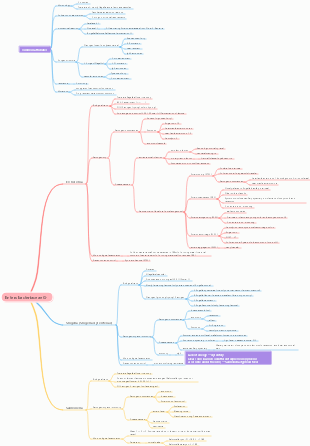
Nursing Pedagogy Third Edition Knowledge Map Examination Sprint, including educational theory, curriculum and curriculum, teaching methods and techniques, etc.
Edited at 2023-11-16 14:22:45This is a mind map about bacteria, and its main contents include: overview, morphology, types, structure, reproduction, distribution, application, and expansion. The summary is comprehensive and meticulous, suitable as review materials.

This is a mind map about plant asexual reproduction, and its main contents include: concept, spore reproduction, vegetative reproduction, tissue culture, and buds. The summary is comprehensive and meticulous, suitable as review materials.
This is a mind map about the reproductive development of animals, and its main contents include: insects, frogs, birds, sexual reproduction, and asexual reproduction. The summary is comprehensive and meticulous, suitable as review materials.
This is a mind map about bacteria, and its main contents include: overview, morphology, types, structure, reproduction, distribution, application, and expansion. The summary is comprehensive and meticulous, suitable as review materials.
This is a mind map about plant asexual reproduction, and its main contents include: concept, spore reproduction, vegetative reproduction, tissue culture, and buds. The summary is comprehensive and meticulous, suitable as review materials.
This is a mind map about the reproductive development of animals, and its main contents include: insects, frogs, birds, sexual reproduction, and asexual reproduction. The summary is comprehensive and meticulous, suitable as review materials.
nursing education
1. Introduction
Education elements 4
nursing pedagogy n.
Subject relationship
Educational Task 3
Development history/education system
foreign
domestic
Formal structure of nursing education system
Divided by education target 3
Education time 2
School format/teaching methods
2. Educational theory
Behaviorism
Fu Keshengjin
Thorndike learning theory/trial and error theory
law
preparatory law
law of effect
practice law
applied law
law of apraxia
application
preparatory law
law of effect
practice law
Skinner's theory of operant conditioning
Strengthening principles
positive reinforcement
negative reinforcement
reinforce a behavior
punish
reinforcement extinction
reduce a behavior
Reinforcement program
Fixed/varying interval reinforcement (time)
Fixed/variable ratio reinforcement (number of times)
application
Strengthening principles
consistency principle
objectivity--
Timeliness——
Efficacy——
Reinforcement program
Reinforcement method
application
cognitive theory
Know→Tobnesu
Epiphany Experiment (Tolman)
Bruner's discovery learning theory
People actively choose knowledge and form cognitive structures
Learning process (acquisition→conversion→evaluation)
Pay attention to the basic structure of the subject (basic knowledge → specific diseases → problem solving)
Intrinsic motivation for learning → interest
Advocate discovery learning (explore → think → reorganize teaching materials)
application
Basic structure of the subject
internal motivation
discovery learning
Ausubel accepts assimilation learning theory
meaningful acceptance of learning
meaningful learning conditions
Learning material logic
Learner Basics + Initiative
Assimilation model of meaningful learning
Lower level learning
Derived——
Related ——
Superior learning
learning in parallel
application
Understand students’ cognition→organize learning content appropriately
Combining discovery learning and acceptance learning
Incorporate learning methods/strategies into the classroom
information processing learning theory
basic process of memory
Memorization (input)
Keep (save)
recall (retrieval)
Reappear
Recognize
forget
application
Attracting attention (clinical cases/experiences)
Reasonably adjust learning limits (appropriate amount of knowledge)
Promote information processing and retention (timely preview review/break between classes)
application
social learning theory
Society → Du (Bandura)
Bobo Doll Experiment
social learning theory perspective
Observational Learning (Social Environment)
Pay attention to the process (see)
Keep - (remember)
copy--
motivation--
Internal cognition affects personal behavior
Self-control/regulation during learning
Pay attention to the role of role models
external reinforcement
vicarious reinforcement
self-reinforcement
application
role model→teacher
Role model → (Introduced/promoted by teachers) Excellent nurses
Provide opportunities for students to emulate role models (student clinical practice)
Role models and learners work together to promote
humanistic theory
people (go) to rome
Main point √
Emphasize the important role of emotions/attitudes/values in learning
Emphasize that education should be learner-centered
Pay attention to human values and personality development
rogers learning theory
student-centered
Freedom-Based Learning Principles
application
Development of students’ values/personality (ideological and political)
Teacher-student relationship, student participation in teaching activities (time setting/teaching methods)
classroom atmosphere
Teachers are helpers/facilitators
Accept individual student differences
Unified semester learning objectives
constructivist theory
Four elements of a learning environment
scene
cooperation
comminicate
sense making
similar
Teaching principles of operational skills
practice curve
Progress first quickly and then slowly
Altitude sickness
Old behavioral structures and patterns of action
Unsatisfied physical fitness
Interest ↓
ups and downs
3. Curriculum and Curriculum Settings
Course objectives
broad sense
nation
educational policy
educational purposes
School
Training objectives
teaching objectives
narrow sense
Education and students
Course features
Promote educational and teaching activities (teaching plans)
Intermediary for teaching activities
Achieve school education goals
Provide standards (achievements) for school management and evaluation
course sorts
Subject/Subject Courses (Except Language and Mathematics)
Experience/Activity Courses (Interest/Need)
Comprehensive courses (merging adjacent subjects)
Core courses (solve practical social problems)
educational evaluation
Diagnostic evaluation (before teaching) n.
Formative assessment (during the teaching process + a specific course content) n.
Summative evaluation (end of teaching + overall inspection) n.
Bloom's taxonomy of educational goals
cognitive domain
memory
understand
application
analyze
evaluate
create
emotional realm
Accept/react/give value/organize values/characterize value system
Psychomotor/Motor Skills Domain
imitate
operate
accurate
connect
naturalize
4. Teaching methods and techniques
Teaching method
advantage
One-to-many → high efficiency
Attention ↓ Forgetting ↑
Transfer a lot of knowledge in a short time
It is difficult for teachers and students to obtain feedback information
knowledge framework
Subjective initiative↓
Thinking ability/self-learning ability↓
High level cognitive level↓
Description/case → understanding
Personalized teaching is difficult to achieve
shortcoming
small group teaching method
Size<25 people
physical environment
U-shaped/ring-shaped/horseshoe type/committee type
Main types
Tutoring group (teachers leading students)
Academic/Guidance (Teacher Led)/Free/Agenda Discussion Group
Question-answering group (teacher asks questions + information)
Research group (experiment)
Problems and solutions
Everyone speaks
Patience/humor/finding reasons
Individually extremely active
polite reminder
dispute
Leave angrily
unwilling to participate
Polite invitation/Build confidence
PBL
n.
Teaching steps
Clarify learning goals
Provide clinical cases
Ask learning questions
student self-study process
Presentations and group discussions
class disscussion
There is a problem
Teacher shortcomings
Insufficient teaching resources
Students have poor adaptability
The PBL evaluation system is imperfect
CBL
n.
Teaching steps
Set up clinical cases
Set core questions
Teaching implementation
application
Advantages (Deepen Understanding/Improve Comprehensive Abilities)
question
The case is single and outdated
Insufficient teacher ability
Poor adaptation of students
simulation teaching method
Teaching skills
Ask a question
Demo
subtopic
flipped classroom
Grasp knowledge before class
Internalization of classroom knowledge
Consolidate and improve after class
clinical teaching
content
Cultivate clinical practice/clinical thinking/organizational management/communication and cooperation/nursing research capabilities
clinical teaching environment
hospital/community setting
The impact of teachers' attitudes on students
Clinical teaching organization and management
Clear responsibilities
nursing school
teaching hospital
Moral qualities of internship students
The role and selection of clinical teachers
Role
Participants in Nursing Practice (Nurse Responsibilities)
Educator (responsibilities as a nursing teacher)
choose
Personal qualities
Professional ethics
knowledge structure
Capability structure
Common methods of clinical teaching
Teaching system n.
Before internship:
Entering the internship:
advantage
teacher
student
shortcoming
teacher
Pre- and post-internship seminars
Before internship
After internship
advantage
Teaching rounds
Students gain experience
Medical rounds
Nursing rounds
Teacher explains and summarizes questions
Symposium/Seminar
Educational Assessment and Evaluation
educational measurementn.
standards for educational assessment
authenticity
reliability
Distinctiveness
Practicality
Test paper difficulty P
Objective question P = number of correct answers/total number of people
Subjective question P = total question score/full score value of the question
0.3<P<0.7 is suitable (0.5 is best)
Test Paper Discrimination D
Objective question D=2×(PH-PL)/N
Subjective question D = 2 × (the difference between the total scores of the high and low groups) / the sum of the total scores of the high and low groups
When D=O, there is no discrimination
When D is a negative number, pay attention to
clinical competency assessment
Assessment content
Cognitive Domain (Pyramid)
Emotional realm (mental attitude)
Operational skill areas
assessment method
Observation
Assessment method
bedside assessment
Simulation assessment method
comprehensive assessment method
Influencing factors
Appraiser
Business level
work attitude
Is it objective and fair?
assess target
readiness
State of mind (anxiety level)
Assessment methods
educational evaluation
Educational evaluation content
Courses (Course Structure/Outline)
Teaching quality (teaching attitude/level/method/effect)
Teaching quality (excellent and moderate can be scored √)
Teaching rounds (clinical)
Education quality assurance
content
method
Nursing Education Management
Basic organizational elements of the higher education system
Work
belief
right
The most basic unit of nursing education and scientific research
Teaching and Research Section/Teaching and Research Group
PDCA cycle
Plan/Execute/Check/Act
13 management principles
XY theory
academic system
n.
The basic basis for establishing the academic system
Target training of nursing talents Development level of social economy and medical science sociopolitical system Age characteristics and educational background of educators
degreen.
moral education
Cultivate students' interest in current affairs
social moral education
Professional ideological education
Professional Values Education