 Wondershare EdrawMind
MindMap Gallery Chemical Biology Chapter 1 Proteins
- 63
Chemical Biology Chapter 1 Proteins
This is a mind map about chemical biology Chapter 1 Protein, including an overview of proteins, basic units of proteins, primary structure of proteins, etc.
Edited at 2023-11-15 16:55:42
- bacteria
This is a mind map about bacteria, and its main contents include: overview, morphology, types, structure, reproduction, distribution, application, and expansion. The summary is comprehensive and meticulous, suitable as review materials.
- Plant asexual reproduction
This is a mind map about plant asexual reproduction, and its main contents include: concept, spore reproduction, vegetative reproduction, tissue culture, and buds. The summary is comprehensive and meticulous, suitable as review materials.
- Reproductive development of animals
This is a mind map about the reproductive development of animals, and its main contents include: insects, frogs, birds, sexual reproduction, and asexual reproduction. The summary is comprehensive and meticulous, suitable as review materials.
Chemical Biology Chapter 1 Proteins
- bacteria
This is a mind map about bacteria, and its main contents include: overview, morphology, types, structure, reproduction, distribution, application, and expansion. The summary is comprehensive and meticulous, suitable as review materials.
- Plant asexual reproduction
This is a mind map about plant asexual reproduction, and its main contents include: concept, spore reproduction, vegetative reproduction, tissue culture, and buds. The summary is comprehensive and meticulous, suitable as review materials.
- Reproductive development of animals
This is a mind map about the reproductive development of animals, and its main contents include: insects, frogs, birds, sexual reproduction, and asexual reproduction. The summary is comprehensive and meticulous, suitable as review materials.
- Recommended to you
- Outline
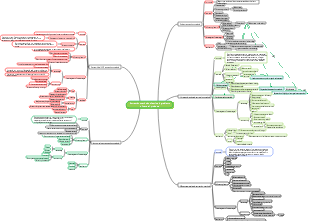
protein
1. Overview of protein
protein
One or more polypeptide chains formed by the condensation of many different amino acids through amide bonds (peptide bonds) in a certain order. They are macromolecules with a relatively stable conformation and certain biological functions.
Molecular weight estimation formula: 110*number of amino acids
Biological functions of proteins
as a signaling molecule
Maintain fluid balance
transport carrier
Antibodies (defense function)
Provides energy, synthetic fat and glucose
Catalytic (protease)
Elemental composition of protein
N is the characteristic element, with an average of 16%
Protein content = protein N content / 16% = protein N content * 6.25
2. Basic unit of protein
Amino acid structural formula
Differences: ① Glycine does not contain chiral carbon atoms, while others do ②Proline is an α-imino acid, and the others are α-amino acids.
Classification and structure of amino acids
see Attachment
Physicochemical properties of amino acids
physical properties
White crystals (yellow is hydrochloride)
Soluble in water, dilute acid, dilute alkali, insoluble in ethanol and ether
Ionic crystal, melting point is 200-300℃
Optical activity: all have chiral carbon atoms except glycine
Optical properties
Phenylalanine (Phe) absorption wave 259nm Tyrosine (Tyr) absorbs wave 278nm Tryptophan (Trp) absorption wave 279nm
Dissociation properties and isoelectric points of amino acids
see Attachment
The isoelectric point of each amino acid
see Attachment
chemical properties
α-Amino
formaldehyde
When excess formaldehyde is added to the amino acid solution, titrate with standard sodium hydroxide. The titration end point changes from pH12 to pH9. A phenolphthalein indicator can be used.
Nitrous acid (primary amino group) Determination of amino acids by Van Slyke method
Nitrogen comes half from amino acids and half from nitrous acid
Proline containing imine cannot react with nitrous acid
acylation reaction
When the amino group of an amino acid interacts with an acid chloride or acid anhydride in a weak alkaline solution, the amino group is acylated. Acylating reagents are often used as protecting agents for amino groups Dansyl chloride is used to label the N-terminal amino acids of polypeptide chains and to quantify trace amino acids (fluorescence!)
Alkylation reaction
One H atom of the amino acid amino group can be replaced by a hydrocarbon group (including cyclic hydrocarbons and their derivatives) a.sanger reaction: 2,4-dinitrofluorobenzene (DNFB/FDNB) reacts with amino groups under weak base conditions to generate DNP-chlorohydroxy acid (yellow oil) b. Edman reaction: Phenyl isothiocyanate (PITC) generates PTH under weak base conditions.
Cypher base
The amino group of amino acids can react with aldehydes and ketones to form Schiff's base
α-carboxy
salt formation reaction
Alkali metal salts of amino acids are soluble in water, but heavy metal salts are insoluble in water.
Ester-forming reaction
reaction to form acid chloride
After the amino group of the amino acid is protected, the carboxyl group reacts with dimethyl sulfoxide or phosphorus pentachloride to form an acid chloride.
azide reaction
decarboxylation reaction
The protein putrefaction process occurs, and amino acids are decarboxylated to form amines and carbon dioxide.
α-amino α-carboxy
Ninhydrin reaction
The reaction produces a blue-purple substance, and the reaction can be qualitatively and quantitatively measured by spectrophotometry at 570nm; Proline and hydroxyproline directly generate a yellow product with a maximum light absorption of 440nm.
peptide reaction
Products are directional
side chain
benzene ring
Reacts with concentrated nitric acid to form a yellow substance
Phenolic (tyrosine)
Reacts with nitric acid and turns red Reduced phosphomolybdic acid and phosphotungstic acid to form molybdenum blue and tungsten blue Combines with diazo compounds to produce an orange-yellow substance
Indolyl (tryptophan)
Can be oxidized by N-generation succinimide under mild conditions
Guanidino (arginine)
It reacts with α-naphthol and hypobromite in alkaline solution to produce a red substance. The reaction can be reversed in hydroxylamine buffer solution.
Methylthio
Nucleophilic group, easily forms sulfonium salts with alkylating reagents
Thiol (cysteine)
Thiol anions are formed by dissociation at slightly alkaline pH. The anions can react rapidly with alkyl halides such as iodoacetic acid, iodoacetamide, methyl iodide, etc. to generate corresponding stable alkyl derivatives: complex with metal ions; easily oxidized
uses of amino acids
medicine
Chemical industry
food
agriculture
Cosmetics industry
Separation and analysis of amino acids
column chromatography
paper chromatography
Ion exchange chromatography
The separation speed depends mainly on electrostatic attraction and secondarily on hydrophobic interaction When the polar groups are the same, the ones with smaller molecular weights are washed out first.
Cation exchange resin (acidic): elution order acidic>neutral>alkaline
Anion exchange resin (alkaline): reverse elution order
Electrophoresis
When AA is at the isoelectric point, it will not move in an external electric field.
When the pH of the medium is less than the isoelectric point of AA, AA is positively charged and moves toward the cathode in the electric field.
When the pH of the medium is greater than AA, on the contrary
Isoelectric precipitation method
The closer to the isoelectric point of AA, the smaller the solubility of AA and the easier it is to precipitate.
3. Primary structure of protein
primary structure
The primary structure includes the number, type, arrangement order of amino acids that make up the protein, the number of polypeptide chains, and the number and position of disulfide bonds within or between polypeptide chains.
Determination of primary structure
Basic strategies: fragment overlap method and direct amino acid sequence determination method
The basic steps
① Determine the number of polypeptide chains in a protein molecule
By determining the relationship between the moles of terminal amino acid residues and the moles of protein
② Split the polypeptide chain of the protein and break the inter- and intra-polypeptide chain disulfide bonds
Non-covalent bonding between peptide chains: use 8mol/L urea or 6mol/L guanidine hydrochloride or high-concentration hydrochloric acid under mild conditions
Covalent bonding between peptide chains: oxidizing agent (oxidizing acid) or reducing agent (sulfhydryl compound)
Use alkylating reagent (iodoacetic acid) to protect -SH on the cysteine residue generated by reduction to prevent oxidation
③Analyze the amino acid composition of each polypeptide chain
④Analyze the amino acid sequence of each polypeptide chain
N-terminal amino acid determination
Dinitrofluorobenzene (DNFB/FDNB)
Dansyl chloride (DNS)
Phenyl isothiocyanate (PITC)
Aminopeptidase
C-terminal amino acid determination
Hydrazine solution
carboxypeptidase method
Carboxypeptidase A: hydrolyzes all C-terminal amino acid residues except Pro, Arg and Lys
Carboxypeptidase B: can only hydrolyze the C-terminal amino acid residues of Arg and Lys
Carboxypeptidase gamma: can act on any C-terminal disability
reduction method
sodium borohydride
Methods for cleaving polypeptide chains
chemical method
cyanogen bromide method
Specifically cleaves the peptide bond formed by the carboxyl group of Met
Hydroxylamine method
Specifically cleaves the peptide bond between Asn-Gly at pH=9
enzymatic hydrolysis
Trypsin
The peptide bond formed by only breaking the carboxyl groups of Lys and Arg
chymotrypsin
Phe, Trp, Tyr (fast hydrolysis)/Leu, Met, His (second)
Pepsin
Hydrophobic amino acid residues (pH=2)
thermolysin
⑤ Determine the position where disulfide bonds are formed between cysteine residues
Pepsin is generally used to hydrolyze proteins, which has low specificity, many cut points, fewer peptide bonds containing disulfide bonds, and low pH to prevent disulfide bond exchange reactions. Diagonal electrophoresis separation
Isolation and Purification
Separation method
molecular size
centrifugal sedimentation method
Dialysis
gel chromatography
Solubility is different
Isoelectric precipitation method
salt soluble
Salting out
Organic solvents
temperature
Charge properties
Ion exchange chromatography
Electrophoresis
subtopic
adsorption properties
adsorption chromatography
affinity chromatography
Ion exchange chromatography
hydrophobic chromatography
6. Important properties of protein
Protein ampholytic dissociation properties and electrophoretic phenomena
protein isoelectric point
Colloidal Properties and Precipitation
The dispersed phase particle size is between 1-100nm and is a colloidal solution.
Three conditions for stability in aqueous solution
The dispersed phase particles are in the range of 1-100nm and the dynamics are stable.
The protein surface can carry the same charge and repel each other, so it is not easy to aggregate into large particles and precipitate.
Surface energy and water form a hydration layer, which is not easy to get close to each other and aggregate.
Precipitation method
High concentration neutral salt (salting out, salt dissolution)
Sodium chloride, ammonium sulfate, sodium sulfate
Reversible
Acid and base (isoelectric point precipitation)
organic solvent precipitation
heavy metal salt precipitation
Easily cause protein denaturation
Alkaloid reagent precipitation
Easily cause protein denaturation
Heating denaturation precipitation
subtopic
The most complete and fastest
Dialysis
Protein coagulation
The phenomenon in which denatured proteins aggregate or intersect with each other
It is essentially an irreversible development result after protein denaturation.
Denaturation and renaturation
Protein denaturation: Physical or chemical factors cause protein molecules to change their original specific spatial structure. The peptide chain changes from a tightly ordered structure to a loose and disordered structure, causing changes in the physical and chemical properties of the protein.
Protein renaturation: After removing denaturing factors, some denatured proteins can restore their natural conformation and biological activity.
denaturing factors
Chemical
Acids, alkalis, organic solvents, protein denaturants (urea, guanidine hydrochloride), heavy metal salts
physics
Heating, ultraviolet rays, X-rays, ultrasonic waves, violent vibration
feature
The secondary bond is broken, the concept is destroyed, no covalent bond is involved, and the primary structure remains unchanged.
Loss or partial loss of activity
Solubility decreases and viscosity increases
G
280nm characteristic absorption
color reaction
biuret reaction
red purple complex
Folin-phenol method
Navy blue
Coomassie Brilliant Blue G-250
488nm→595nm
5. The relationship between protein structure and function
The complex composition and structure of proteins are the basis for their diverse biological functions; and the unique properties and functions of proteins are a reflection of their structures.
The relationship between primary structure and function
Homologous proteins: Proteins that perform the same or similar functions in different organisms have obvious similarity in their amino acid sequences, that is, serial homology.
Cytochrome C
4. Three-dimensional structure of protein
include
secondary structure
domain
super secondary structure
tertiary structure
Quaternary structure
Protein three-dimensional structure determination method
X-ray diffraction
UV difference spectroscopy
Fluorescence and Fluorescence Polarization
circular dichroism
NMR
cryo-electron microscopy
Forces that stabilize the three-dimensional structure of proteins
Weak interaction/non-covalent force
hydrogen bond
The carbonyl oxygen and amide hydrogen on the main chain are formed before, which is the main force for stabilizing the secondary structure and has directional inclusion and saturation.
Van der Waals forces
Orientation effect
induction effect
dispersion effect
hydrophobicity
Hydrophobic groups or side chains are forced to approach due to the need to avoid water. The aggregation of hydrophobic groups is an ordering process, and the entropy decreases.
ionic bond
covalent force
disulfide bond
protein secondary structure
A regular structure formed by the polypeptide chain twisting and folding on itself and held together by hydrogen bonds in the desired direction.
include
alpha-helix
repeating structure
The main force stabilizing the helix is hydrogen bonding
Hydrogen bonds formed between -NH and -CO within the chain
The α-helices in proteins are almost always right-handed, have a chiral structure, and are optically active
There are 3.6 AA per turn of the helix, a rise of 0.53nm, and each residue is rotated 100°, a rise of 0.15nm
A ring closed by hydrogen bonds is a 13-membered ring, and an alpha helix is also called
β-sheet
repeating structure
The main force is hydrogen bonding
Hydrogen bonds formed by all -NH and -CO on adjacent peptide backbones
Fold the paper into a zigzag shape
Parallel and anti-parallel
β-turn
random structure
structure
The spatial orientation and configuration changes of atoms and groups in compound molecules involve the formation and destruction of covalent bonds, but have nothing to do with hydrogen bonds
Conformation
Different spatial arrangements produced by rotation along covalent single bonds in compound molecules. Conformational changes do not involve the formation and destruction of non-covalent bonds.
Super secondary structure and domains of proteins
super secondary structure
Proteins, especially globular protein molecules, are composed of several adjacent secondary structure elements that interact with each other to form a small variety of regular secondary structure combinations, which serve as tertiary structures in a variety of proteins. member
Combination
αα
βαβ
ββ
β-detour
ring topology
domain
independent folding unit of globular protein
Tertiary structure of protein
globular protein
quaternary structure of protein
Oligomeric proteins and subunits
Oligodensin: a polymer of two or more globular proteins bound by non-covalent bonds
Subunit: Each individual globular protein in an oligomeric protein
quaternary structure of protein
Types and quantities of subunits, as well as the spatial arrangement of each subunit in oligomeric proteins and the interactions between subunits
Four-level structure characteristics
Subunits have no complete biological activity when present alone
Subunits are bound by non-covalent bonds
symmetry
Structural and functional superiority
Enhanced structural stability
Improved genetic economy and efficiency
Catalysts come together
Synergy and allosteric effects
Allosteric effect: A ligand bound to a specific part of a protein molecule affects other parts
Main force that maintains protein structure
Primary structure: peptide bonds, disulfide bonds
Secondary structure: hydrogen bonding
Tertiary structure: hydrogen bonding, hydrophobic interaction
Quaternary structure: hydrogen bonds, hydrophobic interactions, ionic bonds, van der Waals forces
Measure protein concentration: Biuret method, Folin-phenol method, UV absorption method, Kjeldahl method, Coomassie brilliant blue method, ninhydrin method, colloidal gold determination method Biuret, Folin-phenol require intact peptide bond Ninhydrin requires an amino acid free amino group UV absorption mainly measures tyrosine and tryptophan residues Colloidal gold is the most sensitive
Peptide bonds and hydrogen bonds are the main factors that determine protein conformation Protein conformational diseases/protein denaturation
①The small intestine is the main site for protein digestion ②The decomposition of undigested protein or unabsorbed protein digestion products caused by intestinal bacteria is called protein putrefaction. ③There are both harmful substances and beneficial substances
Therefore, a UV spectrophotometer can be used to determine protein content. It’s not that the absorption peak is only here, but it’s stronger here It can be roughly considered to be at 280nm
Melamine→Sanlu milk powder incident