MindMap Gallery polygenic inheritance
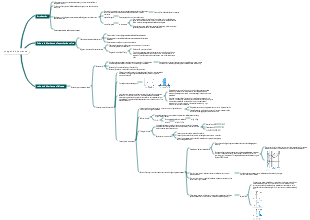
This is a mind map about polygenic inheritance. Most of human phenotypic traits are determined by environmental factors and genetic factors.
Edited at 2023-11-14 22:22:55This is a mind map about bacteria, and its main contents include: overview, morphology, types, structure, reproduction, distribution, application, and expansion. The summary is comprehensive and meticulous, suitable as review materials.

This is a mind map about plant asexual reproduction, and its main contents include: concept, spore reproduction, vegetative reproduction, tissue culture, and buds. The summary is comprehensive and meticulous, suitable as review materials.
This is a mind map about the reproductive development of animals, and its main contents include: insects, frogs, birds, sexual reproduction, and asexual reproduction. The summary is comprehensive and meticulous, suitable as review materials.
This is a mind map about bacteria, and its main contents include: overview, morphology, types, structure, reproduction, distribution, application, and expansion. The summary is comprehensive and meticulous, suitable as review materials.
This is a mind map about plant asexual reproduction, and its main contents include: concept, spore reproduction, vegetative reproduction, tissue culture, and buds. The summary is comprehensive and meticulous, suitable as review materials.
This is a mind map about the reproductive development of animals, and its main contents include: insects, frogs, birds, sexual reproduction, and asexual reproduction. The summary is comprehensive and meticulous, suitable as review materials.
polygenic inheritance
Most human phenotypic traits are determined by both environmental factors and genetic factors
For example: blood pressure, blood lipids, skin color, head circumference, height, weight Diabetes, obesity, hypertension, coronary heart disease, oncology, mental illness and neurodegenerative diseases, etc.
The population prevalence of single-gene genetic diseases is very low, and common disease traits are often regulated by multiple genes. These traits are called polygenic traits, also known as quantitative traits. Diseases affected by quantitative traits are called polygenic diseases, and their inheritance methods are Polygenic or multifactorial inheritance
The inheritance of these diseases does not follow the laws of Mendelian inheritance. Instead, they are caused by complex interactions between genetic susceptibility factors and environmental factors, and are therefore called multifactorial or complex inheritance.
Polygenic diseases are mostly common diseases, and their expression depends on the joint action of multiple related genes.
These genes contribute greatly to the phenotype of the disease, so they can be divided into major genes and minor genes.
Major genes may have a dominant-recessive relationship, but the distinction between minor-effect genes is not clear, and most of them are co-dominant.
The accumulation of the effects of multiple pairs of small-effect genes can form an obvious effect. This phenomenon is called additive effect. Therefore this gene is also called an additive gene
Since many genes are involved in multiple genetic diseases, not only are the genetic relationships between genes complex, but such diseases are often significantly affected by the environment. Therefore, such traits are also called complex traits, and such diseases are also called complex diseases.
Polygenic inheritance of quantitative traits
Traits inherited from a single gene are also called qualitative traits
The variation of polygenic genetic traits is distributed continuously in the population, with only one peak and therefore an average value. The difference between different individuals is only a quantitative variation, and the difference between two adjacent individuals is very small, so this type of shape is called a quantitative trait.
A quantitative trait is a measurable physiological or biochemical numerical indicator
These traits are normally distributed in the population rather than inherited in a "have or don't" manner.
Polygenic inheritance of quantitative traits
Quantitative traits are controlled by an unknown number of micro-effect genes with small contributions.
Environmental factors inhibit, enhance or inhibit the production of a certain shape
The unimodal distribution of quantitative traits mainly depends on two points
Multiple pairs of minimally effective genes
random combination of genes
In polygenic inheritance, although the inheritance rules of traits do not conform to Mendel's laws, the inheritance method of each pair of genes still conforms to Mendel's laws, that is, separation and free combination.
People have established a "whole-gene model" of complex inheritance
The correlation between gene networks is very strong. Any genetic change may affect the core genes related to specific traits. In addition, coupled with the influence of environmental factors, the complexity of quantitative traits is even higher.
Galton proposed the "regression to the mean" theory
During the inheritance process of quantitative traits, the offspring will move closer to the average value of the population. This is the regression phenomenon. This phenomenon is also manifested in other similar quantitative shapes.
The regression phenomenon has important guiding significance for understanding the genetic characteristics of polygenic genetic diseases.
polygenic inheritance of disease
Susceptibility and disease threshold
In polygenic genetic diseases, the genetic basis is composed of multiple genes, which partially determines an individual's risk of disease. This genetic basis determines an individual's risk of disease is called susceptibility
Susceptibility Environmental factors = Susceptibility
Under the same environment, the differences between different individuals can be considered to be caused by different susceptibility, that is to say, caused by genetic differences, and the susceptibility variation in the population is also normally distributed.
This minimum level of polygenic genetic disease caused by susceptibility is called the incidence threshold.
The threshold divides the continuously distributed medical-patient variation into two parts, the normal group and the diseased group.
Polygenic genetic diseases also belong to threshold-related diseases. The threshold is a certain point of medical-patient variation. Under certain conditions, the threshold represents the minimum number of susceptible genes necessary for the disease.
The average medical patient risk of a group can be estimated from the prevalence of the group. Using the known relationship between the mean and the standard deviation of the normal distribution, the disease threshold of the group can be estimated from the prevalence and the average susceptibility. The distance between
Population susceptibility to polygenic genetic diseases is normally distributed
①The area within the range of μ 18 (taking the mean μ as 0 and 1 standard deviation on the left and right) accounts for 68.28% of the total area under the normal distribution curve, the area outside this range accounts for 31.72%, and the left and right sides each account for about 16% ②The area within the μ -2δ range accounts for 95.46% of the total area under the normal distribution curve, the area outside this range accounts for 4.54%, and the left and right sides each account for approximately 2.3% ③The area within the μ -3δ range accounts for 99.74% of the total area under the normal distribution curve, the area outside this range accounts for 0.26%, and the left and right sides each account for approximately 0.13%
The area under the normal distribution curve of polygenic genetic disease susceptibility represents the total population, and the area of lap powder whose susceptibility exceeds the threshold is the percentage of patients, that is, the prevalence rate
The closer the mean value of susceptibility to a polygenic disease is to the threshold, it indicates high susceptibility, and the lower the threshold, the higher the population prevalence. On the contrary, the further the mean value of susceptibility is from the threshold, it indicates low susceptibility. , high threshold, low population prevalence
Heritability and its estimation
Polygenic genetic diseases are caused by a combination of genetic factors and environmental factors
The role of genetic factors can be measured by heritability
Heritability, also known as heritability, is the contribution of genetic factors in the formation of polygenic diseases.
The greater the heritability, the greater the contribution of genetic factors. Generally speaking, the lower the heritability of a trait or disease, the less obvious the family aggregation phenomenon.
Falconer formula
It is established based on the relationship between the prevalence of the proband's relatives and heritability, with the higher the prevalence of the disease in relatives. The greater the heritability
h2=b/r
When the prevalence in the general population is known, b=Xg-Xr/Ag
When prevalence in the general population is lacking, b=Pc(Xc-Xr)/ar
Xg is the number of standard deviations between the average susceptibility and the threshold in the general population; Xc is the number of standard deviations between the average susceptibility and the threshold in relatives of the control group; The number of standard deviations between the mean and the threshold value; Ar is the number of standard deviations between the average susceptibility of the general population and the average susceptibility of patients in the general population; ar is the susceptibility of the proband's relatives The number of standard deviations between the sex mean and the patient's susceptibility mean among the proband's relatives; Qg is the prevalence of the general population; Qc is the prevalence of control relatives, Pc=1-Qc, Qr is the proband's relatives Prevalence
The relatedness coefficient refers to the overall probability that two individuals received a specific allele from a common ancestor.
Holzinger formula
It is established based on the fact that the higher the heritability of a disease, the greater the difference between the concordance rate of monozygotic twins and the concordance rate of dizygotic twins.
Monozygotic twins are twins formed from one fertilized egg. Their genetic basis is theoretically identical, and their individual differences are mainly determined by the environment.
Dizygotic twins are twins formed from two fertilized eggs, which are equivalent to siblings. Therefore, their individual differences are determined by both genetic basis and environmental factors.
h2=Cmz-Cdz/100-Cdz
Please pay attention to the following issues when calculating
1 Heritability is an estimate for a specific population
2 Heritability is a population statistic and is meaningless when used on individuals.
3. The estimation of heritability is only suitable for diseases without genetic suppression and no major gene effect.
Factors influencing the risk estimate of recurrence of polygenic genetic diseases
Prevalence is related to relative level
The incidence of polygenic genetic diseases has an obvious tendency of familial aggregation. The prevalence of the patient's relatives is higher than the population prevalence, and the prevalence decreases sharply as the relationship between the patient and the patient increases, moving closer to the population prevalence.
The risk of recurrence of polygenic genetic diseases is related to the heritability of the disease
Some polygenic diseases have different population prevalence rates and different risk rates even if their heritability is the same.
The risk of recurrence in relatives of patients is related to the number of affected relatives
In polygenic genetic diseases, the more affected people in a family, the higher the risk of recurrence in relatives.
Because the genetic composition of the parents in single-gene genetic diseases has been fixed and is inherited strictly according to Mendelian inheritance rules, the probability of the disease in their offspring changes by 1/2 or 1/4 of the original risk because several patients have been born.
The risk of recurrence in the patient's relatives is related to the severity of the patient's deformity or disease.
The genetic basis for the onset of polygenic genetic diseases is small-effect genes, which have co-significant additive effects. Therefore, if the patient's condition is severe in polygenic genetic diseases, it proves that his susceptibility far exceeds the incidence threshold. Compared with patients with milder disease, whose parents have more susceptibility genes and have more susceptibility genes, their susceptibility is closer to the threshold.
In single-gene genetic diseases, regardless of the severity of the disease, the risk of recurrence is generally 1/2 or 1/4.
When there are gender differences in the population prevalence of polygenic genetic diseases, the risk of recurrence in relatives is related to gender
When there is a gender difference in the incidence of a certain polygenic genetic disease, it means that the incidence thresholds for different genders are simply different.