MindMap Gallery polygenic inheritance
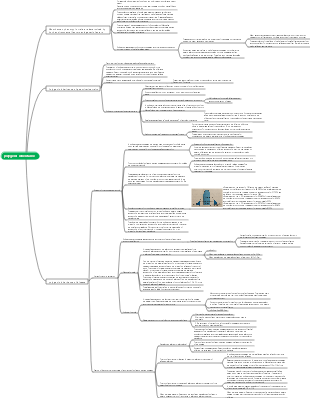
This is a mind map about polygenic inheritance, including polygenic inheritance of quantitative traits, polygenic inheritance of diseases, etc. Hope it helps!
Edited at 2023-11-13 00:21:08This is a mind map about bacteria, and its main contents include: overview, morphology, types, structure, reproduction, distribution, application, and expansion. The summary is comprehensive and meticulous, suitable as review materials.

This is a mind map about plant asexual reproduction, and its main contents include: concept, spore reproduction, vegetative reproduction, tissue culture, and buds. The summary is comprehensive and meticulous, suitable as review materials.
This is a mind map about the reproductive development of animals, and its main contents include: insects, frogs, birds, sexual reproduction, and asexual reproduction. The summary is comprehensive and meticulous, suitable as review materials.
This is a mind map about bacteria, and its main contents include: overview, morphology, types, structure, reproduction, distribution, application, and expansion. The summary is comprehensive and meticulous, suitable as review materials.
This is a mind map about plant asexual reproduction, and its main contents include: concept, spore reproduction, vegetative reproduction, tissue culture, and buds. The summary is comprehensive and meticulous, suitable as review materials.
This is a mind map about the reproductive development of animals, and its main contents include: insects, frogs, birds, sexual reproduction, and asexual reproduction. The summary is comprehensive and meticulous, suitable as review materials.
polygenic inheritance
Introduction
Most human phenotypic traits are determined by both environmental factors and genetic factors
A trait controlled by a pair of alleles is called a monogenic trait, also known as a quality trait
Regulated by multiple genes, these traits are called polygenic traits, also known as quantitative traits
They result from complex interactions between genetic susceptibility factors and environmental factors, and are therefore called multifactorial or complex inheritance.
Does not follow Mendelian laws of inheritance
major effect gene
There may be explicit or implicit relationships
minor effect gene
co-dominance
After the accumulation of the effects of multiple pairs of minimally effective genes, an obvious effect can be formed. This phenomenon is called an additive effect; therefore, these genes are also called additive genes.
There may be some so-called major genes that play a major role, and the major genes may have a dominant or recessive relationship.
These diseases are also called complex diseases
Polygenic inheritance of quantitative traits
Quantitative traits and qualitative traits
Traits inherited from a single gene are also called qualitative characters.
Polygenic genetic traits are also called quantitative characters (quantitative character)
These traits are normally distributed in the population
Polygenic inheritance of quantitative traits
Quantitative traits are controlled by an unknown number of co-dominant, micro-effect genes with small effects.
"Regression to the Mean" Theory
The famous British scientist Galton
During the inheritance process of quantitative traits, the offspring will move closer to the average value of the population, which is the phenomenon of regression. This phenomenon is also manifested in other similar quantitative traits
polygenic inheritance of disease
Susceptibility and disease threshold
Susceptibility
In polygenic genetic diseases, the genetic basis is composed of multiple genes, which partially determines an individual's risk of developing the disease.
The combination of genetic factors and environmental factors to determine an individual's risk of developing a certain genetic disease is called susceptibility.
Susceptibility Environmental factors = Susceptibility
Susceptibility variation in a population is also normally distributed
Incidence threshold (threshold)
When an individual's susceptibility reaches a certain level, he or she may develop the disease. This polygenic genetic disease caused by susceptibility has a minimum incidence of
Normal group and diseased group
Using the known relationship between the mean (or mean μ) and the standard deviation (δ) of the normal distribution, the distance between the disease threshold and the susceptibility mean of the population can be estimated from the prevalence. The distance is calculated based on the normal distribution. The standard deviation of
The area under the normal distribution curve of polygenic genetic disease susceptibility represents the total population, and the area where the susceptibility exceeds the threshold is the percentage of patients, that is, the prevalence
The closer the mean value of susceptibility to a polygenic disease is to the threshold, it indicates high susceptibility, and the lower the threshold, the higher the population prevalence; conversely, the further the mean value of susceptibility is from the threshold, it indicates low susceptibility. , high threshold, low population prevalence
Heritability and its estimation
Heritability, also known as heritability, is the contribution of genetic factors in the formation of polygenic diseases.
The greater the heritability, the greater the contribution of genetic factors.
Generally speaking, the lower the heritability of a trait or disease, the less obvious the familial aggregation phenomenon will be.
Falconer formula
It is established based on the correlation between the prevalence and heritability of the proband's relatives.
h²=b/r
Known general population prevalence
b=(Xg-Xr)/ag
unknown
b=[pc(Xc-Xr)]/ar
Holzinger formula
It is established based on the fact that the higher the heritability of a disease, the greater the difference between the concordance rate of identical twins and the concordance rate of fraternal twins.
Identical twins (MZ)
CMZ
Fraternal twins (DZ)
CDZ
h²=(CMZ-CDZ)/(100-CDZ)
Pay attention to the problem
Heritability is an estimate for a specific population
Heritability is a population statistic and is meaningless when used on individuals.
Heritability estimates are only suitable for diseases with no genetic heterogeneity and no major gene effects.
Factors influencing the risk estimate of recurrence of polygenic genetic diseases
Prevalence is related to relative level
The incidence of polygenic genetic diseases has obvious familial aggregation tendency
For many polygenic genetic diseases, the population prevalence rate is between 0.1% and 1%, and the heritability rate is between 70% and 80%. Then the recurrence risk of the patient's first-degree relatives can be calculated using the Edwards (1960) formula.
The content of the formula is that the risk of recurrence among first-degree relatives of the patient is the square root of the population prevalence.
The risk of recurrence in relatives of patients is related to the number of affected relatives
In polygenic genetic diseases, the more affected people in a family, the higher the risk of recurrence in relatives.
The risk of recurrence in the patient's relatives is related to the severity of the patient's deformity or disease.
When there are gender differences in the population prevalence of polygenic genetic diseases, the risk of recurrence in relatives is related to gender
Carter effect
A proband with a lower prevalence in the population but a higher threshold sex will have a relatively higher risk of recurrence in his or her relatives. On the contrary, a proband with a relatively high prevalence in the population but a lower sex threshold will have a higher risk of recurrence in his relatives. relatively low