MindMap Gallery Chapter 7 Enterprise Strategic Management
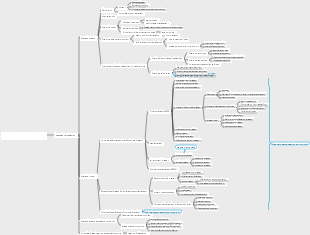
This is a mind map about Chapter 7 of corporate strategic management, including general corporate strategic management, specialization strategy, differentiation strategy, etc.
Edited at 2023-11-13 15:09:12This is a mind map about bacteria, and its main contents include: overview, morphology, types, structure, reproduction, distribution, application, and expansion. The summary is comprehensive and meticulous, suitable as review materials.

This is a mind map about plant asexual reproduction, and its main contents include: concept, spore reproduction, vegetative reproduction, tissue culture, and buds. The summary is comprehensive and meticulous, suitable as review materials.
This is a mind map about the reproductive development of animals, and its main contents include: insects, frogs, birds, sexual reproduction, and asexual reproduction. The summary is comprehensive and meticulous, suitable as review materials.
This is a mind map about bacteria, and its main contents include: overview, morphology, types, structure, reproduction, distribution, application, and expansion. The summary is comprehensive and meticulous, suitable as review materials.
This is a mind map about plant asexual reproduction, and its main contents include: concept, spore reproduction, vegetative reproduction, tissue culture, and buds. The summary is comprehensive and meticulous, suitable as review materials.
This is a mind map about the reproductive development of animals, and its main contents include: insects, frogs, birds, sexual reproduction, and asexual reproduction. The summary is comprehensive and meticulous, suitable as review materials.
Chapter 7 Enterprise Strategic Management
7.1 Overview of Enterprise Strategic Management
strategy definition
chandler
Strategy is the determination of the basic long-term goals of a business, as well as the actions to be taken and the resources to be allocated to achieve these goals.
Ansoff
Strategy is the overall decision-making made by an enterprise on its current and future business activities in order to adapt to the external environment.
Drucker
Strategy is the matter of deciding what an organization will do and how it will do it.
Characteristics of strategy
Overall, long-term, guiding, integrated, competitive and adaptable.
strategic management
Ansoff
In order to ensure the continued survival and development of the enterprise, senior managers of the enterprise carry out fundamental and long-term planning and guidance for all business activities of the enterprise by analyzing the external environment and internal conditions of the enterprise.
fred david
The art and science of cross-functional decision-making that enables an organization to achieve its goals through strategy development, implementation, and evaluation.
Steiner
Enterprise strategic management is a dynamic process that establishes the enterprise's mission, sets enterprise organizational goals based on the enterprise's external environment and internal operating factors, ensures the correct implementation of the goals, and ultimately realizes the enterprise's mission.
Representative perspectives on strategic management
Enterprise strategic management is a series of major management decisions and actions that determine the long-term performance of an enterprise. Including strategy formulation, implementation, evaluation and control.
Enterprise strategic management is the activity of enterprises formulating long-term strategies and implementing such strategies.
Enterprise strategic management is the management process by which an enterprise realizes its purpose while dealing with its relationship with the environment.
strategic management concept
Strategic management is the implementation of decisions that involve making decisions about the direction and scope of future development of a business or organization.
The role of strategic management in improving the competitiveness of enterprises
Helps to correctly evaluate the crises and opportunities of the external environment;
It helps to clarify the core capabilities of the enterprise and formulate effective strategic activity areas for the enterprise, so that the enterprise can gain long-term competitive advantages;
It can optimize the combination of corporate human resources and enhance the company's execution capabilities;
It helps enterprises establish strategic evaluation and control systems based on consumer value.
Three levels of enterprise strategic management
1. The strategy for the company as a whole and all its businesses is the corporate strategy.
2. The strategy for each specific business area in a diversified business is called business strategy, also known as operating strategy or division strategy.
3. The strategies of each specific functional department in each business area are called functional strategies.
Functional strategies for business areas
1. Production strategy 2Marketing strategy 3Financial strategy 4Human resources strategy
Six steps of the strategic management process
1. Identify the current mission, goals and strategies of the business or organization
2. Conduct external environment analysis
3. Conduct internal organizational analysis
4. strategize
5. implement strategy
6. Evaluate the results obtained
subtopic
Step1: Identify the current mission, goals and strategies of the enterprise or organization
Step2: Conduct external environment analysis
SWOT model, Porter's five forces model
Step4: Develop a strategy
Perspective of development direction: The overall strategy is divided into expansion strategy, stability strategy and contraction strategy, among which expansion strategy is further divided into diversification strategy, specialization strategy and integration strategy.
According to Michael Porter's theory: competitive strategies are divided into cost leadership strategy, differentiation strategy, target concentration strategy and optimal cost strategy.
According to the functional departments of the enterprise: functional strategies are divided into human resources strategy, marketing strategy, financial strategy, R&D strategy, production strategy, etc.
boston matrix grand strategy matrix IE matrix Quantitative Analysis Matrix
7.2 Specialization strategy
Definition: A strategy whereby an enterprise or organization concentrates resources and capabilities in a specific area or market to achieve competitive advantage and sustained growth.
Application method
Enrich existing production lines
Develop new products within existing product lines
Expand physical distribution and sales. Expand the sales scope within a region, and expand distribution and sales outlets to new regions at home and abroad.
Expand distribution and sales outlets within a region
Expand shelves, improve locations, and improve product display within existing sales outlets
Encourage non-users to use the company's products through advertising, promotions and special pricing methods, and encourage rare users to use the company's products more often
Penetrate competitors' markets through pricing strategies, product differentiation, and advertising
Advantages and Disadvantages
Advantages of a Specialization Strategy
1. Realization of economies of scale 2. Core competitiveness advantages 3. Target market advantages
Risks faced by the implementation of specialization strategy
Completely affected by the rise and fall of the industry, weak ability to resist risks
market capacity problem
technical bottleneck
The instability of customer preferences is increasing
intensity of competition and
Complexity is increasing
the speed of technological change
changes in government policy
7.3 Differentiation strategy
Definition: Differentiation strategy is an important concept in enterprise strategic management. It refers to a way for enterprises to stand out in market competition and gain competitive advantages by creating uniqueness in their products, services, brands, market positioning, etc. Strategic Choice.
Characteristics of differentiation strategy
Quality wins
Innovative services
Excellent performance
Unique appearance
Special characteristics and value characteristics generate value
Basic requirements for implementing differentiation strategy
R&D capabilities Marketing capabilities Corporate culture
Advantages and Disadvantages
Advantages of differentiation strategy
Improve profitability
Promote loyalty
Create barriers to competition
Achieve pricing flexibility
Risks of differentiation strategy
1 High cost 2 Limited target market 3 Changes in market demand