MindMap Gallery The emergence and development of management ideas
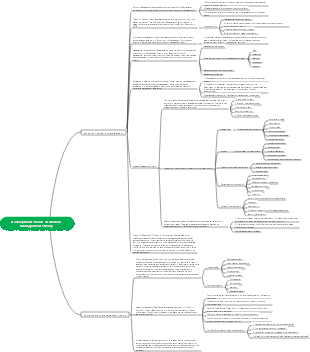
This is a mind map about the emergence and development of management ideas, including early management ideas of the Western factory system, classical management theories, behavioral science management theories, etc.
Edited at 2023-11-12 16:57:04This is a mind map about bacteria, and its main contents include: overview, morphology, types, structure, reproduction, distribution, application, and expansion. The summary is comprehensive and meticulous, suitable as review materials.

This is a mind map about plant asexual reproduction, and its main contents include: concept, spore reproduction, vegetative reproduction, tissue culture, and buds. The summary is comprehensive and meticulous, suitable as review materials.
This is a mind map about the reproductive development of animals, and its main contents include: insects, frogs, birds, sexual reproduction, and asexual reproduction. The summary is comprehensive and meticulous, suitable as review materials.
This is a mind map about bacteria, and its main contents include: overview, morphology, types, structure, reproduction, distribution, application, and expansion. The summary is comprehensive and meticulous, suitable as review materials.
This is a mind map about plant asexual reproduction, and its main contents include: concept, spore reproduction, vegetative reproduction, tissue culture, and buds. The summary is comprehensive and meticulous, suitable as review materials.
This is a mind map about the reproductive development of animals, and its main contents include: insects, frogs, birds, sexual reproduction, and asexual reproduction. The summary is comprehensive and meticulous, suitable as review materials.
The emergence and development of management ideas
Traditional Chinese management thought (divided into macro-management governance and micro-management governance)
Shun Dao: Tao in the subjective category - the theory of governing the country; Tao in the micro category - objective economic laws
Valuing people: First, people’s support is against them; second, talents are valued and they leave.
Renhe: Harmony means adjusting interpersonal relationships, talking about unity, harmony up and down, and harmony left and right.
Trustworthiness: Credibility is the basis for establishing stable relationships between people in human society and the guarantee for national prosperity and career success.
Sharp tools: If a worker wants to do his job well, he must first sharpen his tools.
Seeking truth from facts: Seeking truth from facts, Confucianism proposes the principle of "keeping uprightness", too much is not enough
Countermeasures: One is prediction and the other is planning. In the midst of strategizing, the husband will win the battle thousands of miles away
Frugality: Confucius - Be frugal and love people so that they can take advantage of their time. Mozi - He was economical in his financial use, frugal in self-support, and the people were prosperous and the country was governed. Xunzi said - When a minister is on duty, he should not go out to eat, but use his wealth to fulfill his duties.
Rule of law: implement the principle of clear law and one law
Early Management Thoughts of the Western Factory System
Adam Smith (the first British bourgeois classical economist to make important contributions to Western management theory, with his representative work "The Wealth of Nations")
1Division of labor improves production efficiency
2 Put forward the economic man’s point of view
3 Propose the concept of production rationalization
4 Labor is the source of national wealth
Charles Babbage (1832 "On Machinery and Manufacturing Economy", research on professional division of labor, work methods, use of machines and tools, etc.)
It is necessary to improve the careful study of work methods and use professional skills as the basis for wages and bonuses
Pay attention to the role of people, encourage workers to make suggestions, advocate the implementation of a useful suggestion system, and attach importance to the use of management techniques, etc.
Robert Owen (one of the first people to notice the importance of human factors in improving labor productivity)
1 Improve factory water conditions, rationalize the layout of production equipment, and shorten labor hours
2Raise the minimum age limit for child labor
3. Raise wages, provide free meals to workers in the factory, open factory stores, set up kindergartens and model schools, establish mutual aid funds and hospitals, and issue pensions
4. Contact with workers and understand their production and living conditions
classical management theory
Scientific management thought (Taylor or Taylor is the founder and is known as the father of scientific management. He believes that the central issue of management is to improve labor productivity, and the main content is operation management and organizational management)
Job management
1. Develop scientific operating methods to replace the past operating methods that relied solely on workers’ experience.
Using time research and motion research, we develop standard work methods and standardize the tools and work environment required for work. Principle of work quota: Determine workers’ “reasonable daily workload” based on standard operating methods and reasonable organizational arrangements.
Scientifically select and train workers so that they can work according to the best working methods
Implement an stimulating differential piece-rate wage system
Organizational management
1. Separation of planning functions from management functions: Separate planning functions from workers’ work, and workers should work according to the operating methods and instructions specified by the planning department.
2 Implement the functional foreman system
3. Implement the principle of exception in management control. That is, senior management only retains the right to make decisions and supervise exceptional matters.
Theoretical evaluation of scientific management
1 For the first time in the history of management, management experience has been elevated to scientific management, effectively improving production efficiency.
2. Treat people as economic people and believe that the main motivation of workers is to make money.
General management theory of organizations (representative figure Fayol, known as the father of modern management theory, whose representative work is "Industrial Management and General Management")
main content
1 Research on operations and management
2Advocate management education
3Propose five major management functions
4 Proposed fourteen management principles and the Fayol Springboard Principle (also known as the Fayol Bridge, the advantages liberate the top management, strengthen communication between peers, and subordinates are highly motivated)
Administrative organization theory (represented by Max Weber, known as the father of organization theory, who proposed the so-called ideal theoretical system of administrative organization)
main content
1. It should be based on legal and reasonable power. A highly structured, formal and impersonal ideal administrative organization system is a reasonable means for people to carry out coercive control.
There are three pure forms of power in organizations
1Traditional power: traditional practices and hereditary inheritance
2 Divine Power: Worship and Superstition of Leaders
3. Legal power: rationality - the power provided by law
2 The so-called ideal is the pure form of the organization, that is, the effective and reasonable organizational form.
3The ideal administrative organization system is the so-called bureaucracy, which includes six aspects
1. Segment organizational activities to different people
2Give each position clear rights and responsibilities
3 Carry out training according to job requirements
4 Managers have clear salary and promotion opportunities
5 Managers strictly enforce rules and disciplines
6Managers are guided by reason and do not take personal emotions into consideration
behavioral science management theory
Human relations theory (proposed by Mayo and derived from the Hawthorne experiment, the theory of human relations shifted the focus of management research from work and physical factors to people for the first time)
1 Employees are social beings, not agents
2. There are a large number of informal organizations in enterprises that are linked by unique emotional tendencies and spiritual orientations.
3. The new ability of business leaders lies in improving employee satisfaction to stimulate morale. Hawthorne Effect: An increase in performance or effort due to additional attention
4
Social systems theory (represented by Chester Barnard, known as the father of modern management theory, who applied sociological concepts to management)
1 An organization is a cooperative system
2 Basic conditions for the existence of an organization
Clear objectives
willingness to cooperate
good communication
3 Put forward the authority acceptance theory: Barnard believes that the authority of managers does not come from the conferment of superiors, but from the recognition of subordinates.
Theory
Theory X
Most people are lazy by nature and do whatever they can to avoid work
Most people have no ambitions, would rather be criticized by their leaders, are afraid of responsibility, and value personal safety above all else.
Only works on physiological and safety needs
Most people have very little creativity
Management method: Adopt forced orders and adopt both hard and soft management measures
Theory Y
Most people are willing to take responsibility for their work and have a considerable degree of imagination and creativity
By satisfying employees' love needs, esteem needs and self-actualization needs, the purpose of improving productivity is achieved. Incentives work at all levels of needs.
Management Style: Democratic, Self-Controlled and Self-Directed
Hyper-Y theory (proposed by John Morse and Jay Losey in the United States based on the complex man hypothesis)
There is no immutable, universally applicable best management approach
Flexibly adopt corresponding measures based on the functional relationship between independent variables of the internal and external environment of the organization and dependent variables such as management ideas and management techniques.