MindMap Gallery Breathing mind map
Regarding the physiology of breathing mind map, the respiratory tract is an airflow channel that warms, humidifies, filters and cleans gases, causing defensive reflexes (coughing and sneezing)
Edited at 2023-11-09 18:57:27This is a mind map about bacteria, and its main contents include: overview, morphology, types, structure, reproduction, distribution, application, and expansion. The summary is comprehensive and meticulous, suitable as review materials.

This is a mind map about plant asexual reproduction, and its main contents include: concept, spore reproduction, vegetative reproduction, tissue culture, and buds. The summary is comprehensive and meticulous, suitable as review materials.
This is a mind map about the reproductive development of animals, and its main contents include: insects, frogs, birds, sexual reproduction, and asexual reproduction. The summary is comprehensive and meticulous, suitable as review materials.
This is a mind map about bacteria, and its main contents include: overview, morphology, types, structure, reproduction, distribution, application, and expansion. The summary is comprehensive and meticulous, suitable as review materials.
This is a mind map about plant asexual reproduction, and its main contents include: concept, spore reproduction, vegetative reproduction, tissue culture, and buds. The summary is comprehensive and meticulous, suitable as review materials.
This is a mind map about the reproductive development of animals, and its main contents include: insects, frogs, birds, sexual reproduction, and asexual reproduction. The summary is comprehensive and meticulous, suitable as review materials.
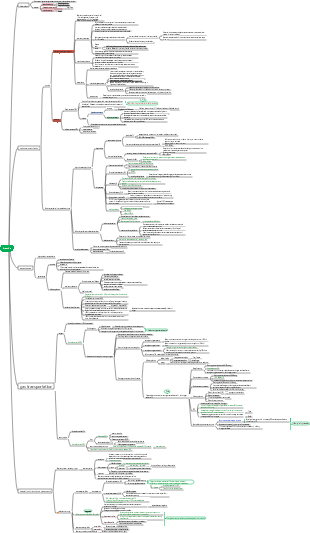
breathe
Overview
Related anatomy
respiratory tract
Air flow channels that warm, humidify, filter and clean gases, causing defensive reflexes (coughing and sneezing)
Alveoli
The main place for lung ventilation
pleural cavity
generate negative pressure
diaphragm and thorax
dynamic organization
functional activity process
pulmonary ventilation
power
driving force
respiratory movements
Thoracic expansion and contraction
The lungs expand and contract with the expansion and contraction of the thorax
direct power
Difference between intrapulmonary pressure and atmospheric pressure
resistance
Elastic resistance 70%
Measured by compliance
Lung elastic resistance
Lung elastic recoil force 1/3
Alveolar surface tension 2/3
The force present at the air-liquid interface of the alveoli that causes it to shrink
constitute inhalation resistance
causing pulmonary edema
Cause alveolar rupture or atrophy
thoracic elastic resistance
when inhaling
resistance to inhalation, motivation to exhale
when exhaling
Resistance to exhale, force to inhale
Inelastic resistance 30%
inertial resistance
viscous drag
airway resistance
Influencing factors
Air velocity
Airflow pattern
Airway diameter size
Airflow pattern
Turbulence
Laminar flow
Evaluation index
lung volume
tidal volume
Refers to the volume of air inhaled or exhaled during each calm breath Normal value is 500ml
Supplementary inspiratory volume
Refers to the amount of gas that can be inhaled at the end of a calm inhalation and then inhaling as hard as possible
Supplementary expiratory volume
Refers to the amount of air that can be exhaled at the end of calm exhalation and then exhaling with all one's strength.
Remaining air volume
Refers to the amount of air that remains in the lungs at the end of maximum expiration and cannot be exhaled.
Lung capacity
deep inspiratory volume
Refers to the amount of air that can be inhaled during maximum inhalation from the end of quiet exhalation
functional residual capacity
Refers to the amount of air remaining in the lungs at the end of quiet expiration
vital capacity
The maximum amount of air that can be exhaled from the lungs after inhaling forcefully
forced vital capacity
Refers to the maximum amount of air that can be exhaled as quickly as possible after one maximum inhalation.
forced expiratory volume
Refers to the amount of gas that can be exhaled within a certain period of time after taking a maximum inhalation and trying to exhale as quickly as possible.
Pulmonary ventilation and alveolar ventilation
pulmonary ventilation
Refers to the total amount of air inhaled or exhaled per minute Normal value is 6-9L
Pulmonary ventilation = tidal volume * respiratory rate
alveolar ventilation
Refers to the amount of fresh air inhaled into the alveoli per minute Normal value is 4.2-6.3L
= (tidal volume - dead space volume) * respiratory rate
physiological dead space
alveolar dead space
Due to the uneven distribution of blood flow in the lungs, all the gas entering the alveoli cannot be exchanged with the blood, and the part of the alveolar volume that cannot be exchanged becomes the alveolar dead space.
anatomical dead space
The respiratory tract between the nose or mouth and the terminal bronchioles does not participate in gas exchange between the alveoli and blood. The volume of this part of the respiratory tract becomes an anatomical dead space.
Lung ventilation and tissue ventilation
lung ventilation
tissue ventilation
Gases are transported in the blood
intracellular oxidative metabolism
adjust
pulmonary surfactant
Maintain alveolar stability
Prevent pulmonary edema
Reduce inhalation resistance