 Wondershare EdrawMind
MindMap Gallery Operation-How to become an operation expert
- 43
Operation-How to become an operation expert
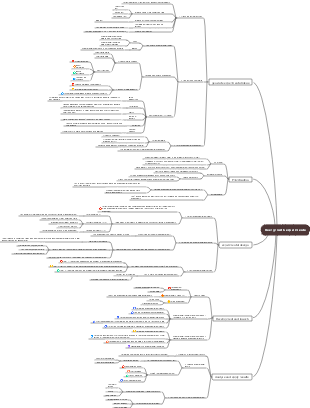
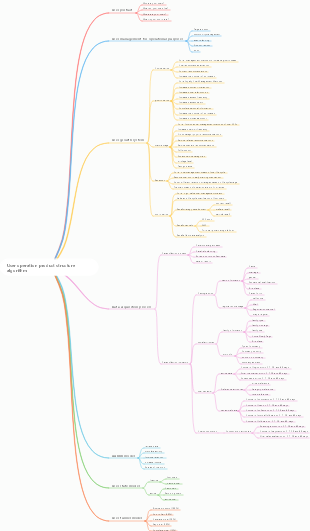
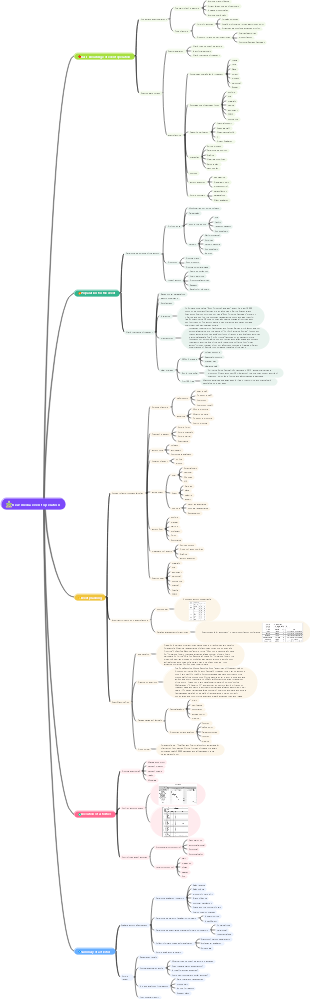
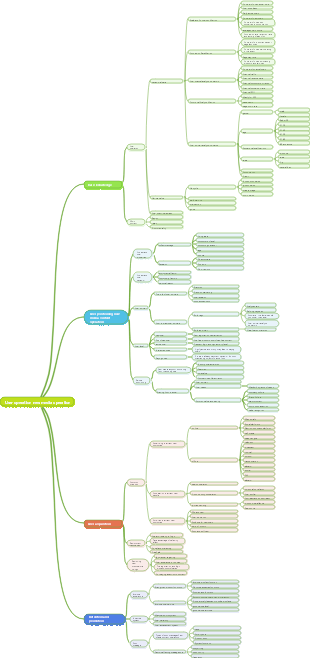
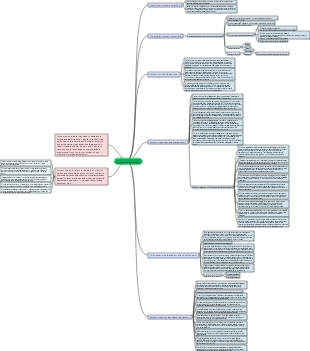
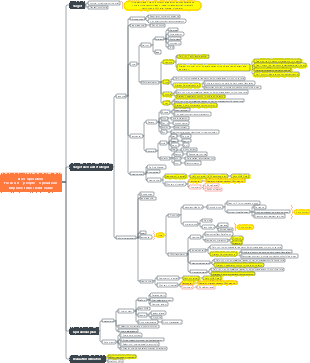
This mind map is divided into four parts, thinking part, structure part, data part and method part. 1. Thinking: up-down-down-up thinking, cube thinking, object thinking, compound interest thinking. 2. Structure: content operation, activity operation, and user operation. 3. Data: key data and three data tests. 4. Methods: User stratification, user growth system, community operation, fission (self-propagation), use of UGC, chasing hot spots, use of coupons, ten strategies of "entrustment", user psychology in operation, gaining momentum And make a game.
Edited at 2023-07-28 16:00:26
- bacteria
This is a mind map about bacteria, and its main contents include: overview, morphology, types, structure, reproduction, distribution, application, and expansion. The summary is comprehensive and meticulous, suitable as review materials.
- Plant asexual reproduction
This is a mind map about plant asexual reproduction, and its main contents include: concept, spore reproduction, vegetative reproduction, tissue culture, and buds. The summary is comprehensive and meticulous, suitable as review materials.
- Reproductive development of animals
This is a mind map about the reproductive development of animals, and its main contents include: insects, frogs, birds, sexual reproduction, and asexual reproduction. The summary is comprehensive and meticulous, suitable as review materials.
Operation-How to become an operation expert
- bacteria
This is a mind map about bacteria, and its main contents include: overview, morphology, types, structure, reproduction, distribution, application, and expansion. The summary is comprehensive and meticulous, suitable as review materials.
- Plant asexual reproduction
This is a mind map about plant asexual reproduction, and its main contents include: concept, spore reproduction, vegetative reproduction, tissue culture, and buds. The summary is comprehensive and meticulous, suitable as review materials.
- Reproductive development of animals
This is a mind map about the reproductive development of animals, and its main contents include: insects, frogs, birds, sexual reproduction, and asexual reproduction. The summary is comprehensive and meticulous, suitable as review materials.
- Recommended to you
- Outline



How to become an operations expert?
一、 Thoughts
Up-down-down-up thinking
Think from the top down
Step one: What kind of environment is our industry in?
Step 2: Which business model in this industry is our business model?
Step 3: With our resources and strength, where should we set the goal for the first phase?
Company level
Step 4: To achieve this goal, what kind of process structure model should we have?
Step 5: What are the key data nodes in this process structure?
Step 6: How much data should we achieve at these key nodes?
Step 7: If we want to achieve these data goals, what operational modules should we do?
Step 8: What methods should we use on each module?
Employee level
Case presentation
Case: Uncle Zhang is an apple vendor. He now hopes to use Internet+ to increase his sales. How should we help him?
Step one: Apple is a mass consumer product. Although there is not much room for growth from the perspective of the overall environment, the project itself is feasible.
Step 2: Sell apples on the Internet. The current mainstream methods may include the following three methods:
(1) Traditional e-commerce model
(2) Internet celebrity store model (hype + gimmick + concept + Internet celebrity + live broadcast)
(3) Traditional offline + Internet
Adopt the third model: the basic model of physical offline cart (school gate) + online ordering (WeChat) + repeat purchase + referral
Step 3: Based on Uncle Zhang’s actual situation, we determined Uncle Zhang’s first goal
Sell 200 kilograms of apples a day, purchase price 3 yuan per kilogram, sell for 5 yuan, earn 400 yuan a day
Step 4: The process structure of this model at the current stage
Step 5: Determine several core data at the current stage
organic traffic
first purchase conversion rate
Repurchase conversion rate
referral rate
Average price per customer
Step 6: According to field observations, the natural flow rate we obtained is 1,000 people/day, and Uncle Zhang currently does not have the funds and energy to do some diversion work. We established the following target model
5% first-time purchase conversion rate, 50% re-purchase conversion rate, 3-day/time purchase frequency, 10% referral rate, average customer price of 10 yuan (2 pounds)/person
A rough calculation: 1000×5%×(1.10%)n×50%/3>200/2, the calculation result is n=27 (days)
That is, after 27 days, Uncle Zhang can steadily sell 200 kilograms of apples every day.
Step 7: Several operational modules are involved here
Content operation: Improve first-time purchase conversion rate and increase frequency of repeat purchases
User operations: improve repurchase rate
Activity operation: improve referral rate and customer unit price
Step 8: We designed the following operating methods
Content operation
Uncle Zhang made an advertising board and placed it in a prominent position to create a visual impact on potential customers (to increase the first-time purchase conversion rate)
Applied for WeChat payment and Alipay payment (enhance payment experience and increase first-time purchase conversion rate)
When Uncle Zhang communicated with students, he persuaded the concept of "young people should eat more fruits" (to increase the frequency of users' repurchase).
User operation
Students who purchase for the first time can get an instant discount of one yuan by joining the group or adding Uncle Zhang on WeChat (enhance stickiness and increase repurchase rate)
Uncle Zhang regularly posts some photos of picking fresh apples in the group or circle of friends. Students in the group can enjoy door-to-door delivery service when placing orders (enhancing stickiness and increasing repurchase rate)
Event operation
In order to guide customers to buy at least 2 kilograms of apples each time, the price is adjusted to 5.2 yuan for 1 kilogram and 10 yuan for 2 kilograms (guiding customers to buy 2 kilograms at a time to increase the average customer price)
Launch an activity: If a pair of lovers come together to buy apples, they can enjoy a 10% discount (through the creation of a ritual sense of "if they are lovers, come together to buy apples", it will cause a word-of-mouth effect and increase the referral rate)
subtopic
Execute from bottom to top
Step 1: Build a basic working environment for several operational modules
Step 2: Prepare the tools or materials required for several methods
Step 3: Implement the set method and monitor the data in real time
Step 4: If there are some deviations from the expected data, adjust and adopt a better method
Step 5: Optimize the process structure based on actual operational data
Step 6: As the data gets closer to our model, we get closer to our strategic goals
cube thinking
Three core elements of business model
product
Customer (User)
Customer order profit
Other cases
New media operation
Number of media matrix, number of fans, conversion rate
Event operation
Cost, user participation, conversion rate
Community operation
Number of groups, number of users, interaction rate
Functional APP
Number of product features, number of users, conversion rate
Channel traffic
Cost, number of channels, user acquisition cost
write copy
Number of copywriting, reading volume, fan conversion rate
Do customer service
Speaking professionalism, consultation volume, satisfaction
Brick and mortar chain stores
B-B-C agency model
intermediary company
SaaS software company
Operation Cube Rules
1. In the actual operation process, a set of "minimum cubes" should be constructed as soon as possible
2. When you encounter a bottleneck, find the dimension you are best at and “expand” it.
3. In 90% of cases, if any one dimension develops too slowly, it will slow down the development of the other two dimensions.
4. If you can develop one dimension to the extreme, you can ignore the other two dimensions
object-oriented thinking
introduce
At the beginning of the 21st century, software development was booming. However, due to previous reasons, the software at that time was developed in a process-oriented way, and people jumped directly between pages.
And when the demand became bigger and bigger and the functions became more and more, everyone found that the structure at that time could no longer support it. In one word, it was "disordered".
At this time, object-oriented thinking emerged. "Object-oriented" abstracts everything into objects, then designs and constructs them through attributes and methods, then encapsulates them, and extends them through inheritance and polymorphism.
several keys
kind
For example, all WeChat copywriting
object
WeChat copywriting
Any object can become an object, no matter how big or small it is
Attributes
title, content, aesthetics
method
So what is the method for the title attribute?
Borrow stars, add numbers, add symbols, etc.
What is the method for the content attribute?
Originality, chasing hot spots, adding cases, etc.
What is the method for the attribute of beauty?
Picture style, font standards, typesetting methods, etc.
encapsulation
This method will be very convenient for you to remember. Once the object is generated again, its properties and methods will be displayed immediately. If it reaches this level, it actually means that it has been "encapsulated" in your mind.
inherit
At this time, if you want to write a Weibo based on this WeChat article, its attributes and methods are almost the same. This is "inheritance"
Polymorphism
You can change the format of this article and put it on the official website, you can also write it as a press release and send it to the media, or you can make a short video and put it on a video website. This is "polymorphic"
Case
Target: WeChat copywriter
Object: company
Object: content display
Target audience: high net worth users
Summary chart
Compound interest thinking
Key Concepts of Compound Interest
Principal can accrue interest
Interest can become principal
That is, A produces B, and then B can be converted into A, and the cycle starts again.
Thinking about the problem
1. Products can generate content, so what’s the next sentence?
Answer: Let the content become the product!
2. Content can generate users, so what’s the next sentence?
Answer: Let users generate content!
3. Content can generate activity, so what’s the next sentence?
A: Let the activity generate content!
4. Activities can generate users, so what’s the next sentence?
Answer: Let users generate activity!
5. Channels can generate users, so what’s the next sentence?
Answer: Let users become channels!
6. Users can generate actions, so what’s the next sentence?
Answer: Let behavior bring users!
7. Actions can produce results, so what’s the next sentence?
Answer: Let effects lead to behavior!
8. Operations can generate data, so what’s the next sentence?
Answer: Let operations drive data!
Operation case
1. Products can generate content and turn content into products
Discovery module in the product
2. Content can generate users, allowing users to generate content
All UGC products, such as Douyin, WeChat official accounts, and Zhihu
3. Content can generate activities, let activities generate content
McDonald’s “Golden Arches” incident, users further generated content for dissemination
4. Activities can generate users and allow users to generate activities
In some programs, the users of the previous episode are the guests of the next episode, and the guests generate activities
5. Channels can generate users and turn users into channels
Direct selling, MLM
6. Users can generate behaviors and let behaviors bring users
Like, comment, share, forward
7. Behavior can produce effects, let effects produce behavior
HiTea hires people to create queuing effect
8. Operations can generate data and let data drive operations
All operations are like this
Other cases
What is ecology?
Ecology is products producing products
What is fission?
Fission means users generate users
What is distribution?
Distribution is channel generation channel
二、 Structure
Content operation
Step One: Goals and Positioning
Draw user portraits
Dig into common problems faced by these users
Find a problem-solving scenario
Find the characteristics of user groups
Step Two: Content Production
Facing objects: properties
Discover
Refers to the title of copywriting, poster slogans, event titles, etc., that is, something that can quickly attract the user's attention and capture the user's attention in the massive amount of reading information.
Use some questioning, suspense, comparison, and digital writing techniques, and at the same time combine some of the latest hot topics as much as possible
First Experience
According to statistics: after a user starts reading a piece of content, if he does not get what he wants within 10 seconds, he will basically give up, so the time left for us is only 10 seconds.
We should try our best to catch users by throwing out some highlights within 10 seconds, and at the same time pay attention to whether the overall layout style is beautiful and unified, etc.
deep reading
The core value of the content itself
Combine multiple scenarios and generate more interactions with users
Don’t make the user’s cognitive cost too high
feel
User feelings determine the motivation for user diffusion
Let users have various feelings after completing in-depth reading: such as joy, excitement, excitement, anger, scarcity, the pleasure of taking advantage, the comfort after venting emotions, unique honor, satisfaction when gossiping, etc.
Step Three: Content Processing
According to the structure of the content
According to the type of content display
Set keywords for each file
Step 4: Display of content
rhythm of presentation
The frequency must be stable
The quality must be stable
Channels must be stable
Display channels
Own product channels
External free channels
External charging channels
Two-dimensional four-quadrant
Step Five: Diffusion of Content
Core question: How to make users willing to forward and spread?
Darkness Chencang
This trick usually needs to be implemented in combination with the product, that is, the behavioral function of forwarding (such as triggering a notification to friends on the site, etc.) becomes very hidden, allowing users to complete a forwarding unintentionally.
Coercion and inducement
The key to this trick is to set the requirements for forwarding behavior before users gain benefits when setting rules. For example, before the user wants to get prizes, get answers, gain knowledge, etc., he must forward it.
move with emotion
This trick is usually to show your weakness at the end of the content to gain the sympathy of users. For example, the boss wants to deduct wages, or he works an all-nighter shift, etc.
Step 6: User landing
landing page
Payment page, download page, registration page, login page, follow page
Summarize
Event operation
Before the event
Facing objects
Attributes
goal correctness
Convert the goals into user data goals (such as clarifying how many new people you want to attract, how many people you want to activate, etc.)
Digitizing the budget (clearly how much it will cost)
Digitizing time (clearly how much time it takes)
program effectiveness
Facing objects
Attributes
creativity
Imitate some of the more mature and effective methods in the market, such as subsidy reduction and exemption, popular promotions, full reductions and full increases, group fights, special interactions, prize-winning guessing, voting, H5 mini games, etc.
Check out more creative websites and collect some creative ideas
Operability
internal support
external support
time matching
Attractiveness to users
1||| Make event copywriting and content as interesting as possible
2||| The user operation level is as convenient as possible
3||| The rules of the event should be as easy to understand as possible
4||| Find as attractive a material prize as possible within your budget
5||| Find as many attractive virtual prizes as possible, such as certificates, titles, etc.
User's spread
Make activities a "talking point" for users
The activity itself should be fun and create value for users
Make it profitable for users
readiness
Material preparation
Execution plan: people, time, things
Options
Active
Facing objects
Attributes
time sufficiency
preheat
Create some gimmicks and topics at the beginning of the event to allow users to start discussions
In the countdown days of the event, use countdown methods to repeatedly stimulate users and enhance their expectations for this event.
residual heat
Summarize this event and share it with users with pictures and texts.
Record interesting people or things that happened during the event and share them in a timely manner
Conduct timely communication and discussion on some feedback and suggestions from users during the event, which can even lead to a new round of activities.
activity efficiency
Real-time monitoring and attention to abnormalities
Discover problems and optimize and adjust them in a timely manner
Record data and collect materials in a timely manner, and organize some feedback from users
Diffusion of activity
Offline activities should be coordinated with online channels, such as live broadcast platforms, online videos, communities and other online channels
At offline events, you should prepare as much content as possible that can guide users to forward it.
Online activities can disseminate and push event data and events in real time. Grasp the characteristic of "people like to join in the fun" and create lively scenes to attract more potential users to join
Online activities can also be spread and pushed using a “countdown” method to create a sense of scarcity and attract potential users to join quickly.
After the event
Facing objects
Attributes
User experience
The results of the activities must be announced in a timely manner and in an open and transparent manner in accordance with the established activity rules.
Ensure smooth channel for user feedback to obtain sufficient user experience feedback (available community)
self-help
Compare and analyze activity plans with overall goals
Compare and analyze specific methods and effects
Analyze and summarize areas of dissatisfaction
Summarize
User operation
Recruit
User decision
Must-answer questions
Let users perceive: User benefits > User costs
So the overall approach: strengthen benefits and weaken costs
user cost
actual cost
Add duration, operation steps, space occupied, etc.
psychological cost
Potential risks, possible losses, bad situations, etc.
Solution
The first step is to reduce user costs
The second step is to let users quickly perceive the benefits
The third step is to create new content output or activities
retain
stay in formula
User benefits User departure cost > User cost
Solution
1. Stable output (user benefits)
Frequency, quality, channel
3. Increase the cost of leaving
Emotionally: community
In terms of benefits: user growth system
2. Don’t make mistakes
4. Prevent competitors
Promote vitality
first realm
User benefits > User costs
Choose the best time to keep alive
Pay attention to user behavior
Length of stay on page, average number of daily opens, PUSH opening rate, number of referred users
For example: "When you get up, I'll treat you to a set meal."
The second realm
Let users not feel that their costs are costs
Let users’ efforts be perceived as benefits
For example: users are keen on analyzing the Starbucks points system
For example: "Go to eat immediately within 10 minutes and you can get a discount (it's still a matter of getting up)."
The third realm
Leading the new with the old, opinion leaders, etc.
For example: Ask Xiao Wang’s friend Xiao Zhang to wake Xiao Wang up (passing the cost to Xiao Zhang)
Convert
User conversion
Free → Paid
low frequency → high frequency
Low customer unit price → High customer unit price
Important points to note
Users need to pay real money, so it is difficult to weaken the cost perception and strengthen the benefit perception.
Organize your thoughts
1||| Ultimately, users should have a perception of “worth paying” when facing the product.
2||| To catalyze the perception of "worth paying", it is necessary to give users a perception: "taking advantage"
3||| In order for users to have the perception of "taking advantage", a necessary condition is: the user "wants"
4||| There is also a catalytic method for the perception that users "want", which is: "I have used it myself or seen others use it."
5||| Worth paying ← Taking advantage ← Want ← Used it myself/watched others use it
execution steps
If it is divided into three levels: A (free), B (low paid), C (high paid)
The first step: Divide the products into several grades and the prices into several grades
Step 2: First turn free users into paid users
Step 3: We must try our best to make type C users visible to type B users
Step 4: Highlight the superiority of type C users and stimulate type B users
Step 5: Launch a membership activity in a timely manner to make Type B users feel they are taking advantage
Step 6: Give type B users a reason to convert
recall
Record the reasons for user churn
Selection of reasons for uninstallation, user questionnaire
Record user growth
Those who need infant care are mothers of children aged 2-3 years old
When children are 5-6 years old, some early childhood education products can be provided
Summarize
三、 Data
key data
The steps of data operation
Data Planning → Data Collection → Data Analysis → Driving Methods
Data planning and core indicators
The top-level core data indicators
Subscribers
Profit per customer (ARPU)
Average Revenue Per User
Retention rate
Activity (DAU)
Generally based on daily activity
There can only be one top-level data indicator
Product initial stage: number of users
Mid-term product: retention rate and activity
Late product period: average revenue per user
split indicator
Subscribers
1||| Number of unique visits (UV)
2||| new user conversion rate
=Number of new users this time/Number of independent visits (UV)
3||| new user acquisition cost
Retention rate
1||| daily retention rate
2||| Weekly retention rate
3||| monthly retention rate
Activity
1||| New and active on the day (DNU)
2||| daily life growth
=DNU/DAU
The daily activity of a product on the first day is 10,000, and the daily activity on the second day is 11,000.
On the first day, 2,000 were newly added and active on the same day (DNU), and on the second day, there were also 2,000 new and active on the same day.
The daily activity growth on the first day is 2000/10000=20%, and the daily activity growth on the second day is 2000/11000=18.2%
Daily activity growth is declining and acceleration is declining
average revenue per user
1||| Average Revenue Per User (ARPU, Average Revenue Per User)
ARPU is a value with time, usually in months.
2||| Average Revenue Per Paying User (ARPPU, Average Revenue Per Paying User)
Monthly ARPPU = Total monthly revenue / Number of monthly paying users
3||| Paying user conversion rate
4||| User lifetime value (LTV)
Life Time Value
Product A: Its life cycle is 3 months, and its ARPU is 1,000 yuan/month
Product B: Its life cycle is 1 year, and its ARPU is 800 yuan/month
Product B is more attractive than product A. The value contributed by users in the entire product life cycle is 3,000 yuan for A and 9,600 yuan for B.
5||| Return on Investment (ROI)
Return On Investment
Continue splitting as needed
New User Registration
Lead page conversion rate, registration page conversion rate, completion page conversion rate, etc.
Type of channel (CPM, CPC, CPA)
Reach rate, click rate
Loss
Churn rate before payment, churn rate after payment, etc.
active
Mild activity rate, moderate activity rate, severe activity rate, etc.
make a deal
Collection conversion rate, order conversion rate, transaction conversion rate, etc.
Dimensions
Time dimension, regional dimension, device dimension, user dimension, etc.
Summarize
Complete data closed loop
Raw data
User source, user volume, user behavior, time, etc.
Processing data
Conversion rate, retention rate, activity rate, etc.
Obtaining raw data
Set through user attributes and behaviors
Such as the user’s age, gender, and what actions the user has performed, etc.
Set by product functional segmentation
Such as collecting, commenting, receiving coupons, etc.
Call the API interface of external products through the call of external data
If you call the WeChat interface, you will get various data on WeChat.
closed loop diagram
Data three tests
monitor
look at past and present
Monitor a certain data in real time for a long time to know its changes at all times
predict
look at the future
Make good use of current data and use reasonable methods to predict its future
Detection
Look at good or bad
Use reasonable means to judge the quality of a person, a product or an event
Three tests
People (users), goods (products), places (methods of presentation or transactions)
Everyone lives in a three-dimensional world, plus the dimension of time, it becomes a four-dimensional space
Comparison of the same dimensions
trend line comparison method
Left and right bar comparison method
The difficulty of competitive product analysis lies in obtaining competitive product data, especially some internal operating data. Usually we can collect external data that can be collected by competing products in the market and make a left and right bar comparison chart for analysis.
Disassembly in the downward dimension
Funnel analysis chart method
Prediction case
How to use past and present data to predict future data
Four steps to achieve
Dimension Split → Sampling → Estimation → Overlay
Forecast of user growth next month
Natural growth Event growth
How to use past and present data to predict future user behavior
User properties
To predict whether a user will buy our product A, first sort out the data of all users who have bought our products before, such as gender, age, region, occupation, etc.
pre-action
For example, when a user purchases product A on Taobao, there will be several prerequisite behaviors: such as the time spent on the product page, whether to add to the shopping cart, whether to collect, whether to consult, etc.
associated behavior
Suppose A is tea and B is tea sets. The behavior of purchasing product A will be related to the behavior of purchasing product B. Then the data of whether B has been purchased is also the data we use to predict.
Number of actions
Use the user's actual data and the data of those variables to predict the probability that the user will purchase our product A.
四、 Methods
User stratification
What do you understand?
1. User stratification is different in different industries and may be diverse
Didi Taxi, the people who use the app to hail taxis are a kind of user, the driver is also a kind of user, and the advertisers are also a kind of user.
If you want to do user stratification, you need to create a different user stratification system for these three types of users.
2. User stratification will change differently at different stages of product development.
For example, in different periods, the ways to distinguish value users from ordinary users are also different.
3. User stratification requires both qualitative and quantitative
Qualitative
For example, value users, general users, or VIP, super VIP, etc.
Quantitative
For example, how much consumption does it take to be considered a valuable user?
RFM model
three elements
Last consumption (Recency)
Frequency
Consumption amount (Monetary)
Eight types of customers
important value users
important development users
Important to retain users
Important detained users
General value users
General development users
generally keep users
General user retention
User growth system
The difference between stratification and growth
User stratification
User stratification is a hidden line. It is something we do to users, but the users themselves don’t know it.
User stratification allows us to drive users more effectively
User growth
The user growth system is a clear line. It is what we expose to users and hope and guide them to do.
The user growth system allows users to drive themselves more effectively
One external factor and one internal factor are the two main lines that drive our user operations.
Common user growth systems
Level system, points system, wealth system, task system, badge system
There are many ways to grow, such as consumption, daily check-ins, tasks, posting replies, and activity interactions.
Strategic positioning of user growth system
Auxiliary
Manifestations
User behavior creates the user’s growth system
is the result
User growth is only a product of user behavior, not an inducement
Case
If you have more points on Taobao, you can become a gold member; if you have more points on Didi Taxi, you can become a platinum member; if you have more points on iQiyi, you can become a VIP user
effect
Increase the cost of leaving
For most companies with their own core products, the strategic positioning, or the biggest mission, of the user growth system is to "increase the cost of users leaving."
method
Compound interest thinking is to transform the user’s growth system into user behavior
The failure case of the beauty salon, her user behavior trajectory: the user's offline beauty behavior → the user's growth (points growth) → the behavior of purchasing daily necessities and dry goods from the north and south. A produces B, and B goes to C. This is the biggest problem.
product type
Manifestations
The user’s growth system triggers the user’s behavior
is an inducement
The user wants to grow, and this desire for growth triggers his behavior. In other words, user growth is the inducement for users to behave
Case
In the game, you buy equipment in order to become stronger; in QQ level, you buy yellow diamonds and blue diamonds in order to gain rights; if you want to become a forum moderator, you stay online for a long time and post posts
effect
Retention, promotion and monetization
method
Compound interest thinking allows users’ behaviors to be transformed into users’ growth system
The user's desire for growth leads him to pay or give time and knowledge. Then, after he pays, we must give him a very obvious perception of growth (entering the growth system), so that we can continue to guide him to the next time. pay
a company's earnings
money
time
knowledge and resources
Through other exports, it will eventually become money
Building a growth system
Elements of user growth system
(1) The progression of growth
(2) Upgrade conditions and downgrade conditions for each level
Five questions need to be addressed
(1) How to formulate a reasonable series?
(2) What are the key indicators for upgrading/downgrading at each level?
(3) What are the user behaviors targeting key indicators?
(4) How to quantify and connect user behavior and key indicators?
(5) How to induce users to complete these user behaviors?
Five steps to build a growth system
1. Formulate a series
The entrance cannot be too difficult and the exit cannot be too easy
If the entrance is too difficult, some people will be turned away.
If exporting is too easy, some high-quality active users will soon reach their peak and no longer pursue them, and they will be easily lost.
2. Set key indicators
There is not necessarily only one key indicator, but it must have a weight (participating in "those data in operations")
Which thing is most important to us, then this is our key indicator
What a product needs from users is three things: money, time, knowledge and resources.
The key indicator of e-commerce or offline merchants is the amount of consumption; the key indicators of some APPs are the number of users, daily activity or the amount of content.
3. Plan user behavior
Assume that the key indicator is the number of users
Pay attention to user registration, such as improving user information, binding mobile phone, binding email, improving avatar, etc.
Assume that the key indicator is daily activity
Login, check-in, continuous check-in, like, comment, favorite, forward, etc.
Let’s say the key metric is the amount of content
Post, write articles, send short videos, online live broadcast time, etc.
Let’s say the key metric is sales
Some agent policies, micro-business franchise policies, etc.
4. behavioral quantification
(1) First unify user behavior into a number, such as points, experience value, growth value, etc.
(2) Set each user behavior to a numerical value based on our weight, such as 1 point for checking in and 2 points for posting.
(3) Simulate a user's behavioral path and calculate the number of values obtained daily. That is, simulate a user's actual operation and see how many values can be obtained at least, on average, and at most in a day.
(4) Based on our product cycle and how long we expect each user to upgrade, determine the value of each user's behavior and the standard for the upgrade value. For example, through the third step, we calculated that the maximum number of points that can be obtained in a day is 50 points. If we want users to upgrade to a level in about 10 days, then we can set the upgrade requirement for a certain level to 500 points.
Two key points
(1) For different behaviors of users, different weights must be set according to our actual needs.
(2) Control the upper limit of the value
(3) Regardless of points or growth value, especially for the second product-based user growth system, how to grow is not the most important.
(4) The most important thing is to create value for users after growth, create incentives for users, give users the motivation to continue to grow, and make users willing to continue to pay money and time for this.
5. Inducing users to complete these user actions
If it is user-driven growth, then when the user wants to grow, he will also consider two things: the cost of growth and the acquisition of growth.
Method: Increase user-perceived benefits and reduce user-perceived costs
It needs to be considered from two perspectives of the user: attributes and human nature.
Summary chart
Community operation
The place of community in strategy
community location
Three points of operation: people, goods and places
User stratification and user growth system are methods about "people"
Community is about the "field" approach
In some operational work, we have a relationship with users, but there is no relationship between users. The community can help us solve this problem.
Conditions in advance
A successful community must be a group of people who come together to form an organization to accomplish one or more common goals. If it is at the company level, it can also be a strategic goal
The community cannot be done for the sake of doing it. We must first understand the positioning of the community in the strategy and the conditions for maintaining the vitality of the community before we can truly use the weapon of community well, otherwise it may be counterproductive.
law of entropy increase
Within any closed thing, if there is no external energy stimulation, it will internally shift from high energy to low energy, eventually reaching a "thermal equilibrium", also known as "heat death", that is, death.
Similarly for the community, if we cannot generate a continuous energy input to the community, it will die soon (see picture)
Two positions of community
Auxiliary
It is suitable for companies that have their own main business and the purpose of the community is to focus on one or several needs of the company.
Commercial
The community is the company, and the company is the community. The purpose of establishing a community is a means of realizing commercial monetization
Key points of community operation
1. There must be a common purpose and values
2. There must be a certain threshold
Thresholds are generally set by charging a fee or by completing a certain task before joining the group.
3. To ensure high-value output
As a decision-maker, if we have not grasped the time to produce high-value output, then it means that now is not the best time to build a community.
4. The output must be stable, and it is best to combine online and offline
Meet-and-greets, sharing sessions, exchange sessions, etc.
5. There must be a hierarchy, let the higher-level people help the lower-level people, and let some users become managers.
(1) Opinion leaders
(2) Joint opinion leaders
(3) Communicator
It is necessary to encourage and reward in time, and to create a certain sense of ritual, such as public praise, granting some privileges, etc. On the one hand, encourage them and on the other hand, stimulate other groups of people
(4) Active person
They should be further guided to actively communicate and create a sense of organization. For example, invite them to become the publicity ambassador of the community, invite them to hold more offline activities, etc.
(5) Participants
We should take the initiative to care for them and enhance their sense of belonging to the community. The method is to organize regular chats to encourage them to talk more and express more opinions.
(6) Bystanders
Guidance should be continuously strengthened to eliminate their concerns and enhance their sense of participation in the community.
High level drives low level
(6) (5) (4) (3) In fact, it also represents the new acquisition-retention-activation promotion-conversion of user operations.
(1) Give communicators some benefits and privileges and let them become managers of the community
(2) Let communicators organize offline activities to invite activists, so that activists slowly become communicators
(3) Let activists proactively contact some participants, initiate topics, increase the activity of participants, and turn participants into activists
(4) Allow participants to take the initiative to publish some content as newcomers, so that bystanders can eliminate their concerns and turn bystanders into participants
Implementation steps of community operations
1. Determine the purpose of the community
2. Establish the goals and values of the community around the purpose of the community
3. Construction of community managers
Auxiliary
Generally speaking, 1~2 people are enough
The management and coordination of a more daily community, mainly focusing on handling things
The other one is more focused on business and communication, mainly focusing on connecting with people. Sometimes just look after each other as partners
Commercial
At least the founder is required (KOL type and energy output)
Daily manager (community secretary type and daily management)
Recruitment personnel (mainly responsible for publicity and promotion of the community)
Several cooperation partners (can come to the platform in different scenarios)
…
4. Determine the carrier of the community
WeChat group, QQ group, Maimai group, forum, etc.
5. Rules for building a community
Objects to join the group
Gender, age, interests, etc.
Conditions for joining the group
Whether it is invitation-only, whether payment is required, etc.
Rules to follow
Do you need to change your name when joining the group, do you need to send red envelopes, do you need to introduce yourself, etc.
Violation handling
Indiscriminate posting of advertisements, insults and quarrels, etc., and determine different levels of punishment, such as warnings, kicking out after 3 warnings, etc.
6. Develop interactive mechanisms and operational strategies
interactive mechanism
Automated and manual responses
Operation strategy
Assess your own output capabilities, allocate reasonably, formulate and implement plans and continuously record relevant data
7. Filtering and fission of users
8. Realize
If it is the first type of auxiliary community, it may help the main business grow by completing the task.
If it is the second type of commercial community, it must produce and sell itself. Generally, monetization will be achieved through membership fees, rewards, crowdfunding, advertising, e-commerce and other methods.
9. copy
Fission (self-propagation)
Two key points of fission
1. Users are willing to join after seeing it
Whether the copywriting and poster design are creative and attractive, and whether they can firmly capture users in a few seconds
The accuracy of targeting people is also crucial
Promotional text should match the context in which the content is disseminated
Promotional images must highlight the three key elements of theme, benefits, and QR code
2. Users must forward if they want to gain benefits
1) Interests put behind
The best way is that we can provide benefits with higher value but no cost to copy.
For example, software tools, videos, e-books, online tutorials, human resources, etc., the cost is the same for 10 people as for 10,000 people.
2) Benefits come later and are shared altruistically
3) The best interest with low probability and posterior interests
gambling mentality
4) Interests are put behind the scenes and user roles are assumed
To put it simply, it is to let users participate first, and then give users a scene to show themselves, but the prerequisite is that users must bring new users to participate together.
Specific implementation steps of fission
The first step: clarify the theme and final purpose of this fission
Step 2: Filter seed users
Step 3: Establish a group and determine the operation strategy
In order to make the group look more popular, we started building it from group 11 to group 30, a total of 20
Step 4: Prepare materials
Such as 1 promotional text, 1 poster and 2 words
Step 5: Confirm a fission tool and set related materials
Step 6: Start implementation
Usage of UGC
Several key points
1. Display the content users most want to obtain
If you have any questions, go to Zhihu, check Douban ratings before watching movies, and read Mafengwo Guide before traveling.
2. Seize the scene where users are most likely to produce content (emotional catharsis point)
I watched a trashy movie and wanted to complain about it, but I saw a beautiful scene and wanted to share it.
3. Low barriers to entry
UGC usage scenarios
1. As an operational strategy, UGC has existed for a long time and has become a way for us to obtain content and materials.
The most important things in this strategy are three things: content type, production scenarios, and distribution channels.
In some non-UGC Internet companies, such as e-commerce, the content types become comments, pictures, videos, etc. The production scenario has changed to cash rebates, deductions, etc. Distribution channels become soft articles, product pages, etc., which are essentially the same
After all, UGC platform companies are only a small part, but UGC as a method is applicable to almost any company.
Step 1: Determine the type of content you want to get, as shown in the figure
Step 2: Build a production scenario for the content we want to get, as shown in the table
Step 3: Determine the distribution channels for these contents, as shown in the table
2. As a means of activity, UGC has become an effective means of user promotion.
NetEase Cloud Music screened more than 5,000 high-quality user music reviews, made them into advertising slogans, and placed them in large quantities in the subway.
The advertising slogans on Jiangxiao Baijiu bottles are all actively contributed by users, and the effect is very good.
How should this kind of activity be planned? There are two methods and ideas:
(1) Content comes first, that is, existing high-quality content is displayed or selected and turned into activities (as in the example above)
(2) The content comes later, that is, through the collection or selection of some prize-winning activities (such as some very common essay contests, etc.) to encourage users to produce high-quality content
If we organize the first activity and the second activity alternately, that is, the first activity produces content through activities, the second time the output content is turned into activities, and the third time the activities are turned into content, And so on. The chicken lays the egg, and the egg lays the chicken, which ensures high-quality activity output and its continuity.
Key points of UGC application
Three lows
Low threshold for participation
Low technical threshold
If a template is provided, it will be automatically generated
Low threshold for thinking
Three more
Many content types
Many production scenarios
Many distribution channels
Three matches
Top crowd matching benefits
Matching and distribution of resources to the central population
Desire to further develop and become popular
Bottom crowd matching recognition
Chasing hot spots
When to chase?
Three key elements
① Product brand attributes
The brand attributes of the product correspond to the business model, toB, toC, B2B2C
②Output after creative packaging
The output after creative packaging corresponds to the team’s creativity and execution capabilities
③Number of users
The number of users corresponds to the user base, budget and channels
Conditions for chasing hot spots
Condition 1: How short is the distance between the product and individual users?
Condition 2: Creativity and execution ability of the team
Condition 3: A certain amount of user base (promotion budget and channels)
Hotspot type and acquisition
1. Regular hot spots
Domestic and foreign holidays, historical events, product launch days, company anniversaries
2. Emerging hot spots
Get channels
(1) Public channels: various popular rankings, such as Weibo hot search, Baidu trending list, Sogou hot search list, etc.
(2) Industry channels: This is mainly for hot spots in some industries, so some industry groups, network and other places are the best channels to obtain relevant hot spots.
3. Predictable hot spots
How could it be predictable if it was sudden? In fact, there are many such situations
For example, "The Chinese football team lost", "The stock market collapsed", "A certain star won an award", etc.
Although this kind of event is sudden, it is a predictable and high-probability event for us.
What hot spots are you chasing?
1. Stay on top of life cycle
In terms of time attributes, the earlier a hotspot is pursued, the better the effect will be; the longer the life cycle of the hotspot, the better the effect will be.
If the "chasing hot spots" thing is continued for a long time, the life cycle of the whole thing will be very long. For example, in the eyes of the advertising industry, marketing industry, or some fans, the matter of "Durex chasing hot spots" is itself a hot spot.
2. The growth of hot spots and user participation
Users will generally go through the following stages: knowing the results → sorting out the details → analyzing the opinions → subsequent extensions
Stage One: Know the Result
Phase 2: Sort out the details
Details and reasons for the incident
The third stage: Analyzing ideas
Is it possible to create consistent user behavior, or is it possible to create several opposing viewpoints that each have valid arguments?
The fourth stage: subsequent extension
3. Match between hot spots and brands
4. Political and negative hot topics cannot be pursued
Chasing hot spots is a joyful thing, and a bunch of melon-eating people are having fun. Only then will it be effective.
How to chase hot spots?
1. Sorting out the attributes of people, things and things
2. From simple to complex, establish connections with hot spots
If we can't find the point of connection at the direct level, then we have to connect it through attributes.
3. Division of work and collaboration, quick implementation
Summary chart
Use of coupons
Components of a coupon
1. Amount
2. Get conditions
3. Conditions of Use
Coupon type
"Catching type" coupons, Solve the problem of drainage
understand
What is a "catch"? It is used as a bait to "catch" users, rather than the main purpose of direct sales to generate profits.
"Experience coupons for spa projects" on Dianping, "new user discount coupons" on a food delivery app, and "cash red envelopes for new users" on a financial app
Features
1) High discount
2) No limit on total quantity
3) Single use only
The prerequisite for "catching things" coupons is: we must be able to earn money from users
"Exciting" coupons, Solve the problem of profit maximization
understand
This is "profit maximization", which is called "price discrimination" in economics. Simply put, it is to achieve different price strategies among recipients.
The role of "stimulating" coupons is that by setting some coupons with a threshold for obtaining them, users who can originally accept high prices can continue to purchase at high prices, while other users who cannot accept high prices can use coupons. Lower the price to meet their psychological price. Of course, we can improve the acquisition conditions by setting some thresholds, such as completing tasks, needing to forward, etc. This combined with the fission we mentioned before, the effect will be better
logic
Logic 1: Users who originally accepted high prices may not be willing to spend this time to obtain coupons
Logic 2: Users who originally accepted the high price may not pay special attention to this coupon.
Features
1) Obtain threshold
2) Polymorphism
3) Limited time
"Guide type" coupons, Solve the problem of precision marketing
understand
The advanced use of coupons is precision marketing, which means pushing different coupons to different users and ensuring that each user gets the coupons they need.
At this time, our coupons become "guided" coupons, which can guide users in the direction we want.
User stratification
For users with low "F" values
to guide them to increase their consumption frequency
Get a 20 yuan coupon when you spend over 100 yuan, and it is only valid for one week
Coupons are valid for the day and are pushed frequently
For users with a low "M" value
Guide them to increase consumption
When you purchase item A, you can enjoy a 20% off coupon for item B
Combination coupons for three categories of products A, B, and C
The essential
1) Usage threshold
2) Joint marketing
The first is the combination in time, that is, the combination of this consumption and the next consumption.
The second is the combination of products, that is, the combination of product A and product B.
3) Limited time
Behind the coupons is actually the optimization of the product price system and the realization of precision marketing.
Ten Strategies for "Entrust"
1. Concealing the truth
When we don’t have a good way to recommend our products to users, we can pretend to be users and interact with them to build a good relationship.
2. To attract good ideas
When we are not sure whether we should launch something, we can use the method of "trust" to test it out.
3. Create something out of nothing
When users have doubts about us on something, we should use "trust" proof to increase the user's trust.
4. Surround Wei and rescue Zhao
When we are troubled by something and fall into an unfavorable situation, we should use "support" to find a way to quickly get out of this "unfavorable situation"
5. Overcome strength with softness
When we are troubled by something and are in an unfavorable situation and cannot change the topic, we should use "entrust" to overcome the rigidity with softness.
6. Play hard to get
When we are put on hold and in a dilemma, we can use "entrust" to find a step to get a buffer and maintain subsequent contact.
7. Make a sound in the east and attack in the west
When we are stuck on something, we can use "tuo" to stimulate the reason behind the matter in a roundabout way to guide it to happen.
8. Killing chickens to scare monkeys
When we don’t want to directly antagonize users but have to do so, we can use the method of “entrusting” to make subtle inroads.
9. Flowers blooming on the tree
When we want to set up a bureau but are unable to mobilize resources, we have to find ways to turn various people in the bureau into our "trustees" in different scenarios.
10. Golden cicada escapes from its shell
When we want to leave a certain game, then "entrusting" is our best way to get out.
User Psychology in Operations
Three stages and states of user development
The first stage: greed
If users can get benefits, they will come naturally.
The second stage: anger
When the user's jealousy arises, he will ignore whether he has taken advantage of it.
The third stage: crazy
Users have become obsessed and think that all products are good, and users will defend their own opinions and positions.
greedy
1. Use “herd mentality” to attract users
2. Use the “anchor effect” to enhance users’ willingness
The anchor effect means that when users make judgments about a product, they are easily dominated by the first impression or the first information, which is like an anchor sinking to the bottom of the sea and fixing people's thoughts somewhere.
3. Use the “ratchet effect” to prevent users from leaving
A better solution than "desire to get what you don't get" is "fear of losing what you have got"
The "ratchet effect" refers to the irreversibility of people's consumption habits after they are formed, that is, it is easy to adjust upwards but difficult to adjust downwards. It is also what we often say, "It is easy to go from frugality to luxury, but it is difficult to go from luxury to frugality."
The ratchet effect must meet one of the following two conditions:
1. Users have no other choice
2. The cost to the user of another choice is greater than the cost of sticking to the original choice.
4. Use “certainty” results to guide users in decision-making
People tend to choose an option where the probability of a favorable outcome is known rather than an option where the probability of a favorable outcome is unknown
Takeaway: "The order must be delivered at least before a certain time, otherwise you can get rewards."
angry
5. Create a “Prisoner’s Dilemma” scenario for users
The "Prisoner's Dilemma" actually sets a "virtual enemy" for the user
To put it simply, "Why don't you use it when others are using it? If you don't use it, others will be better than you." This forces users to have a comparison mentality and even cause jealousy.
6. Use the “threshold effect” or “birdcage effect” to continuously guide users
The threshold effect means that once users accept a trivial request from us, they are likely to accept a larger request.
The birdcage effect refers to the fact that people will continue to add more things related to it that they do not need on the basis of accidentally acquiring an item that they do not need.
The suggestion effect refers to the use of indirect methods of implicit and abstract induction to influence people's psychology and behavior under non-confrontational conditions, thereby inducing people to act in a certain way or accept certain opinions, so that their thoughts and behaviors are consistent with The suggester’s desired goal is consistent with
crazy
7. Construct a “suspension bridge effect” scenario to promote users’ trust in the product
The essence of the "suspension bridge effect": the effect produced through the scene makes users mistakenly think that it is the effect produced by the product
8. Use “confirmation bias” to strengthen users’ positions
Confirmation bias means that people tend to defend their positions, selectively collect evidence, selectively interpret evidence, and look for information that can support their original views.
Simply put, "if users think they are right, they will continue to prove that they are right."
For example, if we are discussing which of two "Internet celebrities" A and B is more interesting, it is very likely that we have similar impressions of both Internet celebrities at first, but in a certain scene, we unintentionally expressed our opinion that A is more interesting. So from now on, between two Internet celebrities A and B, we will most likely choose to support A, because what we support is not A himself, but our previous views.
To make users truly "obsessed", the best way is not to make users obsessed with our products, but to link our products with the users' positions, because what users want to defend is not the product itself, but their position. This is the "madness" in human nature
When we build a product or a brand in an industry, the most important thing is not so much whether it can quickly occupy the market, but whether it can quickly occupy the user's position. And this is a company’s real brand barrier
subtopic
Taking advantage of the situation
The progressive relationship between things and trends
thing
The specific work we do during the operation process is called "things"
Mode
These things can be better accomplished through some scientific methods introduced earlier, which are called "forms"
potential
Choice is more important than effort. We choose the best time to do these things. This is called "potential"
bureau
Teamwork is more effective than working alone. We integrate a group of people to work together to complete these things. This is called a "bureau"
Taking potential (three potential energies)
Trendy industries
Policy orientation, market dividends, scientific and technological progress, etc.
Ways and means
1. The "power" brought by innovative methods
2. The “momentum” brought by hot-selling products
A popular product may be a product, an event or even a popular article.
3. The “power” brought by the latest tools
Matthew effect point
Due to the Matthew effect, even if there is no external effect, the two balls will have their own potential energy in different places, one going left and one going right.
There will always be such a point, which is a boundary that distinguishes whether the ball goes left or right. We call this point the "Matthew Effect Point"
Summary chart
Make a game
Understand the situation
It refers to “uniting a group of people to accomplish something together for a goal, and ultimately allowing all participants in the game to obtain corresponding benefits, creating a win-win situation.”
The essence of such a "bureau" is "integration", the core is "supply and demand", and the means is "leverage"
Three conditions for making a game
(1) Integration: All elements required to form the bureau are complete
From an integration point of view, several things brought by several brothers can be put together to form a hot pot game. This is a necessary condition.
(2) Supply and demand: For any single element, supply and demand are balanced.
From the perspective of supply and demand, it is acceptable for each role in the "bureau" to meet their "needs" and demand their "supply"
(3) Leverage: elements can leverage each other
From a leverage perspective, every move on any character can be leveraged.
Hot pot case
Mr. A wanted to eat hot pot, so he called a few brothers:
A said to B: Brother, come and eat hot pot. We have almost all the people and food. Just bring some boiled mutton when you come.
A said to C: Brother, come and eat hot pot. We have almost all the people and food. You just need to bring some vegetable balls when you come.
A said to D: Brother, come and have hot pot. We have almost all the people and food. You just need to bring some base ingredients when you come.
A said to E: Brother, come and have hot pot. We have almost all the people and things. Just bring some beer when you come.
A said to F: Brother, come and have hot pot. We have almost all the people and things. You just need to bring a pot with you when you come.
Operation case
Case: Suppose we are a cosmetics company. We have just launched a new product and want to conduct an online and offline event. But the problem now is: we don’t have any budget. So how should we do this?
In the first step, we know that to do an event, we need two most basic external conditions: users participating in the event, venue and other hardware equipment.
The second step is that because we have no budget and no way to provide these two things ourselves, we have to think about: Who can provide these two things? After investigating the resources around us, we found that: a certain publicity channel (A) can attract traffic for us, several Internet celebrities (B) can attract traffic for us, and a certain sponsor (C) can provide us with hardware equipment such as venues.
……As shown below……
五、 Follow the studious cat
Give you more methodologies
Table of contents
Thoughts
Up-down-down-up thinking
cube thinking
object thinking
Compound interest thinking
Structure
Content operation
Event operation
User operation
Data
key data
Data three tests
Methods
User stratification
User growth system
Community operation
Fission (self-propagation)
Usage of UGC
Chasing hot spots
Use of coupons
Ten Strategies for "Entrust"
User Psychology in Operations
Taking advantage of the situation
follow me
Give you more methodologies