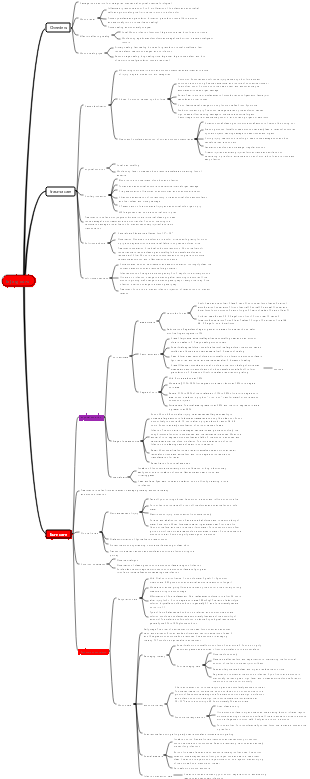
MindMap Gallery Chapter 2 Adaptation and Damage of Cells and Tissues Mind Map
Regarding the mind map of Chapter 2: Adaptation and Damage of Cells and Tissues, when an organism is stimulated by the outside world, cells and tissues will undergo corresponding changes to adapt to the new environment. If the stimulation exceeds the tolerance of the organism, it will cause damage to cells and tissues.
Edited at 2023-11-08 16:43:18This is a mind map about bacteria, and its main contents include: overview, morphology, types, structure, reproduction, distribution, application, and expansion. The summary is comprehensive and meticulous, suitable as review materials.

This is a mind map about plant asexual reproduction, and its main contents include: concept, spore reproduction, vegetative reproduction, tissue culture, and buds. The summary is comprehensive and meticulous, suitable as review materials.
This is a mind map about the reproductive development of animals, and its main contents include: insects, frogs, birds, sexual reproduction, and asexual reproduction. The summary is comprehensive and meticulous, suitable as review materials.
This is a mind map about bacteria, and its main contents include: overview, morphology, types, structure, reproduction, distribution, application, and expansion. The summary is comprehensive and meticulous, suitable as review materials.
This is a mind map about plant asexual reproduction, and its main contents include: concept, spore reproduction, vegetative reproduction, tissue culture, and buds. The summary is comprehensive and meticulous, suitable as review materials.
This is a mind map about the reproductive development of animals, and its main contents include: insects, frogs, birds, sexual reproduction, and asexual reproduction. The summary is comprehensive and meticulous, suitable as review materials.
Adaptation and damage of cells and tissues
Overview
Adaptation and damage of cells and tissues is a response of organisms to environmental changes or stimuli. When an organism is stimulated by the outside world, cells and tissues will undergo corresponding changes to adapt to the new environment. If the stimulation exceeds the tolerance of the organism, it will cause damage to cells and tissues.
Adaptation of cells and tissues
Overview: When the environment changes, the body's cells, tissues or organs make corresponding changes in their own metabolism, function and structure to avoid damage caused by environmental changes.
shrink
A reduction in the size of normally developing cells, tissues, or organs
(1) Physiological atrophy
When many cells, tissues and organs develop to a certain stage, they gradually Atrophy, this phenomenon is called degeneration eg. Senile atrophy
(2) Pathological atrophy
dystrophic atrophy
eg. cachexia → general muscle atrophy Long-term systemic malnutrition → atrophy of body fat and muscles → atrophy of organs such as heart, brain, liver and kidneys
Ischemic atrophy (localized dystrophic atrophy) : Decreased arterial blood supply causes tissue atrophy in the blood supply area → cerebral atherosclerosis
neurological atrophy
eg. Poliomyelitis: muscle paralysis
apraxia of atrophy
eg. Long-term bed rest → muscle atrophy
compressive atrophy
eg. Hydronephrosis → hydronephrosis, renal cortex thinning
endocrine atrophy
eg. Atrophy of adrenal glands, thyroid, gonads and other organs caused by hypopituitarism
(3) Pathological changes
naked eye observation
The volume becomes smaller, the weight becomes lighter, and the color becomes darker.
Observe under the microscope
The size/number of parenchymal cells decreases; lipofuscin granules may appear in the atrophic cytoplasm of cardiomyocytes and liver cells.
(4) Ending
Reversible disease, which can gradually return to its original state by eliminating the cause
The cause of the disease cannot be eliminated, leading to the disappearance of atrophic cells through apoptosis, resulting in smaller organ size, harder texture, and reduced function.
Shrunken tissue or reduced organ function
Fat
An increase in the size of a cell, tissue, or organ (increased organelles, increased metabolism)
(1) Physiological hypertrophy
(2) Pathological hypertrophy
endocrine hypertrophy
eg. Pituitary tumors cause gigantism
compensatory hypertrophy
eg. Hypertensive heart disease
≠Pseudohypertrophy→parenchymal cell atrophy, interstitial tissue fibrosis, and adipose tissue hyperplasia
hyperplasia
An increase in the number of parenchymal cells causes an increase in the size of tissues and organs
(1) Physiological hypertrophy
hormonal hyperplasia
Pathological hyperplasia
Commonly caused by increased hormones
(2) Pathological hyperplasia
Hyperplasia: the cause is eliminated → returns to normal Neoplasia: Growth that persists and develops
Metaplasia
The process of transforming one differentiated organization into another differentiated organization in order to adapt to changes in the environment
transformation process
The differentiation results of undifferentiated cells or stem cells with the ability to divide, proliferate and differentiate into multiple directions
Cell types with more active ability to divide and proliferate
in homologous cells
Certain irritants have long-term effects
(1) Epithelial tissue metaplasia
squamous metaplasia
Benefits: Can enhance local resistance
Disadvantages: Loss of original epithelial function, which may lead to malignant transformation of cells
Intestinal metaplasia
Commonly found in the body or antrum of the stomach
small intestinal metaplasia
large intestinal metaplasia
(2) Mesenchymal tissue metaplasia
Commonly metamorphoses from fibrous connective tissue into bone, cartilage or adipose tissue
Damage to cells and tissues
Overview: After cells and tissues are stimulated by harmful factors that exceed their compensatory capacity, abnormal changes in cell and interstitial material metabolism, histochemistry, ultrastructure, light microscopy and naked eye visible
Cause of injury
Hypoxia (systemic, local), physical factors, chemical factors, biological factors, immune response, genetic factors, nutritional disorders
damage mechanism
Mainly reflected in ATP depletion, increase in free radicals, increase in intracellular free calcium, destruction of cell membrane integrity and irreversible mitochondrial damage.
Injury morphological changes
(1) Reversible damage
transsexual
watery denaturation
(1) Concept: refers to the excessive accumulation of water and sodium ions in cells, also known as water degeneration, which is the most common early degeneration of cell damage.
(2) Mainly occurs in cells with strong metabolism and abundant mitochondria, and is more common in cells of the heart, liver, kidney and other organs.
(3) Pathological changes
Under a light microscope → the cell volume becomes larger, the moisture in the cytoplasm increases, the cells become transparent and lightly stained, and even vacuoles appear.
ballooning degeneration
(4) Summary: Cell edema (turbid swelling) is a reversible injury, but severe cell edema can develop into cell death.
eg. Liver edema
Steatosis/fat deposition
(1) Main ingredients: Neutral fat
(2) Common causes: infection, alcoholism, poisoning, hypoxia, diabetes, obesity, etc.
(3) Prevalent parts: organs with strong metabolism and high oxygen consumption, such as liver, kidney, heart, etc.
hepatic steatosis
Pathological changes: Lipid droplets are dissolved by organic solvents and appear vacuolated. Sudan III staining turns orange-red, and the cell nuclei are squeezed aside.
myocardial fatty degeneration
Most commonly occur in papillary muscles, left ventricle and subendocardial myocardium
"Tabby Heart"
renal steatosis
hyaline degeneration
(1) Homogeneous, translucent glass-like protein accumulation appears in cells or interstitium, which appears as homogeneous red staining in HE-stained sections.
(2) Prevalent sites: connective tissue, blood vessel wall, intracellular
connective tissue hyaline degeneration
Aging of collagen fibers
hyaline degeneration of blood vessel wall
Small arteries that mostly occur in the kidneys, brain, spleen and retina during hypertension
eg. Hyalinous degeneration of splenic arterioles
intracellular hyaline degeneration
Under light microscopy, it appears as round, eosinophilic bodies or masses.
myxoid degeneration
eg. Acute rheumatism, hypothyroidism (hypothyroidism), atherosclerosis
amyloidosis
locality
eg. chronic inflammation
Systemic
intracellular glycogen deposition
pathological pigmentation
pigment
exogenous
Charcoal powder
endogenous
lipofuscin
Yellow-brown particles formed by cells autophagocytosis of organelle fragments in lysosomes that cannot be digested by lysosomal enzymes
Common in the elderly and some chronic wasting diseases
hemosiderin
Golden or brown
pathological significance
Chronic pulmonary congestion → RBCs leaking into the alveolar space are phagocytosed by macrophages and are called heart failure cells.
In the case of old bleeding and hemolytic diseases → hemosiderin accumulation can be seen in tissues such as liver, spleen, lymph nodes and bone marrow.
melanin
pathological calcification
eg. Silicosis
(2) Irreversible damage
cell death
unexpected cell death
(1) Morphological changes of necrosis
nuclear changes
Nuclear pyknosis, nuclear fragmentation, nuclear dissolution
Cytoplasmic changes
interstitial changes
Matrix disintegration, collagen fibers swell, disintegrate, break or liquefy, and finally melt into flaky red-stained structureless material
(2) Type of necrosis
coagulative necrosis
Site of disease: Avascular necrosis commonly seen in the heart, kidneys, spleen and other organs
eg. Renal coagulative necrosis
To the naked eye: there are many and obvious boundaries
View under the microscope: The outline of the organizational structure still exists
liquefied necrosis
eg. Encephalomalacia forming cystic cavity
special type of necrosis
caseous necrosis
More complete coagulative necrosis (no tissue outline visible under the microscope, only some red-stained structureless granular material)
Mainly seen in tuberculosis
gangrene
dry gangrene
It is more common in the distal extremities of diseases such as atherosclerosis, vasculitis obliterans, ischemia, and frostbite.
Arteries are blocked, but venous return remains unobstructed
The lesion is dry and concentrated, dark brown in color
wet gangrene
Frequently occurs in the intestines and lungs
Blockage of arteries and veins (severe infection) → wetness and swelling
gas gangrene
special wet gangrene
Anaerobic infection
There is a "twirling" sound and a "holding snow" feeling when pressed.
fat necrosis
Enzymatic
Common in eg. acute pancreatitis and breast trauma
Traumatic
fibrinoid necrosis
Commonly seen in eg. acute rheumatism, systemic lupus erythematosus, glomerulonephritis, and malignant hypertension.
(3) Necrosis ending
Dissolve and absorb
separate exclusion
Erosion, ulcer, cavity, sinus tract, fistula
Mechanization
encapsulation, calcification
regulated cell death
apoptosis
Features: Does not rupture the plasma membrane, does not cause cell autolysis, and does not cause acute inflammatory reactions.
apoptotic body
Ageing