MindMap Gallery Injury patient care
Organizing notes on trauma and burns, injury patient care is a comprehensive medical care process that aims to promote the healing of patients' wounds, reduce pain, prevent complications, and help patients restore function as soon as possible. The introduction is detailed and I hope it will be helpful to everyone!
Edited at 2024-11-17 09:44:43Injury care
Overview
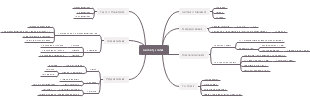
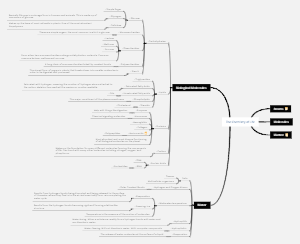
Damage is divided into four categories: mechanical, physical, chemical, biological
Wound repair:
Inflammatory response: about 3 to 5, proliferation of fibroblasts and endothelial cells, and growth along the fibrin network within the blood clot
Tissue hyperplasia and granulation formation: granulation tissue fills the wound and eventually turns into scar (basic healing)
Tissue healing: approximately one year
※Factors affecting healing
Local: Wound infection (common), large wound area, lots of necrotic tissue
Whole body: age (metabolism slows as we age), malnutrition, diabetes, malignant tumors
Wound healing type
Primary healing: fast healing (no need for granulation tissue), small scars, few tissue defects, neat wound edges, and no infection
Second-stage healing: long healing time, large scar, large tissue defect, and lots of necrotic tissue (granulation tissue is required)
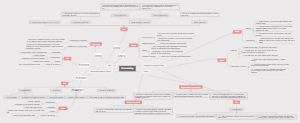
trauma care
Cause classification:
※According to whether the skin and mucous membranes are intact at the time of injury, they are divided into two categories
Closed: No wound, caused by blunt force
Contusion: Subcutaneous soft tissue injury caused by blunt force impact, contusion, and pinching. Edema, hematoma, and rupture of connective tissue or fibers often occur. Contusions to the head, chest, and abdomen may be associated with deep organ damage
Sprain: Tear, rupture or displacement of muscles, tendons, ligaments, fascia, joint capsules and other tissues
Crush: (earthquake), changes in body function called Crush Syndrome
Explosion impact injury: The shock wave generated by the explosion causes high-speed airflow, causing damage to chest and abdominal organs. Hemorrhage, rupture or edema may occur in air-containing organs or eardrums.
Openness: Complete destruction of skin and mucous membranes
Abrasions: small bleeding points with a small amount of serous fluid oozing out
Stabbing wounds: (small but deep wounds can easily lead to tetanus) punctured by sharp objects, causing damage to deep tissues and organs
Cutting injury: neat wound, resulting in deep tissue damage such as blood vessels, nerves, tendons, etc.
Lacerations: avulsion and breakage, irregular wounds
Firearm injuries: penetrating injuries (with entrance and exit) and non-penetrating injuries (with entrance and no exit), with a lot of necrotic tissue and easy infection
physical condition
Local: pain, swelling
Whole body: fever, increased blood pressure, accelerated breathing, loss of appetite
Auxiliary inspection
Blood routine to understand blood loss and infection
Thoracic and abdominal puncture to determine internal organ damage
X-ray examination of fractures, pneumothorax, and pneumoperitoneum
Ultrasound examination of thoracotomy, intra-abdominal blood accumulation and liver, spleen and kidney damage
CT examination of craniocerebral injury and abdominal solid organ injury
MRI diagnoses brain, spine, and spinal cord injuries
Treatment principles: quick judgment (whether there is internal bleeding or deep tissue damage), quick treatment, and quick transfer. Focus on checking the hemostatic bandage, proper fixation (to prevent secondary injuries), and rapid transportation
Soft tissue closure
General care: Elevate the affected limb 15º~30º
Observation: Observe urine volume, urine color, urine specific gravity for crush injury, and pay attention to acute renal failure in soy sauce-colored urine.
Treatment cooperation: Give local cold compress within 24 hours after soft tissue trauma to reduce bleeding and swelling (blood vessels are closed to reduce pain). After 24 hours, use hot compress and nursing care to promote hematoma absorption and inflammation subsidence.
soft tissue openness
Contaminated wounds: debridement and aseptic operation, thoroughly clean the contaminated wounds and remove foreign matter
Infected wounds: Change the dressing every 2 to 3 days for the primary wound. If there is no infection, change the dressing after removing the sutures. If the wound is growing well, change the dressing every day or every other day. If the infection is serious, change the dressing every day.
Treatment: Antibiotics to prevent infection, injection of tetanus toxin to prevent tetanus
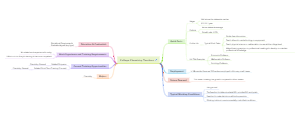
burn care
physical condition
burn estimate
area estimate
new rule of nines
Adult: Head and neck (hair 3 face 3 neck 3) both upper limbs (hands 5 pairs of arms 6 pairs of upper arms 7) trunk (ventral 13 dorsal 13 perineal 1) upper and lower limbs (both buttocks 5 pairs of thighs 21 pairs of calves 13 pairs of feet 7)
Children: head 6 neck 3 9 (12-age) trunk front 13 trunk rear 13 hands 5 forearms 6 upper arms 7 hips 5 feet 7 calves 13 thighs 13 perineum 1 total 46 46- (12-age) = both lower limbs
Palm method: Regardless of age or gender, the area of the patient's own palm with five fingers together is 1%
Depth estimation
Grade I (erythema, epidermal layer) redness, swelling, heat and pain without blisters, healed in 3-7 days, peeling without scars
Superficial degree (blister, superficial dermis) is a large blister, the wound base is swollen and flushed, and scars appear after 1-2 weeks of healing.
Deep (blister, deep dermis) blisters with small or no blisters, the wound surface is light red or red and white, and scars appear after 3-4 weeks of healing.
Grade III (eschar, muscle and bone), no blisters, the burnt feeling of white wax disappears, dendritic embolization of blood vessels, eschar falls off to form granulations in 3-4 weeks, difficult to heal and requires skin grafting
subtopic
Degree of burn
Mild: Burn area less than 10%
Moderate: ‖11%~30% first degree burn area, or less than 10% third degree burn area
Severe: 31% to 50% of the total area, or 11% to 20% of the third-degree burn area, shock, inhalation injury (don’t run, don’t ask for water) or more serious compound injuries
Extra severe: The total area is greater than 50%, and the third-degree burn area is greater than 20%.
Stage of disease course
Shock: Within 48 hours after injury, heat causes capillary permeability to increase, a large amount of plasma extravasates, and body fluids leak out. Shock is most likely to occur at 6-12 hours after injury and lasts for about 36-48 hours. Shock is an early complication of burns or cause of death
Infection: The skin barrier is damaged, bacteria invade, grow and multiply, the body's immune function is suppressed, and the resistance is reduced. When the eschar of third-degree burns dissolves and falls off, the wound is exposed, and bacteria can enter the blood circulation. This is the peak period of burns. Infection is the leading cause of death in burn patients
Repair: Most superficial burns can repair themselves, deep burns can repair residual skin tissue and epithelium, and third-degree burns require skin transplantation for repair.
Rehabilitation: functional exercises
special parts
Inhalation: Also known as respiratory burns, suffocation or lung infection may easily occur due to inhalation of smoke, flames, steam, heat or toxic and irritating gases.
Head and face: Eyes, ears, nose and inhalation burns, difficulty breathing, prone to infection
Treatment principles: first debridement, bandaging therapy, exposure therapy, and wound protection
On-site first aid
Eliminate causes of injury
Take off your burning clothes, lie down on the spot and roll to put out the fire
For hot liquid burns, take off or cut off the clothes and soak the limbs in cold water
Electric shock injury, disconnection from power supply
For acid and alkali burns, cut off acid and alkali clothes and rinse with plenty of water. Lime burns: When lime meets water, it generates heat. First, use oil to flush out the lime, and then rinse the oil with water. For phosphorus burns (low ignition point), the burned area should be immersed in water. Do not expose the wound to the air. Avoid using oily dressings on the wound.
Oral administration of light saline to prevent shock
Protect the wound by wrapping it with a sterile dressing or clean cloth
Transport the patient as soon as possible and continue infusion during the journey
Condition observation
Observe vital signs
Observation of bleeding spots on the wound surface are signs of infection. Purple-black hemorrhagic necrotic spots on the wound surface and light green thick liquid indicate Pseudomonas aeruginosa infection.
Treatment cooperation
Rehydration care:
Mild: Oral burn drink (recipe: 1 cup cold water, 3g salt, 1~2g sodium bicarbonate, 0.05g sodium phenobarbital, appropriate amount of sugar)
Moderate or above: giving fluids as directed by the doctor is the primary nursing measure during the shock stage
※Estimation of fluid replacement: Fluid replacement volume in the first 24 hours after injury (ml) = Il, third degree burn area 100ml/kg). The ratio of electrolyte solution (crystal) and colloid solution is generally 2:1, and for extremely severe burns it is 1:1
Type of liquid: Balanced salt solution is preferred, and sodium bicarbonate solution should be supplemented appropriately (because of the possibility of acidosis). The preferred colloid solution is plasma. Physiological requirements generally use 5% to 10% glucose solution
Wound care
Early stage: The order of debridement is the head, limbs, chest and abdomen, back, and perineum. Broken, avulsed blisters and necrotic epidermis of deep II and III degree wounds must also be removed. Use exposure or bandaging therapy. TAT should be injected after debridement
Bandaging therapy:
Superficial burns to small burns on limbs. Cover with a 2-3cm thick, highly absorbent gauze pad and wrap it from the distal end to the proximal end.
Post-bandaging care
Observe blood supply
Elevate the affected limb and pay attention to maintaining the functional position of the limb to prevent joint stiffness
Keep auxiliary materials clean and dry and replace them in time
Pay attention to whether the wound is infected. If you find that the wound is wet, smelly, worsening pain, high fever, and increased white blood cells, report the wound to the doctor promptly.
exposure therapy
After debridement, do not cover anything and be completely exposed to the air. This makes it easier to observe the wound surface but is not conducive to the growth of Pseudomonas aeruginosa. The ward conditions are high, disinfection and isolation conditions are high, the room temperature is maintained at 30~32°C, and the humidity is 40 Approximately % is appropriate
Exposure therapy care tips
Linen clean and dry
If the wound surface is dry and scabbed, use a baking lamp or infrared rays to promote scabbing on the wound surface. If there is exudation, wipe the wound with sterile gauze or cotton balls. Apply antibiotics to the wound
Turn over often. For circumferentially burned limbs, use a brace to suspend the injured limb
Scab removal and skin grafting: early scab removal and immediate skin grafting
Special area care
Inhalation burns: Prepare first aid items such as tracheostomy kit, sputum suction device, and bronchoscope. Keep the respiratory tract open and actively prevent lung infections
Burns of the head, face and neck: exposure therapy is often used. Use cotton swabs to wipe away secretions from your eyes, nose, and ears to keep them clean. Use antibiotic eye drops or eye ointment on both eyes to prevent drying of the cornea. Avoid pressure on the ear
Perineal burns: wound exposure
Infection prevention care
Use antibiotics as directed by your doctor: pay attention to adverse drug reactions and secondary infections