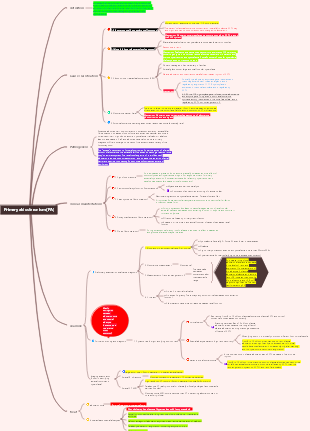
MindMap Gallery Hypokalemia mind map
This is a mind map about hypokalemia, including the cause and pathogenesis, clinical manifestations, prevention and treatment, precautions, etc. Hope this helps!
Edited at 2023-11-04 09:27:21This is a mind map about bacteria, and its main contents include: overview, morphology, types, structure, reproduction, distribution, application, and expansion. The summary is comprehensive and meticulous, suitable as review materials.

This is a mind map about plant asexual reproduction, and its main contents include: concept, spore reproduction, vegetative reproduction, tissue culture, and buds. The summary is comprehensive and meticulous, suitable as review materials.
This is a mind map about the reproductive development of animals, and its main contents include: insects, frogs, birds, sexual reproduction, and asexual reproduction. The summary is comprehensive and meticulous, suitable as review materials.
This is a mind map about bacteria, and its main contents include: overview, morphology, types, structure, reproduction, distribution, application, and expansion. The summary is comprehensive and meticulous, suitable as review materials.
This is a mind map about plant asexual reproduction, and its main contents include: concept, spore reproduction, vegetative reproduction, tissue culture, and buds. The summary is comprehensive and meticulous, suitable as review materials.
This is a mind map about the reproductive development of animals, and its main contents include: insects, frogs, birds, sexual reproduction, and asexual reproduction. The summary is comprehensive and meticulous, suitable as review materials.
Hypokalemia
definition
Serum potassium is less than 3.5mmol/L
mild potassium deficiency
Serum potassium 3.0-3.5mmol/L
Moderate potassium deficiency
Serum potassium 2.5-3.0mmol/L
severe potassium deficiency
Serum potassium 2.0-2.5mmol/L
Etiology and pathogenesis
Insufficient potassium intake
Long-term fasting, partial eclipse, anorexia, daily potassium intake <3g, lasting for more than 2 weeks
metastatic hypokalemia
Extracellular potassium is transferred into cells, total potassium in the body is normal, intracellular potassium increases, and serum potassium decreases
1. Recovery period from metabolic or respiratory alkalosis or acidosis. 2. Use a large amount of glucose solution, especially when insulin is used at the same time. 3. Periodic paralysis, such as Graves' disease. 4. Acute stress state. 5. Cottonseed oil or barium chloride poisoning. 6. Use folic acid and vitamin B12 to treat anemia. 7. Repeated infusion of cold-stored washed red blood cells. 8. Hypothermia therapy.
excrete too much potassium
Gastrointestinal potassium loss
Long-term and massive vomiting, diarrhea, gastrointestinal biliary drainage or fistula, etc.
renal potassium loss
acidosis
Renal tubular acidosis, diabetic ketoacidosis, etc.
Alkalosis
hypertension
High aldosterone
low renin
primary aldosteronism
high renin
Reninoma, renal artery stenosis, malignant hypertension
Normal or low aldosterone
low renin
Liddle syndrome, hypersecretion of deoxycorticosterone, apparent mineralocorticoidism, application of licorice preparations, etc.
Normal or high renin
Cushing's syndrome etc.
Normal or low blood pressure
Diuretics, Batter syndrome, Gitelman syndrome
Potassium loss due to other causes
Such as large area burns, ascites drainage, abdominal drainage, dialysis, long-term high temperature effects, etc.
clinical manifestations
Skeletal muscle performance
Generally, when the serum potassium is less than 3.0mmol/L, the patient will feel tired, weak, and weak; when it is less than 2.5mmol/L, the patient will have generalized muscle weakness and paralysis of the limbs. Tendon reflexes weaken or disappear, and even the diaphragm and ventilator are paralyzed, causing difficulty in breathing, exophthalmos, and in severe cases, suffocation. May be accompanied by sensory disturbances such as numbness and pain. Elderly patients are accompanied by myofiber dislysis, necrosis, atrophy, etc.
Digestive system performance
Nausea, vomiting, abdominal distension, constipation, weakened or absent intestinal motility, intestinal paralysis, etc.
central nervous system manifestations
Listlessness, unresponsiveness, disorientation, drowsiness or coma
Circulatory system performance
Early myocardial stress is enhanced, tachycardia may occur, and premature atrial and ventricular contractions may occur. In severe cases, hypokalemic cardiomyopathy, myocardial necrosis, and fibrosis may occur.
electrocardiogram
The T wave is wide and flat, the Q-T interval is prolonged, and a U wave appears; in severe cases, the T wave is inverted, the ST segment moves downward, and multiple premature contractions or ventricular tachycardia occur. In more severe cases, ventricular flutter and ventricular fibrillation occur. , cardiac arrest, etc.
urinary system manifestations
Long-term or severe potassium loss can cause degeneration and necrosis of renal tubular epithelial cells, decreased urine concentration function, increased thirst, polydipsia, and nocturia, which may lead to potassium-losing nephropathy, proteinuria, casts, etc.
Acid-base balance disorders
Metabolic alkalosis, intracellular acidosis, and paradoxical aciduria
mechanism
The concentration of potassium ions in the extracellular fluid decreases, intracellular potassium goes out, H-K exchange increases, H moves in, and extracellular fluid alkalosis
The potassium ion concentration in the epithelial cells of the renal epithelium decreases, the H concentration increases, the Na-K exchange weakens, the Na-H exchange increases, and the H excretion increases
Prevention and control
Actively treat the underlying disease
Potassium supplement
Potassium supplement estimate
Types of potassium supplements
diet
Drugs: Potassium chloride, potassium citrate, potassium acetate, potassium glutamate, potassium magnesium L-aspartate solution
Potassium supplement method
oral
vein
The appropriate speed is 20-40mmol/L, and the appropriate concentration is potassium 20-40mmol/L or potassium chloride 1.5-3.0g/L.
Correct water and other electrolyte imbalances
Precautions
Kidney function and urine output must be tested when taking potassium supplements
If the urine output is >700ml/d or >30ml/h, potassium supplementation is safe.
Refractory hypokalemia requires correction of alkalosis and hypomagnesemia
The balance time of intracellular and intracellular potassium is about 15 hours or more. Close monitoring during potassium supplementation is required to prevent transient hyperkalemia.