 Wondershare EdrawMind
MindMap Gallery Pheochromocytoma
- 44
Pheochromocytoma
Increased aldosterone secretion caused by adrenocortical lesions leads to expansion of sodium and potassium excretion fluid volume in pigs and inhibition of the renin-angiotensin system, manifesting as hypertension and hypokalemia.
Edited at 2023-11-02 07:25:44
- bacteria
This is a mind map about bacteria, and its main contents include: overview, morphology, types, structure, reproduction, distribution, application, and expansion. The summary is comprehensive and meticulous, suitable as review materials.
- Plant asexual reproduction
This is a mind map about plant asexual reproduction, and its main contents include: concept, spore reproduction, vegetative reproduction, tissue culture, and buds. The summary is comprehensive and meticulous, suitable as review materials.
- Reproductive development of animals
This is a mind map about the reproductive development of animals, and its main contents include: insects, frogs, birds, sexual reproduction, and asexual reproduction. The summary is comprehensive and meticulous, suitable as review materials.
Pheochromocytoma
- bacteria
This is a mind map about bacteria, and its main contents include: overview, morphology, types, structure, reproduction, distribution, application, and expansion. The summary is comprehensive and meticulous, suitable as review materials.
- Plant asexual reproduction
This is a mind map about plant asexual reproduction, and its main contents include: concept, spore reproduction, vegetative reproduction, tissue culture, and buds. The summary is comprehensive and meticulous, suitable as review materials.
- Reproductive development of animals
This is a mind map about the reproductive development of animals, and its main contents include: insects, frogs, birds, sexual reproduction, and asexual reproduction. The summary is comprehensive and meticulous, suitable as review materials.
- Recommended to you
- Outline
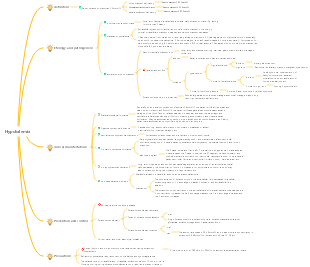
Primary aldosteronism (PA)
definition
Increased aldosterone secretion caused by adrenocortical lesions leads to sodium retention and potassium excretion, expansion of body fluid volume, and inhibition of the renin-angiotensin system, manifesting as hypertension and hypokalemia.
Cause classification
1. Aldosteronoma (Conn syndrome) [common]
More common, adenoma on one side, 1~2cm in diameter
The patient's plasma aldosterone concentration is parallel to plasma ACTH day and night, and has no obvious response to changes in plasma renin.
Mechanism: Aldosteronoma is regulated much more strongly by ACTH than by the RAAS system.
2. Idiopathic hyperaldosteronism [common]
Bilateral adrenal bulbar zone hyperplasia, a considerable part with nodules
Responsive to renin.
Mechanism: Teraldehyde has enhanced sensitivity to angiotensin II. Angiotensin-converting enzyme inhibitors can reduce aldosterone secretion in patients and improve hypertension and hypokalemia. A small number of nodular hyperplasia of aldehydes do not respond to renin.
3. Glucocorticoid-treatable aldosteronism (GRA)
Onset in teenagers, often hereditary in families
Adrenal glands show large and small nodular hyperplasia
Plasma aldosterone concentrations parallel the circadian rhythm of ACTH
mechanism
Normally, the aldosterone synthase gene is expressed in the zona glomerulosa of the adrenal gland and is regulated by angiotensin II; 11-β hydroxylase is expressed in the zona fasciculata and is regulated by ACTH.
In GRA, the 11β-hydroxylase gene is fused to the aldosterone and enzyme gene. This gene product has aldosterone synthase activity, is expressed in the zona fasciculata, and is regulated by ACTH but not angiotensin II.
4. Aldosterone cancer [rare]
The tumor is large in size, with a diameter >5cm. Hemorrhage and necrosis are often present on the cut surface. Calcification is common on CT or ultrasound.
Mechanism: Aldosterone cancer secretes large amounts of aldosterone, glucocorticoids, and androgens
5. Ectopic aldosterone-secreting adenoma or adenocarcinoma (extremely rare)
Pathogenesis
Excessive aldosterone → sodium retention, potassium excretion, extracellular fluid expansion, increased blood volume, and enhanced vascular response to norepinephrine → high blood pressure, hypokalemia → alkalosis → alkalosis leads to a decrease in Ca2, and aldosterone can also promote urinary magnesium After discharge, numbness of the extremities and tetany of the limbs may occur.
The "escape" phenomenon of mineralocorticoids: Under the action of a large amount of aldosterone, the extracellular fluid expands, causing a reaction in the body's natriuretic system. The renal tubules get rid of the influence of aldosterone, reduce sodium reabsorption, and increase the secretion of atrial natriuretic peptide, thus causing Sodium metabolism reaches a state of equilibrium.
clinical manifestations
1. High blood pressure
As the disease progresses, blood pressure gradually increases, and the effect of commonly used antihypertensive drugs is not as good as that of ordinary essential hypertension. Some patients develop refractory hypertension and develop cardiovascular disease, stroke (dizziness, etc.)
2. Neuromuscular dysfunction [low potassium]
①Myasthenia and periodic paralysis
② Numbness of extremities, twitching of hands and feet
3. Heart symptoms [low potassium]
Electrocardiogram shows hypokalemia pattern: T wave is low and flat
Arrhythmias: Supraventricular tachycardia is common, and ventricular fibrillation is the most severe form.
4. Kidney manifestations [low potassium]
①Chronic potassium loss leads to vacuolar degeneration of renal tubular epithelial cells and decreased concentrating function → polyuria and nocturia → thirst and polydipsia
② Often complicated by urinary tract infection
③Increase in urine protein and a small number of cases of decreased renal function
5. Others [low potassium]
During potassium deficiency, insulin release is reduced, its effect is weakened, and glucose tolerance may be impaired.
examine
Preliminary examination, qualitative diagnosis
1. Blood and urine biochemical tests [first choice]
①Hypokalemia: Generally 2~3mmol/L, even lower in severe cases
②Alkalemia
③ High urinary potassium: even when hypokalemia is more than 25mmol/24h
④ Hypernatremia (not particularly high due to escape phenomenon)
2. Aldosterone measurement
Aldosterone↑
3. Measurement of renin and angiotensin II
The base value decreases, sometimes below the measurable range
An increase in the blood aldosterone level and a decrease in the levels of renin and angiotensin II is characteristic of pro-aldehyde. A plasma aldosterone/plasma renin activity ratio >30 indicates the possibility of pro-aldehyde, and >50 is of diagnostic significance. The best test for detecting PA
4. Urine test
①Urine pH is neutral or alkaline
②Urine specific gravity: There may be hypotonic urine (decreased concentration function)
③A few patients have proteinuria and decreased renal function
Further positioning and diagnosis
Mainly distinguish between aldosteronoma and special aldehyde [because these two are the most common]
1. Dynamic test [upright and lying position test]
normal person
Bed resting, from 8 to 12 o'clock, plasma aldosterone, plasma ACTH and cortisol concentrations decreased consistently.
Standing, between 8 and 12 o'clock, plasma aldosterone rises because the rising effect of plasma aldosterone during standing exceeds the influence of ACTH.
Special aldehyde patients [high renin sensitivity]
When lying down, it is probably not much different from normal people.
From 8 to 12 o'clock, when standing upright, plasma aldosterone rises significantly and exceeds that of normal people (because plasma renin increases slightly after standing, and this type is more sensitive to angiotensin)
patients with aldosteronoma
In the supine position, plasma aldosterone and ACTH decrease in line with the rhythm
From 8 to 12 o'clock, in the standing position, plasma aldosterone does not rise but falls, because aldosteronoma is much more affected by ACTH than the renin-angiotensin system, so ACTH↓ and renin↑ are useless.
Imaging examination [Assist in identifying adrenal tumors and hyperplasia]
Large tumor size, >5cm in diameter → indicates adrenal cancer
Adrenal B-ultrasound
Aldosteronomas with a diameter >1.3cm can be detected
Adrenal CT, MRI
High-resolution CT: tumors <5mm in diameter (too small will not work)
Teraldehyde: CT reality is normal or bilaterally diffusely enlarged (a considerable part has nodules)
Aldosteronoma: MRI is more sensitive than CT in detecting aldosteronoma, but its specificity is lower.
treat
aldosteronoma
Surgical resection is the radical cure
Inoperable and special aldehydes
First choice: spironolactone [hypertension with low potassium]
Sexual function decline after long-term use of spironolactone - triamterene, amiloride
Calcium antagonist (aldosterone synthesis requires the participation of calcium)
Teraldehyde patients - angiotensin-converting enzyme inhibitors
GRA - glucocorticoid
Pheochromocytoma
definition
Originating from the adrenal medulla (at most), sympathetic ganglia or other chromaffin tissues, this tumor continuously or intermittently releases large amounts of catecholamines, causing persistent or paroxysmal hypertension and metabolic disorders of multiple organ functions.
Malignant tumors are about 10%, most common between 20 and 50 years old
pathology
Existence part
Pheochromocytoma is located in the adrenal gland, accounting for 80-90% of cases
Mostly one-sided
10% bilateral
10% extra-adrenal tumors coexist with extra-adrenal tumors on one side
Most of them are unilateral, and a few are bilateral, or an adrenal tumor on one side coexists with an extra-adrenal tumor on the other side. Multiple cases are more common in children and familial patients.
10% familial, multiple occurrence
10% extra-adrenal
Extra-adrenal pheochromocytoma becomes a "paraganglioma" and is primarily located in the abdomen
10~15% are mainly next to the abdominal aorta
Other parts are relatively rare
Extra-abdominal cases are rare
produce hormones
Pheochromocytoma of adrenal medulla
Primary: NE, secondary: E (rarely the reverse)
Families are dominated by E
Extra-adrenal pheochromocytoma, except paraaortic chromaffin bodies
Only generate NE
ps: [Normal] Adrenal medullary chromaffin cells
E:NE=4:1
Pheochromocytoma can produce a variety of other peptide hormones that produce atypical symptoms
① Vasodilatory intestinal peptide, substance P - facial flushing
②Opioid peptides, somatostatin-constipation
③Vasoactive intestinal peptide, serotonin, motilin - diarrhea
④Neuropeptide Y——pale complexion, vasoconstriction
⑤ Vasodilatory intestinal peptide, adrenomedullin - hypotension/shock
Adrenaline and norepinephrine
Adrenaline
α → α1 receptor → constriction of small blood vessels → hypertension (surge in blood pressure)
β → β1 receptor → cardiotonic
Norepinephrine
β1 → strong heart
α1 → blood pressure soars, which in turn inhibits the β1 effect, and the heart beats slower.
β2 receptors on the large blood vessels of the limbs
clinical manifestations
1. Performance of cardiovascular system
1. High blood pressure
(1) Paroxysmal hypertension type
[Characteristic manifestations] - A sharp rise during the attack, with systolic blood pressure of 200~300mmHg and diastolic blood pressure of 130~180mmHg, but then dropped sharply after the attack.
The triad of hypertension, headache, palpitations, and hyperhidrosis—diagnosis is of great significance
Severe headache [head] - intracranial hypertension
Pale complexion [face] - neuropeptide Y, peripheral vasoconstriction
Sweating profusely [sweat] - Catecholamines stimulate the central heat dissipation mechanism through the blood-brain barrier and increase heat production, causing sweat glands to secrete a large amount of sweat.
Tachycardia, arrhythmia [Heart] - Catecholamines stimulate β1 receptors
Pressure and pain in the precordium and upper abdomen [heart] - coronary artery systole and spasm
Blurred vision, double vision [eye] - the blood supply to the optic nerve and retina is affected
Severe cases [heart, brain] - acute left heart failure, cerebrovascular accident
(2) Sustained hypertension type
Not effective against commonly used antihypertensive drugs, but effective against α-receptor antagonists
[Severe] The condition of some patients (often children or adolescents) progresses rapidly, showing rapidly progressive (malignant) hypertension → blindness (severe fundus damage), azotemia (kidney damage), heart failure, hypertensive encephalopathy (brain damage) ) → Anti-adrenergic drugs need to be administered quickly and timely surgery is required
2. Hypotension and shock
【feature! ! ! 】——High blood pressure and hypotension appear alternately, and can return to normal in the middle, but they are easy to fluctuate and the mechanism is unknown.
① The tumor suddenly undergoes bleeding and necrosis, causing the release of catecholamines to suddenly stop
② A large amount of catecholamines can cause severe arrhythmia, heart failure, and a sharp decrease in cardiac output.
③ Because tumors mainly secrete epinephrine, excite β2 receptors, and relax blood vessels
④ A large amount of catecholamines causes strong contraction of blood vessels, tissue hypoxia, increased microvascular permeability, plasma overflow, and reduced blood volume.
⑤Tumors secrete a variety of vasodilator substances—vasodilator intestinal peptide, adrenomedullin, etc.
3. Heart performance
Catecholamines can directly damage the heart muscle - cardiomyopathy
Catecholamines act on cardiac β1 receptors—arrhythmias,
Hypertension - diastolic heart failure (cardiac hypertrophy), systolic heart failure (heart enlargement) → heart failure, non-cardiogenic pulmonary edema
Coronary artery spasm and hypotension in hypertension—myocardial infarction
2. Metabolic disorders (the whole body is in a state of preparation for war)
1. Increased basal metabolism - fever, weight loss [consumption, energy production]
2. The decomposition of sugar is accelerated and blood sugar is excessively increased [energy supply]
3. Fat decomposition is accelerated and blood free fatty acids are increased [energy supply]
4. Electrolyte disorder: a few patients have hypokalemia
3. Other clinical manifestations
1. Digestive system [suppressed during fighting]
Constipation, intestinal distension (inability to pass stool)
Intestinal necrosis, bleeding, and perforation (gastrointestinal vascular occlusion and ischemia)
Cholelithiasis (catecholamines weaken gallbladder contraction, increase Oddi sphincter tone, and cause bile retention)
2. Abdominal mass - Larger pheochromocytoma can cause a palpable mass in the upper left or right abdomen. Touching it can induce high blood pressure and metastasize to the liver, causing hepatomegaly.
3. Urinary system: decreased kidney function
4. Blood system: blood volume decreases (vasoconstriction squeezes blood into tissue fluid)
diagnosis
1. [First choice] Determination of catecholamines and their metabolites in blood and urine
[Sustained hypertension] Human urine catecholamines, and their metabolites vanillyl mandelic acid (VMA), metanephrines (MN), and methoxynorepinephrine (NMN) are all elevated, often at the upper limit of normal. More than 2 times
MN and NMN have the highest sensitivity and specificity.
2. Glucagon pharmacological experiments
For patients with persistent hypertension, urinary catecholamines and metabolites are significantly increased, so no pharmacological experiments are necessary. For paroxysmal symptoms that cannot wait until an attack occurs, you may consider doing this test
Injecting glucagon intravenously into the patient will increase the patient's plasma catecholamines by more than three times and increase blood pressure.
3. [Confirmation] Imaging examination
Must be performed after hypertension has been controlled with alpha-receptor antagonists
treat
Surgery is the only radical treatment! !
Alpha receptor antagonists [phenoxybenzamine, prazosin, doxazosin] must be used before surgery to lower blood pressure, reduce the burden on the heart, and dilate blood vessels. Use for no less than 2 weeks
Hypertensive crisis rescue: [phentolamine]
Beta blockers should not be used alone! ! Alpha-receptor antagonists must be used to lower blood pressure before use. Because if β is organized, after the blood pressure drops, it will only cause bradycardia.