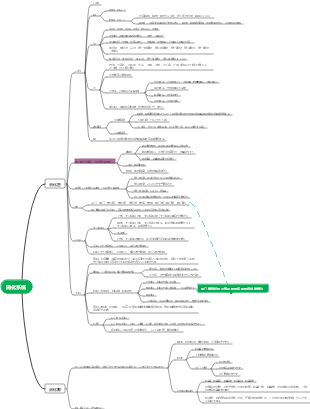
MindMap Gallery Nursing care of patients with craniocerebral diseases
Mind map of the care of patients with craniocerebral diseases, skull fracture: refers to changes in the skull structure caused by violence to the skull.
Edited at 2023-11-02 15:09:16This is a mind map about bacteria, and its main contents include: overview, morphology, types, structure, reproduction, distribution, application, and expansion. The summary is comprehensive and meticulous, suitable as review materials.
This is a mind map about plant asexual reproduction, and its main contents include: concept, spore reproduction, vegetative reproduction, tissue culture, and buds. The summary is comprehensive and meticulous, suitable as review materials.
This is a mind map about the reproductive development of animals, and its main contents include: insects, frogs, birds, sexual reproduction, and asexual reproduction. The summary is comprehensive and meticulous, suitable as review materials.
This is a mind map about bacteria, and its main contents include: overview, morphology, types, structure, reproduction, distribution, application, and expansion. The summary is comprehensive and meticulous, suitable as review materials.
This is a mind map about plant asexual reproduction, and its main contents include: concept, spore reproduction, vegetative reproduction, tissue culture, and buds. The summary is comprehensive and meticulous, suitable as review materials.
This is a mind map about the reproductive development of animals, and its main contents include: insects, frogs, birds, sexual reproduction, and asexual reproduction. The summary is comprehensive and meticulous, suitable as review materials.
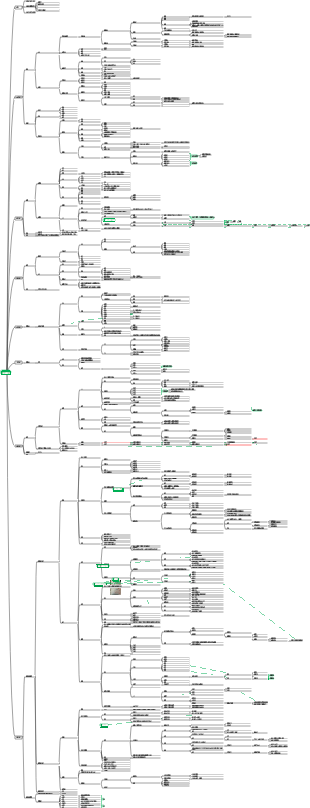
Nursing care of patients with craniocerebral diseases
Nursing care of patients with increased intracranial pressure
Intracranial pressure (ICP) refers to the pressure exerted by the contents of the skull cavity on the walls of the skull cavity. Normal values are 70-200H₂O for adults and 50-100H₂O for children.
increased intracranial pressure When the intracranial pressure is continuously higher than 200mmH0 and the three major symptoms of headache, vomiting and papilledema occur, it is called increased intracranial pressure. Sustained increase in intracranial pressure can lead to cerebral herniation
Cause
Cerebral edema (most common cause)
Pathophysiology
Consequences of increased intracranial pressure
Decreased cerebral blood flow
Cerebral herniation: the most serious complication of increased intracranial pressure and the main cause of death from craniocerebral diseases
Brain edema
Cushing's reaction
Slow heartbeat and pulse, slowed breathing rhythm, and elevated blood pressure (also known as "two slow and one high")
nursing assessment
health condition
Three main symptoms of increased intracranial pressure: headache, vomiting, and papilledema
Headache: The earliest and most important symptom, which worsens in the early morning and at night, is mostly located on the forehead and two temporal regions, and is most common in nature: swelling and tearing pain.
Vomiting: projectile, not related to eating
Papilledema: the main sign, one of the important objective signs of increased intracranial pressure
disorder of consciousness
Chronic patients - apathetic and unresponsive
Acute patients - progressive disorder of consciousness
other
Double vision, dizziness, cataplexy, Children may have enlarged heads and widened cranial sutures, etc.
Cerebral herniation
Tentorial notch herniation
Increased intracranial pressure: severe headache, progressive aggravation, irritability, frequent vomiting
Progressive disorder of consciousness: drowsiness, light coma, deep coma
The pupil of the affected side narrows briefly and then gradually expands, and the direct and indirect light responses disappear.
Movement disorder: weakness or paralysis of the limbs on the opposite side of the disease, followed by spread to both sides
Changes in vital signs: disorder, sudden drop in blood pressure, fast and weak pulse in the late stage, Breathing is shallow and irregular, breathing and heartbeat stop one after another and death occurs;
foramen magnum hernia
Cerebellar tonsil herniation
Severe headache, frequent vomiting. Consciousness disorder occurs later
The condition changes rapidly: medulla oblongata is compressed, breathing and heartbeat suddenly stop, and death occurs
Auxiliary inspection
Computed tomography (CT) diagnosis select.
Lumbar puncture: However, it has certain risks for patients with increased intracranial pressure and may induce the risk of brain herniation, so proceed with caution Lumbar puncture risks causing foramen magnum
Treatment principles
Dealing with the primary disease: the most fundamental treatment
Reduce intracranial pressure: ① dehydrating agents and diuretics; ② hormones; ③ hyperventilation or oxygenation; ④ hibernation hypothermia treatment; ⑤ ventricular puncture to drain cerebrospinal fluid
Symptomatic treatment
Nursing measures
general care
Lying position: Elevate the head of the bed 15°~30° to facilitate intracranial venous return
oxygen
Diet and rehydration: The daily rehydration volume for adults is limited to 1500-2000ml (including no more than 500ml of saline solution)
Strengthen daily care
Symptomatic care
1. For high fever, physical cooling methods such as ice caps, ice packs or towels with ice water are commonly used. 2. Agitation. Give sedatives if necessary. Forced restraint is contraindicated. 3. Vomiting to prevent aspiration, observe and record the amount and characteristics of vomitus 4. For headaches, give sedatives and analgesics, but morphine and pethidine are prohibited. 5. Urinary retention: Inducing stimulation of urination, ineffective catheterization
Condition observation
state of consciousness
Cerebral herniation: Symptoms such as severe headache or irritability during the observation period may be a precursor to increased intracranial pressure.
Care to prevent sudden rise in intracranial pressure
1. Bed rest 2. Keep the respiratory tract open 3. Avoid severe coughing and straining to defecate 4. Control epileptic seizures
dehydration treatment care
20% mannitol 250ml, rapid intravenous infusion within 15 to 30 minutes
Hormone therapy care
Prevent and treat cerebral edema by improving blood-brain barrier barrier permeability It is advisable to use it for a short period of time as soon as possible, and pay attention to preventing infection and stress ulcers.
Nursing care of external ventricular drainage
1. Properly fix the drainage tube. The drainage bag is hung at the head of the bed, 10~15cm above the level of the lateral ventricle. 2. Control the drainage speed and volume to <500ml per day 3. Keep the drainage smooth and can be suctioned, but do not flush with salt water. 4. Observe and record the color, amount and nature of drainage fluid 5. Strictly abide by the principles of aseptic operation 6. Extubation and drainage time are generally 1 week, and drainage should not exceed 3-4 days after craniotomy. Before extubation, perform a head CT examination and clamp the tube for 1 day to observe the condition.
Hibernation hypothermia care
Physical cooling is suitable for reducing body temperature by 1°C per hour. It is ideal for the body temperature to drop to anal temperature of 32~34°C and axillary temperature of 31~34°C. First use hibernation medicine (the cold response disappears and you enter a comatose state), and then physically cool down. The duration of hibernation hypothermia therapy is generally 3 to 5 days. When terminating hibernation, first stop physical cooling and then stop medications.
Nursing care of patients with craniocerebral injury
Head injuries are most common in car accidents, and fall injuries are more common in children
Scalp damage
Etiology, pathology and classification
Scalp hematoma
Subcutaneous hematoma: The hematoma is not easy to spread, is small in size, and has obvious tenderness. Characteristics: small and localized, high tension, obvious pain, and no fluctuation.
Subgaleal hematoma: The tissue is loose, the hematoma spreads easily, the pain is not as obvious as subcutaneous hematoma, and the blood loss is large Characteristics: The hematoma has a wide range and can spread to the whole head, with low tension and obvious fluctuations.
Subperiosteal hematoma: The hematoma is limited to one part of the skull. The hematoma is hypertonic. Characteristics: The scope of the hematoma does not exceed the cranial sutures, and the tension is high. In large cases, there may be a fluctuating sensation, often accompanied by skull fractures.
Processing principles Small hematoma It will be absorbed by itself in 1-2 weeks; be rigorous and conscientious Generally, no puncture is required to draw fluid to avoid infection, and no special treatment is required. Large hematoma Early pressure bandaging and local cold compress can reduce bleeding and pain. Hot compress after 24-48 hours can promote hematoma absorption. It usually takes 4-6 weeks to be absorbed. The huge hematoma was punctured in stages to extract the accumulated blood and then bandaged under pressure.
Scalp laceration
deal with Stop bleeding as soon as possible and bandage the wound with pressure Perform debridement and suturing as soon as possible (within 24 hours) Anti-infective
Scalp avulsion injury
Severe scalp injury, large avulsion area, may cause blood loss sexual or painful shock
First aid: pressure bandage to stop bleeding, relieve pain, and resist shock
Treatment principle: If the injury is not completely avulsed, try to debridement and suture it back to the original location within 6-8 hours after the injury.
skull fracture
It refers to changes in the structure of the skull caused by violence to the skull.
The significance of a skull fracture; not the skull fracture itself, but the possible combined damage to brain tissue, meninges, blood vessels and nerves
Classification
Is it connected to the outside world?
open fracture
closed fracture
parts
skull fracture
Linear fracture (the most common clinically) Diagnosed by X-ray, generally no special treatment is required
depressed fracture Comminuted depressed fractures: more common in adults, mostly on the forehead and top
comminuted fracture
skull base fracture
anterior cranial fossa fracture Spectacle-like hematoma or "panda eye" sign or "rabbit eye" sign; Often accompanied by epistaxis, cerebrospinal fluid rhinorrhea, and traumatic intracranial pneumocephalus; Olfactory nerve, optic nerve damage
middle cranial fossa fracture Temporal congestion, cerebrospinal fluid rhinorrhea (via sphenoid sinus); cerebrospinal fluid otorrhea, auditory nerve, facial nerve damage
posterior fossa fracture Subcutaneous ecchymosis in the mastoid area behind the ear (Battle sign) The cranial nerves are rarely involved, damaging the glossopharyngeal N, vagal N, accessory N, and sublingual N. Difficulty swallowing, hoarseness, or tongue muscle paralysis may occur.
Mostly caused by strong indirect violence; often linear fractures;
Three major clinical manifestations of skull base fracture: ① Cerebrospinal fluid leakage ② Local blood stasis ③ Corresponding symptoms of cranial nerve injury
Processing principles
Diagnosis mainly relies on clinical symptoms-cerebrospinal fluid leakage
The positive rate of X-ray films is not high
Generally, skull base fracture itself does not require special treatment. Pay attention to whether there is brain damage.
Skull base fracture combined with cerebrospinal fluid leakage should be considered an open brain injury
Cerebrospinal fluid leakage usually heals within 2 weeks. If it exceeds 4 weeks, surgery should be performed to repair the dura mater.
Nursing measures
cerebrospinal fluid leak
Half sitting position, head tilted to one side
Brain Injury
Brain injury is the damage to the meninges, brain tissue, cerebral blood vessels and cranial nerves caused by external violence on the head.
Classification
open injury
closed brain injury
direct damage
additive injury
deceleration injury
crush injury
indirect damage
Transmissible damage
whiplash injury
traumatic injury
rotational injury
primary brain injury
concussion
Transient brain dysfunction without visible neuropathological changes
Most common mild primary brain injury
Disorder of consciousness: Transient coma not exceeding 30 minutes
Retrograde amnesia: the inability to recall the situation at the time of the injury and the period before the injury
Auxiliary inspection: Three Nothings Cerebrospinal fluid examination showed no abnormality Head CT showed no abnormality Neurological examination was negative;
Treatment principles: Generally no special treatment is required
brain contusion
Pathophysiology
Secondary changes include cerebral edema and hematoma; The injury will form scars in the future and cause traumatic epilepsy; The arachnoid membrane and leptomeningeal membrane adhere to form hydrocephalus; Traumatic brain atrophy occurs several weeks after extensive brain contusion and laceration.
symptom
Disorder of consciousness: the most prominent symptom. Coma usually >30 minutes
Focal symptoms and signs
headache, vomiting
secondary encephalopathy
Auxiliary inspection
CT: preferred
Treatment principles: Absolute bed rest, keeping the airway open, and controlling cerebral edema: this is the key to treatment
brainstem damage
The most serious
Coma appears immediately after the injury, is severe and lasts for a long time; Have severe vital signs disorder; Pupils on both sides are unequal in size, extremely narrowed or variable in size, and respond erratically to light; Eyeball malposition or gaze in the same direction; Increased muscle tone in the limbs, central paralysis, positive pathological reflexes and other pyramidal tract signs and "decerebrate rigidity";
subtopic
secondary brain injury
Brain edema
intracranial hematoma
epidural hematoma
Occurs between the bony plates of the skull and the dura mater; Bleeding between the dura mater and skull Fracture or temporary skull deformation tears the dural arteries or venous sinuses located in the bone groove, causing bleeding. The most common source of bleeding is the middle meningeal artery.
symptom
Disorder of consciousness: Intermediate waking period (coma-awake-coma The ipsilateral pupil is dilated and the light reflex is lost or delayed; Paralysis of the contralateral limb;
Auxiliary examination: CT examination: biconvex or fusiform between the inner skull plate and the brain surface high density.
Treatment principle: direct surgery to remove hematoma is the main method
subdural hematoma
Incidence: approximately 40% of intracranial hematomas
Mostly caused by cortical blood vessel rupture caused by concussive cerebral contusion
The disorder of consciousness progressively worsens, with rare "intermediate periods of wakefulness"
Auxiliary examination: CT examination: crescent, half-moon
intracerebral hemorrhage
Clinical manifestations: progressive worsening of consciousness disorder
Nursing diagnosis
Disorders of consciousness are related to brain damage and increased intracranial pressure.
Ineffectiveness in clearing the respiratory tract is related to disturbance of consciousness
Cerebral herniation
Nursing care of patients with intracranial tumors