MindMap Gallery Classical International Trade Theory
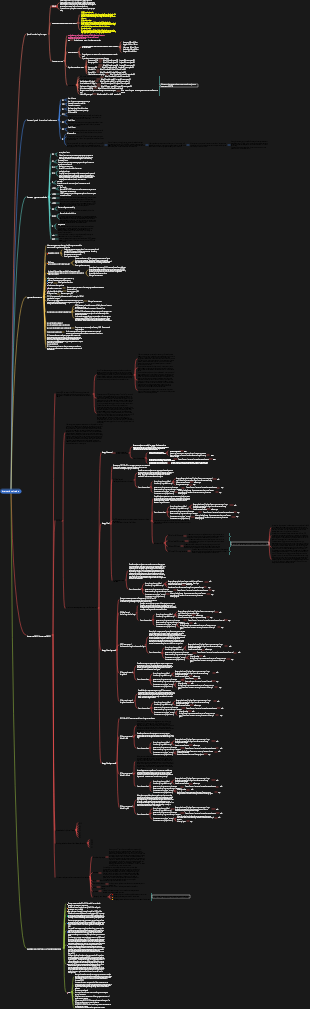
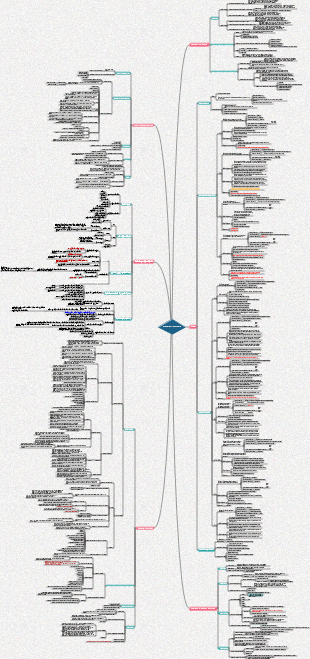
Classical international trade theory explains the causes and effects of international trade from the perspective of differences in production technology. It mainly includes mercantilism thought, absolute advantage theory, comparative advantage theory, mutual demand ethics, etc.
Edited at 2023-10-31 19:34:43This is a mind map about bacteria, and its main contents include: overview, morphology, types, structure, reproduction, distribution, application, and expansion. The summary is comprehensive and meticulous, suitable as review materials.

This is a mind map about plant asexual reproduction, and its main contents include: concept, spore reproduction, vegetative reproduction, tissue culture, and buds. The summary is comprehensive and meticulous, suitable as review materials.
This is a mind map about the reproductive development of animals, and its main contents include: insects, frogs, birds, sexual reproduction, and asexual reproduction. The summary is comprehensive and meticulous, suitable as review materials.
This is a mind map about bacteria, and its main contents include: overview, morphology, types, structure, reproduction, distribution, application, and expansion. The summary is comprehensive and meticulous, suitable as review materials.
This is a mind map about plant asexual reproduction, and its main contents include: concept, spore reproduction, vegetative reproduction, tissue culture, and buds. The summary is comprehensive and meticulous, suitable as review materials.
This is a mind map about the reproductive development of animals, and its main contents include: insects, frogs, birds, sexual reproduction, and asexual reproduction. The summary is comprehensive and meticulous, suitable as review materials.
Chapter 2 Classical International Trade Theory
Section 1 Mercantilism Thoughts
common point of view
1. National wealth is equal to the amount of gold and silver currency
2. Economic benefits come from the field of circulation, not production. The production process of material assets does not create economic benefits.
3. Domestic trade will not create wealth, foreign trade is the only way to accumulate wealth.
4. International trade is a zero-sum game
5. The best way to increase wealth is to maintain a trade surplus
early mercantilist measures
1. Advocate selling more and buying less, or even just selling but not buying.
2. Take administrative measures to directly control currency flows and prohibit the export of gold and silver.
3. Oppose the export of raw materials
late mercantilism
1. Pay attention to the trade balance, from the "currency balance theory" to the "trade balance theory", believing that maintaining a foreign trade surplus is the way to make a country rich.
2. Trade surplus can be divided into individual and overall trade surpluses. A country does not have to insist on maintaining a surplus with all trading partner countries, as long as it maintains an overall surplus.
3. Oppose government restrictions on currency exports
4. Not all imports are harmful
5. In order to ensure the sales of export goods, the price of goods must be reduced and product quality must be improved.
practical consequences
1. Accelerated the primitive accumulation of capitalism and promoted the establishment and development of the capitalist mode of production.
2. Provides strong theoretical support for the development of "triangular trade"
3. Stimulate technological progress in Western European countries
4. The government strengthens its intervention and control over the economy
5. Rent-seeking is rampant, exacerbating social injustice.
limitation
1. The methodology is not scientific enough
2. The pragmatic research purpose is destined to make research conclusions not profound enough.
3. Some specific views need to be discussed
Section 2 Theory of Absolute Advantage
propose
Adam Smith
"Wealth of Nations"
summary
The first argument is that international trade is a "positive sum game" rather than a "zero sum game", and both countries that trade resources can benefit from it.
The measure of a country's wealth is not the amount of precious metals it possesses, but the number of goods these precious metals can purchase.
The main points
Countries should participate in the international division of labor
The principle of international division of labor is absolute advantage
Sources of absolute advantage
inherent natural endowments
Acquired favorable conditions
The interests of international trade include static interests and dynamic interests
evaluate
theoretical significance
Shaken the theoretical foundation of mercantilism
Proved that international trade is not a zero-sum game
Emphasizing participation in international trade based on absolute advantage from the production field of division of labor is a major contribution to international trade theory.
Affirming the role of labor in forming value, the prototype of the labor theory of value
limitation
Wrong belief that exchange is an inherent instinct of human beings and division of labor is caused by exchange
Limited scope of application
Just arguing from the perspective of supply, without analyzing relative prices combined with supply and demand, cannot explain the distribution of trade benefits.
Section 3 Comparative Advantage Theory
propose
David Ricardo
"Principles of Political Economy and Taxation"
Basic assumptions of the Ricardian model
A factor of production: labor (L)
Two products: wheat (Qw), cloth (Qc)
two countries
Factors of production are fully mobile
Full employment, perfect competition, constant returns to scale
Does not consider shipping costs
No trade barriers such as tariffs
trading basics
Relative differences in production base
measure of comparative advantage
relative labor productivity
relative labor cost
opportunity cost
The pattern of production and trade
Countries should specialize in producing and exporting those products in which they have a comparative advantage
Theoretical core: "Which of the two advantages should be chosen as the most important, and the two bad qualities should be chosen as the lighter."
Focus on producing and exporting products with "comparative advantages" and importing products with "comparative disadvantages" to obtain maximum benefits
Summary of trade effects
Price: The relative price of products with comparative advantages increases
Division of production: a country specializes in the production of products with a comparative advantage
Welfare: Welfare has improved in all countries
A brief review of Ricardian model
Practical implications
It provided a powerful ideological weapon for British industrial capitalism to fight for free trade and promoted the development of British capitalism.
had a significant impact on the establishment of the world trading system
theoretical contribution
It marks the establishment of a general system of international trade doctrine and has broad applicability.
Countries without absolute advantages can participate in the international division of labor by relying on comparative advantages.
limitation
Only focusing on static comparative advantages ignores the research on dynamic comparative advantages.
Unable to explain the distribution of trade benefits internationally and domestically
Comparative advantage emphasizes equality and mutual benefit among trading countries, and there is no value transfer and international exploitation, which is inconsistent with reality.
No in-depth study of the sources of comparative advantage
Many deviations from strict assumptions show that the economic world
Section 4 Theory of Mutual Needs
propose
John Stuart Mill
"Principles of Political Economy"
Main ideas about mutual needs
scope of reciprocal trade
The international exchange ratio is between the domestic exchange ratios of the two countries.
Distribution of trade benefits
The distribution of benefits depends on the international exchange ratio
The closer it is to the domestic exchange ratio, the more unfavorable it is; conversely, the more advantageous it is
law of mutual need
Mutual demand, one side’s supply is the other’s demand
Within the scope of reciprocal trade, the exchange ratio of goods between the two countries is determined by the intensity of the two countries’ mutual demand for each other’s products.
Trade balance: commodity exchange ratio = the ratio of each other’s total demand for each other’s products
evaluate
Advantage
Clearly put forward the two concepts of trade conditions and trade benefits
clearly state the law of mutual needs
Clearly state the determination of terms of trade and the size of trade benefits
limitation
deviation from the labor theory of value
The premise of mutual demand theory is that supply and demand are equal under barter exchange.
There is no feasible way to determine where the equilibrium terms of trade are.
It can only be applied to two countries whose economies are of similar size and whose demands have a significant impact on international market prices.