MindMap Gallery History of foreign education
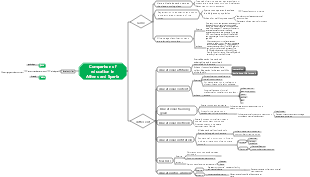
A map of key points in the history of foreign education, simple and easy to remember, can be used for the end of the term, such as Aristotle's ideological purpose of liberal education: people are their own masters, and freedom is the greatest effect of liberal education.
Edited at 2023-10-25 15:09:29This is a mind map about bacteria, and its main contents include: overview, morphology, types, structure, reproduction, distribution, application, and expansion. The summary is comprehensive and meticulous, suitable as review materials.

This is a mind map about plant asexual reproduction, and its main contents include: concept, spore reproduction, vegetative reproduction, tissue culture, and buds. The summary is comprehensive and meticulous, suitable as review materials.
This is a mind map about the reproductive development of animals, and its main contents include: insects, frogs, birds, sexual reproduction, and asexual reproduction. The summary is comprehensive and meticulous, suitable as review materials.
This is a mind map about bacteria, and its main contents include: overview, morphology, types, structure, reproduction, distribution, application, and expansion. The summary is comprehensive and meticulous, suitable as review materials.
This is a mind map about plant asexual reproduction, and its main contents include: concept, spore reproduction, vegetative reproduction, tissue culture, and buds. The summary is comprehensive and meticulous, suitable as review materials.
This is a mind map about the reproductive development of animals, and its main contents include: insects, frogs, birds, sexual reproduction, and asexual reproduction. The summary is comprehensive and meticulous, suitable as review materials.
History of foreign education
Socrates: spiritual midwifery; midwifery; Socratic method
induction method, thinking training method
Way
1. Ridicule: Continuously ask questions about the other party's speech, forcing the other party to contradict themselves, have no words to reply, and admit their ignorance.
2. Induction: the negation of specific opinions, leading to general, true knowledge
3. Induction: Help the other party express their thoughts through induction, metaphor, etc.
4 Definition: to arrive at an answer that he believes to be the correct answer and to arrive at a universal truth
question and answer format
advantage
Inspiration leads to natural conclusions
Proposed methods for people to acquire knowledge
shortcoming
Students must have the desire and enthusiasm to learn
Have a certain understanding of the issues discussed
Have certain knowledge base and ability
No answer has been given to "Where does human knowledge come from?"
Aristotle's Thoughts on Liberal Education
liberal educational thought
Conditions: leisure and pursuit of knowledge, freedom
Purpose: Man as his own master
Subjects: Free subjects as the main content, content with practical purposes and beyond practical purposes
Function: To achieve the best state of happiness in life
It is human nature to seek knowledge
Freedom is the greatest effect of free education
Body, freedom of thought; hedonic life, political life, speculative life
humanistic characteristics
First, humanism. Affirming the power of people, starting from the value of people, requires loving children, respecting children, and believing in children's nature. Education can shape individuals and transform society and nature.
Second, classicism. Humanists advocate the restoration of ancient Greek physical education, moral education, intellectual education, aesthetic education and other multi-faceted education to cultivate harmoniously developed people.
Third, naturalism. In response to the education that distorted human nature in medieval church schools, humanists advocated education based on caring for people's natural nature, following nature, obeying nature, and advocating natural happiness.
Fourth, religious and aristocratic. Humanists believe in God. The target of humanistic education is mainly the children of the upper class. The form of education is mostly palace education and family education. The purpose of education is mainly to cultivate upper-class figures, such as monarchs, gentlemen, etc.
Comenius' Principles of Teaching
intuitive teaching principles
Based on materialist sensory theory, it exaggerates the significance and role of intuition and fails to recognize perceptibility. Perception is the primary stage of knowledge. Only people who rise from perceptibility to rationality can understand the essence of things.
Require
Teach truly valuable knowledge
Teaching should consider the integrity of knowledge
Teaching should follow the order of knowledge, based on what is taught first
Starting from materialistic sensory theory, obtaining intuitive experience
Use real objects, pictures, and models directly in front of students' eyes
step by step principle
What you learn first must become the basis for what you learn later. Follow the rules from simple to complex to easy, difficult from unknown to known, etc.
initiative principle
Abolish the method of forced indoctrination in schools and mobilize children's consciousness and enthusiasm for learning.
principle of quantification
The principle of teaching students in accordance with their aptitude
Thoroughness and Consolidation Principles
Understand knowledge and consolidate knowledge through review and practice
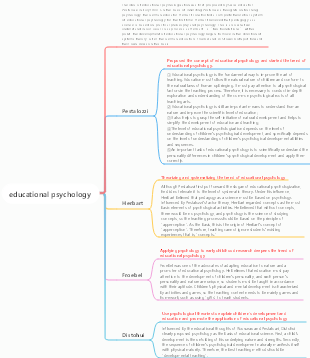
Pestalozzi’s elemental education
Meaning: The development of human educational activities should start from the simplest elements, then gradually transition to more complex elements, and finally achieve the harmonious development of individuals.
It is human beings’ understanding of education, respect for natural laws, and understanding and analysis of objective things.
Moral education: from children’s love for their mother to love for themselves, others, and society.
The core of elemental education
Intellectual education: from numbers, shapes, words, to the development of complex knowledge and thinking ability
The purpose of intellectual education is to impart knowledge to students while developing their thinking, research and judgment abilities.
Sports: From activities of various joints to other sports activities
The healthy growth of children's bodies provides a material foundation for the cultivation of healthy emotions, knowledge mastery and intellectual development.
Herbart's principles of educational teaching
Purpose: To achieve the purpose of moral education with five moral concepts as the core
advocate
There is an inherent connection between morality and knowledge. Moral awareness and behavior are based on moral understanding.
Education is accomplished through teaching as a means in the teaching process, and teaching is the basic way to achieve moral education.
Teacher teaching should not be limited to imparting knowledge and skills training, but should also focus on the cultivation of students’ character.
Spencer-What knowledge is most valuable?
Purpose of education: Prepare for a perfect life and seek happiness in this world
Methods for judging the rationality of a subject
content
Criticizing traditional classical education: curriculum decoration comes before practicality
For the first time, the "education preparation theory" was clearly put forward: how to live a perfect life is a major issue that should be taught in education, and learning subjects is the best preparation for a perfect life.
It is proposed that scientific knowledge is the most valuable: solving the problem of the comparative value of knowledge. Regarding direct self-preservation > Knowledge about obtaining daily necessities and supporting oneself > Knowledge about what is needed for family members > Knowledge about family happiness > Knowledge about social welfare > Knowledge about cultivating various artistic hobbies
Advocates the formulation of a curriculum system with scientific knowledge as the core: education to prepare for direct preservation of one's own → education to prepare for indirect preservation of one's own education → education to prepare for parenthood → education to prepare for citizenship → education for preparation for various cultural activities in life
According to the importance of the five main activities of human life
Dewey - the purpose of education
Educational Essentialism: "Education has no purpose"
Emphasize that the nature of education is anti-authoritarian
The educational process has no purpose outside itself; it is its own purpose
The process of education is a process of continuous reorganization, transformation and transformation.
teleology of education
Cultivate modern people who regard democracy as their way of life: every individual person is the purpose
Modern people: independent personality Possess critical thinking and creative abilities Have a responsible spirit and social cooperation ability
Education must promote the continuous improvement of democratic society
The ultimate driving force comes from the free development of individuals
The task of teachers is not only to cultivate individuals, but also to promote the formation of proper social life
Ideological basis: New individualism - adhere to individualism while emphasizing comprehensive and free exchanges and cooperation
The tension between the social and national purposes of education
The nation-state is liberating and open; repressive and closed
Social Purpose: Understanding, Tolerance, World Peace and Development
Rousseau's educational thought
Life and writings
"Encyclopedia" "On whether the renaissance of science and art contributes to the enlightenment of customs" "On the Origin and Basis of Human Inequality" "On the Social Contract"
"Emile": the most complete and systematic educational treatise in the West after "Utopia", which proposes returning to nature and developing one's nature
Volumes 1-4: Taking Emile as an example, exposing the ineffectiveness and absurdity of men’s education and proposing a reform plan for naturalistic education Volume 5: Taking Sophie as an example, an implementation plan for democratic education is proposed
Nature and Sensation
nature theory
Society is inherently evil, individuals are inherently good
The basic logical starting point of naturalistic educational thought
Human nature: self-love - let it develop naturally and become noble morals, compassion - self-love turns to love for others
Conscience comes from talent and makes people do good.
Revolutionize education and stay away from the city.
Sensationism
I think the impressions obtained by your sense organs in the process of contact with the objective world are the basis for understanding the world and the only source of human knowledge.
Recognize the role of reason, attach importance to realization, and develop from perceptual understanding to rational understanding. Only in this way can we correctly understand objective things.
The task of education is to develop rational and intellectual education on the basis of training students' senses.
The content of naturalistic educational thought
The meaning of naturalistic educational thought
Respect the natural rights of children
Education that respects children’s individual differences and age characteristics
For children of wealthy families
Back to nature
Training goal: "Natural person" - a person who has the ability to make flexible adjustments according to the needs of social life, can quickly master the required professional skills, and is engaged in a variety of occupations
The fundamental principle of naturalistic education: “return to nature”
What is nature: children’s natural humanity and natural rights, that is, the basic abilities and developmental tendencies in human nature
Why return to nature
Human nature is kind
Human education has three sources: natural (cannot be felt), human (completely determined), and things (partially determined) education.
How to return to nature
The purpose of education should be based on a correct understanding of children's personality and nature
The process of education and teaching should be carried out according to the age characteristics and psychological status of the children.
The selection of education and teaching methods should adapt to the natural development laws of children's body and mind, provide a natural and harmonious environment for children's development, and use intuitive teaching, object-based teaching, outdoor teaching, etc. as much as possible
Education should begin with developing children’s most natural relationships
Implementation of naturalistic education
Early childhood: (0~2) The natural state in which rationality has not yet sprouted and the body has fully grown. Pay attention to physical health and maintenance, sports
Childhood: (2~12) rational sleep period, physical education, sensory training and sensory education, moral education, against learning cultural knowledge, natural consequences method
Adolescence: (12-15) period of rapid development, intellectual education, labor education
Youth: (15-20) moral education, religious education, sex education, etc.