MindMap Gallery Chapter 1 Organizational Incentives
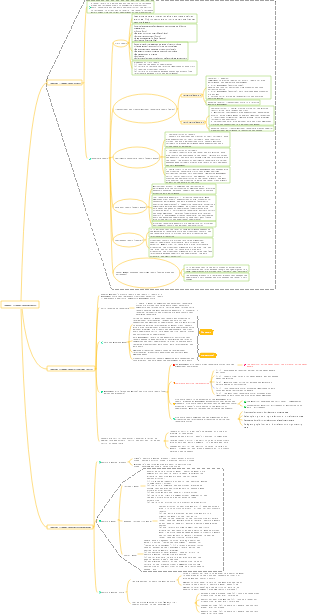
Chapter 1 Organizational Motivation. Motivation is the process of meeting the needs of employees and making them work hard to achieve organizational goals. Friends are welcome to follow me and check in as an Intermediate Economist~
Edited at 2023-10-24 21:00:23This is a mind map about bacteria, and its main contents include: overview, morphology, types, structure, reproduction, distribution, application, and expansion. The summary is comprehensive and meticulous, suitable as review materials.

This is a mind map about plant asexual reproduction, and its main contents include: concept, spore reproduction, vegetative reproduction, tissue culture, and buds. The summary is comprehensive and meticulous, suitable as review materials.
This is a mind map about the reproductive development of animals, and its main contents include: insects, frogs, birds, sexual reproduction, and asexual reproduction. The summary is comprehensive and meticulous, suitable as review materials.
This is a mind map about bacteria, and its main contents include: overview, morphology, types, structure, reproduction, distribution, application, and expansion. The summary is comprehensive and meticulous, suitable as review materials.
This is a mind map about plant asexual reproduction, and its main contents include: concept, spore reproduction, vegetative reproduction, tissue culture, and buds. The summary is comprehensive and meticulous, suitable as review materials.
This is a mind map about the reproductive development of animals, and its main contents include: insects, frogs, birds, sexual reproduction, and asexual reproduction. The summary is comprehensive and meticulous, suitable as review materials.
Chapter 1 Organizational Incentives
Section 1 Needs, motivations and incentives
needs and motivations
Need refers to the psychological state (material needs, social needs) caused by lack of or expectation of certain results.
Motivation refers to people's willingness to engage in certain activities and work hard for a certain goal. This willingness depends on whether and to what extent the goal can meet people's needs.
Classification of motivation: endogenous motivation (the job itself, job opportunities), exogenous motivation (salary, bonus, praise, social status, promotion, fame and fortune are all included)
excitation
Motivation is the process of achieving organizational goals by satisfying employees' needs and making them work hard.
Incentive content: material incentives and spiritual incentives
Incentive effects: positive incentives and negative incentives
Motivating objects: other people’s motivation and self-motivation
Section 2 Incentive Theory
Hierarchy of needs theory (Maslow)
From low to high: physiological needs, safety needs, love and belonging needs, esteem needs, self-actualization (meeting the following three levels of needs mainly depends on external conditions or factors, and satisfying the above two levels of needs depends on internal conditions and factors. The model is in the shape of a triangle, Application in management: Considering the different levels and special needs of employees, the efficiency of the organization's investment in meeting low-level needs is diminishing. Maslow's hierarchy of needs theory is relatively rigid and not fully applicable to complex and changeable actual environments.)
Two-factor theory (Herzberg)
Motivating factors (with: satisfaction, lack of: no satisfaction), hygiene factors (with: no dissatisfaction, lack of: dissatisfaction) Hygiene factors: organizational policies, supervision methods, interpersonal relationships, working environment and wages, etc. (low-level basic needs); motivation Factors: sense of achievement, recognition by others, nature of work, responsibility and promotion (high-level advanced needs)
ERG Theory (Alderfer)
Survival needs, relationship needs, growth needs (frustration-regression perspective: higher-level needs cannot be satisfied, and the desire to satisfy lower-level needs will be strengthened. ERG theory is more flexible and adaptable, supplementing the shortcomings of Maslow's need hierarchy theory)
Triple needs theory (McClelland)
achievement needs
Choose moderate risks
Strong sense of responsibility
Hope to get timely feedback
power needs
Like to dominate
influence others
Pay attention to striving for status and influence
affiliation needs
Value acceptance and likes from others
pursue friendship and cooperation
Equity Theory (Adams)
input and output
Investment: education, loyalty, time, job performance
Outputs: wages, benefits, job security
Comparison method (comparison between oneself and others)
Vertical comparison: self-comparison within the organization, self-comparison outside the organization
Horizontal comparison: comparison with others within the organization, comparison with others outside the organization
Ways to restore fairness
Change one's own input or output, change the input or output of the comparison person, change the perception of input or output, change the reference object, resign
Expectancy theory (Fromm)
Motivation = Valence × Expectation × Instrumentality
Valence refers to an individual’s preference for the rewards received
Expectations refer to the strength of an employee’s belief that hard work will accomplish the task
Instrumentality refers to an employee's belief that he or she will be rewarded once a task is completed
reinforcement theory
A behaviorist perspective that does not take into account people's inner state of mind
Section 3 Application of motivation theory in practice
management by objectives
The basic core of management by objectives emphasizes the establishment of specific, feasible and objectively measurable goals through group participation.
Goal setting can be top-down or bottom-up
Four elements of goal management: goal specificity, participation in decision-making, deadline completion, and performance feedback
Participate in management
Reasons for participating in management: The work is very complex; work tasks are highly interdependent; there is a sense of identity; it can provide intrinsic rewards
Conditions for implementation of participatory management: sufficient time, relevant to self-interest, ability to participate, status and power not threatened, organizational culture must support employee participation, and employee participation needs
Quality supervision team: It is a common model of participation in management. 8-10 people, meet regularly, once a week
performance pay system
Performance salary system refers to incentives that combine performance and reward. Methods used: piece rate wages, work bonuses, profit sharing, and profit-based dividends. Performance can be individual performance, department performance, or organizational performance.
Advantages: Reduce the workload of managers
Performance salary system is closely related to expectancy theory
Scanlon's plan combines the concepts of participatory management and performance-based pay