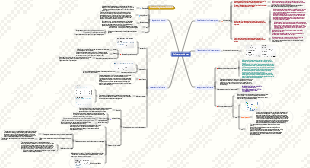
MindMap Gallery Introduction to Soil Science
In soil science, land is a vertical three-dimensional space composed of natural elements such as climate, landforms, rocks, soil, vegetation and hydrology, of which soil is only one component.
Edited at 2023-10-21 10:52:09This is a mind map about bacteria, and its main contents include: overview, morphology, types, structure, reproduction, distribution, application, and expansion. The summary is comprehensive and meticulous, suitable as review materials.

This is a mind map about plant asexual reproduction, and its main contents include: concept, spore reproduction, vegetative reproduction, tissue culture, and buds. The summary is comprehensive and meticulous, suitable as review materials.
This is a mind map about the reproductive development of animals, and its main contents include: insects, frogs, birds, sexual reproduction, and asexual reproduction. The summary is comprehensive and meticulous, suitable as review materials.
This is a mind map about bacteria, and its main contents include: overview, morphology, types, structure, reproduction, distribution, application, and expansion. The summary is comprehensive and meticulous, suitable as review materials.
This is a mind map about plant asexual reproduction, and its main contents include: concept, spore reproduction, vegetative reproduction, tissue culture, and buds. The summary is comprehensive and meticulous, suitable as review materials.
This is a mind map about the reproductive development of animals, and its main contents include: insects, frogs, birds, sexual reproduction, and asexual reproduction. The summary is comprehensive and meticulous, suitable as review materials.
Introduction to Environmental Soilology Mind Map
The concept and difference between soil and land
soil concept
A loose and porous structural surface layer developed on the earth's land surface where green plants can grow.
Comprehensive definition: (Formation-Composition-Function) It is a complex biogeochemical substance that is formed by a combination of factors such as organisms, climate, parent material, terrain, time, etc. on the earth's surface and is used for plant growth. It has a unique loose and porous structure. Structure
A dynamic ecosystem that provides mechanical support, moisture, nutrients and air conditions for plant growth, etc.
concept of land
Land: The land part of the earth's surface and above, all environmental elements within a certain range of space below, and some results of human social production and living activities acting on space - a natural-economic complex.
The natural economic complex on the earth composed of air, soil, topography, hydrology, biology, and the results of past and current human activities
Including: earth scope, a certain area, three-dimensional space entity, natural comprehensive economy, etc.
the difference
Land is a vertical three-dimensional space composed of natural elements such as climate, landforms, rocks, soil, vegetation, and hydrology. Soil is only one component of it.
Land has strong "socio-economic attributes", while soil has weaker socio-economic attributes
soil fertility and soil productivity
Classification of soil fertility
natural fertility
The fertility of soil is formed by the comprehensive factors of the five soil-forming factors (climate, biology, topography, parent material, and time).
artificial fertility
The fertility of soil developed under the combined influence of natural factors and man-made factors
available fertility
Fertility that manifests itself in local production under certain conditions and produces economic effects
Potential fertility
The fertility of the soil itself
soil productivity
The economic benefits that soil can produce under the combined effects of soil fertility, environmental conditions and human factors
the difference
Soil productivity is determined by the fertility properties of the soil itself (basic, internal factors) and the external conditions that exert its fertility effects (external factors). In this sense, fertility is only the basis of productivity, not all of productivity. If soils with basically the same fertility factors are in different environmental conditions, their productivity may be very different from each other.
The importance of soil in agriculture and the natural environment
soil profile
The soil layers formed by pedogenesis are called soil layers, and the complete vertical soil layer sequence is called the soil layer profile.
Soil layer symbol
Humus layer A
Eluate layer E
Deposition layer B
Parent material layer C
Rock R
soil composition
soil organic matter
primary minerals
Primary minerals (magma) are minerals formed by the condensation and solidification of molten magma deep in the earth's crust.
secondary minerals
Secondary minerals (supergene or metamorphic). After physical and chemical weathering, the composition and properties of primary minerals undergo chemical changes, and the new minerals formed are called secondary minerals.
soil organic matter
plant residue
soil microbes, animals
humus
soil water
soil air
O2, N2, CO2, O2 and other gases
importance
Soil is the most basic means of production in agriculture
Soil is an important component of terrestrial ecosystems
Maintain biological activity, diversity and productivity
regulating effect
Filtration, buffering, degradation, detoxification
Storing and recycling biosphere nutrients
Soil is the most precious natural resource
Quality variability and regeneration of soil resources
limited quantity
spatial distribution fixity
Soil resources are the basis for sustainable agriculture
Research contents and tasks of soil science
Task
Contribute to ensuring adequate food and a clean environment for mankind
method
Macro research and micro research
comprehensive cross-research
Fieldwork
New technology application
Overview of the development of soil science
Born in the 19th century
Rapid development in the 20th century
21 Environmental Science 2 Wang Zhanhua 210825030237