MindMap Gallery Saturated hydrocarbons (alkanes)
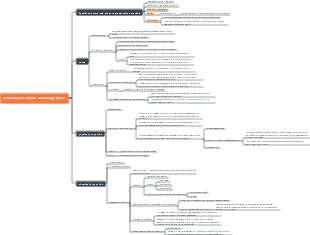
The mind map of Chapter 2 of organic chemistry introduces basic concepts, homoseries and isomerism, nomenclature, the structure of alkanes, the conformation of ethane and butane, etc.
Edited at 2024-03-05 12:48:40This is a mind map about bacteria, and its main contents include: overview, morphology, types, structure, reproduction, distribution, application, and expansion. The summary is comprehensive and meticulous, suitable as review materials.

This is a mind map about plant asexual reproduction, and its main contents include: concept, spore reproduction, vegetative reproduction, tissue culture, and buds. The summary is comprehensive and meticulous, suitable as review materials.
This is a mind map about the reproductive development of animals, and its main contents include: insects, frogs, birds, sexual reproduction, and asexual reproduction. The summary is comprehensive and meticulous, suitable as review materials.
This is a mind map about bacteria, and its main contents include: overview, morphology, types, structure, reproduction, distribution, application, and expansion. The summary is comprehensive and meticulous, suitable as review materials.
This is a mind map about plant asexual reproduction, and its main contents include: concept, spore reproduction, vegetative reproduction, tissue culture, and buds. The summary is comprehensive and meticulous, suitable as review materials.
This is a mind map about the reproductive development of animals, and its main contents include: insects, frogs, birds, sexual reproduction, and asexual reproduction. The summary is comprehensive and meticulous, suitable as review materials.
Saturated hydrocarbons (alkanes)
basic concept
hydrocarbon
organic matter composed of carbon and hydrogen
hydrocarbons
Classification
According to the carbon skeleton in the molecule
open chain hydrocarbon
A compound formed by linking carbon atoms in a molecule into a chain
Aliphatic hydrocarbons
cyclic hydrocarbons
The bond between carbon atoms in a molecule
Saturated hydrocarbons
unsaturated hydrocarbons
Alkanes
open chain saturated hydrocarbon
saturation
The combination of carbon atoms with other atoms reaches the maximum
Homogeneous and isomeric
Gratitude
Same series
Compounds that are similar in structure but differ in composition by CH2 or multiples thereof form a series
Homologues
individual compounds in the series
isomer
The molecular formula is the same, but the atoms are connected in a different order
name
common nomenclature
Number of carbon atoms
A, B, C, D, etc. represent the number of carbon atoms below ten
Eleven, twelve, etc. indicate ten or more
Use prefixes such as normal, iso, and new to distinguish isomers
systematic nomenclature
name
Select the main chain (the longest carbon chain)
Label number (starting from the end closest to the branch chain)
Small branch chains are placed in the front, and "better" groups are placed in the back.
"Better" Group
I>Br>Cl>S>F>O>N>D>H
Largest atomic number first
"Minimum series" assured room
write
There is a comma between "A" and "A"
Short connection between "Ah" and "Han"
Alkane structure
three-dimensional shape observation
ball and stick model
scale model
regular tetrahedron
sp3 hybridization
Bond angle 109.5º
nature
physical properties
boiling point
Straight
The boiling point of alkanes gradually increases with increasing molecular weight
As the relative molecular weight of the molecule increases, the increase in the boiling point of each additional CH2 quickly decreases.
Branched
For alkanes with the same molecular weight, the more branched chains, the lower the boiling point.
chemical properties
Alkanes have only two bonds, C—C and C—H.
The electronegativities of carbon and hydrogen are very different
Chlorination
Oxidation and combustion
Oxidation
In organic reactions, adding oxygen or removing hydrogen is oxidation, and vice versa is reduction.
combustion
CnH(2n 2) (3n 1/2)O2→nCO2 (n 1)H2O
Conformations of ethane and butane
Conformation
Different arrangements of atoms or groups in a molecule in space due to the rotation of single bonds
Conformational isomers
each specific conformation
way of expression
perspective
Projection
dominant conformation
Fully overlapping conformation > Partially overlapping conformation > Ortho-crossover conformation > Para-crossover conformation
The dominant conformation is not the only conformation of the molecule, but the most common conformation