MindMap Gallery Section 3 Business Strategy and Functional Strategy
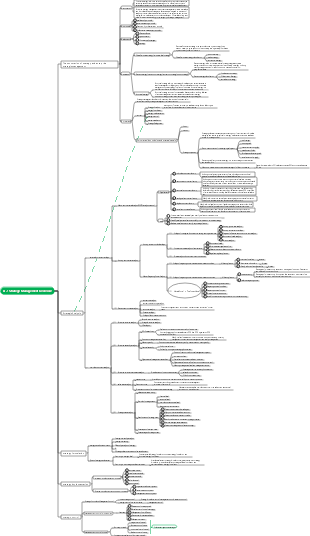
This is a mind map about the third section of business strategy and functional strategy, including the connotation and type of business strategy, business strategy selection, the connotation and type of functional strategy, etc.
Edited at 2024-03-04 13:39:11This is a mind map about bacteria, and its main contents include: overview, morphology, types, structure, reproduction, distribution, application, and expansion. The summary is comprehensive and meticulous, suitable as review materials.

This is a mind map about plant asexual reproduction, and its main contents include: concept, spore reproduction, vegetative reproduction, tissue culture, and buds. The summary is comprehensive and meticulous, suitable as review materials.
This is a mind map about the reproductive development of animals, and its main contents include: insects, frogs, birds, sexual reproduction, and asexual reproduction. The summary is comprehensive and meticulous, suitable as review materials.
This is a mind map about bacteria, and its main contents include: overview, morphology, types, structure, reproduction, distribution, application, and expansion. The summary is comprehensive and meticulous, suitable as review materials.
This is a mind map about plant asexual reproduction, and its main contents include: concept, spore reproduction, vegetative reproduction, tissue culture, and buds. The summary is comprehensive and meticulous, suitable as review materials.
This is a mind map about the reproductive development of animals, and its main contents include: insects, frogs, birds, sexual reproduction, and asexual reproduction. The summary is comprehensive and meticulous, suitable as review materials.
Section 3 Business Strategy and Functional Strategy
1. The connotation and types of business strategy
(1) Cost leadership strategy
Simplifying product-based cost leadership strategies
Improved Design-Based Cost Leadership Strategy
Material Savings Cost Leadership Strategy
Labor cost reduction cost leadership strategy
Production innovation and automation-based cost leadership strategies
(2) Differentiation strategy
product differentiation strategy
Service differentiation strategy
Talent differentiation strategy
Image differentiation strategy
(3) Centralization strategy
By centralized content
product concentration strategy
customer focus strategy
regional concentration strategy
Low share concentration strategy
According to implementation method
pure centralization
cost centralization
differential centralization
Business centralization
2. Business strategy selection
(1) Factors influencing the choice of business strategy
1. Scope of market competition
2. Sources of corporate competitive advantage
Low cost advantage
Unique advantage
(2) Cost leadership strategic choice
1.Characteristics of cost leadership strategy
Achieve industry leadership through low cost advantage
Cost leadership does not mean lowest price
Achieve an advantageous position of equal or similar value based on the uniqueness of the product
A company is required to be the cost leader in its industry, not just a competitor
Strategy success depends on the company's ability to implement that strategy day in and day out
2. Applicable conditions for cost leadership strategy
Mass production
Higher market share
Advanced production equipment
Strictly control all expenses
(3) Differentiated strategic choices
1.Characteristics of differentiation strategy
Low cost is not the company's primary strategy
When successfully implemented, it can be a proactive strategy for earning high levels of returns in the industry.
This strategy cannot be balanced with increasing market share.
accompanied by high costs
2. Applicable conditions for differentiation strategy
Strong R&D capabilities
Reputation of product or technology leadership
The company has a long history or unique skill set in the industry
Strong marketing skills
Research, production and sales departments are highly coordinated
(4) Centralized strategic choice
1. Characteristics of centralized strategy
An enterprise targets a certain customer group, a segment of a certain product line, or a certain regional market.
Unlike cost leadership and differentiation strategies, which are industry-wide, focus strategies focus on a specific goal.
The market is small
2. Applicable conditions for centralization strategy
Enterprises have completely different market customer groups
No other competitor attempts to implement a concentration strategy in the target market segment
Forming a highly isolated specialized market
There are large differences among various segments of the industry
3. The connotation and types of functional strategies
(1) The connotation of functional strategy
Connotation: Strategies formulated in specific functional areas to implement corporate strategies
Features
1.Dependence
2. Singleness or professionalism
3. Targeted
(2) Types of functional strategies
1. R&D strategy
Offensive strategy (development of new products)
Defensive strategy (copying the latest products)
technology introduction strategy
Partial market strategy
2. Production strategy
cost-based strategy
quality based strategy
time based strategy
3. Marketing strategy
4. Financial strategy
Financing strategy
investment strategy
distribution strategy
5. Human resources strategy
feature
Overall, long-term, phased, stability, adaptability
content
human resource planing
Employee recruitment and selection
Human resources training and development
human resource Management
4. Business portfolio management model
(1) Boston matrix
1. Star business: business with high growth and strong competitive position
2. Problem business: business with high growth and weak competitive position
3. Taurus business: a business with low growth and strong competitive position
4. Thin dog business: a business with low growth and weak competitive position
(2) SWOT model
internal
Advantages
DisadvantageW
external
Opportunity O
Threat T
SWOT Quadrant
SO——Growth Strategy
WO - Turn to Strategy
WT - contraction strategy
ST——diversification strategy