MindMap Gallery Tang Dynasty
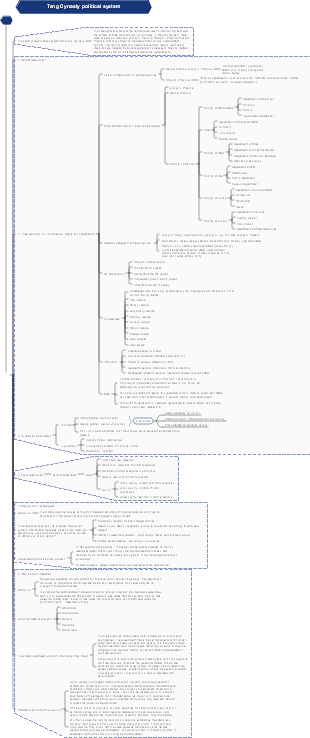
This is a mind map about the Tang Dynasty, including the establishment of the Tang Dynasty and the rule of Zhenguan, Empress Wu Zetian, Kaiyuan prosperous age, Sino-foreign cultural exchanges in the Tang Dynasty, etc.
Edited at 2024-01-19 20:12:24This is a mind map about bacteria, and its main contents include: overview, morphology, types, structure, reproduction, distribution, application, and expansion. The summary is comprehensive and meticulous, suitable as review materials.

This is a mind map about plant asexual reproduction, and its main contents include: concept, spore reproduction, vegetative reproduction, tissue culture, and buds. The summary is comprehensive and meticulous, suitable as review materials.
This is a mind map about the reproductive development of animals, and its main contents include: insects, frogs, birds, sexual reproduction, and asexual reproduction. The summary is comprehensive and meticulous, suitable as review materials.
This is a mind map about bacteria, and its main contents include: overview, morphology, types, structure, reproduction, distribution, application, and expansion. The summary is comprehensive and meticulous, suitable as review materials.
This is a mind map about plant asexual reproduction, and its main contents include: concept, spore reproduction, vegetative reproduction, tissue culture, and buds. The summary is comprehensive and meticulous, suitable as review materials.
This is a mind map about the reproductive development of animals, and its main contents include: insects, frogs, birds, sexual reproduction, and asexual reproduction. The summary is comprehensive and meticulous, suitable as review materials.
Tang Dynasty
The establishment of the Tang Dynasty and the rule of Zhenguan
Establish
In 618, Li Yuan established the Tang Dynasty and made Chang'an its capital. Li Yuan, the emperor of the Tang Dynasty, then eliminated various rebel armies and separatist forces, and pacified the country.
ascended the throne
In 626, Li Shimin (Tang Taizong) succeeded to the throne, and his reign was Zhenguan.
rule
accept remonstrance
Emperor Taizong of the Tang Dynasty learned the historical lessons from King Su of the Sui Dynasty, was diligent in political affairs, accepted advice with an open mind, and followed good deeds. Minister Wei Zheng dared to speak out and gave advice more than 200 times.
Employ people
Recruit talents and know people well. Famous prime ministers Fang Xuanling and Du Ruhui
politics
Further improve the three-province and six-department system and clarify the powers and decision-making procedures of central agencies
Make laws to reduce penalties
Increase the subjects of the imperial examination and encourage people from all over the world to apply for it. The Jinshi subject gradually becomes the most important subject.
Economically
Reduce the labor burden on farmers and encourage the development of agricultural production
military
Defeat the Eastern and Western Turks first and strengthen their rule over the Western Regions
result
During the reign of Emperor Taizong of the Tang Dynasty, politics was relatively clear and the economy was further developed. National strength increased, culture and education prospered, and it was known as the Zhenguan Rule in history.
Evaluate Tang Taizong
Emperor Taizong of the Tang Dynasty adopted a series of reform measures, which were beneficial to the development of society and contributed to the emergence of the Zhenguan Rule. Emperor Taizong of the Tang Dynasty was an outstanding feudal emperor in the history of our country.
Pay attention to people's livelihood, reduce burdens, encourage production, pay attention to officials, improve the three provinces and six ministries, and clarify the powers and decision-making.
The main prosperous times of feudal society and their common points
Main prosperity
The Wenjing rule and the Hanwu period in the Western Han Dynasty, the Guangwu Zhongxing period in the Eastern Han Dynasty, the Kaihuang period in the Sui Dynasty, the Zhenguan period and the Kaiyuan period in the Tang Dynasty, and the Kangxi and Qianlong periods in the early Qing Dynasty.
common cause
National unity and social stability are the prerequisite and foundation for the emergence of a prosperous era.
Political clarity and policy stability are the guarantee of prosperity.
For example, institutional innovation, enlightened ethnic policy, and open foreign policy.
the hard work of the people.
The rulers work diligently, love the people, and work hard to govern.
common expression
National unity, social stability, political clarity, active thinking, economic prosperity, open diplomacy, and improvement in people's lives.
practical significance
Maintain national unity and social stability, and ensure social and economic development.
Reasonably adjust governance policies and promote rapid economic development.
Pay attention to the training, selection and appointment of talents and mobilize the enthusiasm of workers.
We should attach equal importance to governing the country by virtue and governing the country according to the law, establish people-oriented thinking, build harmonious interpersonal relationships, and create a harmonious society.
Empress Wu Zetian
proclaim oneself emperor
After co-taking charge of the government with Tang Gaozong, she successively deposed her two sons who had become emperors and replaced her with herself. She changed the country's name to Zhou. She was the only female emperor in Chinese history.
control measures
He cracked down on hostile bureaucratic aristocrats, vigorously developed the imperial examination system, established a palace examination system, and selected talents in an eclectic way, thus expanding the basis of his rule. Continue to implement the policies and measures implemented since Zhenguan to reduce the burden on the people. Pay attention to the development of production.
Influence
During his reign, the social economy continued to develop, the population continued to grow, and the frontiers were consolidated and expanded, laying the foundation for the prosperous Kaiyuan era. People call his rule "the political enlightenment of Kaiyuan and the great governance of Zhenguan".
Kaiyuan prosperous age
background
Emperor Xuanzong of the Tang Dynasty was versatile and capable of governing the country. After he succeeded to the throne, he stabilized the political situation and worked hard to govern.
measure
Emphasis on talents and the emergence of virtuous ministers Yao Chong and Song Jing
Rectify officials and cut redundant staff
Develop the economy and reform the tax system
Pay attention to literature and education, compile scriptures
Performance
In the early period of Tang Xuanzong's reign, there was political stability, economic prosperity, a full treasury, and social stability. The Tang Dynasty's national power reached an unprecedented level and entered its heyday, which is historically known as the Kaiyuan Age.
Sino-foreign cultural exchanges in the Tang Dynasty
Send envoys to Tang Dynasty
meaning
During the Tang Dynasty, in order to learn from China's advanced culture, Japan sent envoys to China, which were called envoys to the Tang Dynasty at that time.
Overview
Japan sent more than a dozen groups of envoys to the Tang Dynasty, with the largest number reaching more than 500 people at one time. There were also many foreign students and monks traveling with us.
Contributed to the Tang Dynasty's advanced system, astronomical calendar, text classics, calligraphy art, architectural technology, etc., and passed them back to Japan, which had a profound impact on the development of Japanese society.
Jianzhen's journey to the east
reason
Accept an invitation from a Japanese monk
process
In 754, Jianzhen arrived in Japan on his sixth eastward journey. He taught Buddhist scriptures in Japan and also spread Chinese medicine, literature, calligraphy, architecture, painting, etc.
significance
Made outstanding contributions to Sino-Japanese cultural exchanges
Xuanzang's Journey to the West
time
Early years of Zhenguan
process
After four years of long journey, Xuanzang arrived in Tianzhu. He visited the Ming Temple, studied Buddhism, and returned to Chang'an with a large number of Buddhist scriptures.
contribute
Made significant contributions to the development of Chinese Buddhism. In particular, the oral records of the Western Regions of the Tang Dynasty record the landscapes and social customs of more than 100 countries and regions he visited, and are precious documents for studying the history of Sino-foreign exchanges.
think
question
What were the characteristics of the Tang Dynasty’s foreign exchanges? What was the reason for the Tang Dynasty’s active foreign exchanges? What inspiration does it bring to us?
Answer
Features
It has relatively active foreign exchanges and has contacts with some countries in Asia, Africa, and Europe.
The Tang government encouraged merchants from all over the world to trade with China and allowed them to live there for a long time.
Chang'an, Luoyang, Guangzhou, Yangzhou and other places have frequent foreign trade activities.
The Tang Dynasty enjoys a high reputation in the world, and people from all over the world call the Chinese people Tang people.
reason
National stability and unity
Economic and cultural prosperity
Opening up policy
Developed external transportation
Enlightenment
We must have a stable political situation and adhere to the policy of opening up to the outside world.
Improve one's own quality and strive to develop economy and culture
Learn from the broad mind of the Tang Dynasty that embraced all rivers. While spreading advanced culture, we must be good at absorbing its essence and using it for ourselves.
The Anshi Rebellion and the Decline and Fall of the Tang Dynasty
Anshi Rebellion
background
After the end of Kaiyuan, Emperor Xuanzong of the Tang Dynasty pursued pleasure and favored nepotism, and the government became increasingly corrupt. The border general An Lushan also served as the military governor of Fanyang and other three places. He was responsible for the defense of the northeastern region and gradually expanded his power.
break out
In 755, An Lushan and his general Shi Siming launched a rebellion on the pretext that there were traitors in the court, which was known as the Anshi Rebellion in history.
Influence
It caused great damage to the social economy, especially in the northern region. From then on, the power of the Tang Dynasty turned from prosperity to decline, and various contradictions became more and more acute. The central power of the Tang Dynasty declined, and a situation of separatist vassal towns gradually formed.
Huangchao Uprising and the Fall of the Tang Dynasty
reason
In the late Tang Dynasty, the rule was corrupt and officials were dictatorial. The separatist situation of feudal towns became more and more serious. Merger wars broke out among each other, and the central government was no longer able to control the feudal towns.
The people's taxes and servitude were heavy, their lives were miserable, and they suffered from successive years of famine, and they had no way to make a living.
Huangchao Uprising
Under the leadership of the emperor, the rebels fought in the north and south, and invaded Chang'an to establish political power, dealing a fatal blow to the rule of the Tang Dynasty.
The fall of the Tang Dynasty
In 907, Zhu Wen established the Houliang regime and the Tang Dynasty was destroyed.
The changes and divisions of the Five Dynasties and Ten Kingdoms
meaning
After the fall of the Tang Dynasty, five regimes emerged in the Yellow River Basin in the north, and nine regimes emerged in the south. Together with the Northern Han Dynasty, which ruled Taiyuan in the north, they were known as the Five Dynasties and Ten Kingdoms in history.
evaluate
The Five Dynasties and Ten Kingdoms were a continuation of the separatist system of vassal towns since the late Tang Dynasty. Although the political power is separated, the historical influence of long-term political unification and the close connection with the economic development of various places make unification always an objective and inevitable trend.