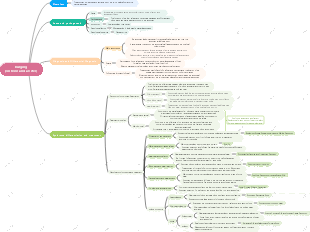
MindMap Gallery Mind Map: Comparison of Search Algorithms (Algorithms)
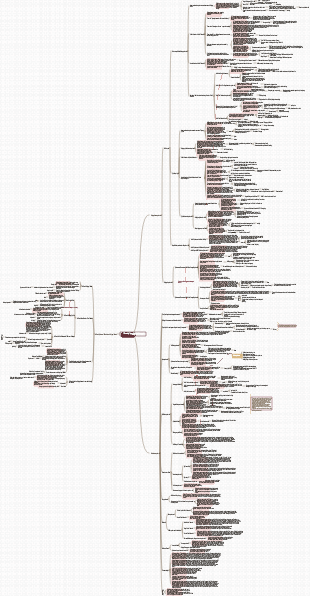
Explore the fascinating world of search algorithms, where efficiency meets strategy in locating target keys within datasets. This guide compares various search techniques based on their goals, time and space efficiency, and optimal use cases. Key factors for choosing an algorithm include data ordering, structure, access patterns, update frequency, and memory constraints. Discover sequential and binary searches, alongside jump, interpolation, exponential, and hash-based searches. Each method has its unique strengths and weaknesses, making them suitable for different conditions, from unsorted data to large, sorted arrays. Whether you're dealing with small datasets or vast collections, understanding these algorithms will empower you to make informed decisions in your data searching endeavors.
Edited at 2026-03-25 15:26:38Unlock the secrets of market success with our comprehensive Business Plan Market Research Timeline! This structured approach spans four key phases to ensure effective insights. In Phase 1, we focus on Planning & Instrument Design, where we define research objectives and craft a targeted survey. Phase 2 delves into Qualitative Research through interviews, capturing valuable participant insights. Next, in Phase 3, we synthesize findings by analyzing both survey and interview data to reveal trends and customer needs. Finally, Phase 4 culminates in Reporting & Presentation, where we compile a detailed report, create compelling visuals, and prepare recommendations for impactful decision-making. Join us on this journey to enhance your business strategy!
Unlock your learning potential with our comprehensive Note Goal Alignment Checklist! This resource is designed to enhance your study experience through structured guidance. The checklist is divided into key sections 1. Learning Objectives Support ensures your notes align with relevant goals, covering essential topics and skills. 2. Exam Preparation Aid focuses on high-yield content, integrating practice formats, and enhancing review readiness. 3. Understanding Promotion emphasizes clarity, connections, examples, and self-checks to deepen comprehension. 4. Overall Quality Checks provide accuracy, clarity, and actionable improvements for continuous learning enhancement. Utilize this checklist to refine your notes and optimize your academic success!
This guide provides a comprehensive framework for Grade 11 IB students to reflect on their group project experiences. It emphasizes the importance of analyzing personal contributions, collaboration, and overall learning. The reflection should begin with an introduction outlining the project context, roles, and team dynamics. The body includes a detailed account of individual contributions, effective communication, planning, and challenges faced. Students are encouraged to reflect on skills developed, personal growth, and lessons learned about teamwork. Finally, the conclusion offers actionable next steps and measurable goals for future group projects, ensuring a balanced and respectful reflection on both strengths and areas for improvement.
Unlock the secrets of market success with our comprehensive Business Plan Market Research Timeline! This structured approach spans four key phases to ensure effective insights. In Phase 1, we focus on Planning & Instrument Design, where we define research objectives and craft a targeted survey. Phase 2 delves into Qualitative Research through interviews, capturing valuable participant insights. Next, in Phase 3, we synthesize findings by analyzing both survey and interview data to reveal trends and customer needs. Finally, Phase 4 culminates in Reporting & Presentation, where we compile a detailed report, create compelling visuals, and prepare recommendations for impactful decision-making. Join us on this journey to enhance your business strategy!
Unlock your learning potential with our comprehensive Note Goal Alignment Checklist! This resource is designed to enhance your study experience through structured guidance. The checklist is divided into key sections 1. Learning Objectives Support ensures your notes align with relevant goals, covering essential topics and skills. 2. Exam Preparation Aid focuses on high-yield content, integrating practice formats, and enhancing review readiness. 3. Understanding Promotion emphasizes clarity, connections, examples, and self-checks to deepen comprehension. 4. Overall Quality Checks provide accuracy, clarity, and actionable improvements for continuous learning enhancement. Utilize this checklist to refine your notes and optimize your academic success!
This guide provides a comprehensive framework for Grade 11 IB students to reflect on their group project experiences. It emphasizes the importance of analyzing personal contributions, collaboration, and overall learning. The reflection should begin with an introduction outlining the project context, roles, and team dynamics. The body includes a detailed account of individual contributions, effective communication, planning, and challenges faced. Students are encouraged to reflect on skills developed, personal growth, and lessons learned about teamwork. Finally, the conclusion offers actionable next steps and measurable goals for future group projects, ensuring a balanced and respectful reflection on both strengths and areas for improvement.
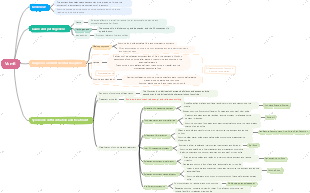
Comparison of Search Algorithms
Goals
Find a target key in a dataset
Compare time/space efficiency and best-use conditions
Key Factors for Choosing an Algorithm
Data ordering (sorted vs. unsorted)
Data structure (array, linked list, tree, hash table)
Access pattern (random access vs. sequential access)
Update frequency (many inserts/deletes vs. mostly read-only)
Memory constraints and cache locality
Need for worst-case guarantees vs. average-case speed
Choose based on ordering, structure/access, update rate, and whether you optimize for worst-case guarantees or typical speed.
Sequential (Linear) Search
Idea
Check elements one by one until found or end reached
Time Complexity
Best: O(1)
Average: O(n)
Worst: O(n)
Space Complexity
O(1)
Suitable Conditions
Unsorted data
Small datasets
Linked lists / sequential-access storage
When preprocessing (sorting/indexing) is not worth it
Pros / Cons
Pros: simplest; no prerequisites
Cons: slow on large n
Binary Search
Idea
Repeatedly halve the search range based on comparison
Preconditions
Data must be sorted
Efficient random access (typically arrays)
Time Complexity
Best: O(1)
Average/Worst: O(log n)
Space Complexity
Iterative: O(1)
Recursive: O(log n) stack
Suitable Conditions
Large, static (rarely updated) sorted arrays
Many queries on the same sorted dataset
Pros / Cons
Pros: fast; predictable performance
Cons: sorting cost; maintaining order under updates can be expensive
Jump Search
Idea
Jump ahead by fixed block size, then linear scan within block
Preconditions
Sorted data; random access helpful
Time Complexity
Best: O(1)
Average/Worst: O(√n)
Space Complexity
O(1)
Suitable Conditions
When binary search overhead is undesirable or comparisons are expensive
Medium-sized sorted arrays; tuned block size (≈ √n)
Pros / Cons
Pros: fewer comparisons than linear; simple
Cons: slower than binary search asymptotically
Interpolation Search
Idea
Estimate position using value distribution (like “guessing” index)
Preconditions
Sorted data
Keys roughly uniformly distributed; numeric/ordinal keys work best
Time Complexity
Best: O(1)
Average (uniform): O(log log n)
Worst: O(n) (skewed distributions)
Space Complexity
O(1)
Suitable Conditions
Very large sorted datasets with near-uniform key distribution
Pros / Cons
Pros: can outperform binary search on uniform data
Cons: unstable worst-case; distribution-sensitive
Exponential Search
Idea
Find a range by doubling bounds, then binary search within it
Preconditions
Sorted data
Useful when upper bound/size is unknown or unbounded list concept
Time Complexity
O(log i) where i is target position (worst O(log n))
Space Complexity
O(1) iterative (plus binary search)
Suitable Conditions
Searching in large/unknown-sized sorted arrays or “infinite” streams with indexing
Pros / Cons
Pros: quickly narrows range near the front
Cons: still requires sorted data and random access
Hash-Based Search (Hash Table Lookup)
Idea
Compute hash to locate bucket/slot for near-direct access
Preconditions
Hash table built; good hash function; controlled load factor
Time Complexity
Average: O(1)
Worst: O(n) (heavy collisions/adversarial cases)
Space Complexity
O(n) (extra table space)
Suitable Conditions
Fast exact-match queries
High query volume; frequent updates acceptable
Pros / Cons
Pros: usually fastest for exact lookup
Cons: no ordering; range queries inefficient; worst-case can degrade
Tree-Based Search (BST / Balanced BST)
BST (unbalanced)
Time: average O(log n), worst O(n)
Suitable when data is somewhat random and simple structure is fine
Balanced BST (AVL / Red-Black)
Time: O(log n) worst-case for search/insert/delete
Space: O(n)
Suitable Conditions
Need ordered traversal and range queries
Mixed workload with frequent updates and guaranteed bounds
Pros / Cons
Pros: maintains order; supports predecessor/successor, range queries
Cons: typically slower constants than hashing for exact lookup
Summary: When to Use What
Unsorted, small, or sequential-only access
Sequential search
Sorted array with many queries (static data)
Binary search
Sorted + uniform distribution + huge dataset
Interpolation search
Sorted + unknown size / searching near beginning
Exponential search (then binary)
Exact-match, fastest average lookup, no range queries
Hash table
Need ordering + range queries + frequent updates with guarantees
Balanced BST
Practical Notes
Preprocessing trade-off
Sorting/indexing costs vs. number of queries
Constant factors matter
Cache locality favors arrays (binary search) and open-address hashing
Data updates change the best choice
Frequent inserts/deletes often favor hashing or balanced trees over sorted arrays