 Wondershare EdrawMind
MindMap Gallery Public International Law Treaty Law
- 84
Public International Law Treaty Law
Combined with MA Engineering textbooks, classroom lectures, and law exam videos, it covers all aspects of knowledge points and is suitable for hard-working law students to help memorize and organize their thinking framework in the days before the exam.
Edited at 2024-01-18 00:10:39
- bacteria
This is a mind map about bacteria, and its main contents include: overview, morphology, types, structure, reproduction, distribution, application, and expansion. The summary is comprehensive and meticulous, suitable as review materials.
- Plant asexual reproduction
This is a mind map about plant asexual reproduction, and its main contents include: concept, spore reproduction, vegetative reproduction, tissue culture, and buds. The summary is comprehensive and meticulous, suitable as review materials.
- Reproductive development of animals
This is a mind map about the reproductive development of animals, and its main contents include: insects, frogs, birds, sexual reproduction, and asexual reproduction. The summary is comprehensive and meticulous, suitable as review materials.
Public International Law Treaty Law
- bacteria
This is a mind map about bacteria, and its main contents include: overview, morphology, types, structure, reproduction, distribution, application, and expansion. The summary is comprehensive and meticulous, suitable as review materials.
- Plant asexual reproduction
This is a mind map about plant asexual reproduction, and its main contents include: concept, spore reproduction, vegetative reproduction, tissue culture, and buds. The summary is comprehensive and meticulous, suitable as review materials.
- Reproductive development of animals
This is a mind map about the reproductive development of animals, and its main contents include: insects, frogs, birds, sexual reproduction, and asexual reproduction. The summary is comprehensive and meticulous, suitable as review materials.
- Recommended to you
- Outline
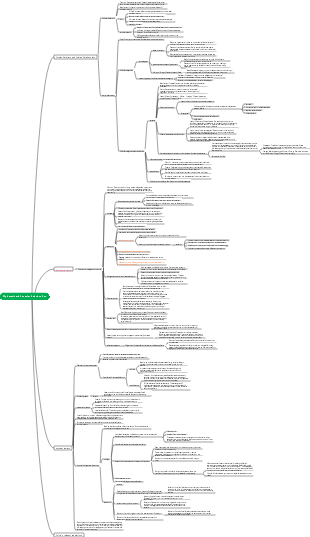
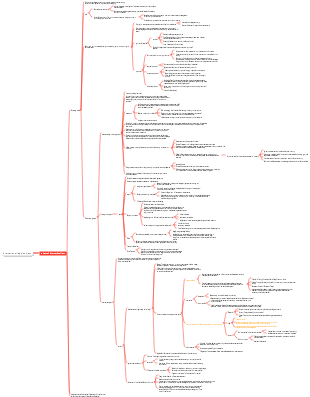

international law treaty law
Overview
Concept of treaty: concluded between countries and international organizations, governed by international law, written agreement (oral agreement is also valid)
name
Core: Whether specific rights and obligations are clear and binding
Treaty, convention, charter, statute, covenant, constitution, agreement, protocol, exchange of letters, memorandum of understanding, declaration, statement, communiqué
type
According to legal nature
Legal treaty: general rights and obligations between contracting parties, indefinite
Contractual treaty: specific transactional rights and obligations between the contracting parties, with a time limit
By number of parties
Bilateral: does not mean two countries, refers to two square teams
multilateral
According to the content of the treaty
Codification (Two Conventions)
1969 Vienna Convention on the Law of Treaties
1986 Vienna Convention on the Law of Treaties between States and International Organizations or between International Organizations (not yet in force)
conclusion of treaty
Contracting entity: Requirements for the establishment and effectiveness of a contract
The contracting party has the ability and right to contract
contracting power
Capacity to conclude treaties: the right, ability or legal qualification to conclude treaties in accordance with international law
State's contracting capacity: every country has it, inherent
Contracting capacity of international organizations
Not inherent in itself: express or implied authorization by the rules of the organization’s articles of association
Limited: shall not exceed the authority authorized by the organizational rules, and the rules of necessity (necessary to perform their duties and achieve the purpose)
Right to conclude a treaty: statutory by the internal law of a country or other subject of international law
nation
The central government can exercise it uniformly, and local governments can only exercise it with special authorization.
Format: Credentials
General: Contracting representatives of countries or international organizations are usually required to demonstrate their contracting authority by holding and presenting "credentials"
Exceptions: customary or other circumstances (agreed by the parties)
Persons holding specific state positions (official positions) do not need to present credentials
Unlimited: Heads of State, Heads of Government, Ministers of Foreign Affairs
Within the scope of job authority
A representative appointed by a state or attending an international organization or conference
Internationally appointed representative to an international organization or agency
Head of Mission
Head of Permanent Mission to International Organizations
International organizations: determined by organizational rules
Connection: The ability to make contracts is the prerequisite for the right to make contracts, and the right to make contracts is the condition for realizing the ability to make contracts
free consent to contract
Comply with the rules of international jus cogens (note: a written contract is not a necessary requirement)
Contracting procedure
conclude new treaty
Agreed text: Negotiation drafting form and content
Certification text
Definition: The parties to the negotiation confirm that the proposed contract is correct and accurate
Way
sign
Pending signature (tentative), initialing (does not have the effect of formal signature)
Express consent to be bound by the treaty (see the treaty provisions, if there is no provision, refer to the domestic law provisions)
1. According to the provisions of the treaty
Signing (not all signatures indicate agreement to be bound by the treaty), exchange of documents (the treaty clearly stipulates that the treaty takes effect upon signature)
Ratification, acceptance, approval, accession (countries have no obligation to ratify signed treaties, that is, they are non-binding)
important treaties
Approval or formal confirmation: Ren Changding (power authority), signed by the chairman
Approval, acceptance or approval: Decided by the State Council, signed by the Prime Minister or Foreign Minister
new country succession
2. According to domestic laws and regulations
Treaties and important agreements: friendship and peace, territory and borders, agreement between the parties requires approval, judicial assistance in extradition, inconsistency with Chinese regulations (reconciliation of territorial boundaries requires approval, and the extradition assistance law is different)
Requires approval from the Standing Committee of the National People's Congress
political treaty
Territory and Delimitation of Boundaries
It is different from the provisions of domestic law, or it may need to be re-enacted
Influence central budget adjustments
It has a significant impact on national interests in diplomacy, economic security and other fields.
judicial cooperation
Regarding participation in important international organizations in the fields of politics, economy, security and other fields
Other agreements and documents of a treaty nature: matters other than ratification procedures
Need to report to the State Council for approval (approval, joining, acceptance)
domestic nature
Controlled goods trade and technical cooperation
Military trade
Border Management and Border Defense Affairs (Domestic Affairs)
Different from administrative regulations, it may need to be re-enacted
Influence central budget execution
Involving the tax system stipulated in laws and regulations
It has a greater impact on national interests such as diplomacy, economic security, etc.
Notification of approval, exchange or deposit of approval
Join an already concluded treaty
Object: Effective or signed but not yet effective, open-ended treaty (joining or accepting procedure, prerequisite)
Content: Same rights and obligations as the original contracting party (can be stipulated separately)
program
1. Treaty provisions
2. Domestic legal provisions
join in
Treaties and important agreements (ratification procedures): The person decides and the foreign minister signs
Other agreements and treaty documents (approval procedures): Decided by the State Council, signed by the Minister of Foreign Affairs
Acceptance: Decided by the State Council, signed by the Foreign Minister
Custody, registration and publication of treaties
Register with the United Nations Secretariat. Registration is not a prerequisite for the treaty to enter into force, does not affect its legal effect, and cannot be invoked in United Nations agencies.
Reservations to treaties
Definition: A unilateral statement whereby the legal effect of certain provisions of a treaty is excluded or modified when applied to a country or organization.
Writing
Scope: Can only be made when the treaty has not yet entered into force for the country (the treaty itself can be a treaty that has entered into force)
Situations in which reservations are not allowed: Prohibited in the treaty, only specific reservations are permitted by the treaty, and the reservation is incompatible with the object and purpose of the treaty
China’s reservation practice
Dispute Resolution Terms
Inconsistent with China’s political system and foreign policy
Conflict with domestic law
There are temporary technical difficulties in performing the contract
Acceptance and objection to treaty reservations and their legal effects
main body
Retainer vs. Reservant Acceptor - Reservation Valid
Reservers and opponents of reservations (the provisions of the treaty are deemed to be non-existent)
Between States that have not made a reservation: the original provisions apply
A reservation becomes effective if at least one of the contracting parties accepts it
condition
express permission
No need to accept it afterwards, it will take effect naturally (Exception: violation of purpose and purpose)
The number of contracting parties is limited and the reservation relates to the purpose of the treaty
Requires the consent of all parties
A treaty is a charter of an international organization
Accepted by the competent authority of the organization
implicit acceptance
12 months / until the date of expressing consent to be bound by the treaty, no objection to the reservation
Legal effect: on individual provisions of the reservation, not on the treaty as a whole
Reservant-recipient: application of the treaty modified in accordance with the scope of the reservation
Reservator-objector: the provisions of the treaty to which the reservation relates do not apply (they are deemed not to exist between the two countries)
Withdrawal of reservations and objections to the withdrawal of reservations: may be withdrawn at any time, in writing
Procedure: Approval, acceptance or approval of the reservation - formal confirmation - written form of objection or acceptance of the reservation (date of formalization)
entry into force of treaty
Definition: the entry into force of the treaty itself (rather than the entry into force of a specific country)
Temporarily applicable
Definition: Part of the treaty is temporarily applicable to negotiators before it enters into force
Situation: The treaty itself has such provisions; the negotiating parties make an agreement
Validity period
No time limit: legal international conventions, boundary treaties, establishment of diplomatic and consular relations
Time limit: expressly stipulated in the treaty
situation
Bilateral: Signing, ratification, exchange of letters of ratification, specific date
Multilateral: Approved or accepted by all, a certain number, specific international entities are essential requirements
Application of treaties
The principle that treaties must be observed (not absolute, unequal treaties or treaties endangering national security do not need to be observed)
Treaties in force must be observed and performed in good faith
Exceptions: invalidity of the treaty, major changes in circumstances, exercise of the state’s right to self-preservation, major breach of contract by one party
Application of treaties
Time range: not retroactive (unless otherwise agreed)
Spatial scope: the entire territory or jurisdiction of the country concerned (unless otherwise agreed)
Application in case of conflict
Definition: The provisions of successive treaties are inconsistent and achieve the effect that they cannot be implemented at the same time.
Applicable rules
United Nations Charter takes precedence
According to the effective provisions of the treaty
When the treaty does not provide for:
Both parties are parties to both treaties: the later treaty is superior to the earlier treaty.
Only one party is a party to both treaties: a treaty to which both parties are parties applies.
principle of relative effectiveness of treaties
Definition: A treaty is only binding on the parties and has no legal effect on third parties.
Requirement: The agreement shall cause no loss or benefit to the third party.
Exception: The bill has become international law or international customary rules
The treaty creates rights for third parties (cancellation requires the consent of the third country)
The parties to the treaty have the intention to create rights
The third party agrees to this (no objection means consent is implied)
The treaty creates obligations for third parties (cancellation requires the consent of the third party)
The parties to the treaty intend to impose obligations on third parties
The third party expressly accepts in writing
Treaty interpretation
Definition: An explanation of a treaty provision with which there is disagreement
Subject: parties to the treaty, authorized international organizations, international arbitration and judicial institutions with jurisdiction (valid only for the parties submitting disputes and litigation participants, and has no universal effect)
Principles and basic methods
Texts in two or more languages: According to the authentic text (as stipulated in the treaty)
Rules of interpretation: context and usual meaning, reference to purpose and purpose, good faith interpretation
Good-faith interpretation: the principle of effectiveness (it is better to make it effective than to be invalid); the principle of supplementation (negotiation records, draft treaties, meeting minutes, etc.); the principle of neutrality (third-party interpretations remain neutral); the principle of altruism (contracting parties should do things that are not beneficial to the other party). explanation that is beneficial to one's own side)
Amendment, termination and invalidity of treaties
revision
definition
Amendment: Amendment to the treaty by all parties to the treaty
rule
main body
Party to the Treaty as Amended: Party to the Treaty as Amended
A party to a treaty that does not accept the amendment: a party to an unamended treaty
NOTICE: TO ALL PARTIES
Amendment: Amendment to the treaty by some parties to the treaty
rule
Procedural Restrictions: Notice Required
Substantive restrictions: There is the possibility of modification, not restricted
Termination and suspension of implementation
General circumstances of termination
Treaty terminated due to material breach
basic change in circumstances
A basic change in circumstances, not expected by the parties, forming a necessary basis for the performance of the treaty and fundamentally changing the scope of treaty obligations.
Excluded: Boundary treaties, violations of treaty obligations by the parties themselves
Validity: The existing treaty in conflict with it is terminated (rather than invalid from the beginning)
Termination by unanimous consent
Diplomatic relations are severed or war breaks out
Signing of new treaties or emergence of sexual norms
suspended
Variable treaties are suspended only through agreement by some of the parties
Treaty provisions or not prohibited by treaty
does not affect the rights and obligations of other parties under the treaty
Not inconsistent with the object and purpose of the treaty
Other parties should be notified
invalid
Definition: It does not meet the substantive requirements for the establishment of a treaty under international law and has no legal effect from the beginning or from the time of withdrawal of consent (substantial requirements: the subject is legal, the expression of intention is true, and the content does not violate the mandatory norms of general international law)
details
Invalid from the beginning
force
Threat with force
Contradictory to general international mandatory norms (jus cogens)
Invalid since withdrawal of consent
Consent may not be revoked on the grounds of violation of the domestic law of a country or the rules of an international organization regarding contracting authority (except when the violation is obvious and involves rules of fundamental importance)
An expression of consent may not be withdrawn on the ground that it violates specific limitations on the power of a State or an international organization to express consent (except when the negotiating States and negotiating organizations are notified of such limitations before consent)
mistake
Circumstances: presumed to exist at the time of conclusion of the treaty, forming the necessary basis for consent to be bound by the treaty
Exceptions: caused by one's own behavior, knowledge, errors in the wording of the invitation (can be corrected)
Fraud
bribe