MindMap Gallery Public International Law International Legal Subjects
Public International Law The main chapter of international law, combined with MA Engineering textbooks, taught by university teachers, law exam teaching, a must-have guide for law students before the final exam!
Edited at 2024-01-18 00:01:09This is a mind map about bacteria, and its main contents include: overview, morphology, types, structure, reproduction, distribution, application, and expansion. The summary is comprehensive and meticulous, suitable as review materials.

This is a mind map about plant asexual reproduction, and its main contents include: concept, spore reproduction, vegetative reproduction, tissue culture, and buds. The summary is comprehensive and meticulous, suitable as review materials.
This is a mind map about the reproductive development of animals, and its main contents include: insects, frogs, birds, sexual reproduction, and asexual reproduction. The summary is comprehensive and meticulous, suitable as review materials.
This is a mind map about bacteria, and its main contents include: overview, morphology, types, structure, reproduction, distribution, application, and expansion. The summary is comprehensive and meticulous, suitable as review materials.
This is a mind map about plant asexual reproduction, and its main contents include: concept, spore reproduction, vegetative reproduction, tissue culture, and buds. The summary is comprehensive and meticulous, suitable as review materials.
This is a mind map about the reproductive development of animals, and its main contents include: insects, frogs, birds, sexual reproduction, and asexual reproduction. The summary is comprehensive and meticulous, suitable as review materials.
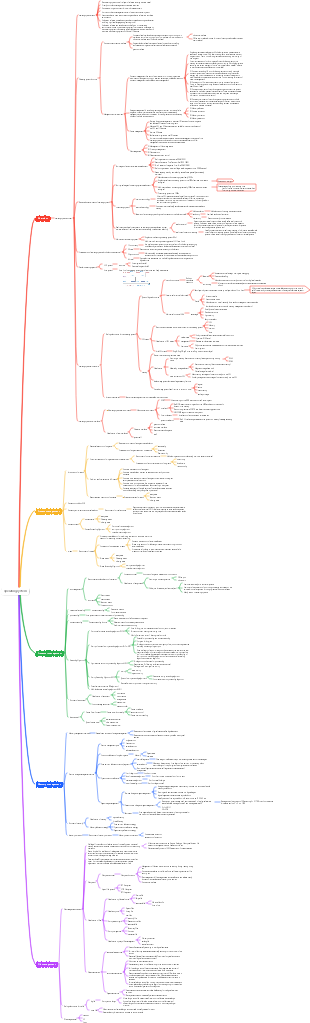
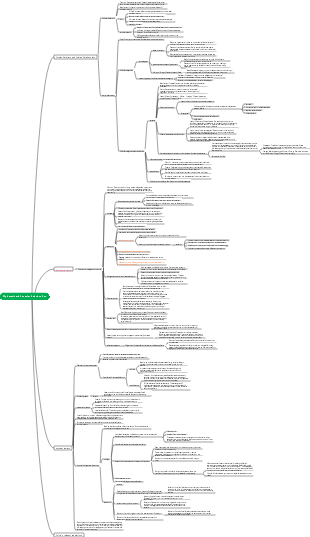
international legal subject
subject of international law
Sovereign state
The constituent elements of a country: settled residents, defined territory, certain political organization or government, sovereignty
type
Permanent neutral country:
Voluntarily assume the obligation of permanent neutrality (not be involved in wars and battles)
Permanent neutral status guaranteed by international treaties: Switzerland, Austria, Turkmenistan
(Gone) Subject country: The right to communicate with foreign countries is controlled by other countries
Vassal state: surrenders diplomacy to other countries and retains management of the country's internal affairs
Protected country: handed over to another country for protection
Basic rights: right to independence, right to equality, right to jurisdiction, right to self-preservation
The right to independence: to be independent and free from interference
Internally: self-managed country
External: Implement foreign policies independently
Right to equality: the right to equal status (representation, voting, use of national language, diplomatic etiquette, judicial immunity, equal treatment of aliens)
right of self-defense
condition
Prerequisite: Being attacked by force
Time: Before the Security Council takes the necessary measures to maintain international peace and security
Procedure: Take action to report to the Security Council
Limits: Necessity and Proportionality
Subject: Sovereign state (international organizations have no right to self-defense)
jurisdiction
Territorial jurisdiction: priority jurisdiction
Subjective territoriality: preparation for crime, execution of crime, etc.
Objective territoriality: the result of the crime occurs or is completed in this country
Restrictions: Diplomatic immunity (heads of state and diplomatic representatives); sovereign immunity; does not affect the innocent passage of foreign ships in territorial waters; restrictions on foreign personal jurisdiction
personal jurisdiction
Positive personal jurisdiction (active): nationality of defendant
Passive personal jurisdiction (passive): nationality of victim
protective jurisdiction
Meaning: personal security, territorial integrity, major economic interests
Target: foreigners, domestic citizens, extraterritorial infringement
Crime: Penal Code for more than three years, specific crimes, double guilt principle
universal jurisdiction
Applicable: Specific international crimes (war crimes, crimes against peace, crimes against humanity, piracy (recognized), genocide, drug trafficking, slave trade, apartheid, torture, aircraft hijacking, etc.)
Scope: within the jurisdiction of this country and not within the jurisdiction of any country
Nature: Supplementary
Three major systems
state sovereign immunity system
Nature: customary law rules
Concept: A country cannot exercise jurisdiction over foreign heads of state, heads of government, diplomatic representatives, and foreign state actions and state property (the jurisdiction of the International Court of Justice is not excluded)
status quo
Absolute immunity of state sovereignty: state actions and state property (all actions and properties) are not subject to the domestic jurisdiction of other countries (already in effect)
Relative immunity (not in effect)
Rule, sovereignty, (public law act) State enjoys immunity from jurisdiction
There is no jurisdictional immunity for business management, commercial transactions, and private law activities (commercial activities)
What is waived is the right to sue rather than the immunity from execution
Judgment criteria: nature purpose
Subjects of immunity: the state and government agencies; organizations with sovereign rights; state representatives (with state rights, Chinese state-owned enterprises do not enjoy sovereign immunity and cannot resort to claims against the state to enforce the property of the state-owned enterprise)
State immunity rules: You are not a defendant without consent; you can be a defendant in a counterclaim when you are a plaintiff; consent to jurisdiction does not mean consent to execution
Situations in which state immunity cannot be invoked: commercial activities, labor service contracts, compensation for personal injury and property damage, related property matters, intellectual property matters, arbitration awards
Waiver of state immunity (the waiver is jurisdictional immunity, not execution immunity)
Characteristics: voluntary, specific, clear
Express: Statement in formal documents such as treaties and contracts
Implication: (litigation behavior) Take the initiative to sue, appear in court to respond, file a counterclaim, and participate as an interested party
Waiver: What is waived is the right to sue rather than the immunity from execution (only the form of waiver is expressly stated, and a separate waiver is required)
Actions that shall not be considered a waiver of immunity:
Agree to the application of the laws of another country
Intervening in a lawsuit solely to invoke or contest a specific property right to be adjudicated in the lawsuit
A representative of one country testifies in a court of another country
Failure of one State to appear in proceedings before the courts of another State
Foreign state property does not enjoy immunity from judicial coercive measures
expressly give up
To set aside or earmark property for enforcement purposes
Effective judgment and ruling: Foreign state property located within the territory of China and used for commercial activities and related to litigation
If a foreign country violates China's immunity, China has the right to take reciprocal measures
recognition system
admit
Subject: States and intergovernmental international organizations
Situation: merger, separation, separation, independence
object
recognize the government
Reason: Social change or military coup (change of government through non-constitutional procedures)
Principle of recognition: effective rule (regardless of the origin of the regime or the provisions of domestic law)
Recognize the country: vice versa
Situation: Merger, spin-off, separation, independence
State element: a country that complies with the principles of international law (premature recognition without recognition, the possibility of interfering in internal affairs, and an internationally wrongful act)
Difference: Whether there is a territorial change
Recognition method
Express: statement, correspondence
Implied: formal establishment of diplomatic relations (symbolized by the establishment of embassies in each other's country), consular relations, conclusion of political treaties, voting to join international organizations open only to countries
Legal recognition (political, mainly between countries)
formal, complete
permanent, irrevocable
Legal basis for comprehensively establishing diplomatic relations
de facto recognition (e.g. commercial relationship)
informal, restrictive
temporary, revocable
Note: Factual recognition is not a necessary prerequisite for legal recognition.
Effect
Retrospective: traceable to the time of its establishment
legally recognized legal effects
Legal recognition and establishment of diplomatic relations: recognition is usually a prerequisite for the establishment of diplomatic relations; legal recognition is irrevocable but the establishment of diplomatic relations can be revoked
Recognition of a new state is in principle irreversible; recognition of a new government implies the removal of the old government within the territory
Nature: Unilateral act
China Practice
Is recognition of the government (the territory remains unchanged)
The theory of reverse conditional recognition: Countries that recognize and establish diplomatic relations must recognize that there is only one China (different from conditional recognition)
inheritance system
Concept: the subject of international law or the government and international organization representing the subject, the transfer of rights and obligations under international law
content
State succession (legitimacy, territoriality)
Reason: The fact that a country’s territory has changed (transfer, merger, separation, separation, independence, disintegration)
Object: Specific rights and obligations under international law related to the inherited territory (the basic rights and obligations of the state are inherent and no issue of succession arises)
Contents: treaties, property, archives, debts
treaty succession
Personal treaties, political treaties, will not be inherited (peace and friendship treaties, alliance treaties, etc.)
Disposal treaties, which should be inherited (treaties related to land use, territorial delimitation (exclusion of personality), and beneficial to local life, delimitation treaties) eg. borders, rivers and roads system
Transfer of Territory: Successor State Treaty Enters into Force
Merger: The original treaty is only valid for the territory of the inherited ancient country.
Separation: Scope of Succession Treaty
Independence (blank slate principle): freedom to decide whether to inherit treaties of the original country (exceptions: general international law conventions, boundary treaties)
inheritance
a standard
Real property: principle of transfer with territory
Movable property: principle of actual subsistence (territorial activities involved)
two principles
Unless there is an agreement, all transfers to the successor state or on a proportional basis
Newly Independent States: Permanent sovereignty of peoples over their wealth and natural resources, first and foremost on the basis of actual subsistence principles and not by treaty
Debt inheritance: strictly speaking, the state is not an odious debt
Elements
Subject: the central government of a country (excluding local governments)
Content: Treaty of equality (not odious debt)
Object: Debts to other international law subjects (excluding commercial banks, etc.)
Way
Merge: Inherit all
Separation, separation (one country derives other countries), division (one country becomes several countries): proportional inheritance
Independence (only refers to colonial independence from colonial rule): no inheritance unless otherwise agreed
content
Two inheritances (in the name of the state)
National debt, borrowed in the name of the country
Localized debts are borne in the name of the state
Two do not inherit
Odd debts that violate the interests of the people or the basic principles of international law
local debt, local name
File inheritance
Principles: Principles related to the territory involved (whoever has the closest relationship inherits the territory)
Compensation: generally no compensation
Obligations of the predecessor State: to take all measures to protect archives
Legal effect: Retroactive to the date of establishment of the new country
government succession
Definition: A change of regime due to a revolution or coup
basic rules
No inheritance: any treaty that is unequal, predatory, or contrary to national interests
Inheritance: All other treaties and property interests shall be inherited (excluding odious debts)
Differences from state inheritance
Reasons for succession: revolution or coup; territorial change
Participants: political power; subject of international law
Degree of inheritance: full inheritance; full or partial
Succession of the People's Republic of China
Treaty: review, cleanup, differentiated treatment
State property: all property is inherited
National debt: odious debts are not inherited; legal debts are inherited (odd debts: debts borne by the government or in the context of war that are against the interests of the people of the country)
Right to represent international organizations: inherit the right to represent all international organizations. In 1971, the United Nations General Assembly passed Resolution 2758, which restored all seats and legitimate rights of China in the United Nations.
Intergovernmental International Organization (United Nations)
Certain National Liberation Organizations (Palestine)