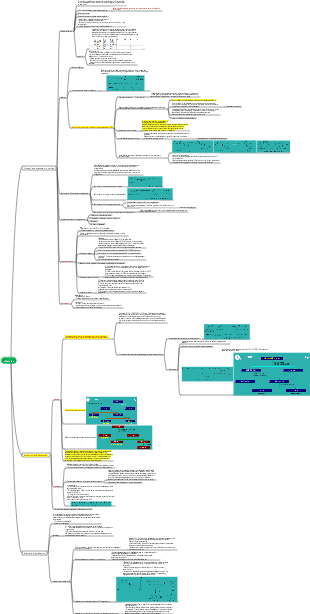
MindMap Gallery Alkaloids - Overview and Classification
This is a mind map about alkaloids - an overview and classification. Alkaloids refer to a type of naturally occurring nitrogen-containing organic compounds; most are alkaline and can combine with acids to form salts; most are heterocyclic compounds and contain nitrogen atoms. within a heterocycle; Most have strong physiological activity.
Edited at 2024-01-16 20:39:20This is a mind map about bacteria, and its main contents include: overview, morphology, types, structure, reproduction, distribution, application, and expansion. The summary is comprehensive and meticulous, suitable as review materials.

This is a mind map about plant asexual reproduction, and its main contents include: concept, spore reproduction, vegetative reproduction, tissue culture, and buds. The summary is comprehensive and meticulous, suitable as review materials.
This is a mind map about the reproductive development of animals, and its main contents include: insects, frogs, birds, sexual reproduction, and asexual reproduction. The summary is comprehensive and meticulous, suitable as review materials.
This is a mind map about bacteria, and its main contents include: overview, morphology, types, structure, reproduction, distribution, application, and expansion. The summary is comprehensive and meticulous, suitable as review materials.
This is a mind map about plant asexual reproduction, and its main contents include: concept, spore reproduction, vegetative reproduction, tissue culture, and buds. The summary is comprehensive and meticulous, suitable as review materials.
This is a mind map about the reproductive development of animals, and its main contents include: insects, frogs, birds, sexual reproduction, and asexual reproduction. The summary is comprehensive and meticulous, suitable as review materials.
alkaloids
Overview
Most of the alkaloids present in plants have obvious physiological activities, such as: • Morphine in opium (isoquinoline-morphinan type) – analgesic effect • Ephedrine (organic amines) in ephedra – antiasthmatic effect • Vinblastine (indole derivative) in Catharanthus roseus – anti-cancer activity • Berberine in coptis (isoquinoline-protoberberine type) – antibacterial and anti-inflammatory effect • Anisodamine (hydropane derivative-belladonna alkaloid) – anti-toxic shock effect
Study of the chemical structure of alkaloids provides clues for the synthesis of drugs such as: Although cocaine, the active ingredient in the plant coca, has a strong local anesthetic Intoxicating effect, but highly toxic and prone to addiction after long-term use
alkaloid definition
Refers to a type of naturally produced nitrogen-containing organic compounds; most are alkaline and can combine with acids to form salts; most are heterocyclic compounds with the nitrogen atom in the heterocyclic ring; most have strong physiological activity
Existing form
1. Free base: It is extremely weak in alkalinity and exists in the form of free base. 2. Salt formation: organic acids: citric acid, tartaric acid, etc.; special acids: aconitic acid, chlorogenic acid, etc.; inorganic acids: sulfuric acid, hydrochloric acid, etc. 3. Glycosides: Exist in plants in the form of glycosides; 4. Esters: The carboxyl groups in the molecules of various indole alkaloids often exist in the form of methyl esters. 5.N-oxides: There are about one hundred kinds of nitrogen oxides in plants.
Naming rules
Type naming
(1) The chemical structure of the base core, such as pyridine, quinoline, terpenoids, etc.; (2) Named after the source plant, such as Amaryllidaceae alkaloids, etc.
Naming of monomer ingredients
(1) Named after the genus and species of the plant source, such as: Hematinine (2) It is also named after physiological activity or medicinal effect, such as: morphine (makes sleep) (3) Named after a person; such as: pelletierine
Classification
Classified by plant source: such as: Lycoris alkaloids, Catharanthus roseus alkaloids
Classified by chemical structure: such as: isoquinoline alkaloids, steroidal alkaloids
Classified by biogenic binding chemistry: such as: pyrrole alkaloids derived from ornithine.
biosynthetic pathways
Amino acid pathway, mevaleric acid pathway, all biosynthesis is related to amino acids
Classification
Organic amines (phenylalanine/tyrosine)
A class of alkaloids in which the nitrogen atom is not bound within the ring
It is soluble in water when free and can form stable salts with acids. It is volatile and does not easily react with most alkaloid precipitation reagents to form a precipitate (brown/yellow precipitate).
Ephedrine (1R, 2S), colchicine (treats acute gout and inhibits the growth of cancer cells), motherwort (can increase the tone and rhythm of the uterus of animals)
Pyrrole derivatives
Alkaloids derived from pyrrole or tetrahydropyrrole
Classification
Simple pyrrole derivatives
Red bean amygdalin: similar to atropine drug in mydriasis and other effects
Pyrrolizidine derivatives (also known as doubly-condensed pyrrolidine)
Monocrotaline (has anticancer activity)
Indolizidine derivatives
Hematine
Pyridine derivatives
Alkaloids derived from pyridine or hexahydropyridine.
Points: Simple pyridine derivatives, quinolizidine
Actinidine, ricinine, cytisine, matrine
Tropane derivatives
Heterocyclic ring formed by the combination of pyrrolidine and piperidine. Hyoscyamine is an ester produced by the condensation of hyoscyamine (tuopine) and hyoscyamine (tuopic acid)
belladonna alkaloids
Hyoscyamine, atropine, anisodine
coca alkaloids
Egonine, cocaine
Quinoline derivatives
Camptothecin: treats leukemia and rectal cancer, has a lactone structure, alkalizes and opens the ring, forms a salt and is soluble in water
Isoquinoline derivatives
1-Benzylisoquinoline type
Nakedin
Bisphenylisoquinoline type
tangconine
Protoberberine type
Berberine (berberine), jatrorrhizine, corydaline
Apomorphine
Turmenine
Protoapomorphine
Morphinoid
Morphine, sinomenine
Prototropine base form
phenanthridine derivatives
Benzophenanthridines
chelidonine
Pyrrophenanthridines
Lycorine
Acridone derivatives
Behenine: has significant anti-cancer effects and a wide anti-tumor spectrum. There are now synthetic products
Indole derivatives
Vinblastine, vincristine, ergometrine, physostigmine, ellipticine
imidazole derivatives
Pilocarpine: Treats glaucoma
Quinazolidone derivatives
Changshanine: antimalarial effect
Purine derivatives
Lentinus purine: has lipid-lowering effect
steroidal alkaloids
Fritillary
Terpene alkaloids
Dendrobine, aconitine, paclitaxel
Macroalkaloids
Maytansine: an anti-cancer active ingredient with high efficiency, low toxicity and large safety margin
Other types of alkaloids
Lin's flower alkane, Lin's flower alkane, fentanyl alkaloids