MindMap Gallery Characteristics of action learning method
This is a mind map about the characteristics of the action learning method. It tells stories about the characteristics of the action learning method. If you are interested in the story of the characteristics of the action learning method, you are welcome to collect and like this mind map~
Edited at 2022-09-28 20:04:59This is a mind map about bacteria, and its main contents include: overview, morphology, types, structure, reproduction, distribution, application, and expansion. The summary is comprehensive and meticulous, suitable as review materials.

This is a mind map about plant asexual reproduction, and its main contents include: concept, spore reproduction, vegetative reproduction, tissue culture, and buds. The summary is comprehensive and meticulous, suitable as review materials.
This is a mind map about the reproductive development of animals, and its main contents include: insects, frogs, birds, sexual reproduction, and asexual reproduction. The summary is comprehensive and meticulous, suitable as review materials.
This is a mind map about bacteria, and its main contents include: overview, morphology, types, structure, reproduction, distribution, application, and expansion. The summary is comprehensive and meticulous, suitable as review materials.
This is a mind map about plant asexual reproduction, and its main contents include: concept, spore reproduction, vegetative reproduction, tissue culture, and buds. The summary is comprehensive and meticulous, suitable as review materials.
This is a mind map about the reproductive development of animals, and its main contents include: insects, frogs, birds, sexual reproduction, and asexual reproduction. The summary is comprehensive and meticulous, suitable as review materials.
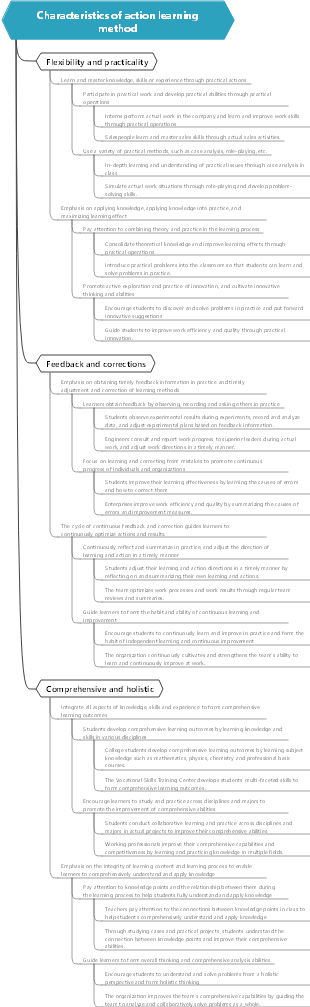
Characteristics of action learning method
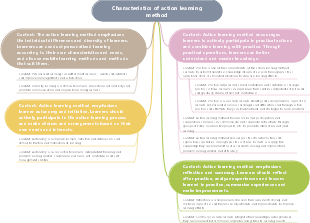
Individualized learning plan: The action learning method allows students to develop a learning plan based on their own interests and goals. For example, students can choose their areas of interest as the focus of their studies and arrange their study schedule to achieve their goals.
Personal will-driven learning: Action learning method focuses on stimulating students’ intrinsic motivation and independent learning ability. For example, students can choose to participate in learning projects that interest them, thereby increasing their motivation and engagement in learning.
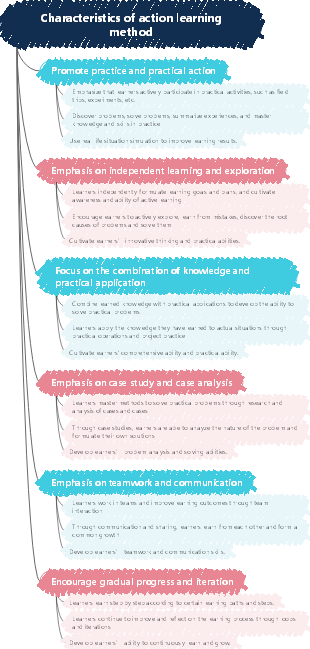
Provide practical opportunities: The action learning method emphasizes the importance of practice and practical application and helps students apply theoretical knowledge to practice by providing practical opportunities. For example, students can participate in practical projects, experiments, and simulated scenarios to deepen their understanding and application of the knowledge they have learned.
Cultivation of creative thinking: The action learning method advocates cultivating students' creative thinking and problem-solving abilities. For example, students can develop creative thinking by solving practical problems, carrying out innovative projects, etc.
Emphasis on teamwork: The action learning method attaches great importance to encouraging students to engage in teamwork and collaboration to improve learning effectiveness and team awareness. For example, students can participate in team projects and cooperative learning, where they learn to listen to others' perspectives and work together to solve problems.
Focus on reflection and summary: The action learning method encourages students to reflect and summarize in actions and practices to promote the depth and persistence of learning. For example, students can record the learning process and results, and conduct self-evaluation and reflection.
Emphasis on practicality and application: Action learning method is committed to cultivating students' practical ability and application ability in order to apply the learned knowledge and skills to actual work. For example, students can improve their practical application skills through practical projects and actual cases.
Emphasis on lifelong learning: The action learning approach emphasizes the importance of students continuing to learn and grow throughout the learning process. For example, students can continuously improve their learning effects and abilities through regular reflection and setting learning goals.
Combining theory and practice: Action learning method combines theoretical knowledge and practice to help students build practical application capabilities. For example, students can practice by learning theoretical knowledge and applying it to real-life situations to promote theoretical understanding and application.
Theoretical learning: Action learning method provides learning channels and resources for theoretical knowledge to help students understand related knowledge and concepts. For example, students can learn relevant theoretical knowledge by reading textbooks and attending lectures and seminars.
Theoretical application: The action learning method emphasizes applying the theoretical knowledge learned to practical problems. For example, students can apply the theoretical knowledge they have learned by solving practical problems and analyzing cases, so as to understand the practical significance and application value of the theory.
Practice feedback: Action learning methods encourage students to receive feedback and make adjustments and improvements during practice. For example, students can evaluate their learning effects based on experimental results or project results, and make adjustments and improvements for the next step of learning.
Practice improvement: Action learning methods improve learning and application capabilities through continuous practice and feedback loops. For example, students can discover deficiencies in practice and improve their practical and application abilities through improvements and adjustments.
Promote lifelong learning: The action learning method emphasizes the importance of students' continuous learning and growth in practice. For example, students can improve their practical and application abilities through continuous practice and reflection, and apply the knowledge they have learned to different situations.
Theoretical innovation: The action learning method encourages students to innovate and try in practice to expand the boundaries of knowledge. For example, students can use practical projects and real cases to discover new problems and solutions, thereby creating new theoretical knowledge and application methods.
Practical learning: The action learning method promotes student learning and growth through practice. For example, students can consolidate and apply the knowledge and skills they have learned through practical projects, experiments and practical operations.
Joint exploration and cooperative learning: The action learning method encourages students to enhance learning effects and depth of understanding through joint exploration and cooperative learning. For example, students can learn and work with others in team projects and cooperative learning, gaining different perspectives and ideas.
Group thinking and collaboration: The action learning method focuses on cultivating students' group thinking and collaboration abilities. For example, students can think and solve problems together through group discussions, collaborative projects, etc. to improve learning results.
Social practice: The action learning method encourages students to participate in social practice and practical applications to enhance the practicality and application of learning. For example, students can gain practical application opportunities and experience by participating in community service projects, internships, and practical training.
Exploration learning: The action learning method encourages students to actively explore and research learning content to cultivate students' exploration spirit and independent learning ability. For example, students can gain an in-depth understanding of the learning content through field visits, surveys, and experiments, and gain independent learning experiences and results.
Lifelong Learning: The action learning approach emphasizes the importance of students continuing to learn and grow throughout the learning process. For example, students can continuously expand their knowledge and skills through social practice and cooperative learning with others, and achieve the goal of lifelong learning.
Mutual-assisted learning and reflection: The action learning method encourages students to improve learning effects and reflective abilities through mutual-assisted learning and reflection. For example, students can help and support each other through group learning, peer evaluation, etc., and jointly improve their learning.